Machine Gun Corps Memorial Travel Guide
Free Guide: A striking WWI memorial at Hyde Park Corner, blending classical art and the harsh realities of mechanized warfare to honor the Machine Gun Corps’ sacrifice.


A brief summary of Machine Gun Corps Memorial
A striking WWI memorial at Hyde Park Corner, blending classical art and the harsh realities of mechanized warfare to honor the Machine Gun Corps’ sacrifice.
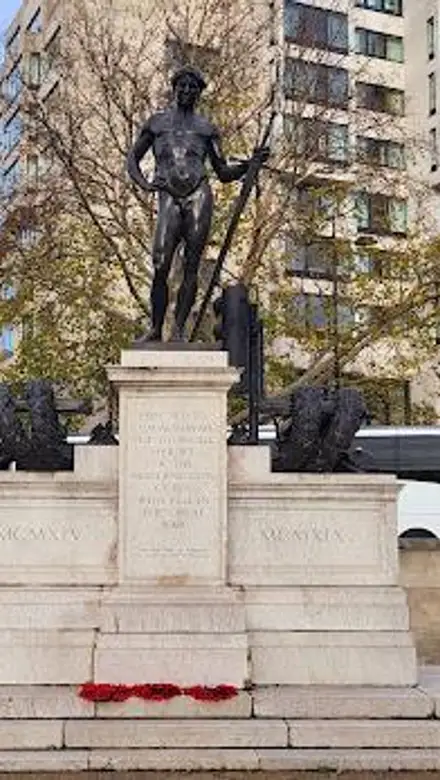
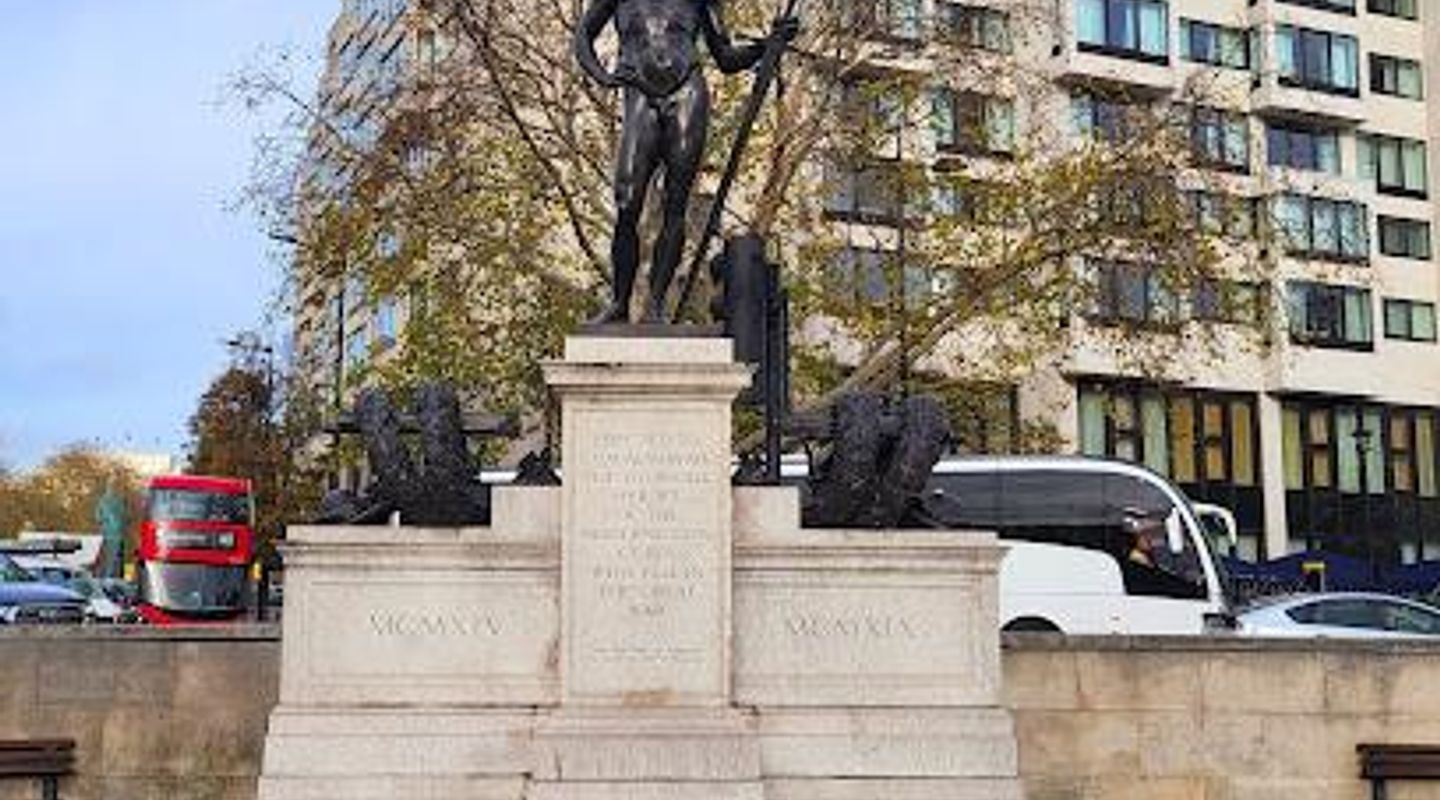
The Machine Gun Corps Memorial, also known as The Boy David, is a poignant World War I monument located at Hyde Park Corner, London. Featuring a striking bronze statue of the Biblical David flanked by laurel-wreathed Vickers machine guns, it commemorates the sacrifices of the Machine Gun Corps, which suffered heavy casualties during the war. Designed by Francis Derwent Wood and unveiled in 1925, the memorial blends classical symbolism with the harsh realities of mechanised warfare.
On-site amenities
 Seating areas
 Information boards
 Trash bins
Opening hours
- Every dayOpen 24 hours
Opening hours as listed on the venue’s Google Business Profile. Hours can change for services and special events, so check with the venue before you go.
- Address
- 4 Duke of Wellington Pl, London SW1W 0QH
- Website
Getting there
London Underground
Bus
Taxi or Rideshare
Walking
Discover more about Machine Gun Corps Memorial
A Symbolic Tribute to the Machine Gun Corps
The Machine Gun Corps Memorial stands prominently at 4 Duke of Wellington Place, near Hyde Park Corner in London. It commemorates the nearly 14,000 members of the Machine Gun Corps who died between its formation in 1915 and disbandment in 1922. The memorial’s centerpiece is a 9-foot bronze statue of the Biblical figure David, depicted nude and holding a sword, symbolizing youthful heroism and solitary courage. This statue is flanked on either side by real Vickers machine guns cast in bronze and adorned with laurel wreaths, representing the deadly weaponry that defined the corps’ role in the First World War.
Design and Controversy
Designed by sculptor Francis Derwent Wood, who was renowned for his work creating facial prosthetic masks for disfigured soldiers, the memorial was unveiled in 1925. Wood’s experience with the brutal realities of war informed his approach, aiming not to glorify but to truthfully represent the sacrifice and mechanized slaughter of the conflict. The juxtaposition of the perfect male nude with instruments of war sparked controversy at its unveiling, with critics debating the appropriateness of the classical nude figure alongside lethal machine guns. Despite this, the inscription from 1 Samuel 18:7—"Saul hath slain his thousands, but David his tens of thousands"—deeply resonates with the memorial’s message of sacrifice and valor.
Historical Context and Location
Originally sited on a traffic island south of the Royal Artillery Memorial, the Machine Gun Corps Memorial was dismantled in 1945 due to roadworks and was not reassembled until 1963 at its current location. This site places it in the heart of London’s ceremonial district, near Wellington Arch and Apsley House, linking it with other tributes to military history and the Duke of Wellington. The memorial’s Grade II* listing underscores its cultural and historic significance.
Francis Derwent Wood’s Legacy
Wood’s artistic and humanitarian contributions extend beyond this memorial. During the war, he served in the Royal Army Medical Corps and pioneered the Department for Masks for Facial Disfigurement, crafting metal masks to restore dignity to wounded soldiers. His work on the memorial reflects a blend of artistic skill and a profound understanding of war’s human cost, making the Machine Gun Corps Memorial a unique and deeply moving tribute.
Memorial Features and Inscription
The memorial’s base is made of Italian marble, designed by Wood himself, and includes detailed inscriptions honoring the corps’ service in multiple theatres of war, including France, Flanders, Russia, Italy, Egypt, Palestine, Mesopotamia, Salonica, India, Afghanistan, and East Africa. The bronze Vickers guns are life-size replicas of the weapons used by the corps, further grounding the memorial in the reality of mechanized combat.
Visiting and Reflecting on Sacrifice
The Machine Gun Corps Memorial invites reflection on the brutal nature of industrialized warfare and the extraordinary sacrifices made by those who served. Its classical form and stark symbolism offer a solemn and contemplative experience amid the bustle of central London. The memorial remains a powerful reminder of the human cost behind the machinery of war and the enduring legacy of those who fought in the Machine Gun Corps.
Evendo Review Centre
 Google
Guest reviews
Best time to go
Quietest: Jan, Feb & Dec · before 6am or at 9pm
Busy times are Evendo estimates for a typical year, to help you plan. Actual crowds vary with events, school holidays and the weather.
Explore Machine Gun Corps Memorial on the map
A handpicked selection of must-see spots near Machine Gun Corps Memorial, mapped for you.
Get your free copy of our complete guide to Machine Gun Corps Memorial, delivered straight to you.
Everything on this page, from opening hours and how to get there to Eve’s tips and the best time to go, in one PDF you can read offline, print or share.
Already have an account? Sign in
Your Machine Gun Corps Memorial guide is ready.
We'll send it to · Not you? Sign out

Getting your guide ready…
We are putting together a fresh copy of the Machine Gun Corps Memorial guide. This can take up to a minute.
This can take a few moments. If your browser asks, choose Allow so the download can start. You'll find the guide in your Downloads folder.
Nothing happened? Download it again
Sorry, the guide is taking longer than usual. Please try again in a minute, or get it by email instead.
Unlock the best of Machine Gun Corps Memorial
Skip-the-line tickets, guided tours with entry, and walking tours of the area, booked in a few clicks.

Other nearby places you may find interesting
The closest places of the same kind, if this one is not quite what you had in mind.
-
Duke Of Sutherland Monument A towering Highland landmark blending breathtaking views with the complex legacy of the Duke of Sutherland’s era.
-
 Monument to Harriet, Duchess of Sutherland
A dignified monument in Golspie honoring Harriet, Duchess of Sutherland, a Victorian political hostess and social reformer with a lasting Highland legacy.
Monument to Harriet, Duchess of Sutherland
A dignified monument in Golspie honoring Harriet, Duchess of Sutherland, a Victorian political hostess and social reformer with a lasting Highland legacy.
-
Broch Dun Dornaigil Explore the towering Iron Age Dun Dornaigil Broch, a drystone marvel perched above the Strathmore River in Scotland’s wild Highlands.
-
Castle Varrich Explore the ancient stronghold of Clan Mackay with stunning Highland views from Castle Varrich’s rugged promontory near Tongue.
-
Hermit's Castle Discover the enigmatic smallest castle in Europe, a Brutalist concrete bothy blending into Scotland’s wild Achmelvich coastline.
Swipe for more places
More to explore near Machine Gun Corps Memorial
-
 Best experiences near Machine Gun Corps Memorial
-
 Best hotels near Machine Gun Corps Memorial
-
 Best landmarks near Machine Gun Corps Memorial
-
 Best attractions near Machine Gun Corps Memorial
-
 Best shops near Machine Gun Corps Memorial
-
 Best restaurants near Machine Gun Corps Memorial
-
 Best bars near Machine Gun Corps Memorial







Do you manage this location?
Take control to get all the benefits, like improved information, better appearance, and stronger visibility across AI-powered discovery.
Explore more

Explore more of Sutherland
Discover Sutherland, the untamed beauty of the Scottish Highlands, where rugged landscapes, serene lochs, and dramatic coastlines await the adventurous traveler.
Explore Sutherland
Explore more of United Kingdom
Discover the United Kingdom: A blend of rich history, stunning landscapes, and vibrant cities, offering a unique travel experience for every visitor.
Explore United Kingdom