

St John's Gate, London Travel Guide
A rare medieval gatehouse in Clerkenwell, with museum galleries, guided historic rooms, and a quiet sense of London's layered religious past.
St John's Gate is a compact but unusually layered historic site in Clerkenwell, where a surviving medieval gatehouse fronts the Museum of the Order of St John. Visitors come for the stonework, the small galleries, and the chance to step into a rare remnant of the Knights Hospitaller's London base. It is quiet, interpretive, and best for travellers who prefer history in manageable doses.
A brief summary to St John's Gate
- 26 St John's Ln, London, EC1M 4BU, GB
- Click to display
- Click to display
- Duration: 0.5 to 2.5 hours
- Free
-
 Mixed
Mixed
- Mobile reception: 4 out of 5
- Wednesday 9:30 am-5 pm
- Thursday 9:30 am-5 pm
- Friday 9:30 am-5 pm
- Saturday 9:30 am-5 pm

Know before you go
Hi, I'm Eve. Here are a few practical things to know before exploring St John's Gate.
- Allow time for the interpretation panels; the site is small, but the history is dense and easy to miss if you rush.
- If you want the church, crypt, or upper rooms, check whether a guided tour is running, as those spaces are not always freely accessible.
- Use Farringdon as your arrival point; it is the simplest public-transport approach and keeps the walk short.
- Do not assume full step-free access beyond the ground-floor galleries, since some historic areas are reached by stairs.
Do you manage this location?
Take control to get all the benefits, like improved information, better appearance, and stronger visibility across AI-powered discovery. Learn more about listing your business on Evendo
Activate your presenceOther nearby places you may find interesting
The closest places of the same kind, if this one is not quite what you had in mind.


Explore St John's Gate on the Map
A handpicked selection of must-see spots near St John's Gate, mapped for you.
Unlock the Best of St John's Gate
Buy tickets
-
No tickets available
Book tours with entry


Book tours without entry

Getting There
-
Public Transport
Farringdon is the nearest station, about a 5-minute walk away, with Underground, Elizabeth line, and rail connections.
-
Bus
Several central London bus routes serve the wider Farringdon and Clerkenwell area, making this an easy stop without a car.
-
Taxi / Ride-hail
Taxis and private hire are practical in central London, especially if you are combining the visit with other Clerkenwell stops.
-
Driving
Driving is possible but less convenient because parking is limited and local restrictions may apply in central London.
For the on-the-go comforts that matter to you
-
 Restrooms
-
 Seating Areas
-
 Sheltered Areas
-
 Information Boards
-
 Visitor Center
Discover more about St John's Gate
What it is
St John's Gate is the surviving south gateway of the medieval Priory of Clerkenwell, once the English headquarters of the Knights Hospitaller. Today it functions as a small museum complex linked to the Museum of the Order of St John, so the visit is less about a single monument and more about a compact sequence of rooms, displays, and architectural fragments. It is one of the few medieval survivals in central London, which gives it unusual weight for such a modest-looking building.What you see on a visit
Most visitors begin at ground level, where the museum galleries present the Order's long history, including its later charitable and first-aid work. The experience is calm and measured: objects, panels, and interpretation rather than spectacle. The gatehouse exterior is the main visual draw from the street, with its Tudor and medieval fabric standing out against Clerkenwell's traffic and office buildings. If you join a guided tour, you may also see the church, crypt, and upper historic rooms, though some of these spaces involve steps and are not part of a fully free-flowing visit.Atmosphere and setting
The setting is urban, enclosed, and compact. There are no broad grounds or sweeping views; the appeal lies in the building's age, the density of its history, and the contrast between old stone and the surrounding city. The mood is scholarly and restrained, with a low-key pace that suits travellers who like to read, compare, and linger over details. It is not a place for long wandering, but it rewards attention. The square and nearby Clerkenwell streets add context, especially for visitors interested in the area's ecclesiastical and institutional past.History in layers
The site began in the 1140s as part of the Priory of Clerkenwell, then survived the Dissolution when much of the wider complex was destroyed or repurposed. Over time the gatehouse took on new roles, including administrative, publishing, coffee-house, and pub uses, and it is associated with Samuel Johnson and other strands of literary London. That layered history is part of its appeal: you are not looking at a frozen medieval relic, but at a building that has been repeatedly adapted while retaining its core identity. The museum interpretation helps connect those phases without overwhelming the small scale of the site.Practical expectations
This is best treated as a short cultural stop rather than a half-day attraction. A brief visit can be done in under an hour, while a guided tour and careful reading of the displays can stretch the stay to around two hours. The main galleries are step-free, but some historic interiors are reached by stairs, so access is partial rather than universal. The site suits history-minded travellers, architecture enthusiasts, and anyone looking for a quiet indoor stop near Farringdon. It is especially useful in wet or cold weather, when its compact indoor format works well as a break from the street.












Your all‑in‑one travel companion app
Explore expert travel guides, compare and book tours, experiences, hotels, and more—all from the palm of your hand. Download now for seamless trip planning wherever your wanderlust takes you.


Explore More of London
Looking beyond St John's Gate? Discover London for broader travel guides, local hot-spots, and regional highlights.
Explore London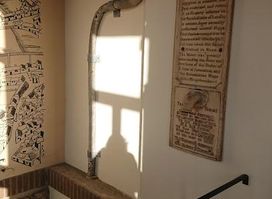
A compact Clerkenwell heritage stop on Farringdon Lane, marking the old Clerks’ Well and the origin of the district’s name.
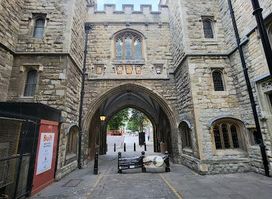
A compact Clerkenwell museum in St John’s Gate, linking medieval crusader history, the Priory Church, and the modern story of St John Ambulance.
