
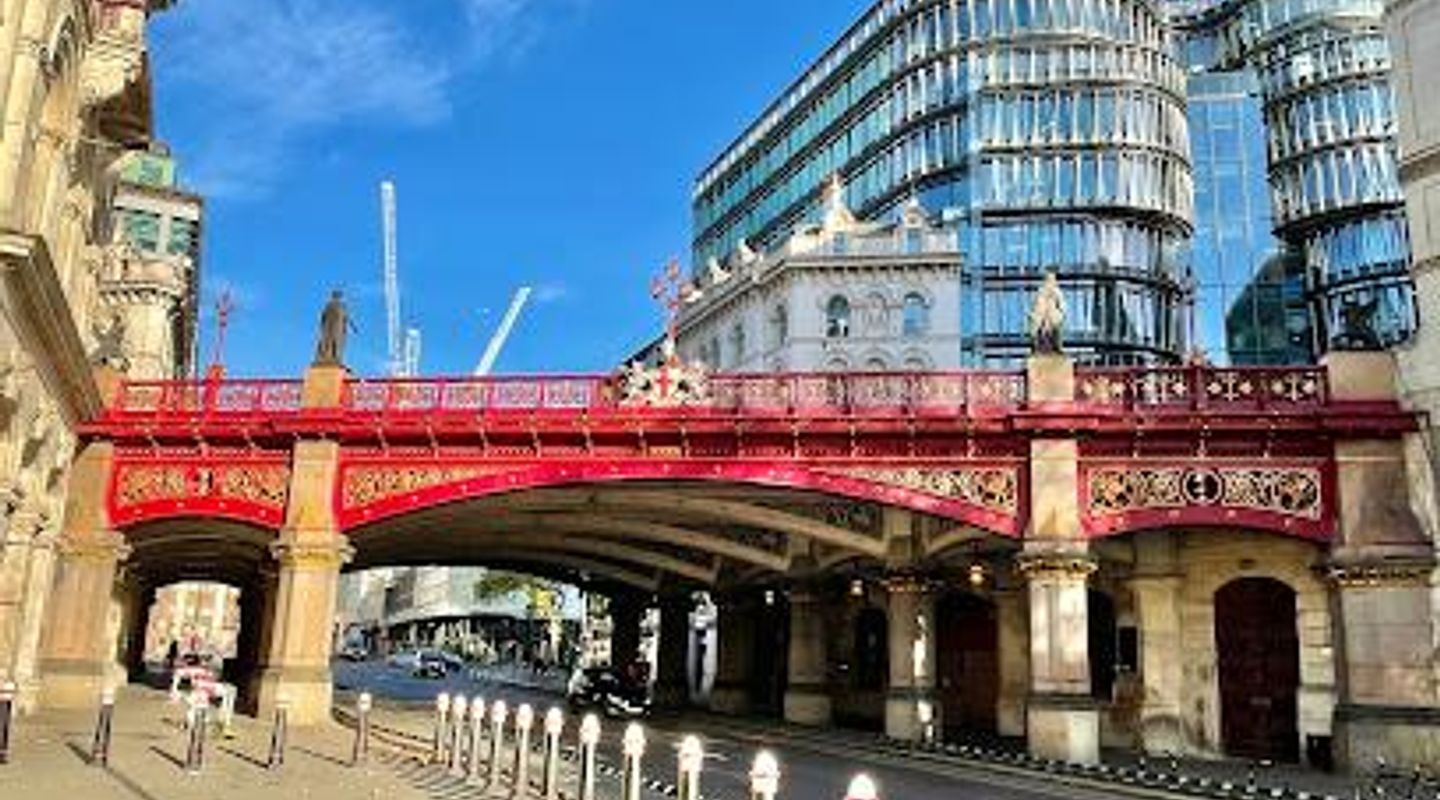
Holborn Viaduct, London Travel Guide
A grand Victorian bridge in London, blending engineering brilliance with ornate artistry, bridging history and modern city life.
Holborn Viaduct is a historic Victorian-era road bridge in London, completed in 1869 to span the steep valley of the River Fleet. It connects Holborn with the City of London, easing traffic flow and symbolizing 19th-century urban innovation. Adorned with ornate ironwork and bronze statues representing Commerce, Agriculture, Science, and Fine Arts, the viaduct remains a vital and architecturally significant part of London's transport network.
A brief summary to Holborn Viaduct
- London, GB
- Duration: 0.5 to 1.5 hours
- Free
-
 Outdoor
- Mobile reception: 5 out of 5

Know before you go
Hi, I'm Eve. Here are a few practical things to know before exploring Holborn Viaduct.
- Take time to admire the intricate ironwork beneath the viaduct, featuring dragons and knights’ helmets.
- Look for the four bronze statues representing Victorian values of Commerce, Agriculture, Science, and Fine Arts.
- Visit nearby Smithfield Market and Holborn Circus to experience the historic urban context of the viaduct.
- Notice the subtle integration of subterranean channels that once housed pioneering electrical cables powering early street lighting.
Do you manage this location?
Take control to get all the benefits, like improved information, better appearance, and stronger visibility across AI-powered discovery. Learn more about listing your business on Evendo
Activate your presenceOther nearby places you may find interesting
The closest places of the same kind, if this one is not quite what you had in mind.



Explore Holborn Viaduct on the Map
A handpicked selection of must-see spots near Holborn Viaduct, mapped for you.
Unlock the Best of Holborn Viaduct
Buy tickets
-
No tickets available
Book tours with entry


Book tours without entry

Getting There
-
London Underground
Take the Central or Northern Line to the nearby Chancery Lane or St. Paul's stations. From either station, it is a 10–15 minute walk along city streets with some gentle inclines. Stations are well-served with frequent trains, and fares range from £2.50 to £4.00 depending on travel zones and ticket type.
-
Bus
Several London bus routes serve Holborn Viaduct, including routes 8, 25, and 242, connecting from various parts of central London. Bus travel times vary between 15 and 30 minutes depending on traffic. Single fares cost approximately £1.75 with an Oyster or contactless card.
-
Taxi or Rideshare
A taxi or rideshare from central London locations such as Covent Garden or the West End takes about 10–20 minutes depending on traffic. Expect fares in the range of £8 to £15. Note that traffic congestion can increase travel time during peak hours.
-
Walking
If you are exploring central London, walking to Holborn Viaduct is feasible from nearby landmarks such as St. Paul's Cathedral or the British Museum. Walking times range from 15 to 25 minutes on mostly paved city streets with some elevation changes.
For the on-the-go comforts that matter to you
-
 Seating Areas
-
 Information Boards
Discover more about Holborn Viaduct
Victorian Vision and Urban Transformation
Holborn Viaduct was constructed between 1863 and 1869 as a centerpiece of the Holborn Valley Improvements, a major Victorian public works project aimed at modernizing London's infrastructure. The steep valley carved by the River Fleet, once an open and heavily polluted waterway, created a challenging obstacle for horse-drawn carriages and early traffic. The viaduct was designed by City surveyor William Haywood and engineer Rowland Mason Ordish to bridge this valley, providing a flat, continuous route from Holborn to Newgate Street and improving access into the City of London from the West End.Engineering Feat with Artistic Flourish
Stretching approximately 1,400 feet (427 meters) long and 80 feet (24 meters) wide, Holborn Viaduct was London’s first road overpass and a marvel of Victorian engineering. Its cast iron and stone construction features intricate ironwork beneath the bridge, including decorative dragons and knights’ helmets. The viaduct’s upper level is graced by four imposing bronze statues of women symbolizing Commerce, Agriculture, Science, and Fine Arts, reflecting Victorian values of progress and enlightenment. Additional bronze winged lions mark the bridge’s ends, while granite piers support the three-span structure.Historical Significance and Cultural Legacy
Officially opened by Queen Victoria on November 6, 1869, the viaduct was part of a grand urban renewal that also included the rebuilding of Blackfriars Bridge and the creation of Queen Victoria Street. The surrounding area underwent significant clearance of slums and notorious alleys, such as Field Lane, to improve public health and safety. The viaduct not only eased traffic congestion but also symbolized London’s emergence as a modern metropolis during the Industrial Revolution.Innovations Beneath the Surface
Beneath the viaduct, the River Fleet was culverted and covered, transforming a polluted river valley into a functional urban space. The viaduct’s design incorporated subterranean channels that facilitated the installation of electricity cables, enabling the world’s first coal-fired power station to open nearby in 1882. This Edison Electric Light Station powered street lighting and buildings in the area, marking a pioneering moment in urban electrification.Preservation and Contemporary Role
Despite wartime damage during the Blitz, Holborn Viaduct has been carefully restored and remains a Grade II listed structure. It continues to serve as a crucial artery in London’s transport network, linking key parts of the city while standing as a testament to Victorian craftsmanship and urban planning. The viaduct’s blend of practicality and ornate design offers a tangible connection to London’s rich industrial heritage.Symbolism and Statues as Cultural Markers
The four bronze female statues on the viaduct represent core Victorian ideals: Commerce, Agriculture, Science, and Fine Arts, embodying the era’s belief in progress through knowledge and industry. Additionally, statues of historic London figures such as Sir Hugh Myddelton and Sir Thomas Gresham adorn the pavilions, linking the structure to the city’s broader historical narrative and its leaders in innovation and commerce.












Your all‑in‑one travel companion app
Explore expert travel guides, compare and book tours, experiences, hotels, and more—all from the palm of your hand. Download now for seamless trip planning wherever your wanderlust takes you.


Explore More of London
Looking beyond Holborn Viaduct? Discover London for broader travel guides, local hot-spots, and regional highlights.
Explore London
Explore the ancient Roman and medieval layers of London's historic city wall nestled within the peaceful St Alphage Garden in Barbican.

A solemn 1956 memorial to Scotland's greatest patriot, executed here in 1305 for resisting English rule.
