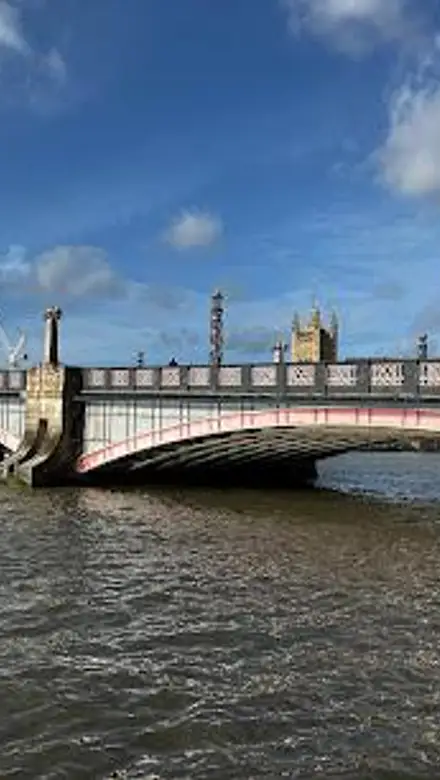
Lambeth Bridge, London Travel Guide
Free Guide: A striking red steel arch bridge linking Lambeth and Westminster, rich in history and adorned with symbolic pine cone obelisks.


A brief summary of Lambeth Bridge
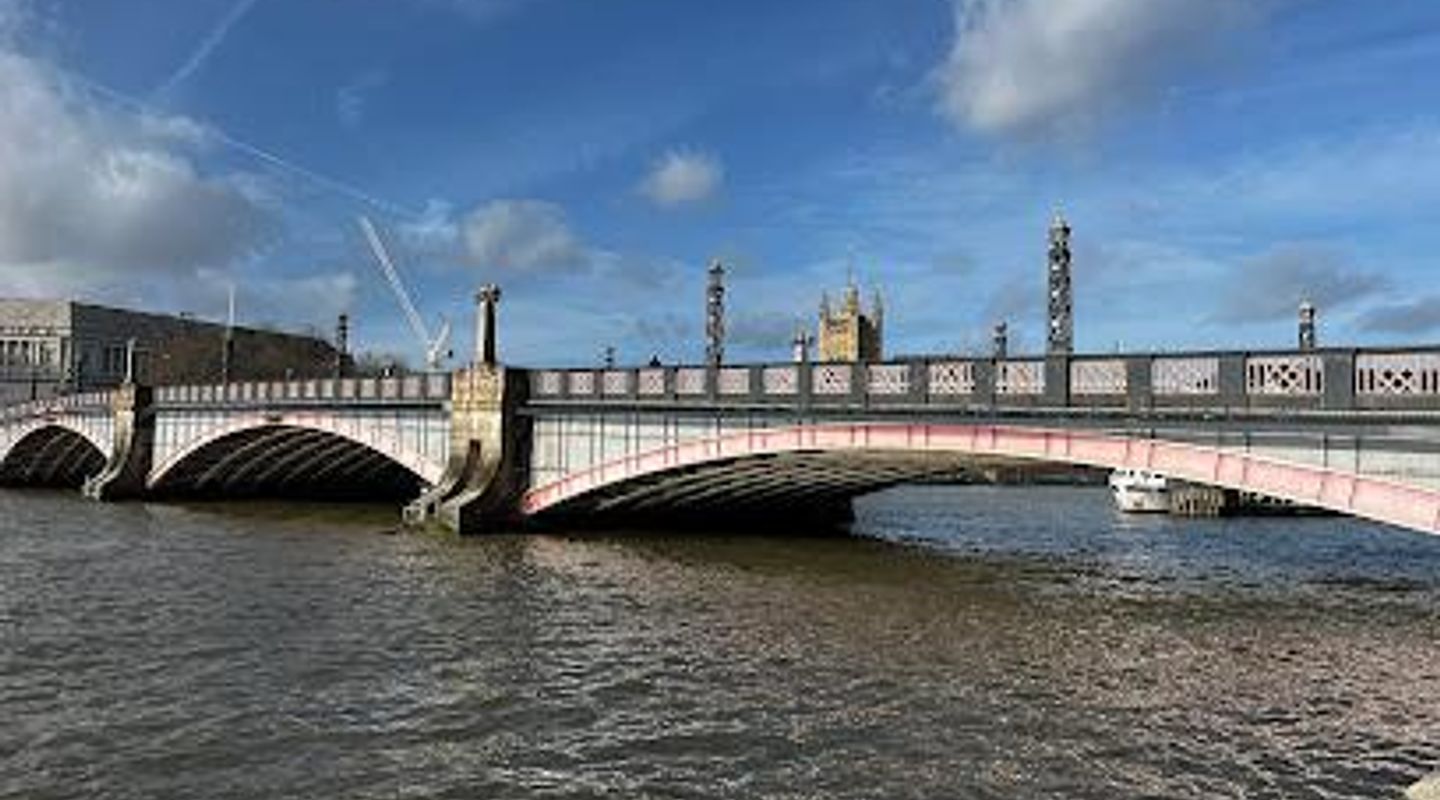
A striking red steel arch bridge linking Lambeth and Westminster, rich in history and adorned with symbolic pine cone obelisks.
Lambeth Bridge is a striking steel arch bridge spanning the River Thames in London, connecting Lambeth on the south bank with Westminster on the north. Opened in 1932, it features distinctive red paintwork and decorative obelisks topped with pine cone sculptures. The bridge stands on granite-faced piers and carries four lanes of road traffic, linking key landmarks such as Lambeth Palace and the MI5 headquarters. Its rich history includes a predecessor horse ferry and an earlier suspension bridge, making it a notable part of London’s river crossings.
On-site amenities
 Seating areas
 Information boards
Opening hours
- Every dayOpen 24 hours
Opening hours as listed on the venue’s Google Business Profile. Hours can change for services and special events, so check with the venue before you go.
- Address
- Lambeth Rd, London SE1 7SG
- Website
Getting there
London Underground
Bus
River Bus
Walking
Discover more about Lambeth Bridge
Historical Roots and Evolution
Lambeth Bridge stands on a site with a deep history as a Thames crossing. Before the bridge existed, a horse ferry operated here for centuries, uniquely allowing horses and carts to cross the river. This ferry was controlled by the Archbishops of Canterbury, whose residence, Lambeth Palace, lies nearby. The ferry service is commemorated today by Horseferry Road on the north bank. The first Lambeth Bridge, a suspension bridge opened in 1862, replaced the ferry but eventually deteriorated and closed to traffic in 1910. The current steel arch bridge was constructed to replace it and was officially opened in 1932 by King George V and Queen Mary.
Architectural Design and Features
Designed by architects Sir Reginald Blomfield and G. Topham Forrest, with engineering by Sir George Humphreys, Lambeth Bridge is a five-span steel arch bridge supported by granite-faced reinforced concrete piers. It stretches 776 feet (236.5 meters) in length and 60 feet (18.3 meters) wide, carrying four lanes of road traffic. The bridge’s red color scheme reflects the leather benches in the House of Lords, situated close to its northern end. At each end of the bridge stand decorative obelisks topped with stone sculptures resembling pine cones—often mistaken for pineapples—symbols whose meanings range from hospitality to Masonic enlightenment or botanical homage.
Symbolism and Cultural Connections
The bridge’s decorative elements include carved London County Council coats of arms on the piers, honoring the council responsible for its construction. The red paint and obelisks also pay tribute to the bridge’s inauguration by King George V. The pine cone sculptures have sparked much debate; one popular but unlikely theory links them to John Tradescant, a 17th-century botanist buried nearby who grew the first pineapple in Britain. Lambeth Bridge also connects important London sites, linking Lambeth Palace and Albert Embankment with Westminster, including the MI5 headquarters.
Modern Role and Surroundings
Today, Lambeth Bridge remains a vital artery for both vehicular and pedestrian traffic across the Thames. It is situated between Westminster Bridge to the east and Vauxhall Bridge to the west. In 1965, it became the first London bridge to be tunnelled underneath to provide pedestrian access along the Thames embankment, a feature that later contributed to the development of the Thames Path. Its location offers scenic views of the river and nearby landmarks, making it both a functional crossing and a point of interest for visitors exploring central London.
Engineering and Construction Legacy
The firm Dorman Long & Co, renowned for their work on iconic bridges such as the Tyne Bridge and Sydney Harbour Bridge, constructed Lambeth Bridge. The bridge’s closed spandrel steel arch design is relatively rare among metal arch bridges, combining structural strength with aesthetic appeal. Its granite piers and obelisks add a sense of permanence and grandeur, while the steel arches provide a sleek, elegant silhouette against the London skyline.
Enduring Significance and Visitor Experience
While not the most flamboyant of London’s river crossings, Lambeth Bridge offers a blend of historical significance, architectural interest, and cultural symbolism. Its red color and ornamental details set it apart visually, while its connections to centuries of river crossing history enrich its story. Visitors can appreciate the bridge’s craftsmanship and its role linking key political and historic sites, making it a meaningful stop for those exploring the heart of London.
Evendo Review Centre
 Google
Guest reviews
Best time to go
Quietest: Jan, Feb & Dec · before 6am or at 10pm
Busy times are Evendo estimates for a typical year, to help you plan. Actual crowds vary with events, school holidays and the weather.
Explore Lambeth Bridge on the map
A handpicked selection of must-see spots near Lambeth Bridge, mapped for you.
Get your free copy of our complete guide to Lambeth Bridge, delivered straight to you.
Everything on this page, from opening hours and how to get there to Eve’s tips and the best time to go, in one PDF you can read offline, print or share.
Already have an account? Sign in
Your Lambeth Bridge guide is ready.
We'll send it to · Not you? Sign out

Getting your guide ready…
We are putting together a fresh copy of the Lambeth Bridge guide. This can take up to a minute.
This can take a few moments. If your browser asks, choose Allow so the download can start. You'll find the guide in your Downloads folder.
Nothing happened? Download it again
Sorry, the guide is taking longer than usual. Please try again in a minute, or get it by email instead.
Unlock the best of Lambeth Bridge
Skip-the-line tickets, guided tours with entry, and walking tours of the area, booked in a few clicks.
 Tour with entry
Harry Potter Filming Locations: Private Black Cab Tour in London
from $503.12 Tour with entry
Private Tour: Half Day Harry Potter Black Taxi Tour of London
from $655.69 Tour with entry
Harry Potter in London – Private Tour with Guide & Driver
from $1,002.46 Tour with entry
Harry Potter Private Tour of London
from $1,683.10


Other nearby places you may find interesting
The closest places of the same kind, if this one is not quite what you had in mind.
-

-
-
-
-


Swipe for more places
More to explore near Lambeth Bridge

 Best experiences near Lambeth Bridge
 Best hotels near Lambeth Bridge
 Best landmarks near Lambeth Bridge
 Best attractions near Lambeth Bridge
 Best shops near Lambeth Bridge
 Best restaurants near Lambeth Bridge
 Best bars near Lambeth Bridge
Do you manage this location?
Take control to get all the benefits, like improved information, better appearance, and stronger visibility across AI-powered discovery.
Explore more

Explore more of London
Explore London: A city of iconic landmarks, rich history, vibrant culture, and endless attractions that cater to every taste, making it a must-visit destination.
Explore London
Explore more of United Kingdom
Discover the United Kingdom: A blend of rich history, stunning landscapes, and vibrant cities, offering a unique travel experience for every visitor.
Explore United Kingdom