The Cenotaph, London Travel Guide
Free Guide: Britain’s national war memorial in Whitehall, a solemn tribute to the fallen of the World Wars and later conflicts.


A brief summary of The Cenotaph
Britain’s national war memorial in Whitehall, a solemn tribute to the fallen of the World Wars and later conflicts.
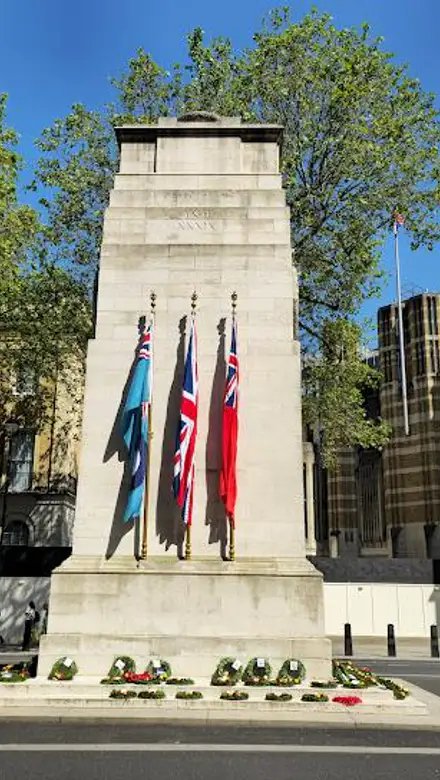
Standing solemnly in the heart of London on Whitehall, The Cenotaph is the United Kingdom’s national war memorial, dedicated to the fallen of the First and Second World Wars and later conflicts. Designed by Sir Edwin Lutyens and unveiled in 1920, this austere Portland stone monument bears the simple inscription ‘The Glorious Dead’ and serves as the focal point of the annual National Service of Remembrance. Its stark, secular form invites quiet reflection and has become a powerful symbol of national sacrifice and remembrance.
On-site amenities
 Restrooms
 Drink options
 Drinking water
 Food options
 Seating areas
 Sheltered areas
 Trash bins
 Information boards
Opening hours
- Every dayOpen 24 hours
Opening hours as listed on the venue’s Google Business Profile. Hours can change for services and special events, so check with the venue before you go.
- Address
- Whitehall, London SW1A 2ET
- Phone
- Website
Getting there
Underground
Bus
Walking
Cycling
Discover more about The Cenotaph
A National Symbol of Remembrance
Rising from the pavement of Whitehall, The Cenotaph is Britain’s principal war memorial, a place where the nation gathers to honour those who have died in service. Designed by Sir Edwin Lutyens, it was first erected as a temporary wood-and-plaster structure for the 1919 Peace Day parade, but its profound impact led to the creation of a permanent Portland stone version unveiled on Armistice Day, 11 November 1920. The word ‘cenotaph’ means ‘empty tomb’, reflecting the reality that many of the war dead had no known grave; instead, this austere pylon became a universal focus for mourning and remembrance.
Design and Meaning
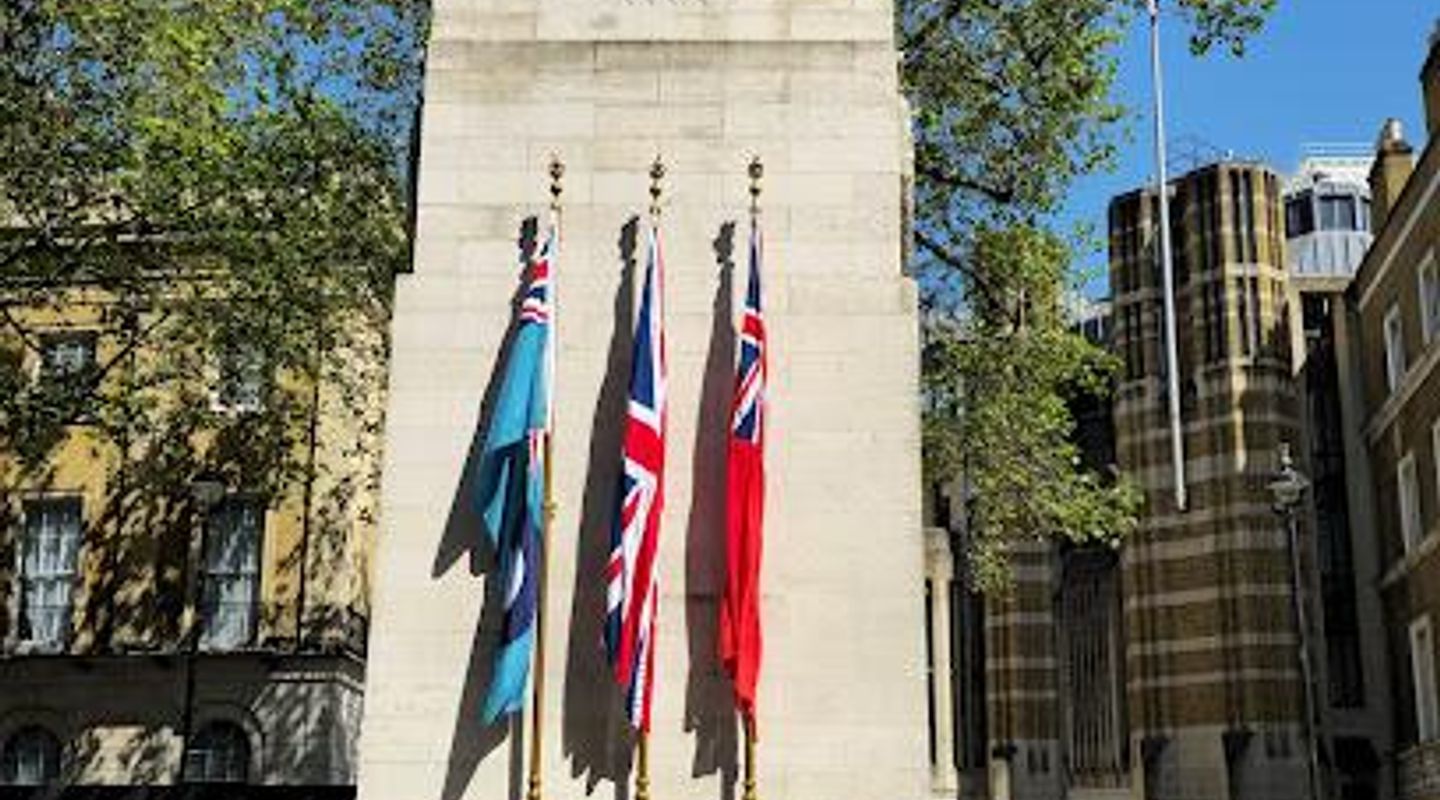
The Cenotaph’s power lies in its simplicity. Lutyens created a tall, rectangular pylon topped with a sarcophagus-like form, carved from pale Portland stone. There are no names, no overt religious symbols, and almost no decoration beyond carved wreaths, ribbons, and the words ‘The Glorious Dead’. This deliberate abstraction allows each visitor to bring their own memories and meanings to the memorial. Three Union Flags hang from each long side, and the dates of the World Wars are inscribed in Roman numerals, marking its evolution from a First World War memorial to one that also honours the dead of the Second World War and later conflicts.
Centre of National Ceremony
Each year on Remembrance Sunday, The Cenotaph becomes the heart of the National Service of Remembrance. Members of the Royal Family, political leaders, military representatives, and veterans gather here to lay wreaths of poppies, observe a two-minute silence at 11 a.m., and pay tribute to the fallen. The ceremony, watched by millions, underscores the Cenotaph’s role as the nation’s primary site of collective remembrance. Its location in the middle of Whitehall, surrounded by government buildings, reinforces its status as a symbol of national sacrifice and duty.
Visiting the Memorial
As a public monument, The Cenotaph is accessible at all times, though it is most meaningful when approached with quiet respect. Visitors often pause to read the inscription, observe the wreaths laid at its base, and reflect on the scale of loss it represents. While there are no formal visitor facilities directly at the memorial, the surrounding area of Whitehall and nearby Westminster offer information boards and context about the wars and the tradition of remembrance. The best times to visit are outside the main ceremony hours, when the atmosphere is more contemplative and personal.
Evendo Review Centre
 Google
Guest reviews
Best time to go
Quietest: Jan, Feb & Mar · before 3am
Busy times are Evendo estimates for a typical year, to help you plan. Actual crowds vary with events, school holidays and the weather.
Explore The Cenotaph on the map
A handpicked selection of must-see spots near The Cenotaph, mapped for you.
Get your free copy of our complete guide to The Cenotaph, delivered straight to you.
Everything on this page, from opening hours and how to get there to Eve’s tips and the best time to go, in one PDF you can read offline, print or share.
Already have an account? Sign in
Your The Cenotaph guide is ready.
We'll send it to · Not you? Sign out

Getting your guide ready…
We are putting together a fresh copy of the The Cenotaph guide. This can take up to a minute.
This can take a few moments. If your browser asks, choose Allow so the download can start. You'll find the guide in your Downloads folder.
Nothing happened? Download it again
Sorry, the guide is taking longer than usual. Please try again in a minute, or get it by email instead.
Unlock the best of The Cenotaph
Skip-the-line tickets, guided tours with entry, and walking tours of the area, booked in a few clicks.
 Tour with entry
London’s West End at War: Self-Guided WWII Puzzle Adventure
from $7.24 Tour with entry
Tour London's West End with the World at War Exploration Game
from $11.35 Tour with entry
London: Churchill & World War 2 Walking Tour
from $17.65 Tour with entry
PRIVATE Harry Potter Filming Location Walking Tour in London
from $25.22


Other nearby places you may find interesting
The closest places of the same kind, if this one is not quite what you had in mind.
-

-
-
-
-


Swipe for more places
More to explore near The Cenotaph

 Best experiences near The Cenotaph
 Best hotels near The Cenotaph
 Best landmarks near The Cenotaph
 Best attractions near The Cenotaph
 Best shops near The Cenotaph
 Best restaurants near The Cenotaph
 Best bars near The Cenotaph
Do you manage this location?
Take control to get all the benefits, like improved information, better appearance, and stronger visibility across AI-powered discovery.
Explore more

Explore more of London
Explore London: A city of iconic landmarks, rich history, vibrant culture, and endless attractions that cater to every taste, making it a must-visit destination.
Explore London
Explore more of United Kingdom
Discover the United Kingdom: A blend of rich history, stunning landscapes, and vibrant cities, offering a unique travel experience for every visitor.
Explore United Kingdom