Best Landmarks in Manchester
Planning a trip to Manchester? Discover the best landmarks in Manchester with history, expert tips, and routes. Free on web or the Evendo app.


The best landmarks in Manchester
Manchester offers visitors a rich tapestry of history and culture, with landmarks that showcase its industrial past and vibrant present. From the iconic Manchester Cathedral and historic Town Hall, to the cutting-edge architecture of MediaCityUK and the world-renowned Manchester Art Gallery, there is something for every interest. Take a stroll through the lively Northern Quarter, explore the fascinating Museum of Science and Industry, or catch a show at the legendary Palace Theatre. With its blend of old and new, Manchester is a city that never fails to captivate and inspire.
- Top rated
- Closest to the centre
- Price level: low to high
- Time to spend: shortest first
- A–Z
33 landmarks
-
Cathedral4.7★6,217 reviews
Manchester Cathedral
Manchester Cathedral, officially the Cathedral and Collegiate Church of St Mary, St Denys and St George, is a Grade I listed Anglican cathedral located on Victoria Street in Manchester city centre. Known for having the widest nave of any English cathedral, it showcases stunning Perpendicular Gothic architecture with intricate medieval woodwork and striking stained glass windows. Open daily with free admission, it offers rich history, spiritual significance, and welcoming guided tours.
Mon–Sat 9:00–16:00 · Sun 12:00–16:00Time to spend 1–3 hrs
-
Historical landmark4.5★1,943 reviews
St. Peter's Square
St Peter's Square is a vibrant public space in central Manchester, steeped in historical significance and surrounded by iconic landmarks such as the Central Library and Midland Hotel. Known for the 1819 Peterloo Massacre, the square today serves as a major transport hub with a Metrolink tram stop and hosts memorials, cultural venues, and a lively urban atmosphere.
Open 24 hoursTime to spend 0.5–2 hrs
-
Historical landmark4.3★595 reviews
Arch of Chinatown
Standing majestically at the heart of Manchester's Chinatown on Faulkner Street, the Chinese Imperial Arch is Europe's first and only true imperial Chinese gateway. Built in China and assembled between Christmas 1986 and Easter 1987, this ornate structure features intricate dragons, phoenixes, ceramics, and gold leaf detailing. A gift from Manchester City Council to the Chinese community, it symbolizes the city's deep cultural ties and marks one of Britain's most vibrant multicultural neighborhoods.
Open 24 hoursTime to spend 0.5–2 hrs
-
Local Government Office4.0★494 reviews
Manchester City Council
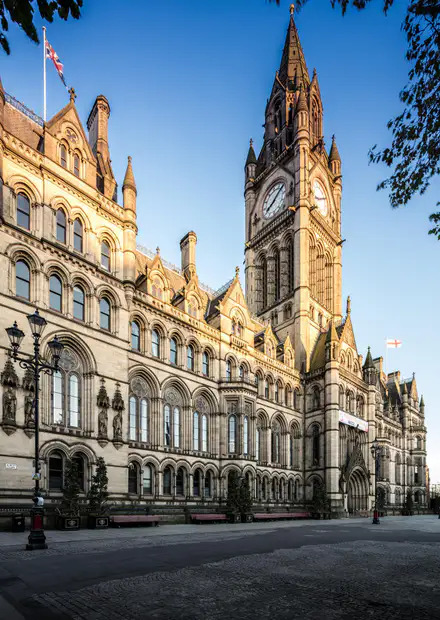
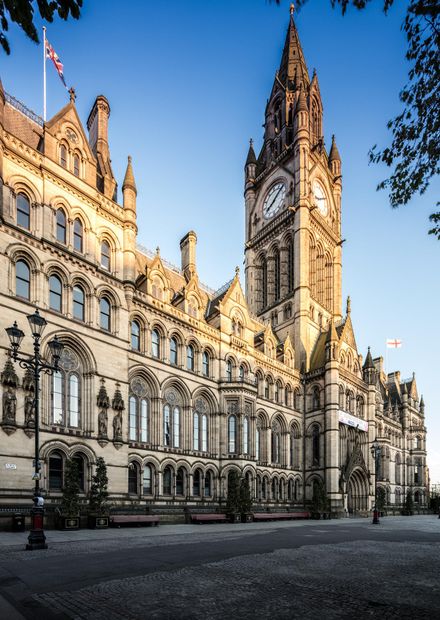
Manchester City Council operates from the iconic Manchester Town Hall located in Albert Square, a masterpiece of Victorian Neo-Gothic architecture completed in 1877. Designed by Alfred Waterhouse, the Grade I listed building features a striking 280-foot clock tower, grand ceremonial rooms adorned with murals, and rich historical significance as the city's administrative heart. Currently undergoing refurbishment, it is a symbol of Manchester’s industrial heritage and civic pride.
Mon–Fri 9:00–17:00Time to spend 0.5–2 hrs
-
Monument4.5★250 reviews
Albert Memorial
The Albert Memorial in Manchester is a striking Victorian Gothic monument dedicated to Prince Albert, Queen Victoria’s consort. Located in Albert Square, it features a marble statue of Albert beneath an ornate medieval-style canopy designed by Thomas Worthington. The memorial celebrates Albert’s passions—art, science, agriculture, and commerce—through intricate carvings and symbolic figures, making it a centerpiece of Manchester’s civic heritage.
Time to spend 0.5–1.5 hrs
-
Historical landmark4.6★105 reviews
The Undamaged Red Post Box
A striking symbol of resilience standing on Corporation Street in Manchester's city centre, this iconic red post box survived the devastating 1996 IRA bombing almost unscathed. Located just yards from where a 3,300-pound lorry bomb detonated, the pillar box and its contents remained intact—a powerful testament to human endurance. Today, a brass plaque marks the historic moment, making this modest structure one of Manchester's most poignant landmarks and a must-see for those exploring the city's complex history.
Open 24 hoursTime to spend 0.2–1 hr
-
Sculpture4.4★66 reviews
Friedrich Engels Statue
The Friedrich Engels Statue stands at Tony Wilson Place, Manchester, commemorating the German philosopher's deep ties to the city where he lived and worked for over 20 years. Originally erected in 1970 in Soviet Ukraine, the 12-foot concrete statue was rescued from abandonment and brought to Manchester in 2017 by artist Phil Collins. It symbolizes Engels’ legacy in social thought and Manchester’s radical history, positioned prominently outside the HOME arts centre in a modern urban setting.
Open 24 hoursTime to spend 0.2–1 hr
-
Historical landmark4.5★57 reviews
Canada House, Manchester
Canada House in Manchester is a striking Grade II listed former cotton warehouse located at 3 Chepstow Street. Renowned for its architectural significance and historic industrial character, this landmark reflects Manchester's rich textile industry past. Today, it stands as a distinguished heritage site in the city centre, admired for its grand facade and preserved features.
Mon–Fri 8:00–17:00Time to spend 0.5–1.5 hrs
-
Historical landmark4.4★48 reviews
Heaton Park Temple
Heaton Park Temple is a charming neoclassical rotunda located on the highest point of Heaton Park in Manchester. Designed by James Wyatt in 1800 for the 1st Earl of Wilton, this Grade II listed structure offers panoramic views over the golf course and the city skyline. Once used as an observatory, the temple is now a tranquil spot embraced by formal gardens and serves as a summer studio and astronomy venue.
Time to spend 0.5–1.5 hrs
-
Sculpture4.4★46 reviews
John Bright Statue
The John Bright Statue, a marble sculpture unveiled in 1891, stands prominently in Albert Square, Manchester. Created by Albert Bruce-Joy, it honors John Bright, a 19th-century British Radical and Liberal statesman known for his passionate advocacy of free trade, electoral reform, and social justice. The statue, set on a granite pedestal facing Manchester Town Hall, symbolizes Bright’s enduring legacy in political reform and civic responsibility.
Open 24 hoursTime to spend 0.2–1 hr


Reconstruction of Mamucium Roman Fort Wall
The Reconstruction of Mamucium Roman Fort Wall in Manchester preserves the remains of a Roman auxiliary fort established around AD 79. The site features reconstructed stone ramparts and original foundations, illustrating the fort's evolution from timber to stone over three centuries. It stands within Castlefield, the UK's first Urban Heritage Park, offering insight into Roman military strategy and early settlement that shaped Manchester's origins.
Time to spend 0.5–1.5 hrs

Rochdale Canal Lock 92
Rochdale Canal Lock 92, also known as Duke’s Lock, is the final lock on the historic Rochdale Canal in Manchester, linking it to the Bridgewater Canal. Built in the early 1800s, this lock marks a key engineering and commercial milestone in the first trans-Pennine canal, renowned for its 92 locks and vital role in industrial transport. Today it stands as a preserved landmark near Castlefield, embodying Manchester’s rich canal heritage and urban regeneration.
Time to spend 0.5–2 hrs

Free Trade Hall
The Free Trade Hall in Manchester, built between 1853 and 1856 on the historic site of the Peterloo Massacre, stands as a monument to political reform and musical innovation. Originally a public hall commemorating the repeal of the Corn Laws, it evolved into a premier concert venue hosting the Hallé Orchestra and legendary rock acts. Severely damaged in WWII, it was rebuilt and later transformed into a hotel, preserving its rich history and architectural grandeur.
Price level $$Time to spend 0.5–2 hrs

Peterloo Massacre Monument
The Peterloo Massacre Monument in Manchester commemorates the tragic 1819 event where peaceful pro-democracy protesters were violently charged by cavalry, resulting in deaths and hundreds of injuries. Designed by artist Jeremy Deller and Caruso St John Architects, the memorial features concentric stone circles engraved with victims' names and their hometowns, symbolizing the fight for political reform and democracy in the UK.
Open 24 hoursTime to spend 0.5–1.5 hrs

Statue of the Duke of Wellington
The Statue of the Duke of Wellington in Piccadilly Gardens, Manchester, is a commanding bronze monument depicting the Duke in later life. Standing over 13 feet tall on a large granite pedestal, it features symbolic figures representing wisdom and valor, commemorating Wellington’s military and political legacy in the city’s vibrant heart.
Open 24 hoursTime to spend 0.2–1 hr

Murrays' Mill
Murrays' Mills in Ancoats, Manchester, is the world's oldest surviving urban steam-powered cotton spinning factory, established in 1797 by Scottish brothers Adam and George Murray. Once the largest mill complex globally, it played a pivotal role in the Industrial Revolution, employing over 1,300 workers at its peak. Today, the historic red-brick buildings have been sensitively restored and repurposed as residential apartments, preserving a vital piece of Manchester's industrial heritage.
Price level $$Time to spend 1–2 hrs

Victory Over Blindness
Victory Over Blindness is a striking bronze sculpture situated outside Manchester Piccadilly station, commemorating First World War veterans who suffered blindness in combat. Created by Johanna Domke-Guyot and unveiled in 2018, it depicts seven life-sized blind soldiers guiding one another at eye level, fostering a powerful connection with passers-by and honoring the resilience of wounded servicemen.
Open 24 hoursTime to spend 0.2–1 hr

Heaton Park Papal Monument
A simple yet profound granite monument nestled on a hillside within Manchester's sprawling Heaton Park, commemorating Pope John Paul II's historic visit on 31 May 1982. This sacred landmark marks the site where over 200,000 faithful gathered for an outdoor Mass during which the Pope ordained twelve priests—a momentous occasion that represented the first papal visit by a reigning pontiff to the United Kingdom. The monument stands as a testament to faith, unity, and reconciliation during a pivotal moment in modern religious history.
Open 24 hoursTime to spend 0.5–2 hrs

The Old Quadrangle
The Old Quadrangle is the historic heart of the University of Manchester, featuring the iconic Whitworth Hall and surrounding Victorian Gothic Revival buildings designed by Alfred Waterhouse. This distinguished courtyard area blends academic heritage with architectural grandeur, hosting ceremonies and events within its neo-gothic sandstone structures dating from the late 19th century.
Time to spend 0.5–2 hrs

Lowry Footbridge
A striking Victorian railway footbridge spanning the Irwell Valley between Cheetham Hill and Collyhurst in Manchester, the Lowry Footbridge stands as an iconic monument to the city's industrial heritage. Built in the 19th century to connect two working-class neighborhoods, this elegant iron structure has become an architectural landmark and cultural symbol, famously depicted in the paintings of artist L.S. Lowry. Today, it remains a popular destination for photographers, history enthusiasts, and those seeking to understand Manchester's transformation from industrial powerhouse to modern metropolis.
Open 24 hoursTime to spend 0.5–2 hrs

Dalton Entry
Dalton Entry is a narrow, historic passageway in Manchester city centre, named after John Dalton, the pioneering 19th-century scientist who revolutionized atomic theory. This hidden alley near John Dalton Street and the Arndale Centre features artistic metalwork celebrating Dalton’s contributions to chemistry and meteorology, offering a unique glimpse into Manchester’s rich scientific heritage and Victorian urban fabric.
Time to spend 0.2–1 hr

Castlefield historical zone
Castlefield, located in the southwestern part of central Manchester, is a unique urban heritage area where Roman ruins meet industrial canals and modern city life. This conservation zone features the remains of the Roman fort Mamucium, historic waterways including the Bridgewater Canal, and a vibrant mix of museums, bars, and green spaces. It offers a tranquil yet lively atmosphere ideal for cultural exploration, leisure walks, and enjoying Manchester’s rich history and contemporary urban culture.
Open 24 hoursPrice level $$Time to spend 1–4 hrs

Stretford Weir
Stretford Weir is a historic landmark located on the River Mersey in Sale, Stretford, Manchester. Known for its scenic riverside setting and significance in local flood management, it offers visitors a charming spot for hiking and nature walks amidst the urban landscape. The weir plays a role in controlling river flow and flood risk in the area, surrounded by peaceful waterside views and green spaces.
Time to spend 0.5–2 hrs

Manchester Old Town Hall Colonnade
The Manchester Old Town Hall Colonnade is a neoclassical architectural relic originally designed by Francis Goodwin in 1822 as the façade of Manchester's first Town Hall on King Street. Though the original building was demolished in 1912, the iconic colonnade was painstakingly dismantled and relocated to Heaton Park, where it stands today as a testament to Manchester's 19th-century civic pride and architectural heritage.
Time to spend 0.5–1.5 hrs

Sky Hook Statue 1
The Skyhook Statues are a striking pair of 18-metre high sculptures by artist Brian Fell, located at the northern entrance of Trafford Park in Manchester. These monumental steel works celebrate the area's industrial heritage and engineering prowess, symbolizing the region's historic role in manufacturing and innovation. Their name references a classic workplace joke, adding a touch of local humor to this iconic landmark.
Open 24 hoursTime to spend 0.5–1.5 hrs

Mulberry Passage
Mulberry Passage is a narrow historic alleyway in Manchester’s city centre, renowned for its artistic homage to John Dalton, the pioneering 19th-century scientist. Also known as Dalton’s Entry or Five Parts Alley, this passageway features intricate metalwork and artworks inspired by Dalton’s atomic theory and scientific legacy. Nestled near St Mary’s Roman Catholic Church, it offers a unique glimpse into Manchester’s rich industrial and scientific heritage.
Time to spend 0.5–1.5 hrs

John Dalton Statue
The John Dalton Statue in Manchester honors the pioneering chemist and physicist who formulated the atomic theory and first described colour blindness, known as Daltonism. This seated bronze statue by William Theed, originally placed in Piccadilly Gardens and relocated in 1966, stands as a tribute to Dalton’s lasting impact on science and Manchester’s heritage.
Open 24 hoursTime to spend 0.2–1 hr

Remains of eastern wall of the Roman fort
Located in Manchester's Castlefield district, the remains of the eastern wall of the Roman fort Mamucium mark a significant archaeological and historical site. Established around 79 AD, Mamucium was a strategically important Roman fort guarding key trade routes and rivers. Though much of the original fort was lost to industrial development, parts of the stone fortifications, including reconstructed sections and foundations, remain visible today, offering insight into Manchester’s Roman origins and early settlement.
Time to spend 0.5–1.5 hrs

The Queen's Arch
The Queen's Arch stands prominently on Oxford Road in Manchester as a historic sandstone gateway to the University of Manchester. Designed by Alfred Waterhouse, this Gothic Revival arch marks the entrance to the university's Old Quadrangle, symbolizing over a century of academic tradition and architectural grandeur. It invites visitors to explore the storied campus and its blend of historic and modern educational landmarks.
Time to spend 0.5–1.5 hrs

The Beacon Of Hope
The Beacon of Hope is a poignant memorial located at 41 Sackville Street in Manchester, dedicated to people living with HIV/AIDS and those who have lost their lives to the disease. Nestled within Sackville Gardens, this inspiring monument symbolizes hope, resilience, and the strength of community, offering visitors a tranquil green space to reflect and honor the ongoing fight against HIV/AIDS.
Open 24 hoursTime to spend 0.5–1.5 hrs

Robert Owen Statue
The Robert Owen Statue stands outside the Co-operative Bank headquarters in Manchester, commemorating Owen’s pioneering role as the founder of the co-operative movement and a social reformer who transformed labor conditions in the 19th century. This bronze statue is a replica of the original in Owen’s Welsh hometown, symbolizing his lasting legacy in social justice and cooperative ideals.
Open 24 hoursTime to spend 0.2–1 hr

LS Lowry birthplace
The LS Lowry Birthplace at 29 Shrewsbury Street in Old Trafford, Manchester, marks the early home of Laurence Stephen Lowry, one of Britain's most iconic painters. Known for his distinctive industrial scenes and matchstick figures, Lowry’s origins in this working-class area deeply influenced his art. Though the house itself is modest, it stands as a historical landmark celebrating the roots of a key figure in British modern art, located near the vibrant cultural and sporting heart of Manchester.
Open 24 hoursTime to spend 0.5–1 hr

Connaught Building
The Connaught Building, located at 35 George Street in Manchester, is a distinguished historical landmark showcasing early 20th-century architecture. It reflects Manchester's rich cultural heritage and offers visitors a glimpse into the city's architectural past amid a vibrant urban setting. Its striking façade and central city location make it a notable point of interest for history and architecture enthusiasts.
Time to spend 0.5–1.5 hrs
Explore Manchester on the map
A handpicked selection of must-see spots in Manchester, mapped for you.
More about Manchester
Manchester travel guide
Manchester blends industrial heritage, world-class football, music history, galleries and Northern Quarter culture with lively food, shopping and nightlife.
Tell me more about ManchesterMore to explore in Manchester

 Best attractions in Manchester

 Best shops in Manchester

 Best bars in Manchester

 Best restaurants in Manchester

 Best nightclubs in Manchester

 Best experiences in Manchester

 Best hotels in Manchester

 All neighbourhoods in Manchester
Explore more

Explore more of United Kingdom
Discover the United Kingdom: A blend of rich history, stunning landscapes, and vibrant cities, offering a unique travel experience for every visitor.
Explore United Kingdom
Getting your guide ready…
We are putting together a fresh copy of the Manchester guide. This can take up to a minute.
This can take a few moments. If your browser asks, choose Allow so the download can start. You'll find the guide in your Downloads folder.
Nothing happened? Download it again
Sorry, the guide is taking longer than usual. Please try again in a minute, or get it by email instead.