

Quoyness Chambered Cairn Travel Guide
Free Guide: Explore the majestic 5,000-year-old Neolithic Quoyness Chambered Cairn on Sanday, a remarkable burial site revealing ancient Orcadian life and architecture.


A brief summary of Quoyness Chambered Cairn
Explore the majestic 5,000-year-old Neolithic Quoyness Chambered Cairn on Sanday, a remarkable burial site revealing ancient Orcadian life and architecture.
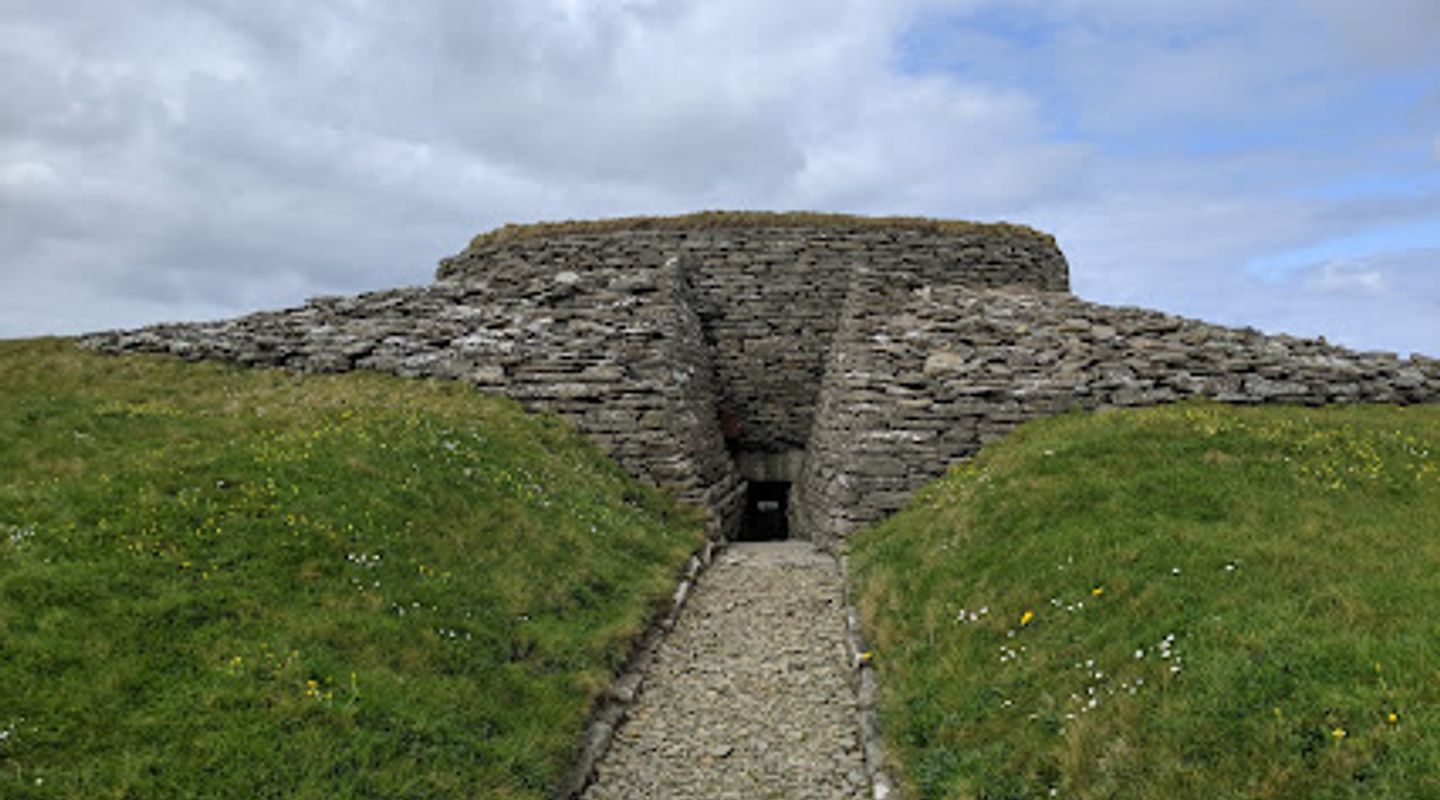
Quoyness Chambered Cairn, located on the island of Sanday in Orkney, Scotland, is a remarkable Neolithic burial monument dating back over 5,000 years. This large chambered cairn features an imposing entrance and a central chamber standing 4 meters high, surrounded by six side cells. Its 'stripped' appearance reveals the intricate stonework and internal structure, offering a rare glimpse into ancient Orcadian life and death rituals. The site sits on a scenic coastal headland, surrounded by Bronze Age mounds and wildlife habitats.
On-site amenities
 Restrooms
 Information boards
 Seating areas
 Trash bins
Opening hours
- Every dayOpen 24 hours
Opening hours as listed on the venue’s Google Business Profile. Hours can change for services and special events, so check with the venue before you go.
- Address
- Sanday, Orkney
- Website
Getting there
Car and Walking
Ferry and Local Transport
Public Transport and Walking
Discover more about Quoyness Chambered Cairn
Ancient Origins and Archaeological Significance
Quoyness Chambered Cairn is a Neolithic burial monument constructed approximately between 3500 and 2500 BC. It belongs to a group of 'Maeshowe-type' cairns found in Orkney, characterized by their sophisticated dry-stone construction and complex internal layouts. The tomb was used for communal burial, with excavations revealing remains of at least ten adults and five children, alongside stone and bone tools. The monument’s original mound has largely eroded, but the remaining structure, including corbelled roofs and concentric revetment walls, showcases the advanced architectural skills of early Orcadian society.
Architectural Features and Visitor Experience
Visitors approach Quoyness via a coastal path, culminating in a 9-meter-long entrance passage that requires crawling to access the central chamber. This main chamber impressively retains its original height of about 4 meters and is surrounded symmetrically by six smaller side cells. The cairn’s current exposed form, a result of mid-20th-century consolidation, allows visitors to appreciate the internal stonework and stepped profile, which would have originally been covered by a grassy mound. The tomb’s design intriguingly resembles the houses of the living, hinting at Neolithic beliefs about the afterlife.
Setting and Natural Environment
Situated on the eastern shore of Els Ness, a remote promontory on Sanday, the cairn overlooks the sea and is surrounded by a landscape rich in archaeological and natural interest. Nearby Bronze Age mounds and eroded Neolithic remains add historical depth to the area. The coastal environment supports diverse wildlife including otters, seals, lapwings, curlews, and oystercatchers, making the site a haven for nature enthusiasts as well as history lovers.
Access and Surrounding Attractions
The cairn is accessible by a walk of about 1 km over flat, sometimes muddy and rocky farmland from a parking area north of Quoyayre. Visitors should be prepared to kneel and crawl through the entrance passage, which can be wet. The site is fenced and well maintained, with information boards available. Nearby, the Sanday Heritage Centre and Croft House provide insights into island life, while the island’s Craft Trail showcases local artisans. The area’s quiet and remote nature enhances the atmospheric experience of exploring this ancient monument.
Historical Research and Conservation
First excavated in 1867 by antiquarians James Farrer and George Petrie, Quoyness was initially misinterpreted as a broch reused for burial. Subsequent research has clarified its Neolithic origins and importance. The cairn underwent consolidation in the 1950s to stabilize the structure and reveal its internal layout. It remains a key example of Orcadian prehistoric architecture and a protected historic environment site, contributing to the understanding of early agricultural communities in Scotland.
Cultural Legacy and Interpretations
Quoyness Chambered Cairn stands as a testament to the complex spiritual and social lives of Neolithic people. Its architectural resemblance to dwellings suggests a symbolic connection between life and death, reflecting beliefs in an afterlife. The site’s prominence on the headland indicates its importance within the ancient landscape, possibly serving as a territorial marker or ceremonial focal point. Today, it offers a profound connection to Scotland’s distant past and the enduring legacy of its earliest inhabitants.
Evendo Review Centre
 Google
Guest reviews
Best time to go
Quietest: Jan, Feb & Dec · before 6am or at 8pm
Busy times are Evendo estimates for a typical year, to help you plan. Actual crowds vary with events, school holidays and the weather.
Explore Quoyness Chambered Cairn on the map
A handpicked selection of must-see spots near Quoyness Chambered Cairn, mapped for you.
Get your free copy of our complete guide to Quoyness Chambered Cairn, delivered straight to you.
Everything on this page, from opening hours and how to get there to Eve’s tips and the best time to go, in one PDF you can read offline, print or share.
Already have an account? Sign in
Your Quoyness Chambered Cairn guide is ready.
We'll send it to · Not you? Sign out

Getting your guide ready…
We are putting together a fresh copy of the Quoyness Chambered Cairn guide. This can take up to a minute.
This can take a few moments. If your browser asks, choose Allow so the download can start. You'll find the guide in your Downloads folder.
Nothing happened? Download it again
Sorry, the guide is taking longer than usual. Please try again in a minute, or get it by email instead.
Other nearby places you may find interesting
The closest places of the same kind, if this one is not quite what you had in mind.
-
-
-
-
-


Swipe for more places
More to explore near Quoyness Chambered Cairn
-
 Best experiences near Quoyness Chambered Cairn
-
 Best hotels near Quoyness Chambered Cairn
-
 Best landmarks near Quoyness Chambered Cairn
-
 Best attractions near Quoyness Chambered Cairn
-
 Best shops near Quoyness Chambered Cairn
-
 Best restaurants near Quoyness Chambered Cairn
-
 Best bars near Quoyness Chambered Cairn


Do you manage this location?
Take control to get all the benefits, like improved information, better appearance, and stronger visibility across AI-powered discovery.
Explore more

Explore more of Orkney
Discover Orkney: A magical blend of ancient history, stunning landscapes, and vibrant local culture in Scotland's enchanting archipelago.
Explore Orkney
Explore more of United Kingdom
Discover the United Kingdom: A blend of rich history, stunning landscapes, and vibrant cities, offering a unique travel experience for every visitor.
Explore United Kingdom
