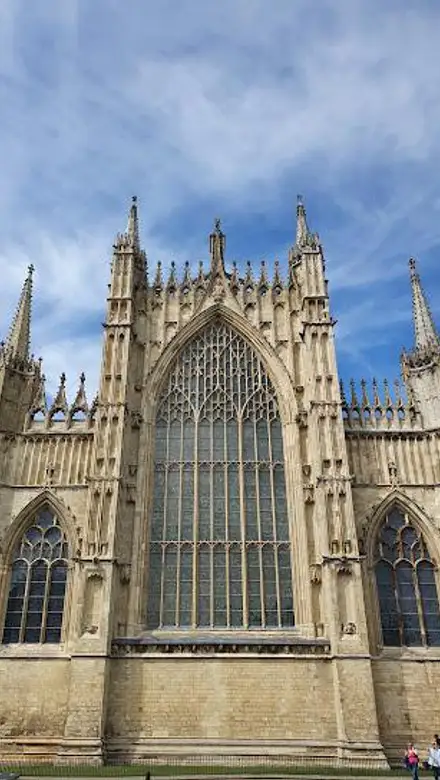
York Minster, York Travel Guide
Free Guide: England's largest Gothic cathedral, a 250-year architectural triumph housing Britain's finest medieval stained glass.


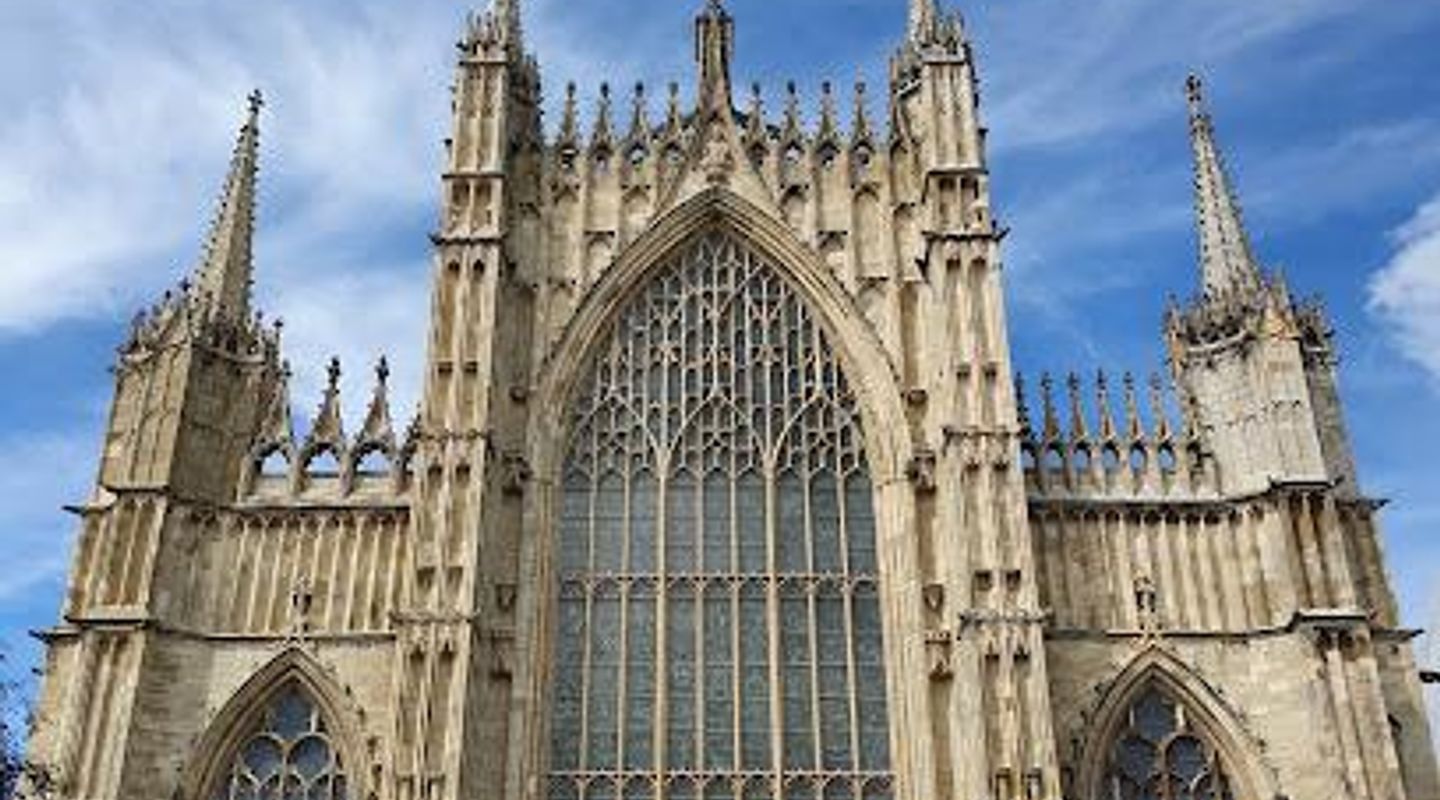
A brief summary of York Minster
England's largest Gothic cathedral, a 250-year architectural triumph housing Britain's finest medieval stained glass.
York Minster stands as England's largest Gothic cathedral north of the Alps, a breathtaking masterpiece of medieval architecture spanning 158 meters in length. Built over approximately 250 years beginning in 1220 under Archbishop Walter de Gray's vision, this magnificent structure showcases soaring Gothic vaults, intricate stone carvings, and Britain's richest collection of medieval stained glass. The cathedral's most celebrated features include the Great East Window—larger than a tennis court—and the distinctive Great West Window nicknamed 'the Heart of Yorkshire'. As the seat of the Archbishop of York, the Minster remains a functioning place of worship while welcoming thousands of visitors annually to marvel at its architectural splendor and spiritual significance.
On-site amenities
 Restrooms
 Drink options
 Food options
 Seating areas
 Information boards
 Visitor centre
Opening hours
- Mon–Sat9:30 am–4 pm
- Sun12:45 pm–3:15 pm
Opening hours as listed on the venue’s Google Business Profile. Hours can change for services and special events, so check with the venue before you go.
- Address
- Deangate, York YO1 7HH
- Phone
- Website
Getting there
Public Transport
Walking
Parking
Taxi or Ride-Share
Discover more about York Minster
A Cathedral Born from Centuries of Vision and Ambition
York Minster's story begins long before the Gothic masterpiece visitors see today. The site itself holds profound historical significance, stretching back to 627 when a small wooden church was constructed for the baptism of Edwin, king of Northumbria—a pivotal moment in England's transition from paganism to Christianity. Over subsequent centuries, successive churches rose and fell on this sacred ground, each destroyed and rebuilt as invasions and conflicts reshaped the landscape. The Normans, having conquered York in 1069, replaced the Anglo-Saxon structure with a grand cathedral of their own design, establishing the vast cross-shaped footprint that would anchor all future construction. The remains of this Norman cathedral—its transepts and nave walls—still survive beneath the current building, visible in the Minster's Undercroft museum.In 1215, Archbishop Walter de Gray arrived with an ambitious vision: to transform York Minster into one of the greatest churches in the kingdom. Beginning in 1220, he initiated a rebuilding project that would consume the next 250 years. This was no swift undertaking. Progress was repeatedly interrupted by financial constraints, Scottish wars, plague, political upheaval, and structural crises. For decades at a time, the liturgy was performed against a backdrop of scaffolding and half-built masonry. Yet this extended timeline allowed successive generations of craftsmen to refine their vision, creating a building of unparalleled sophistication.
The Architectural Triumph of the Gothic Vision
The earliest Gothic work, completed between 1225 and 1255, involved the dramatic rebuilding and expansion of the Norman cathedral's two transepts. These massive structures set the tone for what would follow. The Chapter House, finished in the early 1290s, represents a revolutionary achievement: an octagonal meeting room whose vaulted ceiling is supported not by a central column—the traditional solution—but by ingenious timber roof structures. This engineering marvel was unique at the time of its creation and remains a testament to medieval ingenuity.Work on the Nave began in 1291 and continued for more than 60 years, finally completing around 1360. The finished product is staggering in scale: 63 meters long, 32 meters wide, and 29 meters high, making it the highest and widest medieval Gothic nave in any English cathedral. The Nave was never intended primarily for daily worship; rather, its vast space was designed for spectacular processions and ceremonial gatherings. The Great West Window, completed by 1340, dominates the western end with its distinctive tracery forming the shape of a heart—earning it the affectionate nickname 'the Heart of Yorkshire'. This window illustrates the authority and purpose of the Church through its intricate stonework, though many of the statues lining the triforium lost their heads during the Reformation in the 16th century.Following the Nave's completion, work began on the East End in 1361, followed by the Quire between 1394 and 1420. An unexpected crisis struck in 1405 when a section of the Central Tower collapsed during a storm. The tower, which housed the Minster's bells, required urgent reconstruction. King Henry IV dispatched his own master mason, William of Colchester, to oversee the work, and he remained involved until his death in 1420. The tower was eventually capped at its present height of 60 meters around 1470, as the foundations proved unable to support the originally intended greater height.
Stained Glass: A Luminous Treasury of Medieval Artistry
York Minster houses Britain's richest and most extensive collection of medieval stained glass, a distinction that sets it apart from every other cathedral in the nation. The Great East Window, glazed by John Thornton of Coventry between 1405 and 1408, is the largest expanse of medieval stained glass in existence—larger than a tennis court. This monumental work showcases intricate and vibrant designs of breathtaking complexity. The window's fine details, far too tiny to see from the cathedral floor, were originally intended for God's eyes only, yet modern conservation efforts and interactive exhibits now allow visitors to zoom in on each panel and explore the stories and symbols hidden within.The Five Sisters Window in the north transept, dating to around 1260, displays exquisite grisaille glass—delicate geometric patterns rendered in shades of grey and white. This window represents a different aesthetic approach yet demonstrates the same mastery of the glazier's craft. The Rose Window, damaged by lightning during a fire in 1984, has since been meticulously restored and strengthened. These windows collectively represent centuries of artistic achievement and technical innovation, their preservation a triumph of modern conservation science.
Architectural Details and Spiritual Atmosphere
Beyond the grand scale, York Minster captivates through its intricate details. The beautifully carved choir stalls function as giant sound scoops, magnifying the thunderous pipes of the organ into a transcendent acoustic experience. The Quire Screen, mounted with fifteen statues of Kings of England from William I to Henry VI, commands attention with its meticulously carved stonework. The Chapter House's canopies are adorned with fanciful carvings—strange heads and animals—each possessing remarkable character and personality, offering glimpses into medieval society and the craftsmen's imagination.The Undercroft museum, accessed through the south transept, extends the visitor's journey backward through time. Here, actual remains of the Roman fort's basilica are visible through a see-through floor, and patches of Roman frescoes from the basilica's anteroom provide tangible connection to the site's pre-Christian past. This layering of history—Roman fortress, Anglo-Saxon church, Norman cathedral, Gothic masterpiece—creates a profound sense of continuity and transformation.
Completion and Enduring Legacy
On 3 July 1472, after more than 250 years of construction, York Minster was judged sufficiently complete for re-consecration. The twin west towers had been finished, and the enormous Great Peter bell, installed in 1845, would eventually boom out from the northern tower every day. The cathedral survived Henry VIII's religious upheaval—the king, needing a northern capital for his Anglican church, spared the great Minster when he destroyed nearly everything else Catholic in England. Serious fires in 1829 and 1840 required restoration, and lightning struck the south transept in 1984, yet the cathedral has endured and been carefully conserved.Today, York Minster remains the seat of the Archbishop of York, the second-highest office in the Church of England. It hosts regular services, daily prayers, and weekly choral performances, maintaining its spiritual function while welcoming thousands of pilgrims and visitors annually. The cathedral's stonemasons continue to employ skills and techniques passed down through centuries from their medieval predecessors, ensuring that this architectural treasure is preserved for future generations.
Evendo Review Centre
 Google
Guest reviews
Best time to go
Quietest: Jan, Feb & Mar · before 7am or from 8pm
Busy times are Evendo estimates for a typical year, to help you plan. Actual crowds vary with events, school holidays and the weather.
Explore York Minster on the map
A handpicked selection of must-see spots near York Minster, mapped for you.
Get your free copy of our complete guide to York Minster, delivered straight to you.
Everything on this page, from opening hours and how to get there to Eve’s tips and the best time to go, in one PDF you can read offline, print or share.
Already have an account? Sign in
Your York Minster guide is ready.
We'll send it to · Not you? Sign out

Getting your guide ready…
We are putting together a fresh copy of the York Minster guide. This can take up to a minute.
This can take a few moments. If your browser asks, choose Allow so the download can start. You'll find the guide in your Downloads folder.
Nothing happened? Download it again
Sorry, the guide is taking longer than usual. Please try again in a minute, or get it by email instead.
Unlock the best of York Minster
Skip-the-line tickets, guided tours with entry, and walking tours of the area, booked in a few clicks.



Other nearby places you may find interesting
The closest places of the same kind, if this one is not quite what you had in mind.
-
-
-
-
-


Swipe for more places
More to explore near York Minster

 Best experiences near York Minster
 Best hotels near York Minster
 Best landmarks near York Minster
 Best attractions near York Minster
 Best shops near York Minster
 Best restaurants near York Minster
 Best bars near York Minster
Do you manage this location?
Take control to get all the benefits, like improved information, better appearance, and stronger visibility across AI-powered discovery.
Explore more
Explore more of York
Explore York, a captivating city where medieval history meets modern charm. Discover York Minster, The Shambles, and a vibrant food scene in this must-visit UK destination.
Explore York
Explore more of United Kingdom
Discover the United Kingdom: A blend of rich history, stunning landscapes, and vibrant cities, offering a unique travel experience for every visitor.
Explore United Kingdom