

Free East Bay Travel Guide & Mobile App
Explore East Bay with free travel guides. Discover regional history, expert tips, proposed trips, and audio guides on web or mobile app.


Explore California's East Bay for Oakland culture, Berkeley food, bay wetlands, redwood trails, historic towns and Livermore Valley vineyards.
Read more about East Bay
Getting to and around East Bay
How to get there
Transportation
Top city travel guides in East Bay
The cities of East Bay, and the easiest places to base yourself.
-

-

-

-

-

-


Swipe for more cities
Destinations in East Bay
Resorts, valleys and scenic spots worth a trip of their own.

Swipe for more destinations
Best attractions in East Bay
The East Bay's attractions range from major urban cultural institutions to open landscapes within a short drive of the cities. Oakland offers museums, galleries, historic neighbourhoods, the Oakland Zoo and the waterfront at Jack London Square, while Berkeley combines university culture, performing arts, independent bookshops and access to Tilden Regional Park. Richmond's waterfront includes the Rosie the Riveter/World War II Home Front National Historical Park and views across San Francisco Bay. Regional parklands provide walking, cycling, birdwatching and woodland trails, particularly in the Oakland and Berkeley hills, at Redwood Regional Park and around Mount Diablo. Southern communities such as Hayward and Fremont provide access to bay wetlands and foothill landscapes, while the Livermore Valley adds vineyards, tasting rooms and agricultural scenery. Visitors should expect a varied rather than concentrated attraction scene, with public transport most useful in the urban corridor and a car or carefully planned excursion more practical for distant parks, wineries and inland viewpoints.
-
Tourist attraction
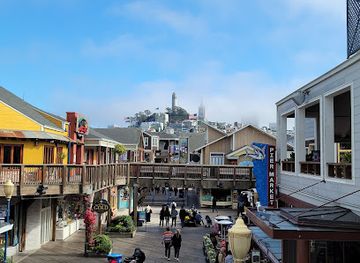
PIER 39
Explore the vibrant atmosphere of PIER 39, a San Francisco landmark featuring shopping, dining, and stunning bay views.
-
Amusement park
California's Great America
Experience the thrill of California's Great America, where endless fun and excitement await for visitors of all ages in the heart of Santa Clara.
-
Zoo
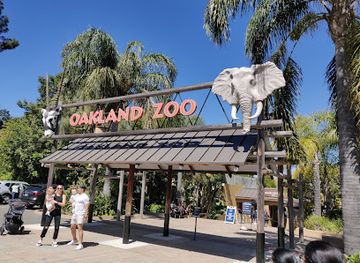
Oakland Zoo
Discover the wonders of wildlife at Oakland Zoo, a family-friendly destination with diverse animal exhibits and breathtaking landscapes.
-
Tourist attraction
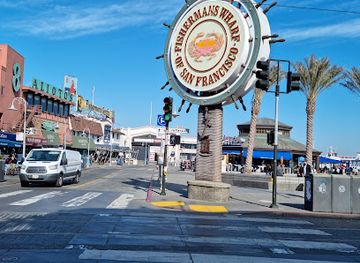
Fisherman's Wharf
Experience the vibrant atmosphere, delectable seafood, and stunning views at Fisherman's Wharf, a must-visit destination in San Francisco.

Best landmarks in East Bay
The East Bay's most recognisable landmarks express its relationship with the bay, industry, education and the surrounding hills. Oakland's Tribune Tower is a notable Art Deco-era civic and commercial landmark, while the Port of Oakland and the Bay Bridge approaches reveal the scale of the region's maritime infrastructure. In Berkeley, the University of California campus and the Campanile form a defining architectural presence, with the Berkeley Hills rising behind the city. Richmond's Ford Assembly Plant, now associated with the Craneway waterfront complex, recalls the area's industrial and wartime manufacturing history, while the Rosie the Riveter memorial landscape interprets the home-front experience. The historic USS Potomac, preserved at Oakland's waterfront, represents the East Bay's maritime connections. Away from the built environment, the redwood groves of Redwood Regional Park, the ridgeline of the Berkeley Hills and the distinctive summit landscape of Mount Diablo serve as major natural reference points. Together these places show a region shaped by infrastructure and industry as much as by its parks and scenery.
-
Tourist attraction
PIER 39
Experience the best of San Francisco at PIER 39, where shopping, dining, and stunning views come together in a vibrant waterfront setting.
-
Historical place
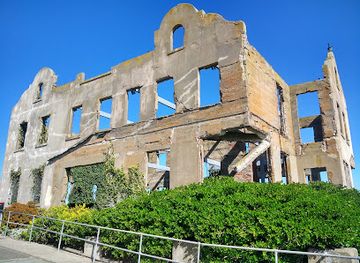
Alcatraz Island
Discover the rich history of Alcatraz Island, a former prison turned national park, offering stunning views and captivating stories of escape and survival.
-
Historical landmark
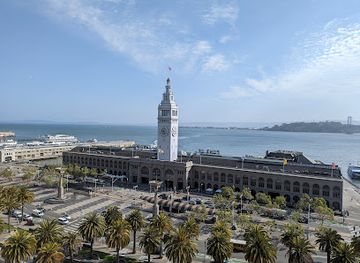
Ferry Building
Explore the vibrant Ferry Building in San Francisco, where history meets culinary excellence and breathtaking bay views await every visitor.
-
Historical landmark
Union Square
Explore the vibrant heart of San Francisco at Union Square, a historic landmark filled with shopping, dining, and cultural experiences.


Explore East Bay on the map
Plan your trip on one map. See where the top cities, national parks and sights are, and book hotels and experiences in a few clicks.
Best hotels in East Bay
Best restaurants in East Bay
East Bay dining reflects the region's multicultural population, agricultural surroundings and long relationship with the Pacific and San Francisco Bay. Oakland and Berkeley have especially broad selections, from neighbourhood restaurants and bakeries to produce-led dining, East and Southeast Asian cuisines, Mexican and Latin American food, Middle Eastern cooking, vegetarian menus and longstanding African American culinary traditions. Berkeley's university setting supports cafés, specialist food shops and a strong interest in seasonal produce, while Oakland's districts offer everything from casual counter dining to more formal restaurants. Farmers' markets across Alameda and Contra Costa counties are useful for fruit, vegetables, flowers, baked goods and prepared foods. Inland communities bring a different emphasis, including wineries, breweries, ranch-country produce and relaxed dining in the Livermore Valley. California wines, craft beer and locally grown ingredients are prominent, but the East Bay's culinary identity is best understood through its diversity rather than a single signature dish.
-
Steak
Texas Roadhouse
Experience hearty American cuisine with hand-cut steaks and famous bread rolls at Texas Roadhouse in Union City.
-
Japanese
Yoshi's
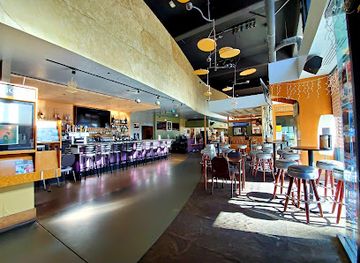
Experience exquisite Japanese cuisine paired with captivating live jazz at Yoshi's in Oakland, a cultural gem on the waterfront.
-
New American
Homeroom
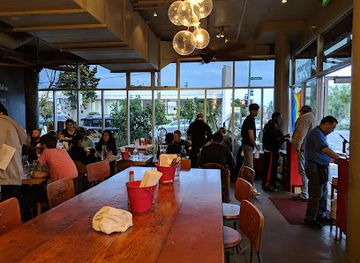
Experience the best of New American cuisine at Homeroom in Oakland – a haven for mac and cheese lovers with a cozy atmosphere.
-
American
Skates On The Bay
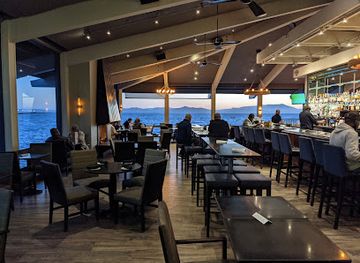
Experience exquisite American cuisine and breathtaking waterfront views at Skates On The Bay in Berkeley.

Best bars in East Bay
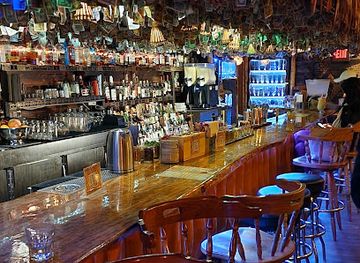
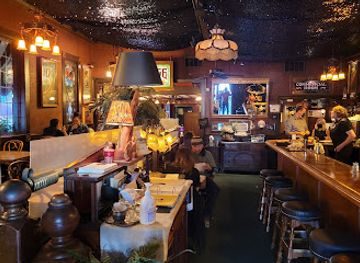
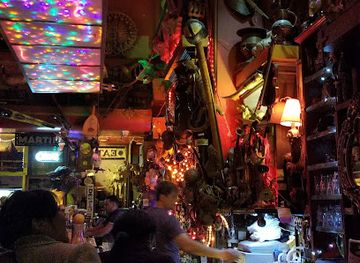
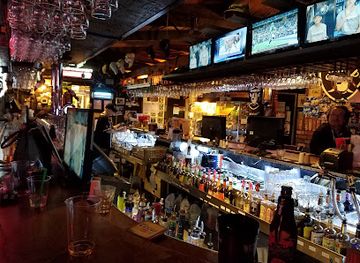
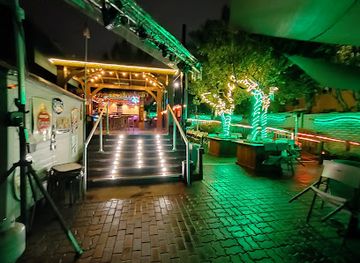
Nightlife is concentrated in Oakland, Berkeley and selected waterfront districts rather than spread evenly across the entire East Bay. Oakland offers cocktail bars, breweries, live music, dance venues and late-opening restaurants, with evening activity varying substantially between neighbourhoods. Berkeley's scene is shaped by its university population, theatres, performance spaces, pubs and smaller bars, while the waterfront at Jack London Square has restaurants and places for an evening drink. Richmond and Alameda tend to offer a more local-scale mix of pubs, breweries, restaurants and occasional live music. In Walnut Creek and other Contra Costa centres, dining, bars and cultural performances form the main evening options. The Livermore Valley is better known for tasting rooms and restaurants than nightclubs, and many rural or suburban areas become quiet earlier, so check current arrangements and plan transport before drinking.
-
Bar
Smuggler's Cove
Experience the spirit of adventure at Smuggler's Cove, San Francisco's enchanting pirate-themed cocktail bar with unique drinks and captivating decor.
-
Tiki bar
Forbidden Island
Discover the vibrant atmosphere and creative cocktails at Forbidden Island, Alameda's premier tiki bar, where every sip transports you to a tropical paradise.
-
American
The Fat Lady Bar & Restaurant
Experience a delightful blend of American cuisine and local charm at The Fat Lady Bar & Restaurant in Oakland, California.
-
Cocktail bar
Cafe Van Kleef
Experience the vibrant cocktail culture at Cafe Van Kleef in Downtown Oakland, where eclectic drinks meet a lively atmosphere.

Best nightclubs in East Bay
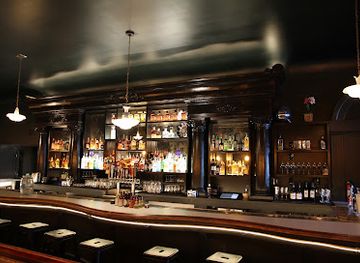
Nightlife is concentrated in Oakland, Berkeley and selected waterfront districts rather than spread evenly across the entire East Bay. Oakland offers cocktail bars, breweries, live music, dance venues and late-opening restaurants, with evening activity varying substantially between neighbourhoods. Berkeley's scene is shaped by its university population, theatres, performance spaces, pubs and smaller bars, while the waterfront at Jack London Square has restaurants and places for an evening drink. Richmond and Alameda tend to offer a more local-scale mix of pubs, breweries, restaurants and occasional live music. In Walnut Creek and other Contra Costa centres, dining, bars and cultural performances form the main evening options. The Livermore Valley is better known for tasting rooms and restaurants than nightclubs, and many rural or suburban areas become quiet earlier, so check current arrangements and plan transport before drinking.
-
Night club
The Valencia Room
Discover San Francisco's nightlife at The Valencia Room, a lively venue blending dining, dancing, and live music in the vibrant Mission District.
-
Sports bar
Rickey's Sports Lounge
Experience the excitement of sports at Rickey's Sports Lounge, where delicious food, drinks, and entertainment come together for a fun-filled outing.
-
Bar
The World Famous Turf Club
Discover vibrant nightlife and creative cocktails at The World Famous Turf Club in Hayward, California - a hotspot for locals and tourists alike.
-
Lounge
Level 13 Ultra Lounge
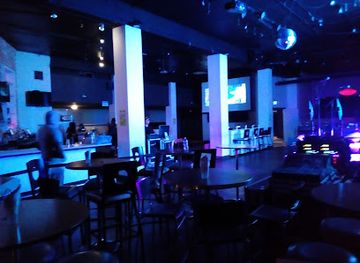
Experience the vibrant nightlife of Downtown Oakland at Level 13 Ultra Lounge, where chic ambiance meets an exciting social scene.
Best shops in East Bay
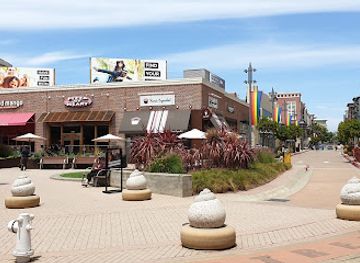
Shopping in the East Bay is strongest in its independent neighbourhoods, university districts, market towns and farmers' markets rather than in one dominant retail quarter. Berkeley's Shattuck Avenue and nearby streets offer books, specialist food shops, cafés, clothing and independent businesses, while Oakland's commercial districts provide galleries, design stores, records, books, vintage clothing and locally made goods. Jack London Square combines waterfront dining with shops and regular market activity, and Alameda is known for older commercial streets, antiques and independent retailers. Walnut Creek has a more conventional concentration of national brands and department-style shopping in its central area, while Pleasanton and Livermore offer established downtown streets and access to wine-country products. Farmers' markets are useful for California produce, olive oil, baked goods, preserves and flowers; winery tasting rooms in the Livermore Valley often sell bottles and regional food products. Retail hours vary, particularly for small businesses, so market and shop arrangements should be checked before making a special journey.
-
Shopping mall
San Francisco Premium Outlets
Discover amazing deals at San Francisco Premium Outlets, where quality brands meet unbeatable prices in a vibrant shopping atmosphere.
-
Shopping mall
Bay Street Emeryville
Discover Bay Street Emeryville, a vibrant shopping mall with diverse dining options and entertainment for the whole family.
-
Shopping mall
Southland Mall
Discover the ultimate shopping experience at Southland Mall in Hayward, California, offering a variety of stores, dining options, and entertainment.
-
Shopping mall
East Bay Bridge
Experience the dynamic blend of shopping, dining, and entertainment at East Bay Bridge Shopping Mall in Emeryville, CA.

Get your free copy of our complete guide to East Bay, delivered straight to you.
Everything on this page, from attractions and restaurants to essentials and local phrases, in one PDF you can read offline, print or share.
Already have an account? Sign in
Your East Bay guide is ready.
We'll send it to · Not you? Sign out

Getting your guide ready…
We are putting together a fresh copy of the East Bay guide. This can take up to a minute.
This can take a few moments. If your browser asks, choose Allow so the download can start. You'll find the guide in your Downloads folder.
Nothing happened? Download it again
Sorry, the guide is taking longer than usual. Please try again in a minute, or get it by email instead.
East Bay essentials
Currency and Payment
Safety
Emergency Situations
Do's and Don'ts
Local Tips
From Eve
Local phrases worth knowing
You don't need to get them perfect. A few words go a long way, and locals appreciate the effort.
Basics
| English | Local | Say it |
|---|---|---|
| Hello | Hey | [hey] |
| Goodbye | Later | [lay-ter] |
| Yes | Yeah | [yeh] |
| No | Nah | [nah] |
| Please/You're welcome | No problem | [noh prob-luhm] |
| Thank you | Thanks | [thangks] |
| Excuse me/Sorry | Sorry | [sor-ee] |
| How are you? | How's it going? | [howz it go-ing] |
| Fine. And you? | Good. You? | [good. you?] |
| Do you speak English? | You speak English? | [you speek ing-lish?] |
| I don't understand | I don't get it | [I don't get it] |
Eating & Drinking
| English | Local | Say it |
|---|---|---|
| I'd like to see the menu, please | Can I see the menu? | [kan I see the men-yoo?] |
| I don't eat meat | I’m vegetarian | [I'm vej-i-tair-ee-an] |
| Cheers! | Cheers! | [cheerz] |
| I would like to pay, please | Can I get the check? | [kan I get the chek?] |
Emergencies
| English | Local | Say it |
|---|---|---|
| Help! | Help! | [help] |
| Go away! | Leave me alone! | [leave me a-lone] |
| Call the Police! | Call 911! | [call nine-one-one] |
| Call a doctor! | Get a doctor! | [get a dok-tor] |
| I'm lost | I’m lost | [I'm lost] |
| I'm ill | I don't feel good | [I don't feel good] |
Shopping
| English | Local | Say it |
|---|---|---|
| I'd like to buy... | I want to get... | [I want to get...] |
| I'm just looking | Just browsing | [just brow-zing] |
| How much is it? | What’s the price? | [what's the pryce?] |
| That's too expensive | That's way too much | [that's way too much] |
| Can you lower the price? | Can you give me a better price? | [can you give me a better pryce?] |
Time & Numbers
| English | Local | Say it |
|---|---|---|
| What time is it? | What time is it? | [what time is it?] |
| It's one o'clock | It's 1 o'clock | [it's one o'clock] |
| Half past (10) | Half past 10 | [half past ten] |
| Morning | Morning | [mor-ning] |
| Afternoon | Afternoon | [af-ter-noon] |
| Evening | Evening | [eev-ning] |
| Yesterday | Yesterday | [yes-ter-day] |
| Today | Today | [to-day] |
| Tomorrow | Tomorrow | [to-mor-row] |
| 1 | One | [wun] |
| 2 | Two | [too] |
| 3 | Three | [three] |
| 4 | Four | [for] |
| 5 | Five | [fiv] |
| 6 | Six | [siks] |
| 7 | Seven | [sev-en] |
| 8 | Eight | [ate] |
| 9 | Nine | [nyn] |
| 10 | Ten | [ten] |
Transport & Directions
| English | Local | Say it |
|---|---|---|
| Where's a/the...? | Where's the...? | [where's the...?] |
| What's the address? | What's the address? | [what's the ad-dress?] |
| Can you show me (on the map)? | Can you show me on the map? | [can you show me on the map?] |
| When's the next (bus)? | When's the next bus? | [when's the next bus?] |
| A ticket (to ....) | A ticket to... | [a tik-it to...] |
History of East Bay
Ohlone Homelands Before European Settlement
Before European colonisation, the East Bay was home to Ohlone peoples whose communities occupied the bay shore, marshes, valleys and hills. Numerous villages and language groups were connected to seasonal food gathering, fishing, hunting and the careful use of native plants. The shoreline was not an empty wilderness but a lived-in cultural landscape shaped by long-standing ecological knowledge. Spanish missions, disease, forced labour and later American settlement severely disrupted Ohlone communities, yet Indigenous cultural work and advocacy remain important parts of the region's contemporary identity.
Spanish and Mexican Colonial Rule
Spanish expeditions reached the Bay Area in the eighteenth century, and the East Bay became connected to the mission and ranch systems of Alta California. Under Mexican rule after independence from Spain in 1821, large land grants transformed parts of the region into ranchos, including extensive holdings around present-day Contra Costa and Alameda counties. Cattle ranching and hide trading shaped the economy, while adobe buildings and historic land divisions left a lasting imprint. Much of this system changed rapidly after the United States acquired California in the nineteenth century.
The Gold Rush and American Urban Growth
The California Gold Rush brought dramatic population growth to the Bay Area after 1848. The East Bay became a place of farms, transport links, ferry landings and new settlements serving the expanding urban economy across the water. Oakland was incorporated in the nineteenth century and developed around rail connections, a deep-water port and industrial commerce. Berkeley grew around the University of California, while communities such as Alameda, San Leandro and Hayward evolved through agriculture, transport and suburban expansion.
Railways, Industry and the Port of Oakland
Railway development in the late nineteenth and early twentieth centuries strengthened Oakland's role as a western transport centre. The port connected rail freight, shipping and manufacturing, helping create an industrial shoreline that remains central to the East Bay economy. Canneries, warehouses, shipyards and other industries employed successive waves of migrants, including immigrants from Asia, Europe, Mexico and elsewhere in the United States. This industrial heritage is still visible in port infrastructure, older commercial districts and the relationship between inland rail corridors and the bay.
World War II Shipbuilding and Migration
During the Second World War, Richmond became one of the nation's major shipbuilding centres. The Kaiser shipyards produced vessels at extraordinary speed and attracted workers from across the United States, including large numbers of African American migrants from the South and women entering industrial employment. The wartime population boom transformed Richmond and the wider East Bay, while the experience exposed persistent racial discrimination in housing and employment. The Rosie the Riveter/World War II Home Front National Historical Park preserves and interprets this history along the Richmond waterfront.
Civil Rights, Black Power and Social Movements
The East Bay became an important centre of twentieth-century social movements. Oakland and Berkeley saw campaigns for civil rights, free speech, anti-war activism, labour rights, community control and educational reform. The Black Panther Party was founded in Oakland in 1966, and its history is closely connected with debates about policing, political representation, health care and food access. Berkeley's university and neighbourhood movements also influenced national discussions about free expression and protest. These legacies continue to shape the region's civic culture, memorials and public conversations.
Environmental Restoration and Contemporary Transformation
Late twentieth- and early twenty-first-century East Bay development brought both economic change and contentious debates about housing, transport, environmental justice and shoreline access. Former industrial areas have been reused for housing, parks, cultural venues and technology businesses, while wetlands and creeks have benefited from restoration projects. The region remains a patchwork of ports, universities, older working-class communities, affluent hills, agricultural valleys and rapidly changing urban districts. Its current identity is therefore inseparable from both industrial history and continuing struggles over land and belonging.
East Bay in Photos
Browse through our photo collection highlighting the charm and character of the destination.
Neighbouring regions of East Bay
The closest regions to East Bay, if you have time for more than one.
-

-

-

-

-


Swipe for more regions
Explore more
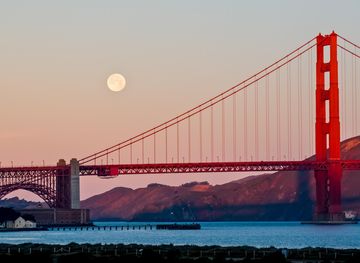
Explore more of California
Discover California: A land of diverse landscapes, iconic cities, and endless adventures, from sun-soaked beaches to towering redwoods and vibrant cultural experiences.
Explore California