

Free Greater Hartford Travel Guide & Mobile App
Explore Greater Hartford with free travel guides. Discover regional history, expert tips, proposed trips, and audio guides on web or mobile app.


Greater Hartford pairs Connecticut River landscapes with literary homes, major museums, historic towns, theatre, dining and accessible New England countryside.
Read more about Greater Hartford
When is the best time to visit Greater Hartford?
Best: June, August–September · 22–27°C| Month | High (°C) | Rainfall (mm) |
|---|---|---|
| January | 2 | 88 |
| February | 4 | 76 |
| March | 8 | 102 |
| April | 15 | 103 |
| May | 20 | 108 |
| June (best) | 25 | 102 |
| July | 28 | 109 |
| August (best) | 27 | 105 |
| September (best) | 22 | 98 |
| October | 17 | 102 |
| November | 11 | 106 |
| December | 3 | 102 |
Getting to and around Greater Hartford
How to get there
Transportation
Top city travel guides in Greater Hartford
The cities of Greater Hartford, and the easiest places to base yourself.
-

-
-

-
-


Swipe for more cities
Destinations in Greater Hartford
Resorts, valleys and scenic spots worth a trip of their own.
-

-

-

-

-


Swipe for more destinations
Best attractions in Greater Hartford
Greater Hartford’s attractions range from major cultural institutions to historic neighbourhoods and open-air recreation. In central Hartford, the Wadsworth Atheneum Museum of Art, Connecticut Science Center, Connecticut State Capitol and Old State House create a concentrated civic and museum district, while the Bushnell presents theatre, music and other performances. The Mark Twain House and Harriet Beecher Stowe Center explore the literary and reform history of nineteenth-century Hartford. Historic Wethersfield offers colonial and early-American architecture, gardens and museums, and Windsor adds further insight into the region’s early settlement. Riverfront parks and trails provide walking and cycling opportunities along the Connecticut River, while Rocky Hill’s Dinosaur State Park preserves an important trackway site beneath a geodesic dome. North of Hartford, the New England Air Museum in Windsor Locks presents aviation history and large historic aircraft. Parks, farms, seasonal agricultural attractions and suburban cultural venues broaden the region’s appeal beyond formal museums, although opening arrangements and seasonal access should be checked before setting out.
-
Garden
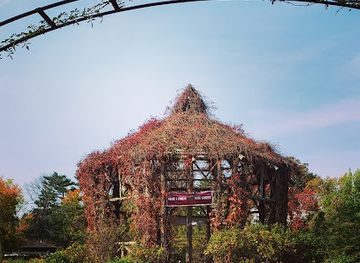
Elizabeth Park Conservancy
Discover a historic Victorian park with stunning gardens, recreational activities, and tranquil beauty in the heart of West Hartford, Connecticut.
-
Historical place museum
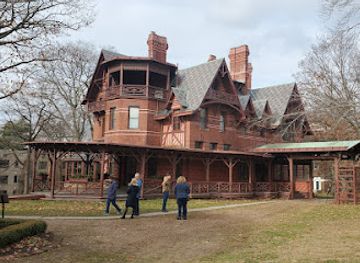
The Mark Twain House & Museum
Step back in time at Mark Twain's meticulously preserved Hartford home, where literary history comes to life. A must-see for book lovers!
-
Garden
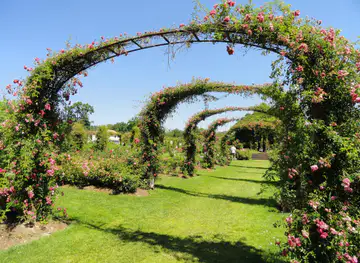
Elizabeth Park Rose Garden
Explore the stunning beauty of Elizabeth Park Rose Garden in Hartford, CT, featuring thousands of vibrant roses and serene landscapes for a perfect getaway.
-
Science museum
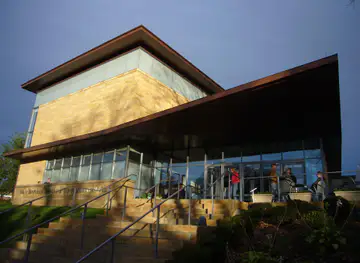
Connecticut Science Center
Discover interactive science exhibits and educational fun for all ages at the Connecticut Science Center in Hartford, CT.

Best landmarks in Greater Hartford
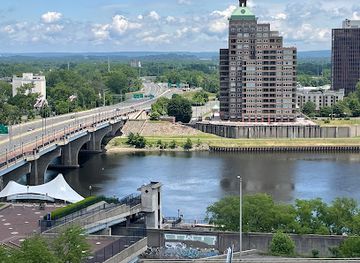
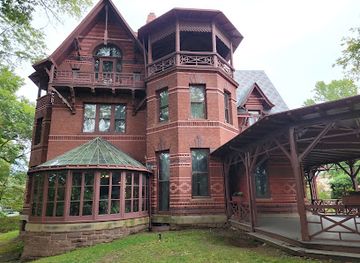
The Connecticut State Capitol is Greater Hartford’s most prominent civic landmark, with its ornate nineteenth-century architecture and distinctive gilded dome overlooking Bushnell Park. Nearby, the Old State House recalls the city’s colonial and early republican political importance, while the Soldiers and Sailors Memorial Arch forms a striking entrance to the park. The Mark Twain House is a major High Victorian landmark whose architecture reflects the author’s prosperous Hartford years, and the Harriet Beecher Stowe House adds a connected literary and reform legacy. In Wethersfield, historic streets and preserved colonial houses convey the age of one of Connecticut’s earliest English settlements. The Connecticut River itself is the region’s principal natural landmark, shaping settlement, industry and recreation. Rocky Hill’s Dinosaur State Park protects a scientifically important fossil trackway, while the dome and surrounding landscape make the site a distinctive landmark within the wider river valley.
-
Garden
Elizabeth Park Conservancy
Explore the natural beauty and historical charm of Elizabeth Park Conservancy, a serene oasis in West Hartford, Connecticut, perfect for all nature lovers.
-
Historical place museum
The Mark Twain House & Museum
Explore the rich literary heritage of Mark Twain at his historic home and museum in Hartford, Connecticut—an enriching experience for all visitors.
-
Science museum
Connecticut Science Center
Explore the Connecticut Science Center: A thrilling science museum in Hartford with interactive exhibits and inspiring educational programs for all ages.
-
Art museum
Wadsworth Atheneum Museum of Art
Discover the rich history and artistic treasures at Wadsworth Atheneum Museum of Art in Hartford, Connecticut, a must-visit for art lovers and cultural enthusiasts.



Explore Greater Hartford on the map
Plan your trip on one map. See where the top cities, national parks and sights are, and book hotels and experiences in a few clicks.
Best hotels in Greater Hartford
Best restaurants in Greater Hartford
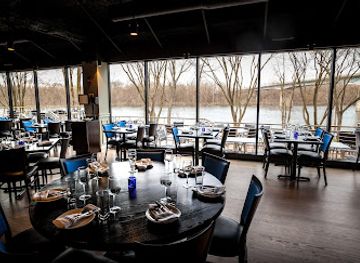
Greater Hartford’s dining scene reflects both its diverse metropolitan population and its Connecticut River Valley setting. Hartford and West Hartford provide the largest concentration of restaurants, cafés, bakeries and international cooking, while Wethersfield, Glastonbury, Windsor and other surrounding communities add independent restaurants, taverns and suburban dining areas. Regional food experiences include New England seafood, clam chowder, oysters, locally produced ice cream, baked goods and farm-market produce, alongside Italian-American traditions that are well established in Connecticut. Farm stands and seasonal markets around the outer towns are useful for fruit, vegetables, cider and locally made products when available. Craft breweries and small producers contribute to the contemporary food-and-drink landscape, while historic inns and neighbourhood pubs offer more traditional settings. Menus and businesses change, so the most reliable approach is to explore central dining streets for variety and combine them with seasonal produce or river-valley businesses when travelling beyond Hartford.
-
American
The Mill on the River
Experience exquisite American cuisine with stunning riverside views at The Mill on the River in South Windsor.
-
Restaurant
River: A Waterfront Restaurant and Bar
Experience exceptional dining at River: A Waterfront Restaurant and Bar with stunning views of the Connecticut River.
-
Barbecue
Fire on the Mountain Smokehouse
Experience authentic American barbecue at Fire on the Mountain Smokehouse in Suffield, CT – where flavor meets tradition.


Best bars in Greater Hartford
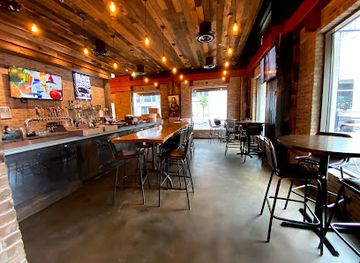
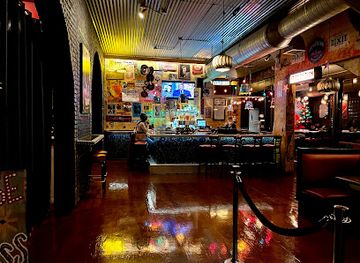
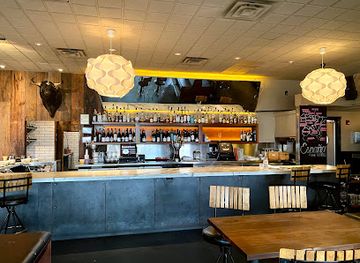
Evening life in Greater Hartford is centred on pubs, restaurants, live music and theatre rather than on a single large club district. Downtown Hartford provides the strongest concentration of pre-performance dining, hotel bars and venues connected with the Bushnell and other cultural institutions, while West Hartford has a busy collection of restaurants, bars and cafés around its commercial centre. Breweries and taprooms appear in several metropolitan communities, and traditional taverns remain part of the region’s social landscape. Live music and special events add variety, but programming and opening arrangements change regularly. Outside the main urban centres, evenings are generally quieter and revolve around dining, local pubs or seasonal events; a car or pre-arranged transport is useful when moving between suburban venues.
-
Barbecue
Bear's Smokehouse Barbecue
Experience the best of Southern barbecue at Bear's Smokehouse Barbecue in Hartford, where every bite tells a flavorful story.
-
Barbecue
Black-Eyed Sally's Southern Kitchen & Bar
Discover the flavors of the South at Black-Eyed Sally's Southern Kitchen & Bar, where barbecue meets live music in a vibrant atmosphere.
-
Spanish
Barcelona Wine Bar
Discover the vibrant tastes of Spain at Barcelona Wine Bar, where tapas and an extensive wine selection create unforgettable dining experiences.
-
American
The Yarde Tavern
Experience the heart of American dining at The Yarde Tavern in Enfield, where hearty meals and craft beers await in a welcoming atmosphere.

Best nightclubs in Greater Hartford
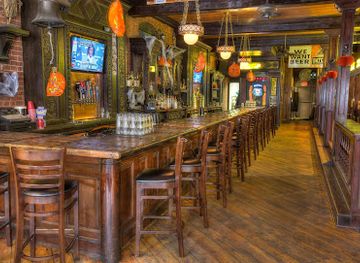
Evening life in Greater Hartford is centred on pubs, restaurants, live music and theatre rather than on a single large club district. Downtown Hartford provides the strongest concentration of pre-performance dining, hotel bars and venues connected with the Bushnell and other cultural institutions, while West Hartford has a busy collection of restaurants, bars and cafés around its commercial centre. Breweries and taprooms appear in several metropolitan communities, and traditional taverns remain part of the region’s social landscape. Live music and special events add variety, but programming and opening arrangements change regularly. Outside the main urban centres, evenings are generally quieter and revolve around dining, local pubs or seasonal events; a car or pre-arranged transport is useful when moving between suburban venues.
-
Bar
The Lady
Experience the best of Hartford nightlife at The Lady, a bar, restaurant, and nightclub all in one, perfect for a fun-filled evening.
-
Bar
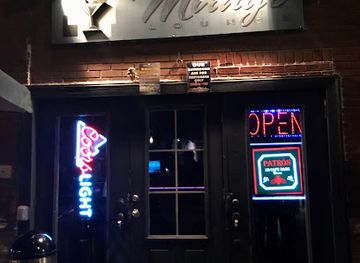
Mirage Lounge
Experience the vibrant nightlife at Mirage Lounge in Hartford, where live music meets expertly crafted cocktails in a cozy setting.
-
Night club
Vibz Uptown
Discover the electrifying nightlife at Vibz Uptown, Hartford's premier night club and bar, perfect for unforgettable experiences and vibrant entertainment.
-
Cabaret club
Chez Est
Experience the vibrant nightlife at Chez Est, Hartford's premier cabaret club and gay bar, where entertainment and inclusivity meet.

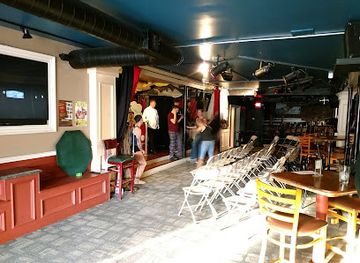
Best shops in Greater Hartford
Shopping in Greater Hartford ranges from central-city independent businesses and museum shops to suburban high streets, farmers’ markets and specialist stores. West Hartford’s commercial centre has a broad selection of restaurants, boutiques, bookshops and everyday retail, while Hartford’s cultural institutions provide art books, Connecticut-themed gifts and locally relevant design objects. Wethersfield, Glastonbury and Windsor offer smaller-scale independent shopping, antiques, galleries and historic-town browsing rather than large department-store districts. Seasonal farm stands and markets around the outer communities are good places to look for apples, cider, honey, baked goods, preserves and other Connecticut produce. Craft beer and regional food products travel well, although availability varies by season. Visitors interested in antiques, art or handmade goods should allow time for browsing beyond the central business district, where the region’s retail character is more local and dispersed than concentrated in one shopping destination.
-
Shopping mall
Westfarms
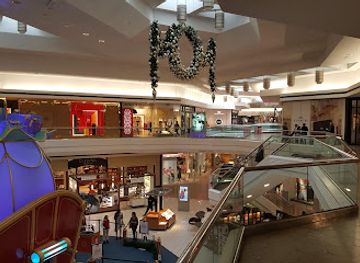
Discover Westfarms, a premier shopping mall in Farmington, CT, featuring diverse retail, dining, and entertainment experiences for all ages.
-
Shopping mall
Charter Oak Marketplace
Discover the vibrant Charter Oak Marketplace, a shopping haven in Hartford, CT, featuring a diverse selection of stores, delightful dining, and lively entertainment.
-
Shopping mall
Corbin's Corner
Experience the best of shopping and dining at Corbin's Corner, West Hartford's premier shopping mall with diverse options for all tastes.
-
Shopping mall
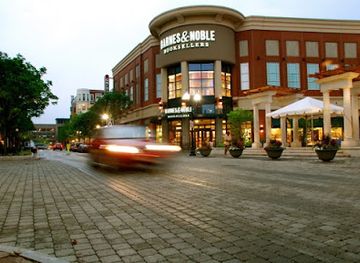
Blue Back Square
Explore Blue Back Square: A vibrant shopping and dining destination in West Hartford, filled with unique boutiques and a variety of culinary delights.
Get your free copy of our complete guide to Greater Hartford, delivered straight to you.
Everything on this page, from attractions and restaurants to essentials and local phrases, in one PDF you can read offline, print or share.
Already have an account? Sign in
Your Greater Hartford guide is ready.
We'll send it to · Not you? Sign out

Getting your guide ready…
We are putting together a fresh copy of the Greater Hartford guide. This can take up to a minute.
This can take a few moments. If your browser asks, choose Allow so the download can start. You'll find the guide in your Downloads folder.
Nothing happened? Download it again
Sorry, the guide is taking longer than usual. Please try again in a minute, or get it by email instead.
Greater Hartford essentials
Currency and Payment
Safety
Emergency Situations
Do's and Don'ts
Local Tips
From Eve
Local phrases worth knowing
You don't need to get them perfect. A few words go a long way, and locals appreciate the effort.
Basics
| English | Local | Say it |
|---|---|---|
| Hello | Hey there | [Hey thair] |
| Goodbye | See ya | [See yah] |
| Yes | Yup | [Yup] |
| No | Nah | [Nah] |
| Please/You're welcome | No problem | [No prob-lem] |
| Thank you | Thanks | [Thangs] |
| Excuse me/Sorry | Excuse me | [Ex-cuse me] |
| How are you? | How ya doin'? | [How yah doin'?] |
| Fine. And you? | Good. You? | [Good. You?] |
| Do you speak English? | Do ya speak English? | [Do yah speak English?] |
| I don't understand | I don't get it | [I don't get it] |
Eating & Drinking
| English | Local | Say it |
|---|---|---|
| I'd like to see the menu, please | Can I see the menu? | [Can I see the menu?] |
| I don't eat meat | I’m a vegetarian | [I'm a vege-tarian] |
| Cheers! | Cheers! | [Cheers!] |
| I would like to pay, please | Can I get the check? | [Can I get the check?] |
Emergencies
| English | Local | Say it |
|---|---|---|
| Help! | Help! | [Help!] |
| Go away! | Get lost! | [Get lost!] |
| Call the Police! | Call the cops! | [Call the cops!] |
| Call a doctor! | Get a doctor! | [Get a doc-tor!] |
| I'm lost | I’m lost | [I'm lost] |
| I'm ill | I’m sick | [I'm sick] |
Shopping
| English | Local | Say it |
|---|---|---|
| I'd like to buy... | I wanna buy... | [I wanna buy...] |
| I'm just looking | Just browsing | [Just brow-sing] |
| How much is it? | How much's this? | [How much's this?] |
| That's too expensive | That's way too pricey | [That's way too pricey] |
| Can you lower the price? | Can ya knock down the price? | [Can yah knock down the price?] |
Time & Numbers
| English | Local | Say it |
|---|---|---|
| What time is it? | What time is it? | [What time is it?] |
| It's one o'clock | It's 1 o'clock | [It's 1 o'clock] |
| Half past (10) | Half past 10 | [Half past 10] |
| Morning | Morning | [Morning] |
| Afternoon | Afternoon | [Afternoon] |
| Evening | Evening | [Evening] |
| Yesterday | Yesterday | [Yesterday] |
| Today | Today | [Today] |
| Tomorrow | Tomorrow | [Tomorrow] |
| 1 | One | [One] |
| 2 | Two | [Two] |
| 3 | Three | [Three] |
| 4 | Four | [Four] |
| 5 | Five | [Five] |
| 6 | Six | [Six] |
| 7 | Seven | [Seven] |
| 8 | Eight | [Eight] |
| 9 | Nine | [Nine] |
| 10 | Ten | [Ten] |
Transport & Directions
| English | Local | Say it |
|---|---|---|
| Where's a/the...? | Where's the...? | [Where's the...?] |
| What's the address? | What's the address? | [What's the address?] |
| Can you show me (on the map)? | Can you show me on the map? | [Can you show me on the map?] |
| When's the next (bus)? | When's the next bus? | [When's the next bus?] |
| A ticket (to ....) | A ticket to ... | [A ticket to ...] |
History of Greater Hartford
Indigenous Connecticut River Communities
Before European settlement, the Connecticut River valley was home to Indigenous peoples including the Wangunk, whose communities used the river, wetlands and surrounding forests for fishing, agriculture, hunting and trade. The river was a route of movement and exchange rather than a boundary between separate worlds. Later colonial settlement increasingly displaced Indigenous control through land purchases, coercion and changing patterns of authority. The region’s modern place names and landscapes therefore sit within a much older human history, although much of that history is represented through archaeology, scholarship and continuing Indigenous presence rather than through surviving monumental structures.
Hartford’s Colonial Foundation
English settlers established Hartford in the 1630s at a strategically important point on the Connecticut River. The settlement became one of the principal communities of the Connecticut Colony, and the Fundamental Orders of 1638–39 are often discussed as an early example of written colonial self-government. The river supported agriculture, trade and communication, while nearby settlements such as Windsor and Wethersfield developed as important colonial communities. Much of the region’s later political and commercial importance grew from this early concentration of population and institutions along the river corridor.
The Charter Oak and Colonial Political Memory
Hartford’s Charter Oak became an enduring symbol of Connecticut’s resistance to the attempted seizure of its colonial charter by royal authorities in 1687. According to the traditional account, the charter was hidden in an oak tree on the estate of Samuel Wyllys, though historians treat elements of the story as part of a long political tradition rather than a fully documented event. The tree later fell in 1856, but its image remains central to Connecticut’s civic identity and appears in public art, state symbolism and local historical interpretation.
River Trade and Industrial Growth
During the eighteenth and nineteenth centuries, the Connecticut River connected Greater Hartford with coastal New England and inland markets. Warehousing, shipping and manufacturing expanded, while roads, canals and railways gradually altered the region’s commercial geography. Hartford became known for publishing, firearms manufacture, metalworking and other industries, and its financial institutions grew alongside these businesses. The river corridor’s industrial past survives in historic buildings, transport routes and museums, even though later economic change shifted much employment towards services, education, healthcare, government and insurance.
Hartford’s Literary and Cultural Era
In the nineteenth century, Hartford became an important centre of publishing and intellectual life. Samuel Clemens, known as Mark Twain, lived in the city during the 1870s and 1880s and wrote several major works there. Harriet Beecher Stowe, already internationally known for Uncle Tom’s Cabin, also lived and worked in Hartford. Their presence reflected the city’s connections to publishing, reform and the wider cultural networks of New England. The houses and institutions associated with them remain among the region’s most significant reminders of this period.
Insurance, Government and the Modern Region
Greater Hartford’s modern economy was shaped by the expansion of insurance and financial services, as well as by the continuing growth of state government, education and healthcare. Hartford’s reputation as an insurance centre developed during the nineteenth and twentieth centuries, bringing corporate offices and professional employment to the capital region. Suburban expansion after the Second World War changed settlement patterns, increasing dependence on roads and creating a metropolitan area of linked municipalities. Today, the region combines government and institutional functions with technology, healthcare, culture, education and established suburban communities.
Greater Hartford in Photos
Browse through our photo collection highlighting the charm and character of the destination.
Neighbouring regions of Greater Hartford
The closest regions to Greater Hartford, if you have time for more than one.
-

-

-

-

-


Swipe for more regions
Explore more

Explore more of Connecticut
Discover Connecticut: A blend of charming coastal towns, rich history, and scenic landscapes, perfect for nature lovers, history buffs, and cultural enthusiasts.
Explore Connecticut