
Ekkodalen, Bornholm Travel Guide
Bornholm’s Echo Valley: a dramatic rift of cliffs, forest and meadow where geology, folklore and gentle walking paths meet in the heart of Almindingen.
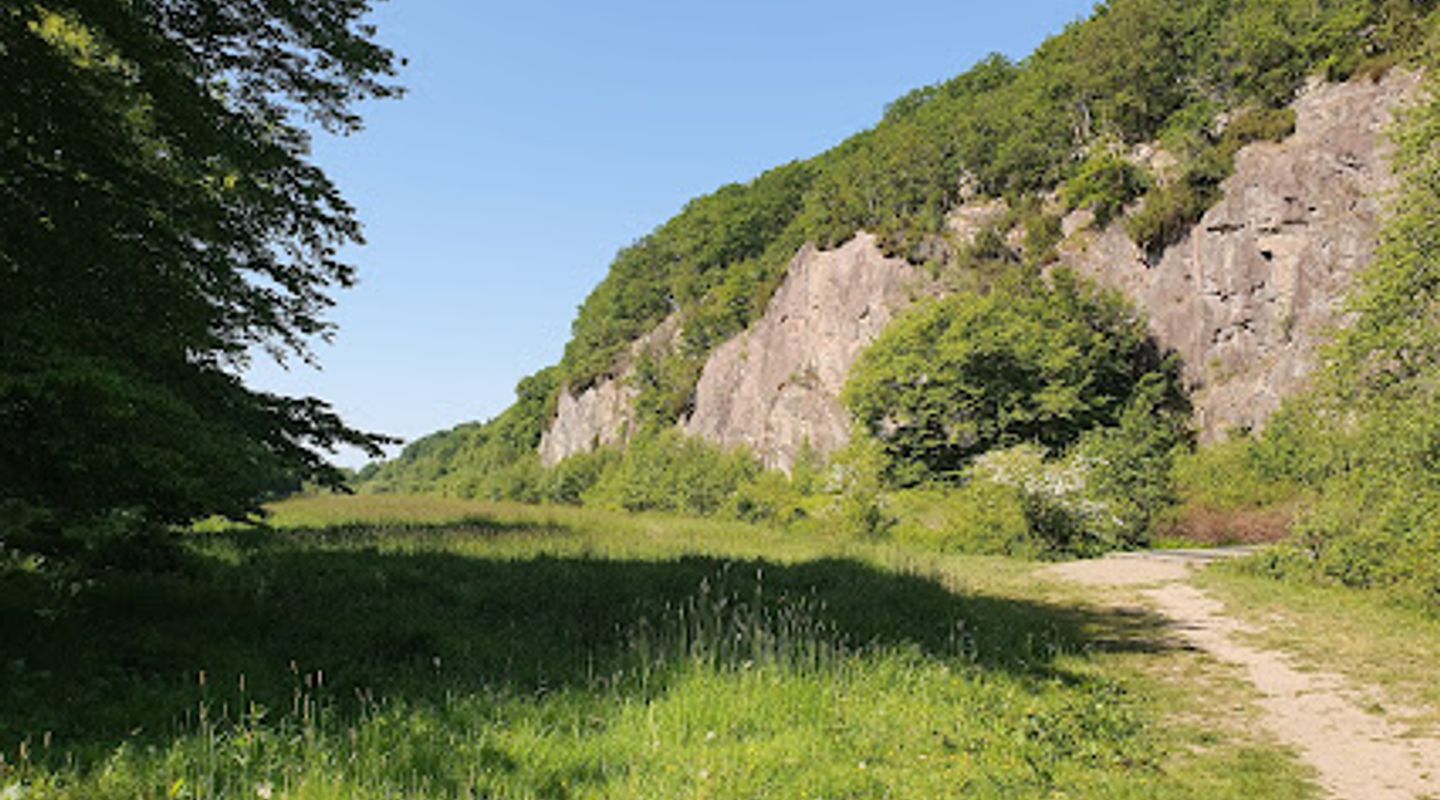
Ekkodalen, the Echo Valley, is Bornholm’s largest and longest rift valley, slicing dramatically through the Almindingen forest near Aakirkeby. Steep 20 m rock walls, open meadows and a 200‑year‑old protected oak forest create a striking natural corridor that is both scenic and accessible. Famous for its echo at the H.C. Ørsted spring, the valley offers gentle walks along the valley floor, steeper paths up to viewpoints on the cliffs, and chances to spot grazing cattle and rich plant life in a uniquely Bornholm landscape.
A brief summary to Ekkodalen
- Aakirkeby, DK
- Duration: 1 to 4 hours
- Free
-
 Outdoor
- Mobile reception: 4 out of 5

Know before you go
Hi, I'm Eve. Here are a few practical things to know before exploring Ekkodalen.
- For the clearest echo, go to H.C. Ørsted’s spring near the main entrance and call out on a calm, dry day when wind and background noise are low.
- Wear sturdy shoes: valley‑floor paths are easy, but routes up the escarpment like Fuglsangsrenden can be steep, uneven and slippery after rain.
- In late spring, look for carpets of lily‑of‑the‑valley along the forested slopes, but keep to paths to protect the protected plant life.
- Combine a short walk with a longer Almindingen loop to viewpoints such as Loklippen for an overhead perspective on the rift valley.
- Bring layers: the valley floor can feel cooler and damper than the surrounding countryside, especially in the morning or outside summer.
Do you manage this location?
Take control to get all the benefits, like improved information, better appearance, and stronger visibility across AI-powered discovery. Learn more about listing your business on Evendo
Activate your presenceOther nearby places you may find interesting
The closest places of the same kind, if this one is not quite what you had in mind.
Explore Ekkodalen on the Map
A handpicked selection of must-see spots near Ekkodalen, mapped for you.
Getting There
-
Car from Rønne
From Rønne town, driving to Ekkodalen via the central roads through Bornholm typically takes around 25–30 minutes, depending on traffic. The route crosses gentle countryside with no tolls, and standard car hire on Bornholm starts at roughly 450–700 DKK per day including basic insurance. Near the main entrance by Ekkodalshuset there is a public parking area; it can be busy in peak summer and around midday, so early morning and late afternoon usually offer easier parking and a quieter valley.
-
Bus from Aakirkeby
Local buses connect Aakirkeby with Almindingen and the Ekkodalen area, typically in 20–35 minutes depending on the specific line and stop. Services run more frequently on weekdays and in summer, with reduced schedules in the evening and outside the main season. A single adult ticket on Bornholm’s buses usually costs in the range of 25–40 DKK, and tickets are purchased directly on board or via regional ticket apps. Expect a short, gently sloping walk on forest paths from the nearest bus stop to reach the valley floor.
-
Cycling from Aakirkeby
Cycling from Aakirkeby to Ekkodalen is a popular option, taking about 25–40 minutes each way along minor roads and forest routes with rolling but moderate hills. Standard city or touring bikes can be rented in the area for approximately 100–150 DKK per day. Surfaces are a mix of asphalt and compact gravel; they are suitable for most cyclists, though child trailers and very narrow‑tyre road bikes may find some forest stretches less comfortable, especially after heavy rain.
For the on-the-go comforts that matter to you
-
 Restrooms
-
 Food Options
-
 Drink Options
-
 Seating Areas
-
 Picnic Areas
-
 Trash Bins
-
 Information Boards
-
 Visitor Center
Discover more about Ekkodalen
A valley carved deep into Bornholm’s bedrock
Ekkodalen, or Echo Valley, is the most impressive section of Bornholm’s longest rift valley, a geological fracture that runs roughly 12 kilometres across the island. Here, the bedrock has split and sunk to form a straight, green corridor framed by vertical rock faces up to 20 metres high. The valley is typically around 70 metres wide, so you feel enclosed yet never hemmed in, with the sky always visible above the cliff rims.The slopes on the northwest side carry a more than 200‑year‑old durmast oak forest, one of the reasons the area is protected. Below, the floor of the valley is a mosaic of meadow and wet ground, kept open by grazing cattle so that the rock walls remain clearly visible. Running through it all is the brook Læsåen, meandering quietly past sedges and wildflowers.The famous echo and a historic spring
Ekkodalen is named for its echo, created as sound rebounds off the vertical rock faces. The most celebrated spot to test it is H.C. Ørsted’s spring, a clear source tucked just off the main valley path. For centuries, the spring was considered a sacred and curative well; in the early 20th century it was even nicknamed the Radium Spring because of the water’s reputation for purity.Standing by the spring, voices bounce back distinctly on still days, and local tradition has grown up around calling out playful phrases and waiting for the valley’s answer. Even when the surrounding vegetation softens the effect in some seasons, the combination of water, rock and forest gives a strong sense of place and local folklore.Forest paths, viewpoints and gentle exploration
Visiting Ekkodalen is mostly about unhurried exploration. Easy, almost level trails follow the valley floor, suitable for leisurely strolls and families with children. More adventurous routes, such as the path up Fuglsangsrenden, climb the escarpment where water and ice have carved natural passages into the rock, in some places helped by simple steps.Above the cliffs, viewpoints like Loklippen and Queen’s View look out across the valley, the surrounding Almindingen forest and the gentle contours of Bornholm. From the upper paths, you see the sharp line of the rift, the stone walls that once marked forest boundaries, and the patchwork of open pasture and dense woodland below.Traces of foresters, farmers and past travel
Human history is woven through the landscape. The historic forester’s residence Rømersdal stands within the valley, built in the early 1800s by Hans Rømer, the man who organised Almindingen into a managed forest. He enclosed the woods with an impressive stone wall that still runs along parts of the valley, a reminder of the conflict between common grazing rights and emerging forest management.In the early 20th century, a small excursion railway once linked Åkirkeby with Ekkodalen, bringing day‑trippers into the forest. Today that line has vanished, but the sense of the valley as a traditional outing spot remains, reinforced by the presence of a classic forest restaurant at the entrance and picnic‑friendly clearings along the meadow.Seasonal moods and natural detail
Ekkodalen changes character with the seasons. In spring, lily‑of‑the‑valley carpets the forest floor and fresh leaves brighten the oak canopy, while the brook runs high with meltwater. Summer brings deep shade under the trees and cooler air on the valley floor, a welcome contrast to the island’s sunny coasts.Autumn paints the oaks in rust and gold, with mist often clinging to the cliffs in the morning. In winter, when snow or frost outlines the vertical rock faces, the underlying structure of the rift valley becomes especially clear. Throughout the year, birdsong, the lowing of cattle and the murmuring stream provide a soft soundtrack to walks, underlining how this is both a dramatic geological feature and a quietly lived‑in piece of Bornholm’s interior.












Your all‑in‑one travel companion app
Explore expert travel guides, compare and book tours, experiences, hotels, and more—all from the palm of your hand. Download now for seamless trip planning wherever your wanderlust takes you.


Explore More of Bornholm

Looking beyond Ekkodalen? Discover Bornholm for broader travel guides, local hot-spots, and regional highlights.
Explore Bornholm
A 20‑ton rocking boulder hidden in Rutsker Højlyng’s heathland, where Ice Age geology, quiet woodland and Bornholm folklore come together in a simple, wild setting.
A modest historic grotto and garden on Bornholm, offering a quiet glimpse of Aakirkeby’s 19th‑century leisure life amid trees, stonework and gentle calm.
