

Børsen Travel Guide
Free Guide: Copenhagen's legendary Dragon Spire and Dutch Renaissance masterpiece—a 400-year-old trading hub bearing witness to centuries of Danish commerce.


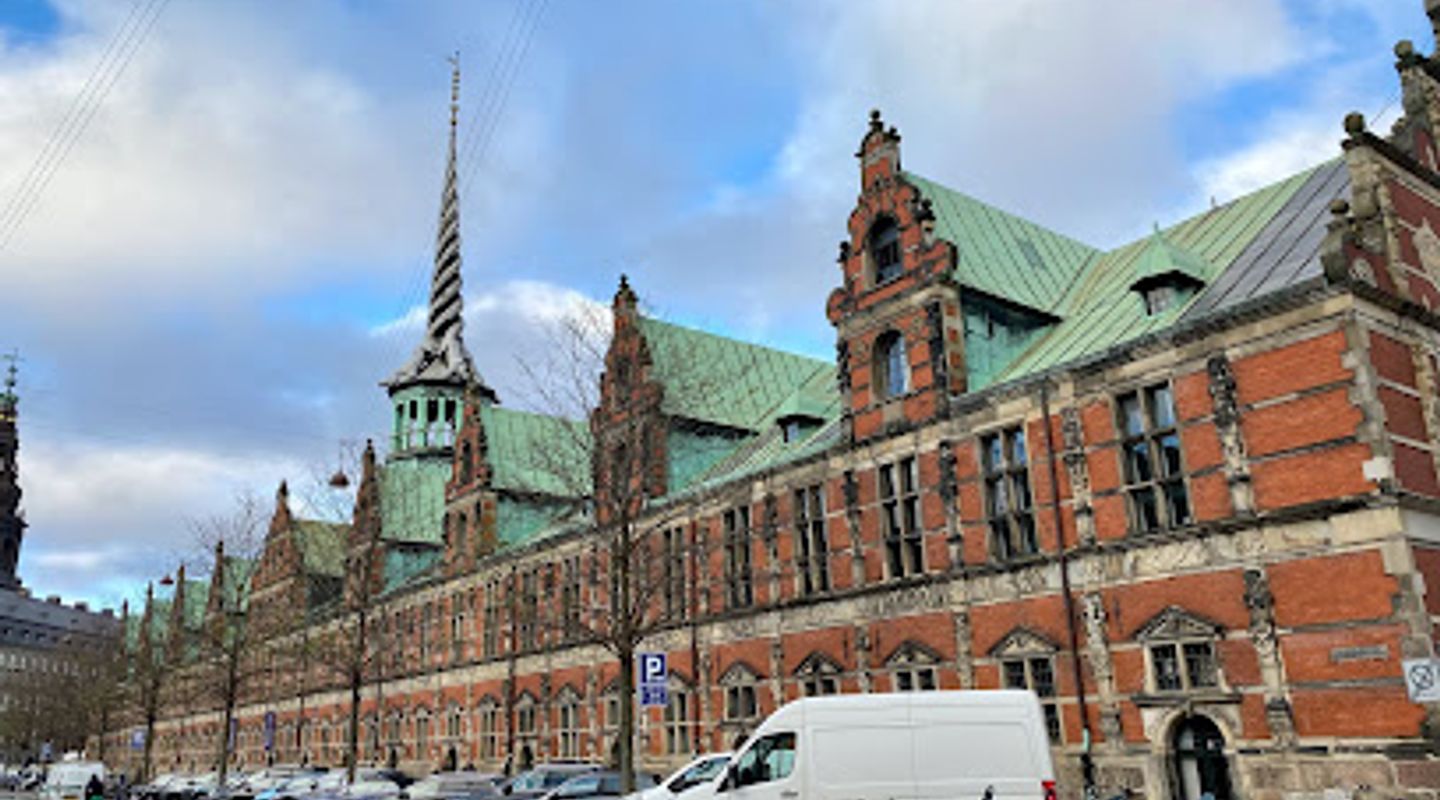
A brief summary of Børsen
Copenhagen's legendary Dragon Spire and Dutch Renaissance masterpiece—a 400-year-old trading hub bearing witness to centuries of Danish commerce.
Børsen is one of Copenhagen's oldest and most iconic buildings, a masterpiece of Dutch Renaissance architecture built by King Christian IV between 1619 and 1640. Famous for its distinctive 56-meter Dragon Spire—four intertwined dragon tails topped with three crowns symbolizing the Scandinavian kingdoms—the building once served as Denmark's financial center and marketplace. Severely damaged by fire in April 2024, Børsen remains a powerful symbol of Copenhagen's trading heritage and architectural legacy, currently undergoing restoration.
On-site amenities
 Seating areas
 Information boards
 Visitor centre
- Address
- 1217 København K
- Phone
- Website
Getting there
Metro and Walking
Bus
Walking from Nyhavn or Strøget
Bicycle
Discover more about Børsen
A Monument to Royal Ambition and Trade
Børsen was conceived by King Christian IV as part of his grand vision to establish Copenhagen as a major trading hub for Northern Europe. Construction began in 1620 on reclaimed land connecting Copenhagen to the newly founded district of Christianshavn, positioning the building strategically for maritime commerce. The structure was largely completed by 1624, with the iconic spire added in 1625 and final details finished by 1640. Designed by brothers Lorenz and Hans van Steenwinckel the Younger, the building exemplifies Dutch Renaissance style with its distinctive red brick facades, ornate gables, and soaring proportions that commanded respect from merchants and traders across the Baltic region.The building's original configuration reflected its commercial purpose: 40 trading offices occupied the ground floor, while a large hall on the upper level served as the main exchange floor. Ships could unload cargo directly at the wharf on three sides of the building, making it an exceptionally efficient marketplace for the era. During the late 1620s, Børsen functioned as a vibrant center of commerce, where merchants gathered to exchange goods and negotiate deals that shaped Denmark's economic fortunes.
The Dragon Spire: Legend and Protection
Børsen's most recognizable feature is its extraordinary Dragon Spire, designed by Christian IV's fireworks master and installed in 1625. Standing 56 meters tall, the spire consists of four intertwined dragon tails crowned with three golden orbs representing Denmark, Norway, and Sweden—a visual proclamation of Scandinavian unity and power. According to legend, the dragons were meant to protect the building from enemies and fire, a superstition that seemed remarkably vindicated by history. For nearly 400 years, Børsen survived numerous fires that devastated neighboring structures, including repeated fires at nearby Christiansborg Palace and a 1990 fire at the Proviantgaarden just across the street, yet the stock exchange remained mysteriously untouched—until April 2024.The spire underwent significant renewal in 1772–1777 and again in 1775, when structural concerns prompted the construction of a replacement spire with a similar design. The copper roof that crowns the building today dates to the late 19th century, replacing an earlier lead roof that had been partially melted down during the Swedish siege of Copenhagen in 1658–1659 to manufacture cannonballs—a poignant reminder of the building's vulnerability despite its legendary protectors.
Centuries of Transformation and Restoration
Børsen's architectural evolution reflects Denmark's changing economic and political circumstances. The interior underwent its first major renovation in 1855 under architect Harald Conrad Stilling, modernizing the exchange hall and updating facilities for contemporary trading practices. In 1857, King Frederick VII sold the building to the Grosserer-Societetet (Merchants' Society) for 70,000 rigsdaler, transferring ownership from the crown to the merchant class it served. From 1880 to 1883, the original yellow and red-flamed brick facades were faced with thin red clay tiles, and dormers were added to the Slotsholmsgade elevation. Sandstone ornaments were replaced in 1902–1906, and comprehensive restoration work occurred in the 1920s and 1950s.The building housed the Danish stock market continuously from its founding until 1974, when trading operations relocated. A dramatic chapter in its history occurred on 11 February 1918, when unemployed anarchists stormed Børsen in protest against rising inequality, an event recorded in Danish history as "Stormen på Børsen" (The Storm of the Stock Exchange). Following its retirement from active trading, Børsen transitioned to new roles: since 2018, it has served as headquarters for the Danish Chamber of Commerce, while also functioning as a prestigious venue for gala dinners, conferences, and cultural events. The building housed one of Denmark's most valuable art collections, carefully preserved within its historic walls.
The April 2024 Fire and Ongoing Restoration
On 16 April 2024, a devastating fire broke out in the copper roof of Børsen while the building was undergoing extensive external restoration. The fire spread rapidly through the scaffolding that surrounded the structure and into multiple floors, ultimately causing the collapse of the iconic Dragon Spire and severe damage to the main gable walls and ornate facades. The catastrophe was compared internationally to the 2019 Notre-Dame fire in Paris, prompting calls for careful restoration and rebuilding. Emergency workers and volunteers collaborated to rescue significant artworks from the burning building, and fortunately no casualties were reported.Prior to the fire, Børsen had been undergoing comprehensive restoration since 2022, with work scheduled for completion in 2029. The restoration aimed to replace the copper roof and facade bricks while correcting inappropriate renovations from the 19th century and reestablishing the building's original Dutch Renaissance expression. The fire has transformed this restoration into a far more complex undertaking, requiring not only repair of the original damage but also reconstruction of the collapsed spire and damaged structural elements. The Danish Chamber of Commerce has committed to rebuilding the historic landmark, ensuring that this four-century-old symbol of Copenhagen's commercial heritage will be restored for future generations.
Evendo Review Centre
 Google
Guest reviews
Best time to go
Quietest: Jan, Feb & Nov · before 6am or from 11pm
Busy times are Evendo estimates for a typical year, to help you plan. Actual crowds vary with events, school holidays and the weather.
Explore Børsen on the map
A handpicked selection of must-see spots near Børsen, mapped for you.
Get your free copy of our complete guide to Børsen, delivered straight to you.
Everything on this page, from opening hours and how to get there to Eve’s tips and the best time to go, in one PDF you can read offline, print or share.
Already have an account? Sign in
Your Børsen guide is ready.
We'll send it to · Not you? Sign out

Getting your guide ready…
We are putting together a fresh copy of the Børsen guide. This can take up to a minute.
This can take a few moments. If your browser asks, choose Allow so the download can start. You'll find the guide in your Downloads folder.
Nothing happened? Download it again
Sorry, the guide is taking longer than usual. Please try again in a minute, or get it by email instead.
Unlock the best of Børsen
Skip-the-line tickets, guided tours with entry, and walking tours of the area, booked in a few clicks.


 Tour
TourCopenhagen Scavenger Hunt & Highlights Self-Guided Walking Tour
from $5.34 Tour
TourMonstour: A Self-Guided Audio Tour of Danish Folk Legends
from $8.54 Tour
TourCastle Island’s Royal History: A Self-Guided Audio Tour of Slotsholmen
from $8.54 Tour
TourTOP Copenhagen : Private Guided Tour with your mobile
from $10.68
Other nearby places you may find interesting
The closest places of the same kind, if this one is not quite what you had in mind.
-

-
-
-
-


Swipe for more places
More to explore near Børsen

 Best experiences near Børsen
 Best hotels near Børsen
 Best landmarks near Børsen
 Best attractions near Børsen
 Best shops near Børsen
 Best restaurants near Børsen
 Best bars near Børsen
Do you manage this location?
Take control to get all the benefits, like improved information, better appearance, and stronger visibility across AI-powered discovery.
Explore more
Explore more of Copenhagen Region
Discover the Copenhagen Region: A perfect mix of historic charm and modern vibrancy, offering scenic beauty, cultural landmarks, and a high quality of life.
Explore Copenhagen Region
Explore more of Denmark
Discover Denmark: A perfect blend of history, modern design, and the cozy concept of hygge. Explore vibrant cities, serene landscapes, and world-class cuisine.
Explore Denmark
