Agnete and the Merman Statue
An underwater bronze family beneath Højbro Bridge, forever reaching toward the surface and the human wife and mother who chose life on land over the sea.
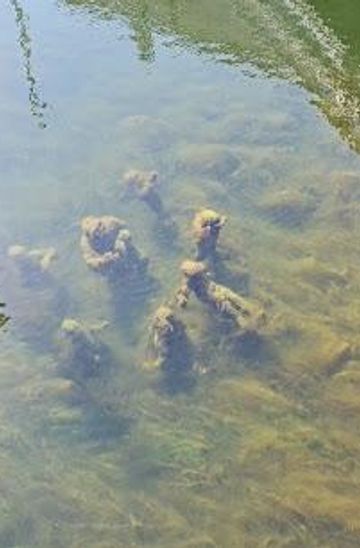
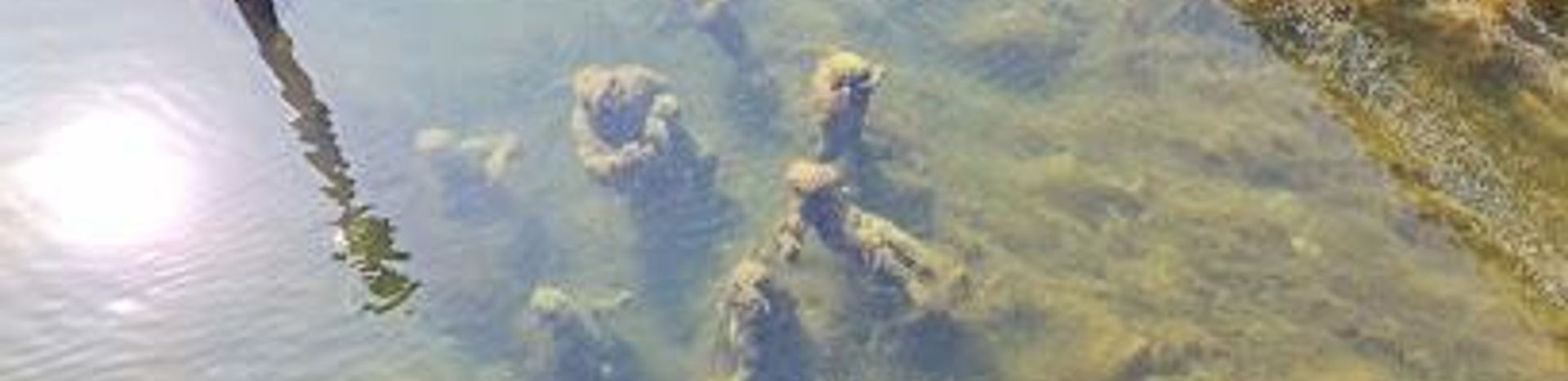
Hidden just below the surface of Copenhagen’s Slotsholm Canal beside Højbro Bridge, Agnete and the Merman is an evocative underwater bronze sculpture group by Suste Bonnen. Created in 1992 and based on a traditional Danish ballad, it shows a merman and his seven sons stretching their arms toward the light, eternally waiting for Agnete, the human wife and mother who left them to return to life on land. Subtle lighting and changing reflections make this one of the city’s most atmospheric and easily overlooked works of public art.
A brief summary to Agnete and the Merman Statue
- Højbro, Copenhagen, Indre By, DK
- Click to display
- Duration: 0.25 to 1 hours
- Free
-
 Outdoor
- Mobile reception: 5 out of 5

Know before you go
Hi, I'm Eve. Here are a few practical things to know before exploring Agnete and the Merman Statue.
- For the best view, stand on Højbro Bridge and wait a few minutes for boat traffic to ease so the canal surface becomes calm and the figures sharpen into focus.
- Visit around dusk or after dark to see the sculptures lit from below; the coloured underwater lights add drama and make the figures easier to pick out.
- Read a short version of the Agnete and the Merman folk tale beforehand; knowing the story makes the merman’s gesture and each child’s pose far more moving.
- Bring a camera with a polarising filter if you have one—reducing reflections on the water helps capture clearer photos of the submerged bronze forms.
- Combine a stop here with a walk around Slotsholmen and Christiansborg Palace to appreciate how this intimate artwork contrasts with the grand surroundings.
Do you manage this location?
Take control to get all the benefits, like improved information, better appearance, and stronger visibility across AI-powered discovery. Learn more
Activate your presence
Getting There
-
Metro and walk from central Copenhagen
Take the M1 or M2 metro to Gammel Strand Station in central Copenhagen; trains run every few minutes and a single zone ticket typically costs around 20–30 DKK. From the station it is an easy 5–10 minute walk through the historic centre on level pavements to Højbro Bridge, suitable for most visitors including those with limited mobility. Services run from early morning until late night, but late‑night frequencies are slightly reduced.
-
Bus within the city centre
Several city bus routes serve stops around Slotsholmen and Højbro Plads, with typical journey times of 10–25 minutes from inner districts depending on traffic. Standard bus tickets cost roughly 20–30 DKK within the central zones and can be paid via travel card or mobile ticket. Buses are generally low‑floor and accessible, though they can be crowded at rush hour, and services run more sparsely in the late evening and on Sundays.
-
Bicycle access via Copenhagen’s cycle network
Copenhagen’s dense network of bike lanes makes it straightforward to reach Højbro Bridge by bicycle from most central neighbourhoods in 10–20 minutes. You can use a personal bike or hire a city bike from multiple docking stations for roughly 20–40 DKK per half‑hour, depending on the scheme. Be prepared for cobblestones and busy junctions near the old town, and always dismount to walk your bike across pedestrian areas around the bridge.
-
Canal tour stopping near the bridge
Classic canal boat tours depart from central harbourside piers and typically last about 1 hour, passing directly by Agnete and the Merman and often pointing it out en route. Tickets usually cost in the range of 80–120 DKK per adult, with frequent departures in spring and summer and a reduced schedule in colder months. Boats have low seating and partial shelter; they are not ideal in very rough or icy conditions, and you will still need to walk a few minutes from the pier to view the statues from above.
For the on-the-go comforts that matter to you
-
 Restrooms
-
 Drink Options
-
 Drinking Water
-
 Food Options
-
 Seating Areas
-
 Trash Bins
-
 Information Boards
Discover more about Agnete and the Merman Statue
A submerged tale beneath Højbro Bridge
Agnete and the Merman lies almost invisibly below you in the Slotsholm Canal, hard up against Copenhagen’s Højbro Bridge and within sight of Christiansborg Palace. Rather than standing on a plinth, the figures rest on a submerged bronze platform a little below the waterline, so you look down on them from the balustrade above. Their setting in the city’s historic heart makes the discovery feel almost secret, even though tour boats glide past all day.Peer over the edge and, as the water calms, you start to pick out forms: a powerful torso, a lifted arm, the curve of a tail. The statues seem to appear and disappear with the ripples and reflections, so the scene never looks quite the same twice. In the evening, discreet underwater lighting paints the bronzes in blue‑green or golden tones, enhancing the sense that you are intruding on a private, underwater world.Folklore of love, faith and abandonment
The group illustrates one of Denmark’s classic folk ballads, the story of Agnete og Havmanden. In the tale, Agnete, a young woman on land, is courted by a merman who rises from the sea and asks her to follow him beneath the waves. She agrees, leaving her human life behind and bearing him seven sons in their underwater home.One day Agnete hears distant church bells tolling from the shore and is overcome with longing for the world she left. She persuades the merman to let her visit, promising to return. Once on land, she finds she cannot go back, torn between religious guilt, human ties and the pull of dry ground. The merman and their children are left waiting in vain, forever separated from the mother who abandoned them.Suste Bonnen’s dramatic underwater composition
Danish sculptor, photographer and author Suste Bonnen completed the work in 1992, choosing bronze for its durability and the way it would patinate under water. Rather than depicting Agnete, she focused on the ones left behind: a broad‑shouldered merman and seven boys of different ages, some with tails, some more human, unified by their upward, pleading gestures.Each figure expresses loss differently. One child buries his head in his arms, another reaches toward the surface, while the father’s outstretched hands underline his despair and helplessness. Seen through shifting water, their poses become even more poignant, as weeds and algae sway around them like underwater drapery. Over time, the bronze has taken on subtle green and brown tones, blending sculpture and canal into a single, melancholic tableau.Seeing the statues from bridge and water
From Højbro Bridge, you get the clearest overview of the composition, especially if you wait for a lull between passing boats so the water can still. The canal is shallow here, which helps visibility, but the figures can remain hidden until the light hits them at just the right angle. On bright days, reflections of nearby facades ripple across the scene; on overcast afternoons, the group looks darker and more ghostlike.Canal cruises often pass directly above the sculptures, sometimes close enough that passengers can look almost straight down. From this angle the merman’s musculature and the children’s gestures feel more immediate, as if you are briefly sharing their confined underwater space. At night, the careful lighting makes the statues glow in the gloom, a quiet counterpoint to the illuminated buildings rising on either bank.A quiet counterpoint to Copenhagen’s mer‑icons
Copenhagen is closely associated with merfolk through the famous Little Mermaid, but Agnete and the Merman offers a more introspective, narrative‑driven take on the theme. Instead of a solitary figure gazing outward, this hidden group focuses on family, loss and unresolved longing. The absence of Agnete herself is central: she exists only in the story you bring with you, leaving the viewer to imagine her choice and its consequences.Because there is no barrier or ticket line, the encounter feels informal and personal. You may pause for just a few minutes on your way across the bridge, or linger longer as the water changes and more details emerge. In the midst of government buildings and city bustle, this quiet, half‑concealed artwork invites a moment of reflection on promises made, ties broken and the worlds we leave behind.Explore the best of what Agnete and the Merman Statue has to offer













More about North Zealand
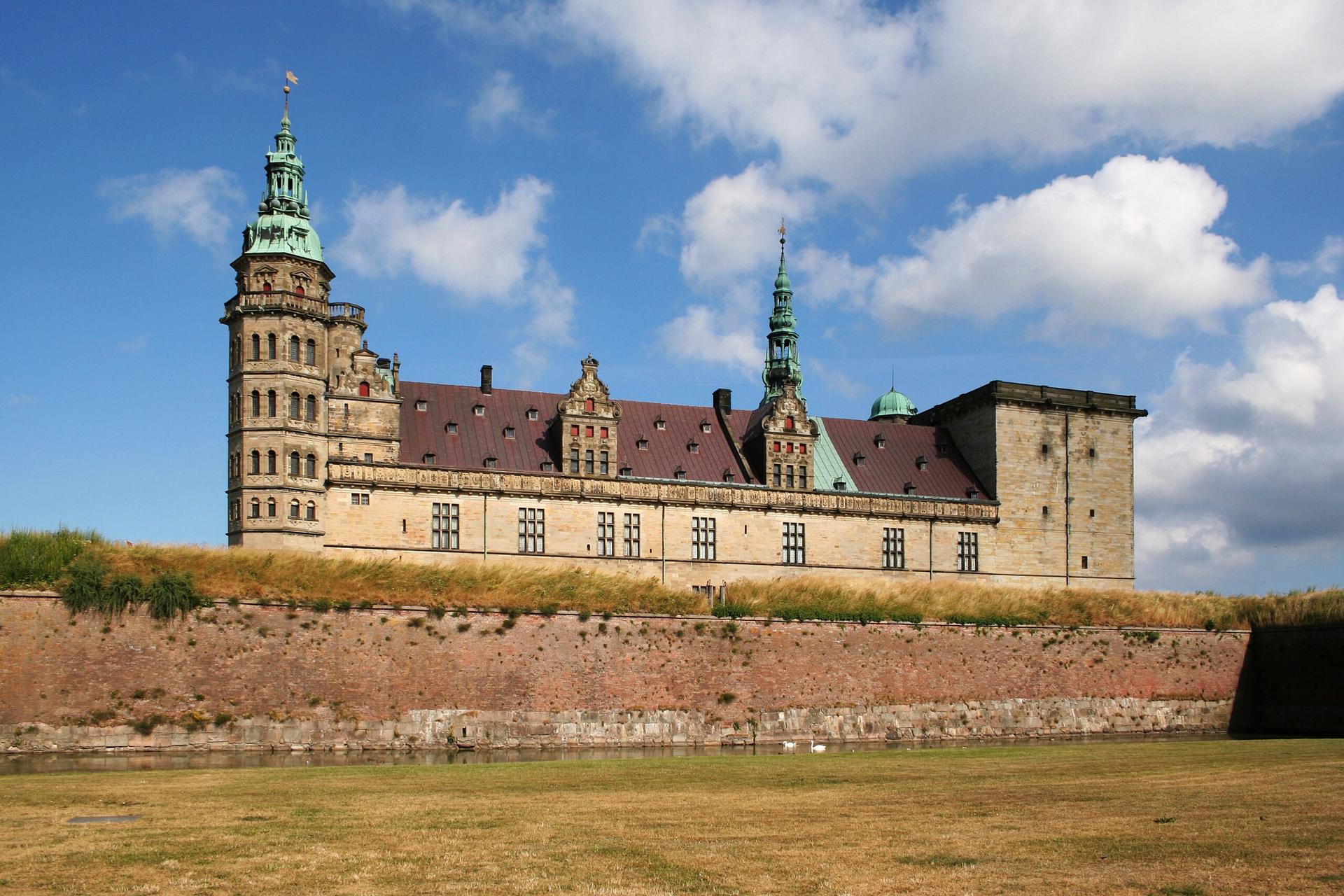
Explore North Zealand, Denmark's enchanting region of castles, beaches, and royal estates, perfect for history buffs, nature enthusiasts, and seaside lovers.
Tell me more about North Zealand