Christiania, Copenhagen Travel Guide
Free Guide: A self-governing “freetown” of murals, lakeside paths and experimental living, tucked behind Copenhagen’s old ramparts in the heart of Christianshavn.


A brief summary of Christiania
A self-governing “freetown” of murals, lakeside paths and experimental living, tucked behind Copenhagen’s old ramparts in the heart of Christianshavn.
Freetown Christiania is Copenhagen’s famous self-governing “free town”, a former military barracks turned colorful commune on the ramparts of Christianshavn. Since 1971, this car‑free neighborhood has mixed experimental architecture, bold murals, workshops and music venues with lakeside paths and rambling greenery. It is free to enter and open at all hours, but remains a lived‑in community with its own rules, values and evolving identity.
On-site amenities
 Restrooms
 Drink options
 Drinking water
 Food options
 Seating areas
 Sheltered areas
 Trash bins
 Information boards
 Visitor centre
Opening hours
- Every dayOpen 24 hours
Opening hours as listed on the venue’s Google Business Profile. Hours can change for services and special events, so check with the venue before you go.
- Address
- Bådsmandsstræde 43, 1407 København K
- Phone
- Website
Getting there
Metro
Bus
Bicycle
Walking
Discover more about Christiania
A self-declared freetown on Copenhagen’s ramparts
Christiania occupies a swath of former military land on the island of Amager, just behind the old city ramparts in the Christianshavn district. Born in 1971 when squatters and activists opened the fences of abandoned barracks, it quickly evolved into an intentional community that questioned mainstream ideas of ownership, work and urban life. Today around a thousand residents share this 1970s experiment in self‑governance with a steady flow of curious visitors.The setting feels surprisingly bucolic for such a central location. Canals, grassy earthworks and pockets of woodland soften the remnants of the fortifications. Narrow gravel paths thread between old brick storehouses, improvised homes and communal spaces, giving the impression of a village stitched into the city yet somehow apart from it.
Everyday life in an alternative neighborhood
At its heart, Christiania functions as a neighborhood: people live, work, raise children and debate local issues in regular community meetings. Many houses have been self‑built over the decades, ranging from tiny cabins and glass‑fronted modernist experiments to whimsical constructions of salvaged timber perched beside the lakes.Workshops, organic eateries, a microbrewery, galleries and music venues help sustain the community. Bicycles and hand‑pulled carts dominate the car‑free lanes, echoing the place’s long tradition of practical, people‑centered design. Everyday scenes—someone repairing a bike, a pot of soup simmering in a shared kitchen, children playing under a mural—reveal the quieter side of a place often reduced to a single street in the headlines.
Street art, improvised architecture and cultural spaces
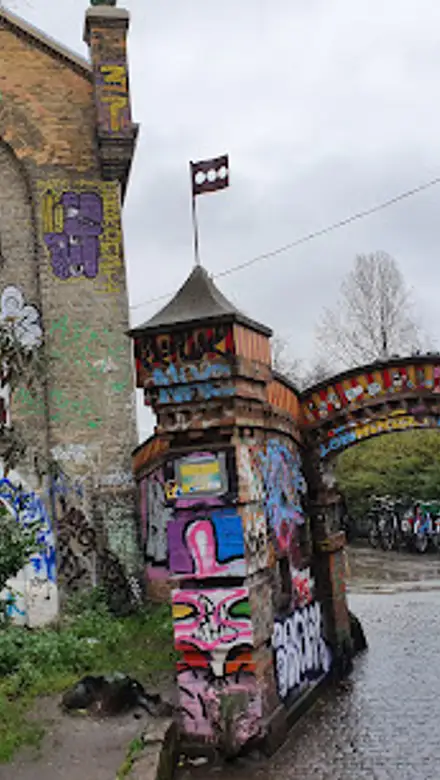
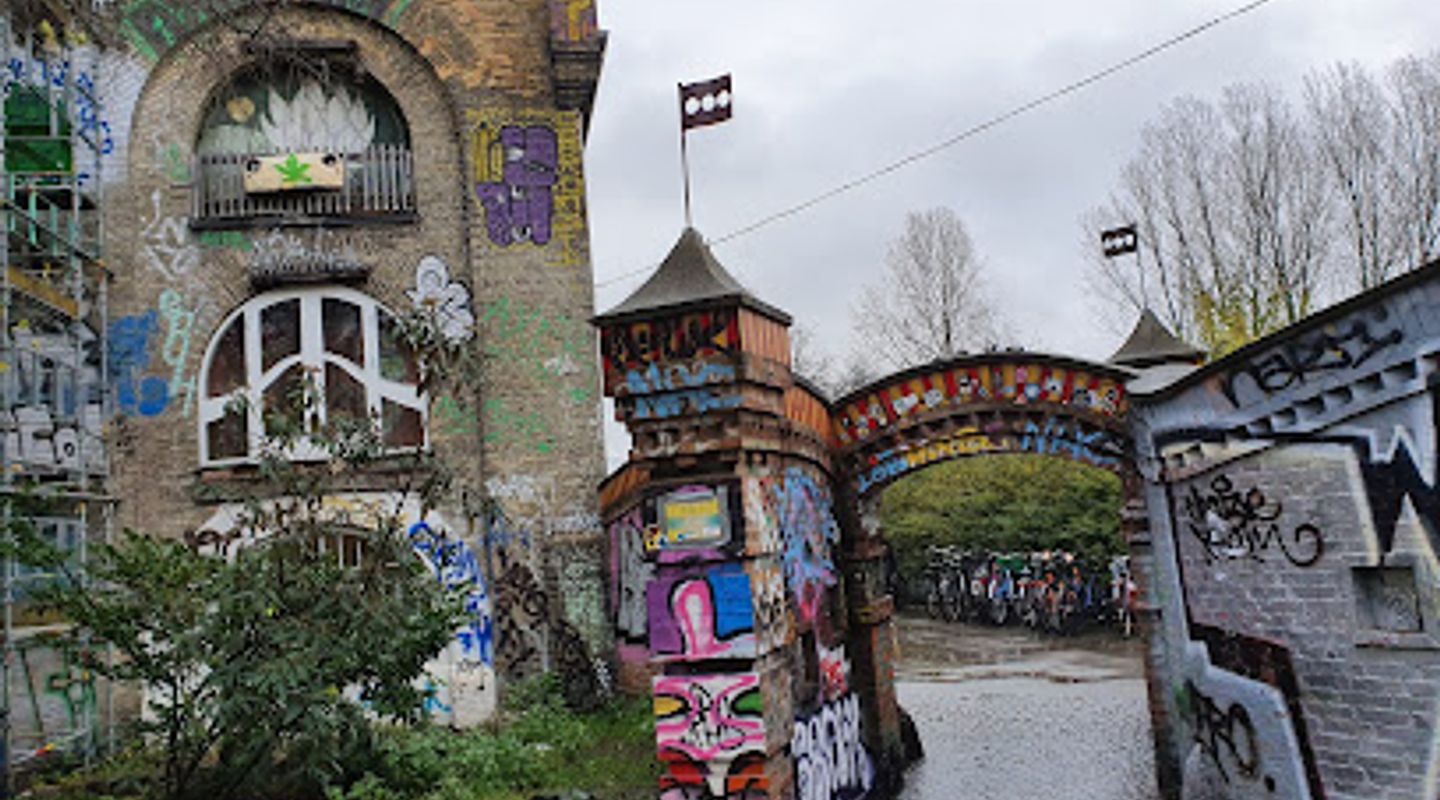
Christiania’s visual identity is unmistakable. Gateways are painted with suns and stars, façades are layered with decades of murals, and sculptures rise from unexpected corners. Walls become canvases, and even staircases and fences are repurposed as art. The mix is eclectic rather than curated, reflecting individual expression more than any master plan.A cluster of cultural landmarks is tucked into this landscape: the Grey Hall concert venue, small stages that host outdoor shows in summer, workshops devoted to metalwork or textiles, and a long‑running art gallery showcasing local creativity. Walking here is less about ticking off sights and more about drifting from one imaginative detail to the next, from a skate bowl to a mosaic‑covered doorway.
Changing attitudes, rules and responsibilities
From its earliest days, Christiania has stood at the center of debates about law, autonomy and urban space. Over time, agreements with the Danish state have gradually formalized aspects of land use and building rights, while the community has refined its own internal rules. Hard drugs were pushed out through local initiatives, and in recent years the most controversial trade on the main selling street has been significantly reduced as residents and authorities collaborated on new approaches.This evolution has brought a stronger focus on sustainability, culture and shared responsibility. Gardens, recycling projects and building renovations sit alongside social initiatives and communal decision‑making. Visitors are expected to respect local guidelines, behave considerately and remember that this is a residential area first and an attraction second.
What to expect when you wander inside
Entering Christiania, you pass under the iconic wooden sign and into a warren of lanes where food stands, simple cafés and craft stalls spill into the open air. In daylight, the atmosphere can feel relaxed and informal, with music drifting from doorways and people talking at long outdoor tables. Further from the entrance, paths lead around a lake and along the ramparts, offering unexpectedly peaceful viewpoints over water and woodland.The mood can shift after dark, when some areas feel livelier and more intense, and many visitors prefer to explore earlier in the day. There is no admission fee and the area never officially closes, but individual venues keep their own hours. Allow unhurried time: wandering, noticing small details and pausing by the water are essential to understanding this unusual corner of Copenhagen.
Christiania’s place in Copenhagen’s story
More than half a century after its founding, Christiania remains woven into the city’s identity as a symbol of experimentation and dissent. It has inspired design firms, musicians, activists and city planners, and its cargo bikes and cooperative practices have left a mark far beyond its borders. Yet it is also facing familiar pressures: rising land values, redevelopment plans and questions about how to preserve a community born of resistance within a rapidly changing capital.Spending time here offers a glimpse of those tensions but also of the creativity they spark. Seen up close, Christiania is neither utopia nor relic, but an ongoing negotiation about how people might live together differently inside a modern European city.
Evendo Review Centre
 Google
Guest reviews
Best time to go
Quietest: Jan, Feb & Mar · before 6am
Busy times are Evendo estimates for a typical year, to help you plan. Actual crowds vary with events, school holidays and the weather.
Explore Christiania on the map
A handpicked selection of must-see spots near Christiania, mapped for you.
Get your free copy of our complete guide to Christiania, delivered straight to you.
Everything on this page, from opening hours and how to get there to Eve’s tips and the best time to go, in one PDF you can read offline, print or share.
Already have an account? Sign in
Your Christiania guide is ready.
We'll send it to · Not you? Sign out

Getting your guide ready…
We are putting together a fresh copy of the Christiania guide. This can take up to a minute.
This can take a few moments. If your browser asks, choose Allow so the download can start. You'll find the guide in your Downloads folder.
Nothing happened? Download it again
Sorry, the guide is taking longer than usual. Please try again in a minute, or get it by email instead.
Other nearby places you may find interesting
The closest places of the same kind, if this one is not quite what you had in mind.
-
Copenhagen Zoo Explore 4,000+ animals across continents without leaving Copenhagen—year-round indoor and outdoor wildlife adventure.
-
 National Aquarium Denmark
Northern Europe’s largest aquarium, where striking whirlpool architecture, sharks, sea otters and a lush indoor rainforest bring the world’s oceans to Copenhagen’s shoreline.
National Aquarium Denmark
Northern Europe’s largest aquarium, where striking whirlpool architecture, sharks, sea otters and a lush indoor rainforest bring the world’s oceans to Copenhagen’s shoreline.
-
Magstræde One of Copenhagen’s oldest cobbled lanes, Magstræde is a colorful, time‑worn shortcut through the city’s medieval heart and everyday modern life.
-
Kastellet A perfectly preserved 17th‑century star fortress where red barracks, a windmill and grassy ramparts create a quiet green refuge beside Copenhagen’s harbour.
-
Rosenborg castle A compact Renaissance palace of kings, crowns and stories, Rosenborg Castle pairs glittering Crown Jewels with tranquil gardens in the very heart of Copenhagen.
Swipe for more places
More to explore near Christiania

 Best experiences near Christiania
 Best hotels near Christiania
 Best landmarks near Christiania
 Best attractions near Christiania
 Best shops near Christiania
 Best restaurants near Christiania
 Best bars near Christiania
Do you manage this location?
Take control to get all the benefits, like improved information, better appearance, and stronger visibility across AI-powered discovery.
Explore more

Explore more of Copenhagen
Discover Copenhagen: A perfect blend of history, modernity, and vibrant culture, where picturesque canals, stunning architecture, and world-class dining await you.
Explore Copenhagen
Explore more of Denmark
Discover Denmark: A perfect blend of history, modern design, and the cozy concept of hygge. Explore vibrant cities, serene landscapes, and world-class cuisine.
Explore Denmark