Lille Mølle, Copenhagen Travel Guide
Free Guide: A compact windmill on Christianshavn’s ramparts, Lille Mølle blends defensive history, domestic interiors and gentle canal‑side views in one atmospheric museum.


A brief summary of Lille Mølle
A compact windmill on Christianshavn’s ramparts, Lille Mølle blends defensive history, domestic interiors and gentle canal‑side views in one atmospheric museum.
Tucked into the green ramparts of Christianshavn, Lille Mølle is the district’s last remaining windmill, now a small museum with a remarkably intimate feel. This octagonal brick mill once ground grain and later became a private home, preserving elegant early-1900s interiors, personal objects and city views in miniature. A guided visit reveals both Copenhagen’s defensive history and everyday bourgeois life, all within a compact, atmospheric landmark overlooking the water and the surrounding fortifications.
On-site amenities
 Restrooms
 Seating areas
 Information boards
Opening hours
- Mon10:59 am–12:59 pm
- Tue10:59 am–12:59 pm
- Wed10:59 am–12:59 pm
- Thu10:59 am–12:59 pm
- Fri10:59 am–12:59 pm
- Sat10:59 am–12:45 pm
- Sun10:59 am–12:45 pm
Opening hours as listed on the venue’s Google Business Profile. Hours can change for services and special events, so check with the venue before you go.
- Address
- Christianshavns Voldgade 52, 1424 København
- Phone
- Website
Getting there
Metro and short walk
City bus and canal-side walk
Bicycle from inner city
Harbour bus and walk
Discover more about Lille Mølle
An old windmill on Copenhagen’s fortifications
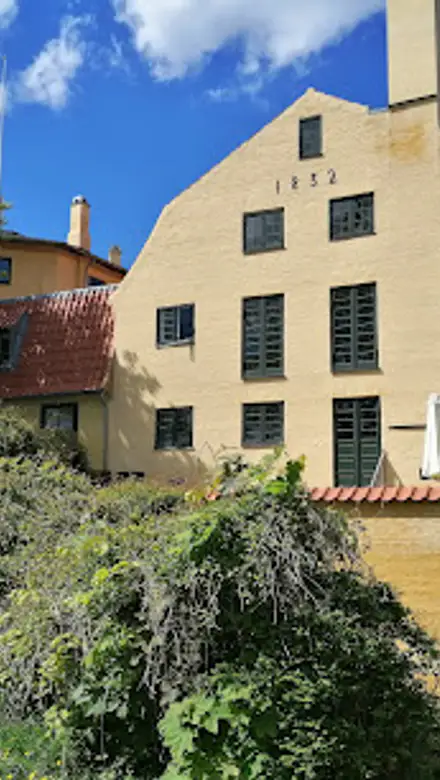
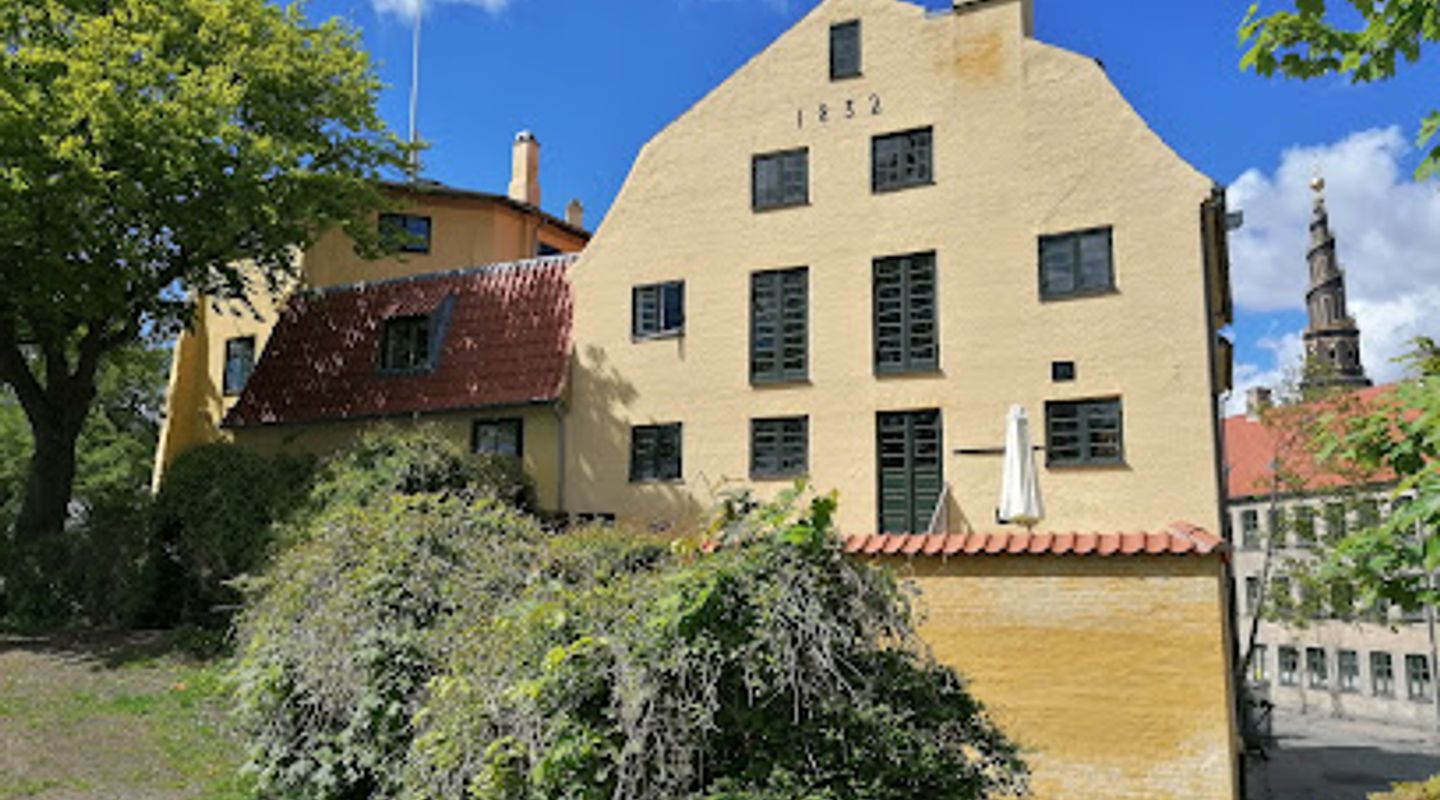
Lille Mølle stands on the grassy earthworks of Christianshavns Vold, the 17th‑century ramparts that once defended Copenhagen’s bustling harbour. From the outside, the mill’s octagonal brick body and cap recall its working past, when wind power turned its machinery and supplied flour to the growing city. Today the sails no longer turn, but the structure remains firmly rooted in the landscape of moats, bastions and trees that soften the former military line.The setting is unusually tranquil for central Copenhagen. You approach along paths used by joggers and dog‑walkers, then suddenly the mill appears above the embankment, slightly elevated, catching the light and breeze. From here you sense how closely industry, defence and daily life once intertwined along these ramparts.
From working mill to private residence
Lille Mølle’s story shifted in the early 20th century, when milling ceased and the building was converted into a private home. Inside, you move through a compact warren of rooms where domestic life was carefully layered over the old industrial shell. Floors follow the mill’s circular plan, with curved walls and slightly irregular spaces shaped by the original structure.The interiors preserve furniture, tableware, textiles and artworks from the early 1900s, evoking a cultured Copenhagen household. Parlours are arranged with dark wood pieces, patterned wallpapers and small decorative objects that feel as if the owners have only just stepped out. Yet beneath the homely atmosphere, the building’s origins remain legible in exposed beams, narrow staircases and the sense of height within the mill tower.
A museum of lived-in details
Today Lille Mølle functions as a small museum, typically visitable on guided tours that take you through several floors. Rather than large display cases, much of the experience lies in noticing details: a writing desk set for correspondence, framed portraits on the walls, books lined up along low shelves. Period lighting, textiles and even kitchen items help reconstruct everyday routines within this unusual vertical home.Because the spaces are compact, the guiding style is often conversational, with stories attaching to particular objects or rooms. You gain a sense not only of architectural history, but of personality: how the inhabitants entertained guests, decorated according to taste, and adapted a former mill into a comfortable residence on the ramparts.
Views over Christianshavn’s canals and ramparts
As you climb higher, glimpses through the windows connect the intimate interior to the wider city. One side opens towards Christianshavn’s canals and coloured houses; another looks out across the water and the tree‑lined paths of the old fortifications. The mill’s elevated position gives modest but characterful views, more about atmosphere than sweeping panoramas.Stepping back outside after the tour, you can continue along the embankments, where the rounded forms of bastions and lakes reveal the original defensive design. Seen from the surrounding paths, Lille Mølle becomes a focal point on the skyline of the ramparts, a reminder of an era when windmills were everyday infrastructure rather than curiosities.
Exploring Christianshavn around the mill
Lille Mølle sits within easy walking distance of many of Christianshavn’s landmarks, yet feels tucked away from the busier streets. Nearby, the spiral tower of the Church of Our Saviour rises dramatically above the district, while the canals offer reflections of old warehouses and modern apartments. The contrast emphasises how compact and human‑scaled the mill is, standing between harbour city and green defences.A visit here fits naturally into a half‑day wander through the neighbourhood: a pause on the ramparts, a guided look into a preserved home, and then onward along the water or through cobbled side streets. For travellers interested in quieter corners of Copenhagen’s past, Lille Mølle offers a concentrated slice of history, architecture and everyday life in one small, characterful building.
Evendo Review Centre
 Google
Guest reviews
Best time to go
Quietest: Jan, Feb & Mar · before 8am or at 6pm
Busy times are Evendo estimates for a typical year, to help you plan. Actual crowds vary with events, school holidays and the weather.
Explore Lille Mølle on the map
A handpicked selection of must-see spots near Lille Mølle, mapped for you.
Get your free copy of our complete guide to Lille Mølle, delivered straight to you.
Everything on this page, from opening hours and how to get there to Eve’s tips and the best time to go, in one PDF you can read offline, print or share.
Already have an account? Sign in
Your Lille Mølle guide is ready.
We'll send it to · Not you? Sign out

Getting your guide ready…
We are putting together a fresh copy of the Lille Mølle guide. This can take up to a minute.
This can take a few moments. If your browser asks, choose Allow so the download can start. You'll find the guide in your Downloads folder.
Nothing happened? Download it again
Sorry, the guide is taking longer than usual. Please try again in a minute, or get it by email instead.
Unlock the best of Lille Mølle
Skip-the-line tickets, guided tours with entry, and walking tours of the area, booked in a few clicks.

Other nearby places you may find interesting
The closest places of the same kind, if this one is not quite what you had in mind.
-
-

-
-
-


Swipe for more places
More to explore near Lille Mølle

 Best experiences near Lille Mølle
 Best hotels near Lille Mølle
 Best landmarks near Lille Mølle
 Best attractions near Lille Mølle
 Best shops near Lille Mølle
 Best restaurants near Lille Mølle
 Best bars near Lille Mølle
Do you manage this location?
Take control to get all the benefits, like improved information, better appearance, and stronger visibility across AI-powered discovery.
Explore more

Explore more of Copenhagen
Discover Copenhagen: A perfect blend of history, modernity, and vibrant culture, where picturesque canals, stunning architecture, and world-class dining await you.
Explore Copenhagen
Explore more of Denmark
Discover Denmark: A perfect blend of history, modern design, and the cozy concept of hygge. Explore vibrant cities, serene landscapes, and world-class cuisine.
Explore Denmark