Det Ny Teater, Copenhagen Travel Guide
Opulent 1908 theatre straddling Vesterbro and Frederiksberg, famed for grand musicals, ornate interiors and one of Denmark’s most impressive historic stages.
Det Ny Teater on Gammel Kongevej is one of Copenhagen’s grandest theatre buildings, a 1908 Art Nouveau–influenced playhouse that spans a covered passage between Vesterbro and Frederiksberg. Behind its ornate facade lies a lavish auditorium with around 1,000 seats, a pioneering revolving stage and richly decorated foyers. Today it is Denmark’s only privately run theatre, best known for large-scale, West End–style musicals staged in a classic, old-world setting.
A brief summary to Det Ny Teater
- Gl. Kongevej 29, Copenhagen, Vesterbro/Kongens Enghave, 1610, DK
- Click to display
- Click to display
- Duration: 2 to 4 hours
- Mid ranged
-
 Indoor
- Mobile reception: 5 out of 5

Know before you go
Hi, I'm Eve. Here are a few practical things to know before exploring Det Ny Teater.
- Arrive at least 20–30 minutes before curtain to explore the foyers, admire the historic interiors and avoid queues at the bars and cloakroom.
- If you want the full impact of the stage effects and orchestra, aim for seats in the front of the stalls or lower balcony rather than the very top tier.
- Check the performance language when booking; major musicals are often presented in Danish even when based on English-language originals.
- Use the interval to stroll the passage between Gammel Kongevej and Vesterbrogade and see the theatre’s facade from both sides.
Do you manage this location?
Take control to get all the benefits, like improved information, better appearance, and stronger visibility across AI-powered discovery. Learn more about listing your business on Evendo
Activate your presenceOther nearby places you may find interesting
The closest places of the same kind, if this one is not quite what you had in mind.

Explore Det Ny Teater on the Map
A handpicked selection of must-see spots near Det Ny Teater, mapped for you.
Unlock the Best of Det Ny Teater
Buy tickets
-
No tickets available
Book tours with entry


Getting There
-
Metro
Take the M3 Cityringen metro to Frederiksberg Allé Station, which is roughly one stop from Copenhagen Central. Trains run every few minutes throughout the day, and the ride from the central area typically takes 3–6 minutes. A single-zone ticket costs about 20–30 DKK. From Frederiksberg Allé it is a short, level walk along major streets, suitable for most visitors including those with limited mobility.
-
Bus
Several bus routes run along Vesterbrogade and Gammel Kongevej from the city centre and Copenhagen Central Station, with typical journey times of 10–20 minutes depending on traffic. Standard bus tickets cost around 20–30 DKK within the central zones. Buses usually run every 5–15 minutes during the day and evening, but can be busier around performance times, so allow extra time before curtain-up.
-
Walking from Central Station
From Copenhagen Central Station, Det Ny Teater is within a pleasant urban walk of roughly 20–25 minutes through Vesterbro. The route follows broad, well-lit streets with pavements and frequent crossings. It is generally flat and straightforward, though it may be less comfortable in heavy rain or snow. This is a good option if you want to combine the theatre visit with a short city stroll.
-
Taxi
Taxis are widely available in central Copenhagen and at Copenhagen Central Station. A ride to Det Ny Teater usually takes 5–10 minutes outside rush hour, longer during peak traffic. Fares typically range from about 80–150 DKK depending on time of day and traffic. Drop-off is possible close to the entrance, making this the most convenient option for visitors with limited mobility or in bad weather.
For the on-the-go comforts that matter to you
-
 Restrooms
-
 Drink Options
-
 Food Options
-
 Seating Areas
-
 Sheltered Areas
-
 Trash Bins
-
 Information Boards
Discover more about Det Ny Teater
A grand theatre straddling two neighbourhoods
Det Ny Teater stands where lively Vesterbro meets elegant Frederiksberg, its monumental facade anchoring a covered passage that links Gammel Kongevej with Vesterbrogade. Conceived in the early 1900s as part of a larger real-estate project, the theatre was designed not just as a stage but as the centrepiece of an entire urban block. When it opened in 1908, it immediately became one of Denmark’s largest theatres, with about 12,000 square metres of floor space and more than 1,000 seats spread between the main auditorium and smaller spaces.The building’s architecture mixes French-inspired grandeur with Nordic detailing. High, sculpted facades, decorative reliefs and large windows signal its role as a cultural landmark, while the covered passage running beneath it turns the complex into a miniature city within the city – a place where people live, dine and shop around the theatre at its heart.Stage innovations and changing repertoires
From the outset, Det Ny Teater positioned itself at the forefront of theatre technology. It was among the first in Denmark to introduce a revolving stage, allowing rapid scene changes and ambitious productions that would have been difficult elsewhere. This technical edge helped the theatre mount elaborate shows, from early 20th-century dramas and comedies to later modernist works.In the mid-20th century, under director Peer Gregaard, the repertoire broadened significantly. Classic plays were presented alongside new Danish and European drama, and the theatre developed a reputation for challenging the more traditional programming of the Royal Danish Theatre. The big stage, advanced machinery and willingness to experiment made it a pivotal venue for serious drama as well as lavish entertainment.Decline, rescue and meticulous restoration
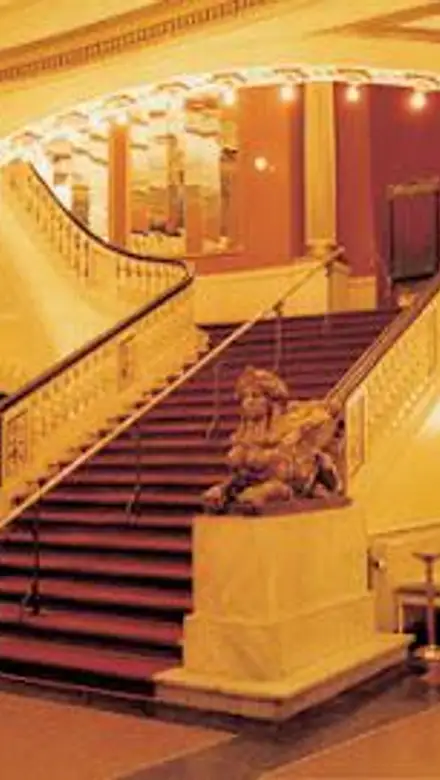
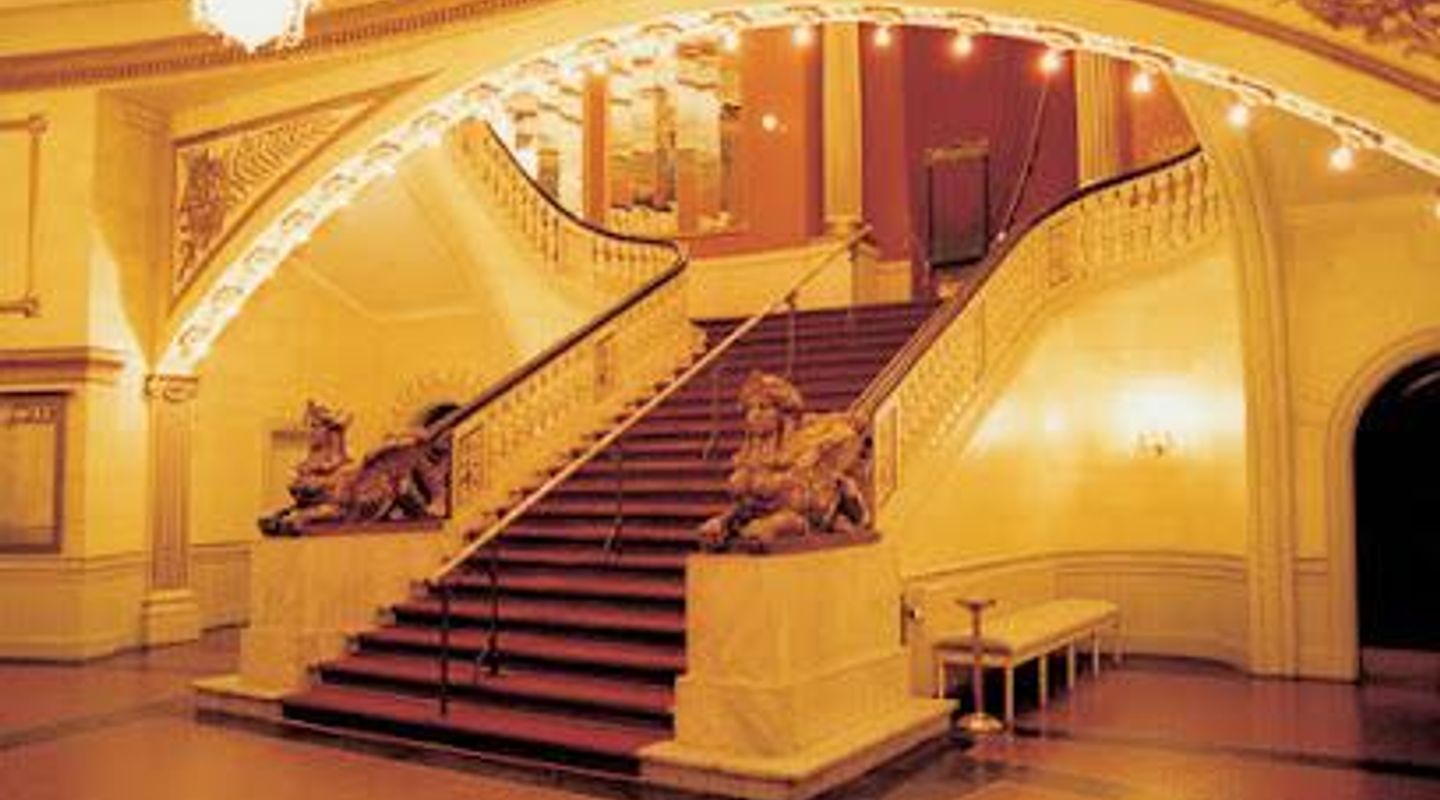
By the late 1980s the grand building was worn and financially burdened. Operations ceased in 1990, and for a time the future of Det Ny Teater was deeply uncertain. A concerted rescue effort involving the theatre’s management and its owning foundation secured funding for an extensive restoration, aiming to preserve the historical character while updating the building to modern safety and comfort standards.After several years of work, the theatre reopened in 1994. Much of the original decorative scheme was carefully restored: stucco, plasterwork and gilded details in the foyers, sweeping staircases and ornate light fixtures regained their turn-of-the-century glow. At the same time, backstage areas, technical systems and audience facilities were modernised, allowing the house to host large productions with contemporary demands for sound, lighting and stagecraft.A private musical powerhouse in Copenhagen
On reopening, Det Ny Teater redefined itself as a privately run musical theatre, focusing on large-scale productions on par with international stages. It has since staged numerous well-known titles, from operettas to modern Broadway and West End shows, often with full orchestras, detailed period costumes and expansive sets that make full use of the revolving stage and fly tower.Being privately operated gives the theatre a distinct profile in Denmark’s cultural landscape. It relies on strong attendance rather than public subsidy, which has encouraged programming that balances artistic ambition with broad appeal. The result is a house known for polished, visually rich performances that draw both local audiences and visitors interested in a big-night-out experience.Inside the auditorium’s golden glow
Stepping into the main auditorium, you enter a classic horseshoe-shaped space with multiple balconies, plush seating and a monumental proscenium arch framing the stage. Warm colours, gilded ornamentation and soft lighting create an intimate yet opulent atmosphere, even though the room seats around a thousand people. The design ensures good sightlines from most seats and accentuates the sense of being enveloped by the performance.The surrounding foyers and bars continue the theme of early 20th-century luxury. Marble, mirrors and decorative ceilings make the intervals almost as much a part of the experience as the show itself. In the basement, a smaller space has often been used for more intimate productions, adding another layer to the building’s theatrical life.Experiencing Det Ny Teater today
Today, a visit to Det Ny Teater is as much about the building as about the performance. People come dressed for an evening out, pausing on the steps or in the passage to take in the facade before moving inside to find their seats. Theatres bars and lounges provide spots to chat before the curtain rises, while the buzz of anticipation in the auditorium underscores the live nature of what is about to unfold.Whether you are seeing a blockbuster musical or simply exploring the neighbourhood, the theatre remains a powerful symbol of Copenhagen’s long-running love affair with the stage. Its survival through financial crises, closure and restoration speaks to the value placed on this kind of historic urban theatre – a place where ornate architecture, technical ingenuity and live performance continue to come together under one roof.












Your all‑in‑one travel companion app
Explore expert travel guides, compare and book tours, experiences, hotels, and more—all from the palm of your hand. Download now for seamless trip planning wherever your wanderlust takes you.


Explore More of Copenhagen
Looking beyond Det Ny Teater? Discover Copenhagen for broader travel guides, local hot-spots, and regional highlights.
Explore Copenhagen