

Rainbow Square (Regnbuepladsen), Copenhagen
A modest city-centre plaza with a mighty message, Rainbow Square blends minimalist design, history and LGBT+ symbolism beside Copenhagen’s City Hall.
Tucked beside Copenhagen City Hall, Rainbow Square (Regnbuepladsen) is a small but symbolically powerful urban space dedicated to LGBT+ equality. Once a car park, it was reimagined by architects Hall McKnight into a minimalist plaza of cobblestones, granite seating blocks and carefully planted trees. Named in 2014 after the rainbow flag, it serves as a quiet everyday hangout and a backdrop for Pride events, political gatherings and moments of reflection in the very heart of the city.
A brief summary to Rainbow Square
- Regnbuepladsen, Copenhagen, Indre By, 1552, DK
- Duration: 0.5 to 1.5 hours
- Free
-
 Outdoor
- Mobile reception: 5 out of 5

Know before you go
Hi, I'm Eve. Here are a few practical things to know before exploring Rainbow Square.
- Bring a takeaway coffee or snack and use the granite blocks as impromptu seating while you watch the everyday life of central Copenhagen go by.
- Look closely at the paving and stone blocks facing the Vartov building to spot patterns inspired by the windows and engraved Hans Christian Andersen text.
- If you visit during Copenhagen Pride, allow extra time; Rainbow Square often forms part of the celebrations and can be lively and colourful.
- Come early in the morning or later in the evening for quieter moments and softer light if you plan to take photos of the square and nearby façades.
Do you manage this location?
Take control to get all the benefits, like improved information, better appearance, and stronger visibility across AI-powered discovery. Learn more
Activate your presence

Getting There
-
Metro from central Copenhagen
From Kongens Nytorv or Nørreport stations, take any metro line running to Rådhuspladsen Station in the inner city; trains run every few minutes and the ride typically takes 3–6 minutes. A single-zone ticket costs around 20–25 DKK and is valid on buses and trains within the central area. From the station concourse, it is a short, step-free walk through the main City Hall Square to reach Rainbow Square.
-
City bus within the inner districts
Several city bus lines serve the City Hall area from neighbourhoods such as Vesterbro, Nørrebro and Østerbro, with journey times of about 10–20 minutes depending on traffic. Standard bus fares in the central zones are roughly 20–25 DKK per ride, and buses usually run every 5–15 minutes throughout the day. Most services stop on streets around City Hall Square, from where you can walk a few minutes on level pavements to Rainbow Square.
-
Cycling in the city centre
Copenhagen’s extensive cycle paths make Rainbow Square easy to reach by bike from most central districts in around 5–15 minutes. You can use public bike-share schemes, which typically cost about 15–30 DKK for short rides or have day passes at higher but still moderate prices. Cycle lanes are generally well marked and lit, though you should be comfortable with busy urban traffic, especially during rush hours near City Hall.
-
Taxi from inner Copenhagen hotels
From many central hotels, a taxi ride to the City Hall area takes roughly 5–15 minutes, depending on distance and congestion. Expect typical fares of around 80–160 DKK within the inner city, with higher prices at night or in heavy traffic. Taxis can drop passengers on the perimeter streets of City Hall Square, and from there the approach to Rainbow Square is on foot across broad, pedestrian-friendly surfaces.
For the on-the-go comforts that matter to you
-
 Restrooms
-
 Drink Options
-
 Food Options
-
 Seating Areas
-
 Trash Bins
-
 Information Boards
Rainbow Square location weather suitability
-
 Any Weather
-
 Clear Skies
-
 Mild Temperatures
-
 Rain / Wet Weather
-
 Cold Weather
Discover more about Rainbow Square
A quiet corner with a powerful name
Rainbow Square, or Regnbuepladsen, occupies a modest corner just off Copenhagen’s grand City Hall Square, yet its name carries global resonance. Officially dedicated in 2014, it was named after the rainbow flag as a tribute to the struggle for equal rights for gay, lesbian, bisexual and transgender people. The decision followed years of debate about how to mark Denmark’s role as an early pioneer of LGBT+ rights, culminating in this understated but highly visible gesture at the city’s civic heart. From the square, the towers of City Hall and the flowing traffic of central Copenhagen are only steps away, but the mood here is noticeably calmer. The space is pedestrian-friendly and open, used daily as a place to pause, meet friends or sit in the sun, as well as a symbolic gathering point during Copenhagen Pride and other equality-focused events.From car park to contemporary urban plaza
The site was long an anonymous patch of asphalt used for parking and service access. In the late 2000s, the municipality launched a competition to transform it into a proper public space. Irish architectural firm Hall McKnight won with a design that embraces restraint rather than spectacle, letting subtle details and context do the work. Construction and renewal culminated around 2013, when the former extension of City Hall Square took on a clearly defined identity of its own. The new layout introduced more breathing space, a careful arrangement of trees and robust granite elements that invite sitting and lingering. Vehicles were pushed to the background, and the ground plane was reworked to knit the square into its surroundings, connecting visually to City Hall on one side and the historic Vartov building on the other. What might look like a simple paved plaza at first glance reveals, on closer inspection, a deliberately composed urban room.Granite patterns, fairy tales and hidden stories
One of Rainbow Square’s most distinctive features is its patterned paving. Bands of granite and cobblestone echo the rhythm of the many windows on the red-brick façade of Vartov, the centuries-old building that frames one edge of the site. This mirroring effect creates a quiet dialogue between old and new, pulling the architecture of the surrounding block down onto the ground beneath your feet. The designers also drew inspiration from Hans Christian Andersen’s text "From a Window in Vartov." Fragments from the tale are engraved into two of the large granite blocks, inviting those who pause here to discover a literary layer beneath the everyday bustle. These blocks serve as both seating and sculpture, their rough-hewn forms softened by people perching on them with coffee cups, phones or notebooks in hand.A civic stage for equality and expression
Although modest in scale, Rainbow Square has become a focal point for civic life linked to human rights and inclusion. Its proximity to City Hall makes it a natural place for speeches, flag-raisings and symbolic acts tied to local and international LGBT+ milestones. During Pride season, the area fills with rainbow colours, temporary installations and a celebratory atmosphere, though for most of the year it remains an everyday shortcut and pause point for office workers and visitors. The presence of the rainbow flag and the square’s name send a clear message about Copenhagen’s values. Standing here, between government offices and historic façades, you are literally in a space that declares support for diversity and openness. It is both a place to celebrate progress and a reminder that equal rights are a continuing project.Everyday rhythms in the centre of the city
Outside of major events, Rainbow Square feels pleasantly low-key. The soundscape mixes bike bells, snippets of conversation and the distant chime of City Hall’s clock. Trees offer seasonal variation: bare branches framing winter light, fresh leaves in spring, and dappled shade in summer. People drift through on their way across the centre, or sit along the granite blocks for a break between museum visits, shopping or administrative errands. Cafés, shops and cultural venues are all within a short stroll, so the square often functions as an informal meeting point. Its simple design, hard-wearing surfaces and lack of clutter mean it works in all kinds of weather, from crisp blue-sky days to soft Danish drizzle. Whether you stay for five minutes or an hour, it gives you a momentary island of calm in one of Copenhagen’s busiest districts.Reading the city through a small space
Spending time at Rainbow Square offers a compact lesson in how contemporary Copenhagen balances history, design and social values. Look one way and you see medieval church spires and brickwork; turn another and the modernist lines of newer buildings come into view. Underfoot, the carefully laid stones tell a story about craftsmanship and attention to detail. Above, the rainbow banner signals that this is also a place of ideas and ideals. By day it may seem like just another paved plaza, but understanding its backstory changes the experience. This is a place where urban design carries meaning beyond aesthetics, where the pattern of the ground and the text in stone are as much part of the narrative as the flag overhead. For travellers, it is a small but resonant stop that connects architecture, literature and human rights in the space of a few steps.Explore the best of what Rainbow Square has to offer















More about Copenhagen
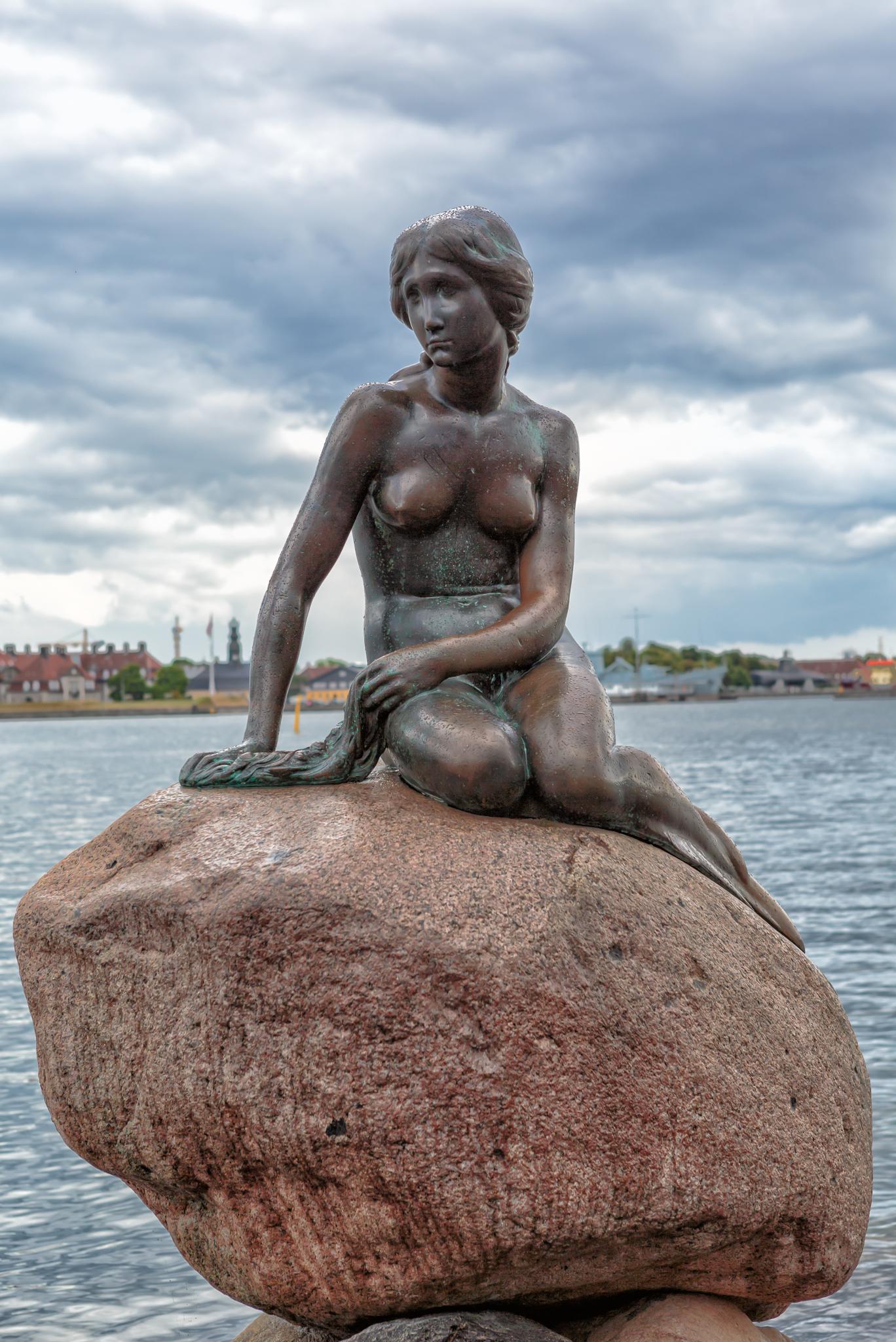
Discover Copenhagen: A perfect blend of history, modernity, and vibrant culture, where picturesque canals, stunning architecture, and world-class dining await you.
Tell me more about Copenhagen
A bold "København" sculpture on the harborfront at Langebrogade, mixing graphic design, waterfront views, and everyday local life in Copenhagen’s inner city.
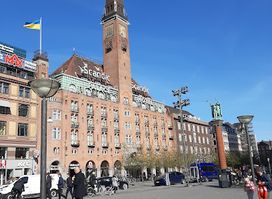
A compact oddities museum on Rådhuspladsen where shrunken heads, vortex tunnels and record‑breaking curiosities turn everyday Copenhagen into a world of wonders.
