Background

Stortorget, Malmö

Malmö’s grand 16th‑century main square, where Renaissance power, shifting borders and everyday city life all play out on a single open stage.

From Danish Market Vision to Malmö’s Grand Stage

Stortorget was laid out in the late 1530s on the orders of mayor and mint master Jørgen Kock, at a time when Malmö was a prosperous Danish trading hub. To create space for the new square, an entire block of medieval buildings, including the Monastery of the Holy Spirit, was demolished, opening a vast, almost square plaza around 140 metres across. The new marketplace quickly eclipsed the older, cramped trading area and became the beating commercial heart of the city. For centuries, farmers and merchants converged here with grain, livestock and everyday goods bound for local households and for export across the Øresund. The broad expanse allowed carts, animals and temporary stalls to jostle side by side, while nearby guild houses and trading offices handled deals that linked Malmö to wider Baltic and North Sea trade routes.

Architecture Framing the Civic Heart

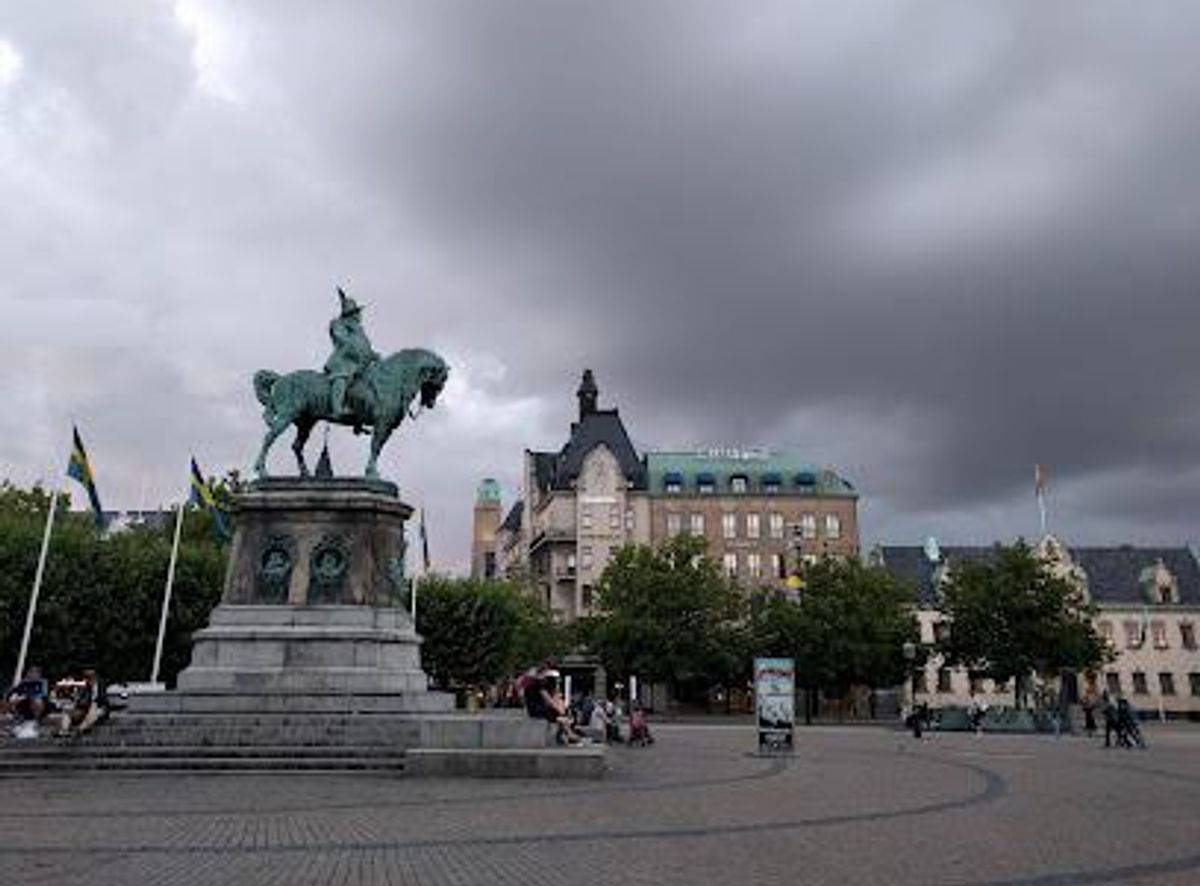
The architecture around Stortorget tells Malmö’s story in brick and stone. On the eastern side stands the City Hall, first completed in the 1540s and once considered the largest town hall in the Nordic region. Its façade has been reworked over time, blending Renaissance roots with later historicist flourishes, but it still projects the same message of mercantile confidence and civic pride that defined the square’s early years. Nearby, the Kockska huset, Jørgen Kock’s own 16th‑century residence, adds sturdy brick gables and decorative details that recall Malmö’s Hanseatic connections. Around the rest of the perimeter, late‑19th‑century landmarks such as Hotel Kramer and Hotel Savoy contribute ornate façades and grand windows, creating a stately urban room where each building plays a part in the overall ensemble.

Monuments, Memory and Power

At the centre of the square rises the equestrian statue of Karl X Gustav, the Swedish king whose campaigns in the 17th century led to Skåne’s transfer from Denmark to Sweden. The monument anchors the open space and embodies a complex regional history of shifting borders and loyalties. Its presence turns the square into a stage for national narratives as well as local daily life. Beneath your feet, the cobbles and paving stones conceal traces of earlier water systems that once served traders and households. A subtle line of pale markers in the pavement indicates the spot of a historic cistern, a reminder that practical infrastructure and monumental display have always intersected here.

Everyday Life on a Historic Stage

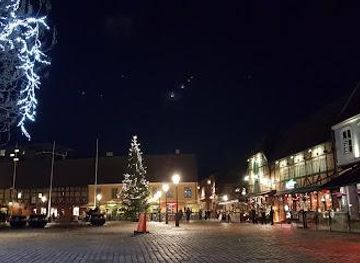
Today Stortorget functions as a generous open living room for central Malmö. The square links key pedestrian routes such as Södergatan and the lanes leading toward Lilla Torg and the canals, so you see a steady flow of cyclists, commuters and shoppers crossing its wide surface. In fine weather, outdoor seating from surrounding cafés and hotels spills into the space, softening the formal edges with the clink of cups and low conversation. Seasonal markets, civic ceremonies and cultural happenings periodically transform the square into a festive arena, yet there are also quieter corners where you can sit on a bench, study the façades and watch the rhythm of the city unfold. The generous scale ensures that even on busy days the square rarely feels cramped, preserving a sense of openness that contrasts with the more intimate courtyards and side streets nearby.

Reading Layers of Time in the Urban Fabric

Stortorget rewards slow observation. Look closely at the variation in brickwork and window shapes to see how construction techniques and tastes evolved from Renaissance craftsmanship to 19th‑century classicism. Street names leading away from the square hint at vanished alleys and medieval layouts erased when the new marketplace was imposed on the older town plan. Subtle design choices, from the alignment of tram and bus routes on surrounding streets to the placement of lighting and trees, show how the square continues to adapt to modern needs while retaining its historic outline. Standing here, you sense both continuity and change: the same space that once echoed with the calls of livestock traders now hosts city events, demonstrations and everyday meetings, making Stortorget an enduring focal point for Malmö’s public life.

Experiencing Malmö’s Centerpiece Today

For visitors, Stortorget is both orientation point and atmosphere in one. It offers clear sightlines toward nearby church towers and canals, helping you mentally map the old town, while the mix of historic buildings and contemporary street life encapsulates Malmö’s blend of heritage and modernity. Early mornings reveal delivery vans and commuters reclaiming the square; evenings bring softer light on the façades and the glow of interiors around its edges. Whether you pause for photographs of the City Hall, sit beneath the statue’s pedestal, or simply cross the cobbles on your way elsewhere, you participate in a centuries‑long tradition of using this space as a shared urban stage. Stortorget is less about individual attractions and more about the experience of standing at the point where Malmö’s past and present continuously meet.

Local tips

  • Visit early in the morning or around sunset to enjoy softer light on the City Hall and surrounding façades, ideal for wide-angle photos of the entire square.
  • Combine Stortorget with nearby Lilla Torg and the canals on a short walking loop to see how Malmö’s historic spaces shift from grand to intimate.
  • Look for the equestrian statue of Karl X Gustav and the subtle pavement markers indicating the old water cistern to appreciate the square’s layered history.
  • In cooler months, dress warmly and be prepared for wind across the open square, which can feel colder than nearby, more sheltered streets.
  • Check in advance if any civic events or markets are scheduled during your visit, as these can significantly change the atmosphere and crowd levels.
widget icon

Buy tickets

    No tickets available

Book tours with entry

    No tours available

Book tours without entry

    No tours available

A brief summary to Stortorget

  • Malmö, SE

Getting There

  • Train and walking from Malmö Central Station

    From Malmö Central Station, Stortorget is roughly a 10–15 minute walk through the compact city centre on level pavements suitable for most visitors. Regional and Öresund trains connect the station with nearby cities such as Copenhagen, Lund and Helsingborg, with typical journeys from Copenhagen taking about 35–45 minutes and standard adult single fares in the range of 120–170 SEK. The walk from the station to the square is well lit and straightforward, but can feel windy and cold in winter months.

  • City bus within Malmö

    Several city bus lines stop within a 5–10 minute walk of Stortorget, with total travel times from outer districts typically 15–30 minutes depending on distance and traffic. Single adult tickets on Malmö’s urban buses usually cost around 30–40 SEK when purchased via local transport apps or ticket machines, and services run frequently in daytime but thin out later in the evening. Buses are generally low-floor and wheelchair-accessible, though boarding may be easiest at major hubs such as Malmö Central Station or Gustav Adolfs torg.

  • Bicycle access through central Malmö

    Malmö is notably cycle-friendly, and Stortorget sits close to several main bike routes across the inner city. From nearby neighbourhoods like Möllevången or Västra Hamnen, cycling times to the square are usually 10–20 minutes on mostly flat, segregated lanes. Public bike-share and rental options are available at various points in the centre for modest hourly or daily fees, but be aware that the immediate edges of the square can be busy with pedestrians, so you may need to dismount and walk the final stretch.

  • Car and taxi within Malmö

    Driving to the streets around Stortorget from other parts of Malmö typically takes 10–25 minutes, depending on distance and congestion, but the immediate area is part of the dense inner city with limited street parking. It is more practical to use nearby public car parks, where hourly rates commonly range between 20–40 SEK, and then walk a short distance to the square. Taxis within Malmö’s central zones often cost roughly 120–220 SEK for common inner-city trips; journey times are similar to driving yourself, but can vary at peak hours or during major events when traffic is heavier.

Popular Experiences near Stortorget

Popular Hotels near Stortorget

Select Currency