Peberholm Travel Guide
Free Guide: A man-made island where nature reclaimed the landscape—Europe's most successful ecological experiment.


A brief summary of Peberholm
A man-made island where nature reclaimed the landscape—Europe's most successful ecological experiment.
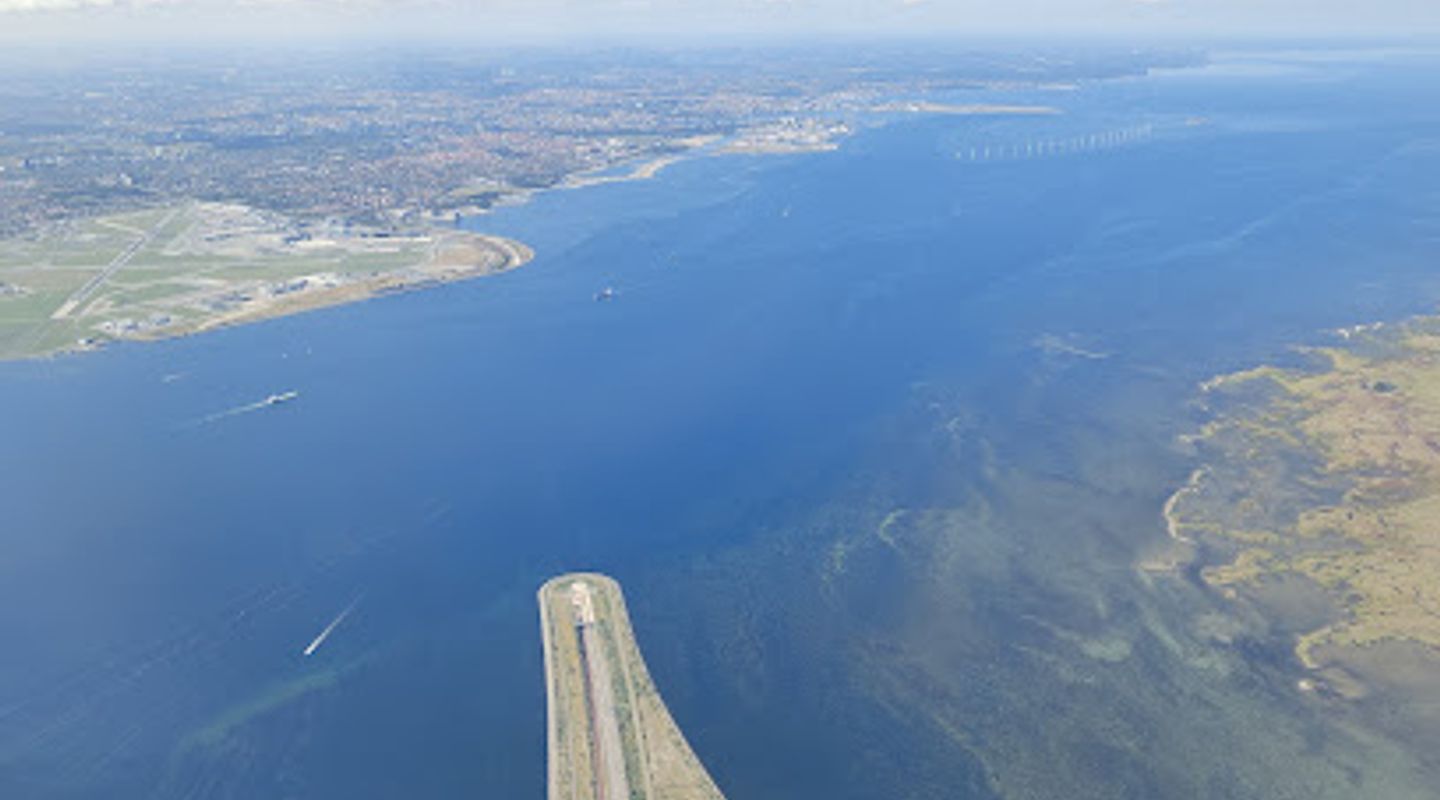
Peberholm is a remarkable 1.3 km² artificial island in the Øresund Strait between Denmark and Sweden, created as a pivotal junction between the Øresund Bridge and the Drogden Tunnel. Built from 1995–1999 using dredged seabed material, this engineering marvel was intentionally left to nature, resulting in an extraordinary ecological success story. Today, it hosts over 600 plant species, 30 nesting bird species, and rare European green toads, making it one of Europe's most unique natural experiments.
- Address
- 2770
Getting there
Øresund Bridge by car
Øresund Bridge by train
Coastal viewing from Amager Strandpark
Coastal viewing from Dragør
Discover more about Peberholm
Engineering Marvel at the Heart of the Strait
Perberholm was constructed as a critical structural and functional component of the Øresund Fixed Link, the massive infrastructure project connecting Copenhagen and Malmö. Built between 1995 and 1999, the island spans approximately 4 kilometers in length and 500 meters in width, covering 1.3 km² (130 hectares). Its creation required approximately 9 million cubic meters of dredged material from the tunnel trench, supplemented by 1.6 million tons of stone embankments. The island's name—meaning "Pepper Islet" in Danish—was chosen to complement its natural neighbor, Saltholm ("Salt Islet"), located 1 kilometer to the north.The island serves as the crucial transition point where traffic shifts from the two-level bridge structure to the single-level tunnel portal. This engineering solution was necessary because a bridge spanning the entire distance between Copenhagen and Malmö would have interfered with obstacle-free zones required around Kastrup Airport and would have been too high for freight train traffic. Peberholm's location ensures optimal water flow through the strait while enabling seamless traffic management between the bridge and tunnel systems.
A Bold Experiment in Natural Succession
What makes Peberholm truly exceptional is the decision to leave it entirely to nature. No landscaping occurred, no soil was imported from the mainland, and nothing was planted by human hands. The barren island was simply left open, allowing plant and animal species to colonize naturally from Denmark and Sweden. This unprecedented ecological experiment has yielded astonishing results. Within just a few years, the lifeless landscape transformed into a thriving ecosystem teeming with biodiversity.Today, Peberholm hosts an estimated 600 plant species, including rare orchids carried by wind from mainland meadows. Approximately 30 bird species nest on the island annually, including geese, ducks, great cormorants, and waders. The white-tailed eagle is frequently observed during winter months. Perhaps most remarkably, the European green toad—a rare and protected species in Denmark—established a thriving population in the island's ditches. A 2007–08 survey counted 2,500 individuals, representing one of Scandinavia's largest populations of this species.
Protected Sanctuary and Conservation Efforts
Recognizing the island's ecological significance, Danish and Swedish authorities implemented strict protective measures. Peberholm has been designated a Natura 2000 site since 2000, affording it protection under European conservation law. The island is classified under two bird protection habitats (H110 and H126) and forms part of Natura 2000 area 142, which encompasses Saltholm and surrounding waters totaling 7,218 hectares. Access is severely restricted: only authorized biologists are permitted one annual visit to areas outside the railroad and highway infrastructure. Ordinary visitors are prohibited to preserve the island's self-regulating ecological balance.Conservation management has evolved over time. By 2020, annual surveys revealed that certain species thriving in open, bright conditions were declining as vegetation increased. In response, Øresundsbro Konsortiet (the bridge operator) began selective clearing of shrubs and small trees on approximately 10% of the island's area. These targeted efforts successfully reversed the decline and restored populations of species previously at risk of disappearing.
Modern Sustainability and Infrastructure
In spring 2023, Peberholm underwent a green transformation with the installation of 10,000 square meters of solar panels on the island, supplemented by 3,000 square meters at the toll station. This solar installation now provides nearly half of the Øresund connection's electricity consumption, demonstrating how the island continues to serve both functional and environmental purposes. An emergency exit from the motorway and a helicopter pad for traffic accident response remain the only authorized human infrastructure on the island.
A Symbol of Human-Nature Harmony
Peberholm represents a unique philosophical approach to infrastructure development—the belief that when humans step back and allow natural processes to unfold, remarkable outcomes emerge. The island demonstrates that engineered landscapes can evolve into something genuinely wild and valuable. Travelers crossing the Øresund Bridge or tunnel experience Peberholm as a fleeting moment of green horizon where the bridge becomes land before descending into the water. For those seeking distant views, the island is visible from Amager Strandpark and coastal paths near Dragør, where the Øresund Link unfolds like a ribbon across the sea. At sunset, the island's dunes glow golden against the silver-blue waters of the strait, a visual reminder of the delicate balance between human ingenuity and natural restoration.
Evendo Review Centre
 Google
Guest reviews
Best time to go
Quietest: Jan, Feb & Dec · before 6am or from 11pm
Busy times are Evendo estimates for a typical year, to help you plan. Actual crowds vary with events, school holidays and the weather.
Explore Peberholm on the map
A handpicked selection of must-see spots near Peberholm, mapped for you.
Get your free copy of our complete guide to Peberholm, delivered straight to you.
Everything on this page, from opening hours and how to get there to Eve’s tips and the best time to go, in one PDF you can read offline, print or share.
Already have an account? Sign in
Your Peberholm guide is ready.
We'll send it to · Not you? Sign out

Getting your guide ready…
We are putting together a fresh copy of the Peberholm guide. This can take up to a minute.
This can take a few moments. If your browser asks, choose Allow so the download can start. You'll find the guide in your Downloads folder.
Nothing happened? Download it again
Sorry, the guide is taking longer than usual. Please try again in a minute, or get it by email instead.
Other nearby places you may find interesting
The closest places of the same kind, if this one is not quite what you had in mind.
-
-
-
-
-


Swipe for more places
More to explore near Peberholm

 Best experiences near Peberholm
 Best hotels near Peberholm
 Best landmarks near Peberholm
 Best attractions near Peberholm
 Best shops near Peberholm
 Best restaurants near Peberholm
 Best bars near Peberholm
Do you manage this location?
Take control to get all the benefits, like improved information, better appearance, and stronger visibility across AI-powered discovery.
Explore more

Explore more of The North Sea Islands
Discover the North Sea Islands of Denmark: idyllic sandy beaches, vibrant local culture, and unique natural landscapes await you on Fanø, Rømø, and Mandø.
Explore The North Sea Islands
Explore more of Denmark
Discover Denmark: A perfect blend of history, modern design, and the cozy concept of hygge. Explore vibrant cities, serene landscapes, and world-class cuisine.
Explore Denmark