St. Peter's Church, Copenhagen Region Travel Guide
Malmö’s oldest building and a Brick Gothic masterpiece, St. Peter’s Church blends medieval architecture, Reformation history and serene light-filled interiors in the city center.
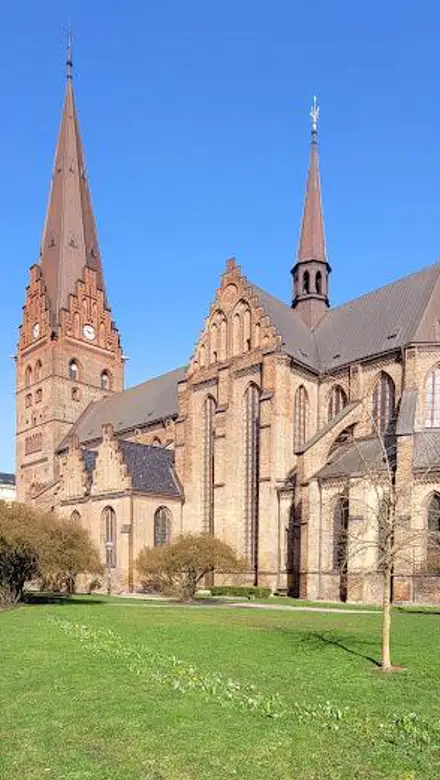
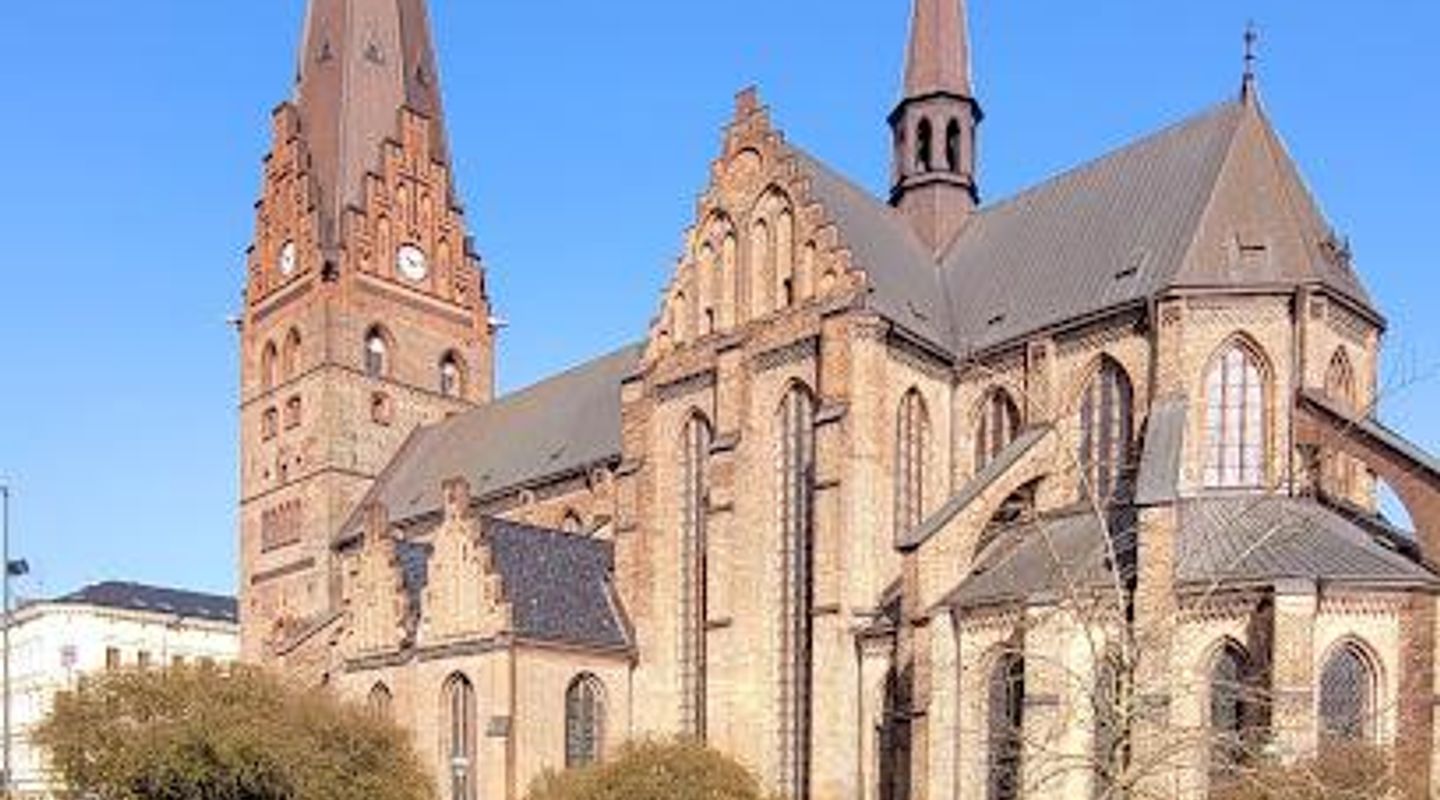
St. Peter’s Church is Malmö’s oldest surviving building and a striking example of Baltic Brick Gothic architecture, rising just off Stortorget in the historic city center. Built between the early 14th century and around 1380, its soaring red-brick tower, lofty whitewashed nave and restored medieval murals tell the story of Malmö’s transformation from a Danish medieval trading hub to a modern Swedish city. Inside, intricate stonework, a monumental 17th-century oak altarpiece and a richly carved Renaissance pulpit create a serene, light-filled space that is as much a cultural treasure as a living Lutheran parish church.
A brief summary to St. Peter's Church
- Göran Olsgatan 4, Malmö, 211 22, SE
- Click to display
- Click to display
- Duration: 0.5 to 1.5 hours
- Free
-
 Indoor
- Mobile reception: 4 out of 5
- Monday 10 am-6 pm
- Tuesday 10 am-6 pm
- Wednesday 10 am-6 pm
- Thursday 10 am-6 pm
- Friday 10 am-6 pm
- Saturday 10 am-6 pm
- Sunday 10 am-6 pm

Know before you go
Hi, I'm Eve. Here are a few practical things to know before exploring St. Peter's Church.
- Plan your visit for mid-morning on a weekday when the church is usually quieter, allowing you to linger by the murals, altarpiece and pulpit without feeling rushed.
- Bring a light sweater even in summer; the thick brick walls and high vaults keep the interior noticeably cooler than the streets outside.
- Check onsite notices for organ rehearsals or concerts; hearing the large organ in this acoustic transforms the experience of the architecture.
- Walk slowly around the side chapels and look up to spot sections of restored medieval frescoes that can be easy to miss at first glance.
- Be aware of ongoing services; photography and movement near the altar area should be kept unobtrusive when worship is taking place.
Do you manage this location?
Take control to get all the benefits, like improved information, better appearance, and stronger visibility across AI-powered discovery. Learn more about listing your business on Evendo
Activate your presenceOther nearby places you may find interesting
The closest places of the same kind, if this one is not quite what you had in mind.
Explore St. Peter's Church on the Map
A handpicked selection of must-see spots near St. Peter's Church, mapped for you.
Unlock the Best of St. Peter's Church
Buy tickets
-
No tickets available
Book tours with entry


Getting There
-
On foot from Malmö Central Station
From Malmö Central Station, allow around 10–15 minutes on foot to reach St. Peter’s Church. The route is flat and follows paved sidewalks through the compact city center, crossing canals and passing shops and cafés. This is the most convenient option for most visitors arriving by regional or intercity train, and it is suitable for wheelchairs and strollers in normal weather.
-
City bus within Malmö
Several city bus lines stop within a 5–10 minute walk of St. Peter’s Church, with typical journey times of 10–20 minutes from residential districts or outer neighborhoods. Single urban tickets usually cost in the range of 30–40 SEK and can be bought via mobile apps or ticket machines. Services run frequently during the day, though evening and Sunday schedules can be less frequent, so checking the latest timetable before travel is recommended.
-
Bicycle in the city
Malmö is very bike‑friendly, and reaching St. Peter’s Church by bicycle from most central districts takes roughly 5–15 minutes along dedicated cycle lanes or calm streets. Public bike‑sharing schemes and rental shops typically charge from about 80–150 SEK for a day’s use, with helmets often available. Be prepared to dismount and walk your bike in the immediate surroundings of the church where pedestrian traffic is heavier.
-
Taxi from central Malmö areas
A licensed taxi ride from central hotels or neighborhoods to St. Peter’s Church usually takes 5–10 minutes, depending on traffic. Fares within the inner city commonly range from about 120–220 SEK, with higher prices in peak hours or at night. Taxis can drop passengers close to the church, which is helpful for those with limited mobility, but brief congestion can occur during major events or around rush hour.
For the on-the-go comforts that matter to you
-
 Restrooms
-
 Seating Areas
-
 Information Boards
Discover more about St. Peter's Church
Medieval landmark at the heart of old Malmö
St. Peter’s Church, or Sankt Petri kyrka, anchors the historic core of Malmö just behind the main square. Completed in the 14th century and built entirely in red brick, it is widely regarded as the city’s oldest preserved building and a textbook Baltic Brick Gothic church. The massive western tower, rebuilt after a collapse in the 1400s and later heightened, dominates the low city skyline and once served as both a spiritual beacon and a statement of mercantile pride in what was then an important Danish port.Step back from the façade and you see layers of construction history. The tall nave and slightly lower side aisles create a powerful stepped silhouette, while buttresses, pointed windows and decorative friezes reveal the technical ambition of medieval masons. Along the sides, low chapels project from the main body of the church, hinting at a time when local guilds and wealthy families endowed their own altars in exchange for prayers and prestige.A luminous interior shaped by faith and reform
Passing through the relatively plain portal, you enter a surprisingly bright and open interior. The nave soars to around 25 meters, carried on slender clustered pillars and ribbed vaults that draw the eye upward. In the Middle Ages the walls were crowded with images and sculptures; during the 16th-century Reformation the space was dramatically simplified and later whitewashed, giving the church its characteristic Nordic light.Even with this austerity, the fittings are rich in symbolism. The enormous oak altarpiece from the early 1600s rises like a carved forest of figures behind the main altar, stacked in tiers that depict scenes from the life of Christ, framed by columns, scrollwork and coats of arms. Nearby, the Renaissance pulpit, created at the turn of the 17th century in contrasting black limestone and pale sandstone with gilded details, presents narrative panels from the Gospels, turning sermons into visual storytelling long before microphones and screens.Hidden images in paint, stone and wood
Look closer and St. Peter’s reveals more intimate treasures. In side chapels, sections of 15th- and early 16th-century wall paintings have been uncovered from beneath layers of lime, showing saints, floral patterns and biblical scenes in soft reds and ochres. These restored frescoes rank among the best-preserved medieval murals in the Nordic region and offer a rare glimpse of how vividly colored the medieval interior once was.The octagonal baptismal font, carved from dark stone around 1600, stands like a small architectural object in its own right. Its reliefs show baptismal and biblical motifs, tying daily parish life to grand theological themes. High on the gallery, a mid-20th-century organ with an older-style façade continues the church’s musical tradition, filling the nave with chorales during services and concerts.From Danish stronghold to Swedish city church
St. Peter’s mirrors Malmö’s shifting political and religious identity. When construction began, the town belonged to the Danish crown, and the church was Catholic. With the spread of Lutheran ideas in the 16th century, it became a key Reformation stronghold in the region, its altars reduced in number and its imagery curbed in line with new teachings. Centuries later, careful restorations have tried to respect both the simplicity favored after the Reformation and the craftsmanship of the medieval and Renaissance fittings that survived.Today, the church belongs to the Lutheran Church of Sweden but functions on many levels: as a neighborhood parish, a concert venue with generous acoustics and a major stop on any architectural walk through Malmö. Its calm interior contrasts with the lively streets outside, reminding visitors that this was once the spiritual and social center of the medieval town.Experiencing the space as a modern visitor
For travelers, St. Peter’s offers a peaceful pause within walking distance of shops, cafés and the central station. Entry is typically free, and you are welcome to wander quietly beneath the vaults, studying details like worn gravestones set into the floor or inscriptions on memorials. Light filters through tall windows, changing with the weather and season, and on some days the sound of rehearsal music drifts from the organ loft, underscoring the church’s ongoing liturgical life.Benches and side aisles give plenty of corners to sit, reflect or simply absorb the shifting play of light on brick and plaster. Whether you come with a passion for northern Gothic architecture, an interest in Reformation history or simply a desire for a contemplative space, St. Peter’s allows you to connect Malmö’s medieval past with its present-day rhythm in a single, quietly impressive building.












Your all‑in‑one travel companion app
Explore expert travel guides, compare and book tours, experiences, hotels, and more—all from the palm of your hand. Download now for seamless trip planning wherever your wanderlust takes you.


Explore More of Copenhagen Region
Looking beyond St. Peter's Church? Discover Copenhagen Region for broader travel guides, local hot-spots, and regional highlights.
Explore Copenhagen Region