
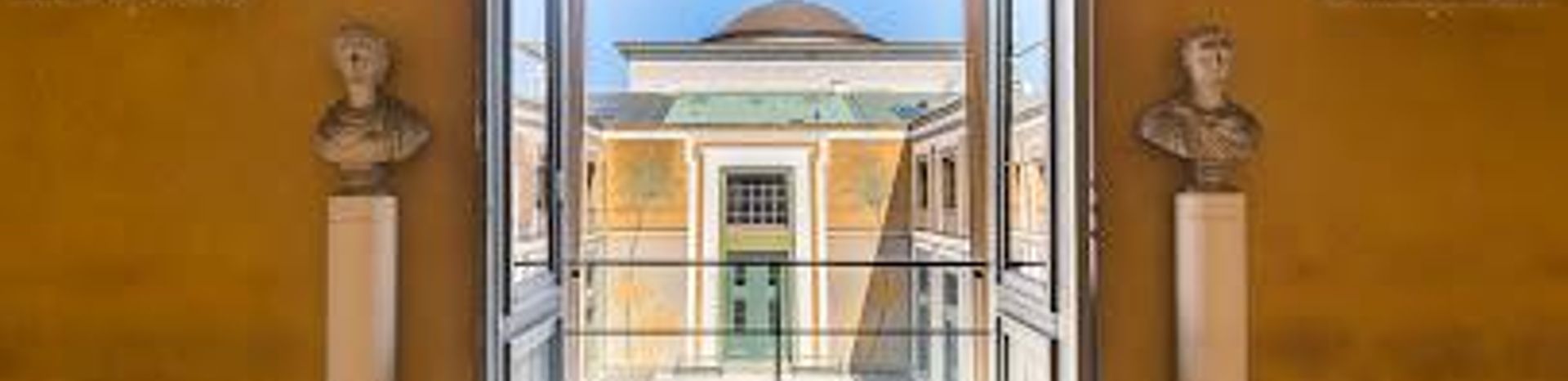
Thorvaldsens Museum
Denmark’s first public art museum, Thorvaldsens Museum blends neoclassical sculpture, vivid architecture, and tranquil courtyards into one immersive urban sanctuary.
Thorvaldsens Museum is Denmark’s first public art museum and a vibrant shrine to neoclassical sculptor Bertel Thorvaldsen, set beside Christiansborg Palace on Slotsholmen in central Copenhagen. Opened in 1848, the color-drenched building is as striking as its 19th‑century sculptures, reliefs, and antiquities from Greece, Rome, and Egypt. Quiet courtyards, richly decorated ceilings, and monumental marble figures create an immersive journey into art, history, and architecture in one cohesive masterpiece.
A brief summary to Thorvaldsens Museum
- Bertel Thorvaldsens Plads 2, København K, København K, 1213, DK
- Click to display
- Click to display
- Duration: 1.5 to 3 hours
- Budget
-
 Indoor
- Mobile reception: 5 out of 5
- Tuesday 10 am-5 pm
- Wednesday 10 am-5 pm
- Thursday 10 am-5 pm
- Friday 10 am-5 pm
- Saturday 10 am-5 pm
- Sunday 10 am-5 pm

Know before you go
Hi, I'm Eve. Here are a few practical things to know before exploring Thorvaldsens Museum.
- Allow at least two hours if you want to explore both the main sculpture halls and the quieter side galleries with drawings and personal objects.
- Look up in every room: each ceiling has its own elaborate decorative scheme that changes the mood of the sculptures beneath it.
- Bring a light layer; the thick historic walls can feel cool even on warm days, especially in the inner rooms and courtyard.
- Visit near opening or late afternoon on weekdays for a calmer atmosphere in the galleries around the inner courtyard.
- Combine your visit with nearby Christiansborg Palace and Slotsholmen’s other institutions to create a full day focused on Danish history and art.
Do you manage this location?
Take control to get all the benefits, like improved information, better appearance, and stronger visibility across AI-powered discovery. Learn more
Activate your presence
Getting There
-
Metro and short walk
From central Copenhagen, take the M1 or M2 metro to Gammel Strand or Kongens Nytorv; the ride from major hubs such as Nørreport typically takes 3–5 minutes with frequent departures throughout the day. From either station, it is an easy 10–15 minute walk on mostly flat, paved streets suitable for wheelchairs and strollers. Standard single tickets in the central zones usually cost around 20–25 DKK, and contactless payment is widely accepted.
-
City bus
Several city bus lines cross central Copenhagen and stop within about a 10–15 minute walk of Slotsholmen and the museum area. Travel times from inner districts such as Vesterbro or Østerbro are generally 10–20 minutes depending on traffic. A single bus ticket within the city center typically costs about 20–25 DKK, with buses running every few minutes in daytime but less frequently in late evening and on weekends.
-
Bicycle
Copenhagen’s extensive cycle lanes make it straightforward to reach Thorvaldsens Museum by bike from most central neighborhoods in roughly 5–20 minutes. Public bike‑share schemes and rentals are widely available, with typical pay‑as‑you‑go costs starting from about 15–25 DKK per half hour. The terrain is flat, but be mindful of canal bridges and heavy commuter traffic during weekday rush hours.
-
Taxi or rideshare
From inner‑city areas such as Nørreport, Vesterbro, or Østerbro, a taxi ride to Slotsholmen usually takes 5–15 minutes depending on congestion. Fares for short inner‑city journeys generally range from about 80–150 DKK, with higher prices during peak periods and late nights. Drop‑off is typically on nearby streets, after which you walk a short distance through the pedestrian‑friendly historic core.
For the on-the-go comforts that matter to you
-
 Restrooms
-
 Drink Options
-
 Drinking Water
-
 Food Options
-
 Seating Areas
-
 Sheltered Areas
-
 Trash Bins
-
 Information Boards
-
 Visitor Center
Discover more about Thorvaldsens Museum
A sculptor’s legacy in the heart of Copenhagen
Thorvaldsens Museum is devoted entirely to the life and work of Danish‑Icelandic sculptor Bertel Thorvaldsen, whose neoclassical style made him one of Europe’s most celebrated artists in the early 19th century. The museum stands on the small island of Slotsholmen, next to Christiansborg Palace, underlining its place in Denmark’s cultural and political story. Planned during Thorvaldsen’s lifetime and opened in 1848, it was the country’s first public museum and a national monument to an artist welcomed home from Rome as a hero.Within its walls you encounter the breadth of Thorvaldsen’s career, from early experiments to mature masterworks that once served as models for monuments across Europe. Rather than a scattered survey, the collection forms a carefully composed portrait of an artist whose influence reached far beyond Copenhagen.Rooms filled with gods, heroes, and portraits
The museum’s core is over 900 works by Thorvaldsen, including sculptures and reliefs in plaster and marble, as well as sketches and models that reveal how finished masterpieces evolved from small studies. Many pieces draw on Greek and Roman mythology, so you stand eye to eye with gods, goddesses, and heroic figures that defined neoclassical taste. Alongside them are portrait busts of statesmen, clergy, and royals who commissioned their likenesses from the sculptor.Beyond his own creations, Thorvaldsen’s personal collections line the galleries: paintings by European contemporaries, ancient vases, coins, and sculptures gathered during decades in Rome. These objects speak to his curiosity and the networks of artists, patrons, and scholars that surrounded him.An architectural gesamtkunstwerk of color and pattern
The building itself, designed by Michael Gottlieb Bindesbøll, is as compelling as the art it houses. Strongly influenced by ancient Greek forms, it is arranged around an inner courtyard where Thorvaldsen is buried, turning the museum into a mausoleum in the classical sense. The architecture also borrows from Pompeian frescoes and Egyptian motifs, weaving together references that fascinated 19th‑century Europe.Inside, every room is an artwork: ceilings painted in intricate grotesque patterns, richly pigmented walls, and graphic mosaic floors that echo classical ornament. Outside, a long painted frieze by Jørgen Sonne wraps around the façade, narrating Thorvaldsen’s triumphant return to Copenhagen in 1838. Moving through the galleries, you sense a total work of art where sculpture, color, and architecture form one continuous experience.The quiet drama of the courtyard and surroundings
Step into the courtyard and the mood shifts. Here, beneath open sky, the artist’s grave lies at the heart of the complex, surrounded by walls painted with stylized Egyptian palms, animals, and exotic plants. It is both contemplative and theatrical, like a stage set for memory. The contrast between this enclosed, introspective space and the busy city just beyond the museum gates is striking.From the upper windows and terraces the urban fabric of Slotsholmen unfolds: palace roofs, canals, and spires frame the museum, reminding you that this intimate homage to a single artist also belongs to a larger story of Copenhagen’s development in the 1800s.Exploring at your own pace
Visiting Thorvaldsens Museum is less about rushing through highlights and more about lingering among details. The scale of the sculptures, the rhythm of repeated classical motifs, and the surprising color combinations reward slow looking. Families find plenty of visual drama for children, from towering figures to patterned floors, while art enthusiasts can trace the evolution of specific commissions from model to finished form elsewhere in Europe.Quiet side rooms offer a change of pace, with drawings, plaster fragments, and personal effects that bring Thorvaldsen closer as a working artist rather than a distant monument. Whether you stay briefly or wander for hours, the museum invites you to experience 19th‑century art and architecture as a single, carefully orchestrated composition.Explore the best of what Thorvaldsens Museum has to offer













More about North Zealand
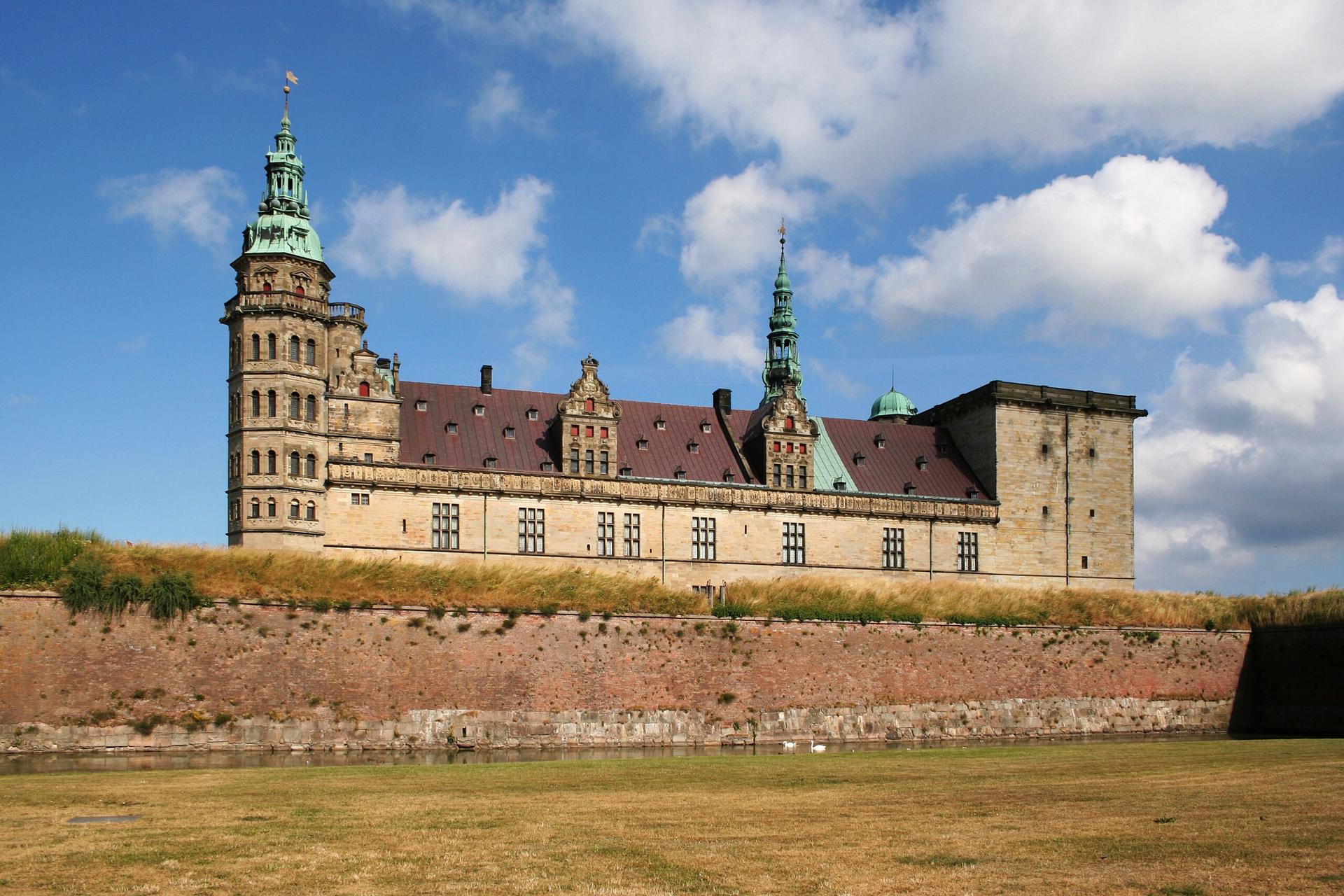
Explore North Zealand, Denmark's enchanting region of castles, beaches, and royal estates, perfect for history buffs, nature enthusiasts, and seaside lovers.
Tell me more about North Zealand
A compact canal island where medieval fortresses, royal palaces and modern democracy meet at the very heart of Copenhagen’s harbour.

Denmark’s first public art museum, a colour‑rich neoclassical gem on Slotsholmen where Bertel Thorvaldsen’s sculptures, collections and tomb share a single evocative space.
