Højbro Plads
Copenhagen’s open-air crossroads, where Bishop Absalon’s statue, canal views and neo-classical facades frame a lively pause between Strøget and Christiansborg.
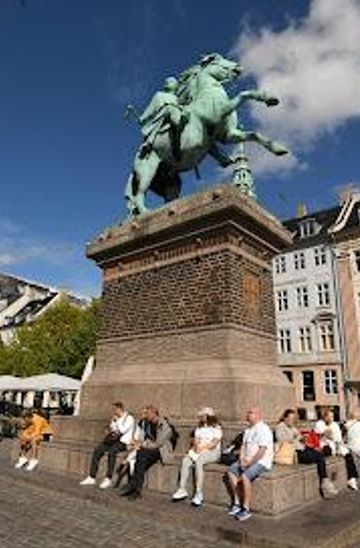
Højbro Plads is a central Copenhagen square linking the Strøget pedestrian spine with the historic island of Slotsholmen and Christiansborg Palace. Defined by its broad, open space and neo-classical facades, the square is dominated by the equestrian statue of Bishop Absalon, founder of Copenhagen, with herring carved around its base as a nod to the city’s medieval fishing roots. Today it’s a lively meeting place lined with shops and cafés, hosting seasonal events and a cosy Christmas market.
A brief summary to Højbro Pl.
- Copenhagen, Indre By, 1200, DK
- Duration: 0.5 to 1.5 hours
- Free
-
 Outdoor
- Mobile reception: 5 out of 5

Know before you go
Hi, I'm Eve. Here are a few practical things to know before exploring Højbro Pl..
- Visit in late afternoon for softer light on the Absalon statue and surrounding facades, and for relaxed people-watching as commuters and shoppers pass through.
- In December, allow extra time to explore the Christmas stalls, taste seasonal treats like æbleskiver and gløgg, and enjoy the festive lights around the square.
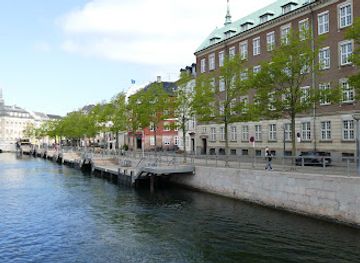
- Walk to the canal side of the square and look across to Christiansborg and the Old Stock Exchange spire for classic Copenhagen skyline photos.
- Bring a light layer even in summer; the open square and nearby water can make it feel breezy compared with the surrounding narrow streets.
Do you manage this location?
Take control to get all the benefits, like improved information, better appearance, and stronger visibility across AI-powered discovery. Learn more
Activate your presence
Getting There
-
Metro
Take the M1 or M2 metro line to Gammel Strand Station in central Copenhagen; from most inner-city stops the ride takes 3–8 minutes. Trains run every few minutes throughout the day, and a single ticket within the central zones typically costs around 20–30 DKK. From Gammel Strand it is a short, level walk on paved surfaces to Højbro Plads, suitable for wheelchairs and strollers in most weather.
-
City Bus
Several city bus routes serve the Indre By area around Højbro Plads, with typical journey times of 10–20 minutes from other central districts depending on traffic. Standard bus fares within the city are usually 20–30 DKK for a single ride, and services run frequently during the day and early evening. Buses stop on nearby main streets, from where you continue on foot through pedestrian zones; note that vehicles do not enter the square itself.
-
Bicycle
Cycling is one of the most convenient ways to reach Højbro Plads from within Copenhagen’s central neighbourhoods, generally taking 5–15 minutes along dedicated bike lanes. You can use a rental or bike-share; expect to pay roughly 50–150 DKK per day depending on the provider. The terrain is flat and bike-friendly, but be prepared to dismount in the pedestrian areas immediately around the square, especially during busy periods.
-
Walking
If you are already in the historic centre, plan 5–20 minutes to walk to Højbro Plads via the pedestrian shopping streets and canalside paths. The route is almost entirely flat with mixed cobblestones and paving slabs, which can be uneven in places and slightly slippery in rain or snow. This is the most atmospheric way to arrive, letting you approach the square gradually through narrow lanes that open suddenly onto its broad, airy space.
For the on-the-go comforts that matter to you
-
 Restrooms
-
 Drink Options
-
 Drinking Water
-
 Food Options
-
 Seating Areas
-
 Sheltered Areas
-
 Trash Bins
-
 Information Boards
-
 Visitor Center
Discover more about Højbro Pl.
A historic square between city streets and royal power
Højbro Plads sits at the hinge between Copenhagen’s busy shopping streets and its seat of government on Slotsholmen. Created after the devastating fire of 1795, the square was deliberately laid out as a broad, open space to act as a firebreak and to bring light and air into what had been a maze of tight medieval alleys. The surrounding buildings show clean neo-classical lines and pastel facades, a contrast to the older streets feeding into the square from every side.From here, the cobbles slope gently towards the canal and Højbro bridge, which gave the square its name. This connection to the water has always been central to the area’s character, tying the commercial city to the island where Copenhagen’s castle, and later Christiansborg Palace, rose to protect the harbour.Absalon on horseback and the story in the stone
At the heart of Højbro Plads stands the equestrian statue of Bishop Absalon, the warrior churchman credited with founding Copenhagen in the 12th century. In bronze he appears as both nobleman and defender, gazing towards Slotsholmen where his original fortress once stood. Look closely at the stone base and you will see a school of herring carved in relief. These fish tell an economic story: the export of salted herring in the Middle Ages brought enough wealth to expand the small fishing village and justify the construction of defensive works that evolved into the modern city.The statue gives the open square a strong focal point. Around it, cyclists glide past, street musicians often set up, and the constant hum of conversation mixes with the clink of glasses from nearby cafés.Everyday life, markets, and seasonal celebrations
By day, Højbro Plads functions as an urban living room. Locals cross the cobbles on their way between Strøget and Christiansborg, while others pause on the low edges and benches to watch the constant flow of bicycles and pedestrians. Outdoor seating in warmer months creates an informal fringe of cafés and bars, turning the square into an easy stop for a coffee, pastry, or beer in the open air.Throughout the year the space is used for temporary events and stalls. In the run-up to Christmas, wooden huts, lights, and the scent of mulled wine transform the square into a compact festive market. At other times, it can host performances, small fairs, or spillover activities during citywide festivals, adding an extra layer of colour to the historic setting.Views to canals, towers, and quiet corners
From the edge of Højbro Plads, the view opens out over the canal towards the towers of Christiansborg Palace and the spire of the Old Stock Exchange. The water reflects shifting northern light, boats pass below the bridge, and the silhouettes of domes and spires frame the scene. Step a little away from the central bustle towards the canal railings and the mood softens, with the gentle sound of water and the creak of moored vessels.The square’s generous width means there is always a pocket of space to stand back and take in the architecture. Narrow lanes lead off towards older church towers and former warehouses, making Højbro Plads a natural orientation point as you explore the historic core.An open-air pause in the middle of the old city
Despite its central location, Højbro Plads offers a simple pleasure: a wide patch of sky and cobblestones where you can pause between museums, palaces, and shopping streets. The combination of clear sightlines, human-scale buildings, and a single commanding monument gives it a calm, legible character. Whether you stay only long enough to photograph Absalon on his horse or linger on a bench watching the city’s rhythms, the square neatly encapsulates Copenhagen’s blend of history, water, and easy-going street life.Explore the best of what Højbro Pl. has to offer













More about North Zealand
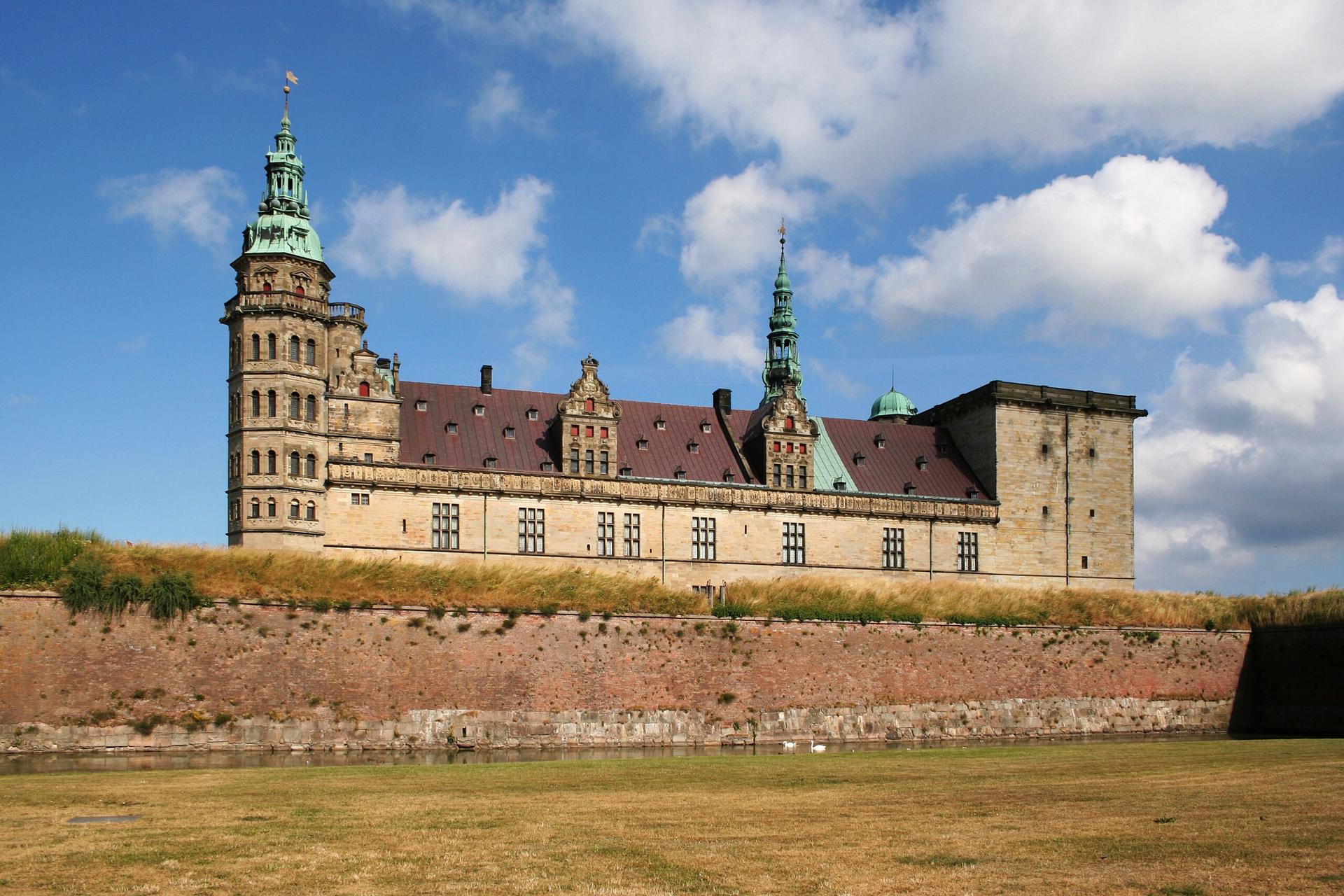
Explore North Zealand, Denmark's enchanting region of castles, beaches, and royal estates, perfect for history buffs, nature enthusiasts, and seaside lovers.
Tell me more about North Zealand