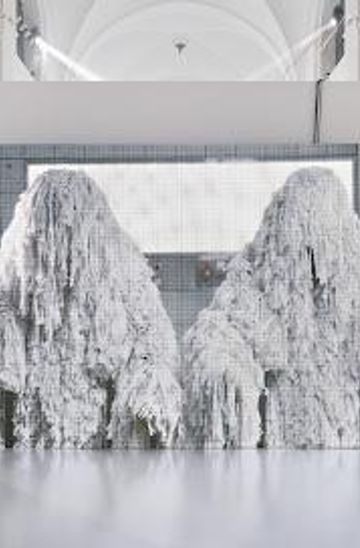
Nikolaj Kunsthal
Medieval church transformed into a contemporary art sanctuary where 800 years of history meets cutting-edge creativity.
Nikolaj Kunsthal is a contemporary art gallery housed in Copenhagen's third-oldest church, a striking medieval structure transformed into a vibrant cultural space. Located at Nikolaj Plads in the heart of the city, this unique venue showcases Danish and international contemporary art within whitewashed Neo-Baroque interiors featuring soaring ceilings and tall arched windows. The building itself—with its iconic copper-spired tower overlooking the city—blends 800 years of history with cutting-edge artistic expression, offering exhibitions, performances, and cultural events in an atmosphere where sacred architecture meets modern creativity.
A brief summary to Nikolaj Art Gallery
- Nikolaj Plads 10, Copenhagen, Indre By, 1067, DK
- Click to display
- Click to display
- Duration: 1 to 3 hours
- Budget
-
 Indoor
- Mobile reception: 5 out of 5
- Tuesday 11 am-6 pm
- Wednesday 11 am-6 pm
- Thursday 11 am-6 pm
- Friday 11 am-6 pm
- Saturday 11 am-5 pm
- Sunday 11 am-5 pm

Know before you go
Hi, I'm Eve. Here are a few practical things to know before exploring Nikolaj Art Gallery.
- Visit during opening hours (Tuesday–Friday 11am–6pm, Saturday–Sunday 11am–5pm; closed Mondays) to experience the interplay of natural light through the Neo-Baroque windows, which changes throughout the day and enhances the artwork.
- Admission includes free entry to Thorvaldsens Museum, located just a five-minute walk away across the canal—a valuable addition to your cultural visit.
- Explore the café and restaurant on the ground floor, which offers a contemplative retreat and excellent vantage point for observing the architectural details of the space.
- Check the gallery's programme for special events, performances, and guided tours that provide deeper context into the building's history and current exhibitions.
- Arrive early in the day to avoid crowds and fully appreciate the serene atmosphere created by the soaring ceilings, whitewashed walls, and natural light.
Do you manage this location?
Take control to get all the benefits, like improved information, better appearance, and stronger visibility across AI-powered discovery. Learn more
Activate your presence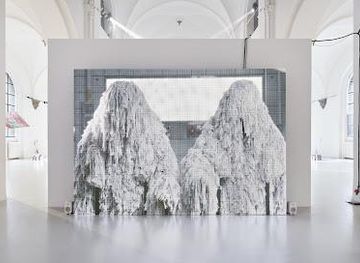
Getting There
-
Metro + Walking
Take the Copenhagen Metro (Lines M1 or M2) to Kongens Nytorv station, approximately 2–3 minutes travel time from central Copenhagen. Exit and walk 200–300 metres northwest to Nikolaj Plads. The route is flat, well-signposted, and passes through the pedestrian-friendly Inner City district. No parking required. Trains run frequently (every 3–6 minutes during peak hours).
-
Bicycle
Copenhagen's extensive cycle network makes cycling an efficient option. From most central locations, the journey to Nikolaj Plads takes 5–15 minutes depending on your starting point. Use the dedicated cycle lanes throughout the city. Bike parking is available near Nikolaj Plads. This is a popular local transport method and requires no payment beyond any bike rental fees.
-
Walking
If staying in central Copenhagen (Nyhavn, Strøget, or Christiansborg area), Nikolaj Plads is within a 10–20 minute walk. The route is entirely flat, pedestrian-friendly, and passes through historic neighbourhoods. Follow signs toward Kongens Nytorv and then Nikolaj Plads. No payment required.
-
Taxi or Rideshare
Taxis and rideshare services (Uber, local operators) are available throughout Copenhagen. Journey time from central locations is typically 5–10 minutes depending on traffic. Expect to pay 60–150 DKK (approximately 8–20 EUR) for a short journey within the city centre. Limited on-street parking is available near Nikolaj Plads; paid parking zones apply.
For the on-the-go comforts that matter to you
-
 Restrooms
-
 Drink Options
-
 Food Options
-
 Seating Areas
-
 Information Boards
-
 Visitor Center
Discover more about Nikolaj Art Gallery
From Medieval Church to Living Art Space
Nikolaj Kunsthal stands as one of Copenhagen's most extraordinary cultural transformations. Founded in the early 1200s as the Church of Saint Nicholas, the building served as a place of worship for centuries until the Great Fire of 1795 devastated Copenhagen. The parish was dissolved in 1805, and the structure fell into disuse. Rather than disappearing into history, the building was repurposed multiple times—serving as a fire station, naval museum, and public art library—before finally becoming the contemporary art centre it is today.The most iconic element of the building is its towering spire. The original 90-meter Renaissance spire collapsed during the 1795 fire and lay buried for centuries until its discovery. In the early 20th century, Carl Jacobsen, the founder of Carlsberg, donated funds to rebuild the tower as a gift to the city. This act of cultural patronage restored a significant landmark to Copenhagen's skyline and reflected Jacobsen's broader commitment to supporting the arts and cultural heritage.Architectural Restoration and Contemporary Intervention
The current building was reconstructed around 1910 by architect Hans Christian Amberg, who approached the project with meticulous attention to historical detail. Rather than creating a functioning church, Amberg designed a structure that served as a living monument to the original medieval building. The whitewashed walls, soaring arches, and vast high ceilings create an atmosphere of contemplative grandeur, while enormous Neo-Baroque windows flood the interior with natural light.In recent years, the architectural firm Engel Architects undertook a sensitive restoration that stripped away decades of ad-hoc modifications—exposed electrical installations, blocked windows, and layers of plastic paint—to reveal the building's original qualities. The restoration introduced contemporary elements, including a café and shop, that sit comfortably alongside the historical architecture. Modern lighting fixtures reference classic church candlesticks while incorporating contemporary design, and the entire electrical system was elegantly integrated into the walls. This dialogue between past and present creates a space that feels both rooted in history and fully alive with contemporary cultural activity.The Contemporary Art Programme
Today, Nikolaj Kunsthal presents a dynamic programme of Danish and international contemporary art, with changing exhibitions that challenge and inspire visitors. The gallery focuses on experimental work across multiple genres and media formats, regularly hosting visual art installations, performances, concerts, guided tours, and artist talks. The intimate scale of the exhibition space, combined with the dramatic architectural setting, creates a unique context for experiencing contemporary art. The building's sacred proportions and historical weight add an unexpected dimension to modern artistic expression, encouraging visitors to engage with art in a space charged with centuries of cultural significance.A Cultural Hub in the Heart of Copenhagen
Located on Nikolaj Plads, a small square between Christiansborg Palace and Kongens Nytorv, the gallery occupies one of Copenhagen's most historically significant neighbourhoods. The square itself has an intimate quality despite its central location and the flow of visitors. At street level, a restaurant spills onto the square during summer months, creating a vibrant social atmosphere that complements the cultural activities within. The venue regularly hosts special events, dinners, and performances that extend beyond traditional gallery hours, making it a gathering place for Copenhagen's creative community and culturally engaged visitors.Accessibility and Visitor Experience
The gallery is wheelchair accessible and welcomes visitors of all backgrounds. A café within the building provides refreshment and serves as a social hub, shifting from a quiet, contemplative space during the day to a vibrant gathering point during opening receptions and special events. The combination of art, architecture, history, and hospitality creates an experience that extends beyond viewing exhibitions—it invites visitors to inhabit a space where culture, community, and centuries of history converge.Explore the best of what Nikolaj Art Gallery has to offer















More about North Zealand
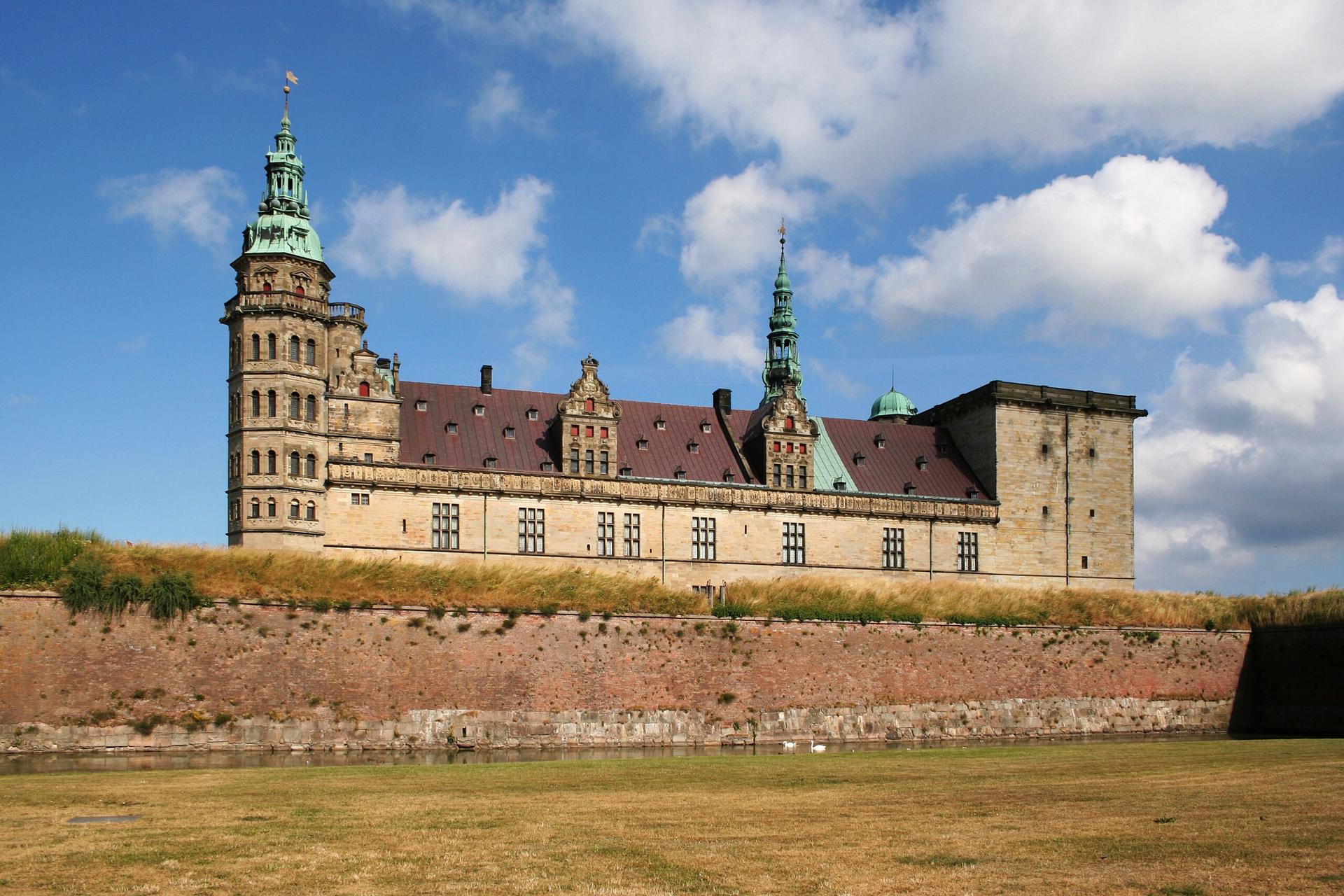
Explore North Zealand, Denmark's enchanting region of castles, beaches, and royal estates, perfect for history buffs, nature enthusiasts, and seaside lovers.
Tell me more about North Zealand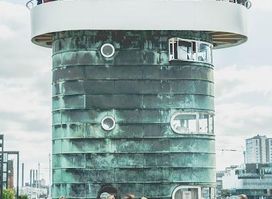
An intimate cultural hideaway inside an old copper bridge tower, offering harbor‑wide views, maritime character and small‑scale events above Copenhagen’s Knippelsbro.
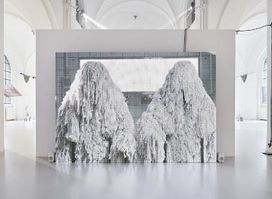
A soaring former church in central Copenhagen where centuries-old brickwork, a towering spire and intimate galleries meet bold, experimental contemporary art.