Masnedø Fort Travel Guide
Free Guide: Grassy island stronghold turned cultural venue, Masnedø Fort blends coastal views, underground corridors and pivotal 20th‑century history near Vordingborg.


A brief summary of Masnedø Fort
Grassy island stronghold turned cultural venue, Masnedø Fort blends coastal views, underground corridors and pivotal 20th‑century history near Vordingborg.
Masnedø Fort is a grass-covered coastal stronghold on the small island of Masnedø near Vordingborg, built between 1912 and 1915 to guard the Storstrømmen strait and the vital rail and road link between Zealand and Falster. Once bristling with heavy artillery and garrisoned by hundreds of soldiers, it later became infamous for being seized by German paratroopers in 1940 in one of the earliest airborne assaults. Today its ramparts, tunnels and sweeping sea views form an atmospheric historic site and seasonal arts venue, freely accessible year-round.
On-site amenities
 Trash bins
 Information boards
 Seating areas
Opening hours
- Every dayOpen 24 hours
Opening hours as listed on the venue’s Google Business Profile. Hours can change for services and special events, so check with the venue before you go.
- Address
- Masnedø, 4760 Vordingborg
- Website
Getting there
Train and taxi from Vordingborg
Cycling from Vordingborg town
Car from greater Zealand
Discover more about Masnedø Fort
Island fortress at the gateway to southern Zealand
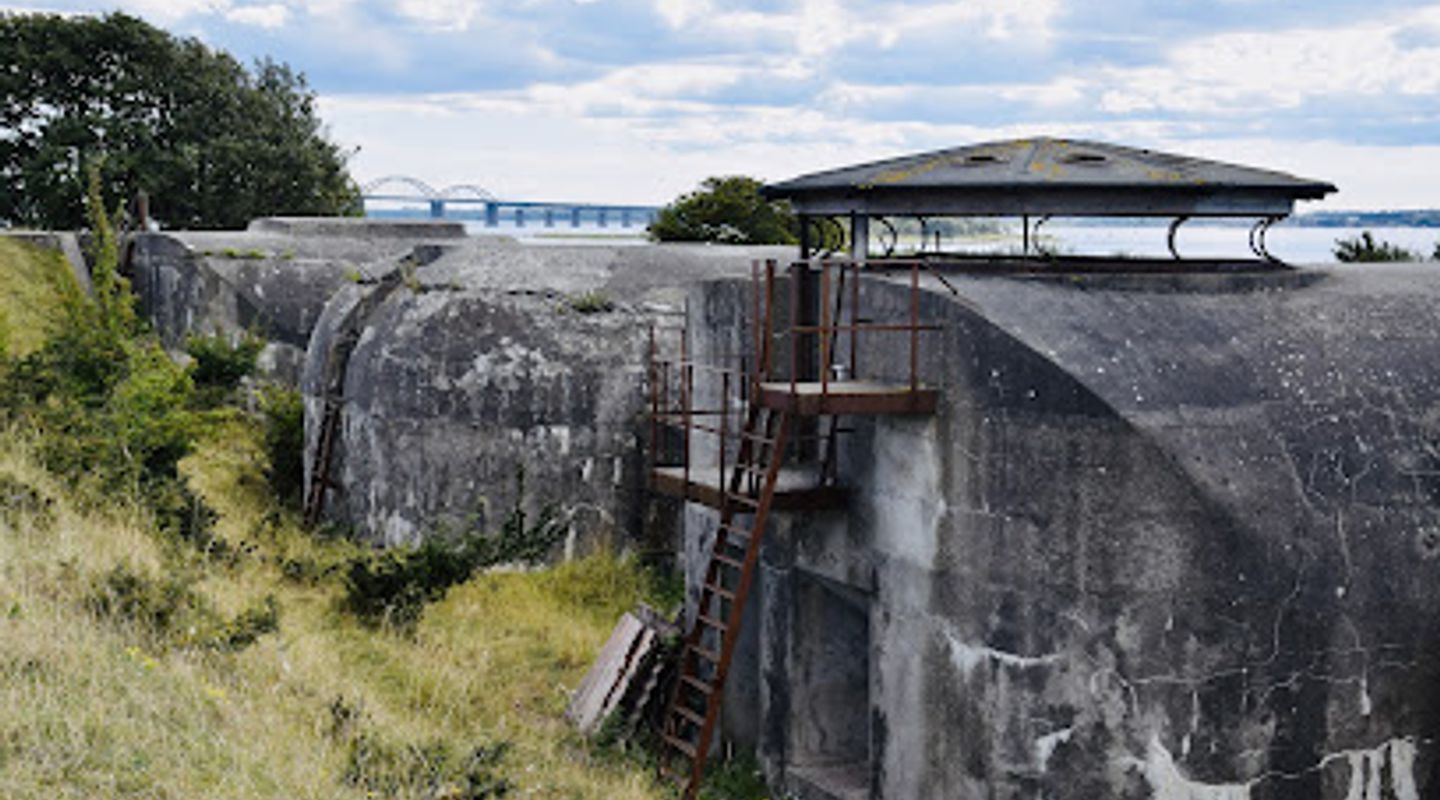
Masnedø Fort occupies a grassy rise on the low-lying island of Masnedø, set between Zealand and Falster and facing the busy Storstrømmen strait. Built into the landscape rather than towering over it, the fort almost disappears beneath turf and shrubs until you are close, when the curving ramparts and concrete structures slowly reveal themselves. From the outer embankments you look out across water, bridges and passing ships, a reminder of why this modest island was once of great strategic value.The site covers roughly 45,000 square metres, with open lawns, covered gun positions and scattered military buildings telling the story of early 20th-century coastal defence. Paths trace the outline of the former batteries, and from the top of the earthworks you gain some of the best wide-angle views of the Storstrøm Bridge and its newer neighbour carrying the modern rail line.
From Copenhagen’s shield to wartime frontline
Construction of Masnedø Fort began in 1912 as part of a wider defensive ring designed to protect Copenhagen and the approaches to Zealand. Armed with heavy steel cannons and howitzers, the fort’s task was to secure both the sea lane and the critical land connection between Zealand and Lolland-Falster. In the years following completion, a substantial garrison of artillery troops lived and trained here in what was then a thoroughly modern installation of concrete, armour and underground galleries.On 9 April 1940, Masnedø Fort unexpectedly entered world military history. In the opening hours of the German invasion of Denmark, paratroopers dropped onto the island and captured the fort and nearby bridge in one of the first true airborne assaults on a fixed position. Control of this narrow corridor was vital for the rapid advance north, and the fort remained under German command throughout the Second World War, adapting to new roles and technologies as the conflict unfolded.
Hidden corridors and post-war transformations
Beneath the grassy surface a network of underground corridors, magazines and rooms once buzzed with activity. Ammunition was stored below ground, and protected passages connected the gun emplacements, command posts and living quarters. After the war, the strong construction and secluded location made the fort suitable for a range of new uses, from military storage to more secretive activities that took advantage of its isolation and robust design.By the 1970s local authorities had taken over ownership, and in the mid-1990s the fort was formally protected as a national historical monument. This status preserved its characteristic earthworks, gun positions and subterranean spaces, ensuring that later adaptations would respect the original structure. Today, some areas remain in use by the Danish Home Guard, giving the place a subtle sense of continuity as a still-active, if largely peaceful, military site.
Art, culture and life within the ramparts
Masnedø Fort is more than a static relic. Each summer the interior spaces host a contemporary art exhibition, transforming the old casemates and rooms into an atmospheric gallery. Installations and paintings are shown against bare concrete walls, low arched ceilings and the filtered daylight that seeps in through narrow openings once designed for observation and defence. At other times, performances and occasional concerts lend the fort an unexpected cultural energy.Between events, the grassy courtyards and ring of embankments invite unhurried exploration. Children can clamber along the slopes while adults follow the traces of former gun pits and lookout points, comparing the peaceful scene with historical photos and diagrams. The island setting, with sea birds overhead and the sound of wind across the structures, makes it easy to imagine the very different atmosphere here during exercises or under wartime alert.
Views, walks and quiet corners by the Storstrømmen
The area around the fort lends itself to simple pleasures: a slow circuit of the walls, a pause on a bench to watch the play of light on the water, or a short walk towards the shoreline to see the bridges framed between embankments and sea. Anglers and sailors at nearby harbours add a gentle sense of everyday life, while the low horizon and open sky emphasise how exposed yet calmly situated the fort is.Access to the outdoor grounds is free throughout the year, and the site rewards visits in different seasons. In spring and summer, wildflowers soften the hard edges of the concrete, while autumn brings longer shadows over the ramparts. Even on a grey winter day, the combination of military geometry, wide water views and the knowledge of the events that unfolded here creates a quietly compelling place to linger for an hour or two.
Evendo Review Centre
 Google
Guest reviews
Best time to go
Quietest: Jan, Feb & Mar · before 8am or at 9pm
Busy times are Evendo estimates for a typical year, to help you plan. Actual crowds vary with events, school holidays and the weather.
Explore Masnedø Fort on the map
A handpicked selection of must-see spots near Masnedø Fort, mapped for you.
Get your free copy of our complete guide to Masnedø Fort, delivered straight to you.
Everything on this page, from opening hours and how to get there to Eve’s tips and the best time to go, in one PDF you can read offline, print or share.
Already have an account? Sign in
Your Masnedø Fort guide is ready.
We'll send it to · Not you? Sign out

Getting your guide ready…
We are putting together a fresh copy of the Masnedø Fort guide. This can take up to a minute.
This can take a few moments. If your browser asks, choose Allow so the download can start. You'll find the guide in your Downloads folder.
Nothing happened? Download it again
Sorry, the guide is taking longer than usual. Please try again in a minute, or get it by email instead.
Other nearby places you may find interesting
The closest places of the same kind, if this one is not quite what you had in mind.
-
-
-
-
-


Swipe for more places
More to explore near Masnedø Fort

 Best experiences near Masnedø Fort
 Best hotels near Masnedø Fort
 Best landmarks near Masnedø Fort
 Best attractions near Masnedø Fort
 Best shops near Masnedø Fort
 Best restaurants near Masnedø Fort
 Best bars near Masnedø Fort
Do you manage this location?
Take control to get all the benefits, like improved information, better appearance, and stronger visibility across AI-powered discovery.
Explore more

Explore more of Falster
Discover Falster: A blend of serene beaches, rich history, and lush landscapes in Denmark's southern island treasure.
Explore Falster
Explore more of Denmark
Discover Denmark: A perfect blend of history, modern design, and the cozy concept of hygge. Explore vibrant cities, serene landscapes, and world-class cuisine.
Explore Denmark