Stormflodssøjlen (Storm Surge Column)
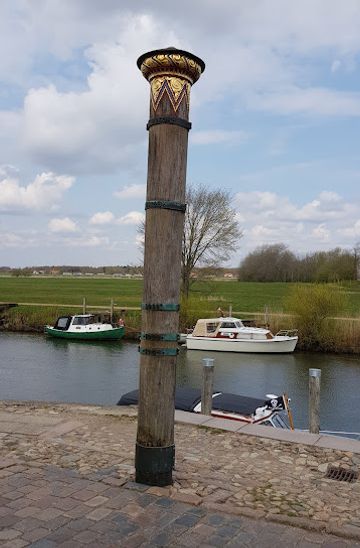
A gilded oak column marking centuries of catastrophic floods, testament to Ribe's battle with the North Sea.
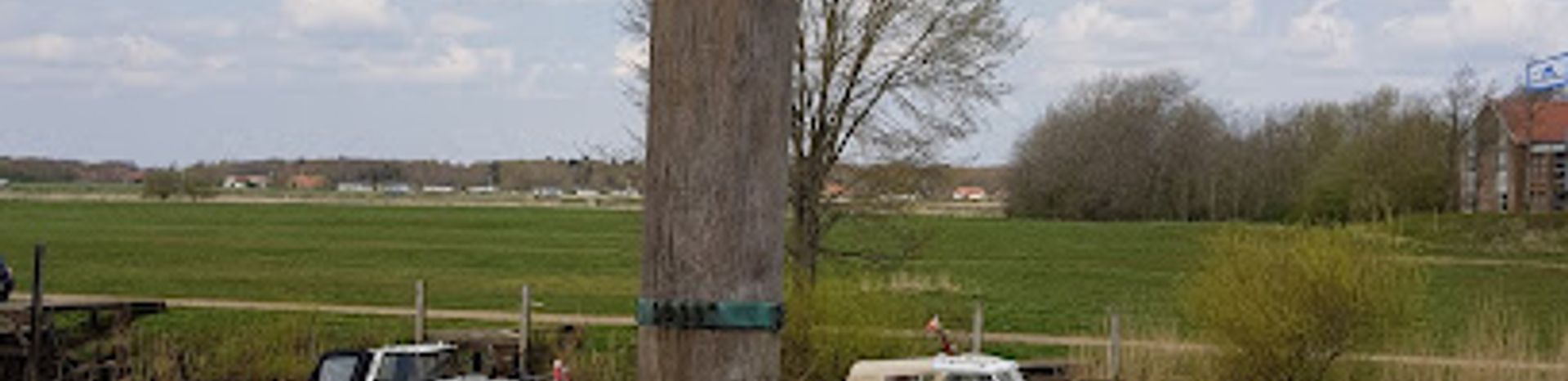
A striking wooden flood column standing on Ribe's harborfront, marked with bronze rings that chronicle centuries of devastating storm surges. Erected in 1922 and crowned with a gilded cap reminiscent of Venetian mooring poles, this historical monument records water levels from catastrophic floods dating back to the 14th century, offering a tangible reminder of the North Sea's power and Ribe's resilience.
A brief summary to Stormflodssøjlen
- Skibbroen 25, Ribe, 6760, DK
- Duration: 0.25 to 1 hours
- Free
-
 Outdoor
- Mobile reception: 4 out of 5

Know before you go
Hi, I'm Eve. Here are a few practical things to know before exploring Stormflodssøjlen.
- Visit at high tide or during storm surge warnings to fully appreciate the column's significance—imagine the water reaching those bronze rings.
- Align your eye with the gilded cap and the roofline of the building at the end of Skibbroen to visualize the water level of medieval floods.
- Combine your visit with a guided Night Watchman tour (May–October) to hear stories of Ribe's floods and medieval history in atmospheric detail.
- Explore the nearby Wadden Sea Centre to understand the broader ecological and climate context of storm surges affecting the region.
Do you manage this location?
Take control to get all the benefits, like improved information, better appearance, and stronger visibility across AI-powered discovery. Learn more
Activate your presenceOther nearby places you may find interesting

Getting There
-
Walking from Ribe Town Centre
From Ribe's medieval town center, walk toward the harbor along Skibbroen street. The column is located directly on the harborfront at Skibbroen 25, approximately 5–10 minutes on foot from the Market Square. The route passes through the historic pedestrian streets and is flat and accessible year-round.
-
Parking and Vehicle Access
Several public parking lots are available within the town center, typically 2–5 minutes' walk from the column. Parking is generally free or low-cost (under 50 DKK per day). The column itself has no dedicated parking, but the town center's parking areas serve all harborfront attractions.
-
Public Transport from Esbjerg
Esbjerg railway station is approximately 30 kilometers south of Ribe. Regional trains and buses connect Esbjerg to Ribe in 30–45 minutes (approximately 60–90 DKK). From Ribe station, the town center and harborfront are a 10–15 minute walk downhill.
-
Bicycle Access
Ribe is well-connected by cycling routes through the Wadden Sea region. Bike rental is available in town (approximately 80–120 DKK per day). The harbor area is flat and bike-friendly, with secure parking near the column.
For the on-the-go comforts that matter to you
-
 Seating Areas
-
 Information Boards
-
 Nearby Food Options
-
 Nearby Restrooms
Discover more about Stormflodssøjlen
A Monument to Nature's Fury and Human Survival
Standing on Skibbroen (Ship's Bridge) in the heart of Ribe's historic harbor, the Stormflodssøjlen is an oak pole crowned with a gilded cap that tells the story of one of Denmark's oldest towns battling the sea. Erected on November 14, 1922, this distinctive monument is inscribed with bronze rings marking the water levels reached during the most catastrophic storm surges in recorded history. The topmost ring indicates the devastating flood of 1634, known as "the second Big Drowning," when waters rose approximately 6 meters above normal levels, drowning thousands across the Wadden Sea region and even flooding Ribe Cathedral itself to 1.7 meters above its floor.Centuries of Struggle Against the North Sea
The flat marshlands surrounding Ribe have been vulnerable to flooding since the town's founding in the 8th century. The column's rings document a litany of disasters: medieval floods that devastated entire parishes, 14th-century surges that reshaped the landscape, and more recent inundations as recently as the 1970s. Before the construction of the Ribe Dike in 1912—a 15-kilometer barrier stretching from Tjæreborg to Vester Vedsted—the town faced repeated catastrophe. Remarkably, just months before the dike's completion, another terrible storm caused water to swell so high that residents could sail down Ribe's main street. The column's design, inspired by Venetian gondola mooring poles, reflects the town's maritime heritage while serving as a sobering gauge of environmental peril.Modern Protection and Climate Awareness
Today, Ribe's safety depends on the Ribe Dike and modern storm sluices rather than luck or prayer. Yet the column remains a powerful symbol of the region's ongoing vulnerability. Records from the port authorities in nearby Esbjerg reveal that extremely high tides have become more frequent in recent decades—averaging 2.2 per year over the last 50 years, double the rate from the previous 125 years. Combined with rising sea levels linked to climate change, the Stormflodssøjlen serves as both historical record and warning, reminding visitors that nature's power continues to shape life in the Wadden Sea region.A Quiet Witness to Ribe's Identity
The column occupies a modest but significant place in Ribe's landscape, positioned near the harbor where merchant ships once arrived and where the town's economic and cultural life has centered for over a thousand years. Its gilded cap catches the light, making it visible from various angles across the waterfront—locals note that the hat aligns perfectly with the roofline of a building at the end of the bridge, marking the water level of medieval floods. Unlike the grand Ribe Cathedral or the reconstructed Viking village, the Stormflodssøjlen makes no grand architectural statement. Instead, it stands as a quiet, eloquent testimony to the forces that have shaped Ribe's character: vulnerability, adaptation, and an enduring determination to survive.Explore the best of what Stormflodssøjlen has to offer













More about The North Sea Islands
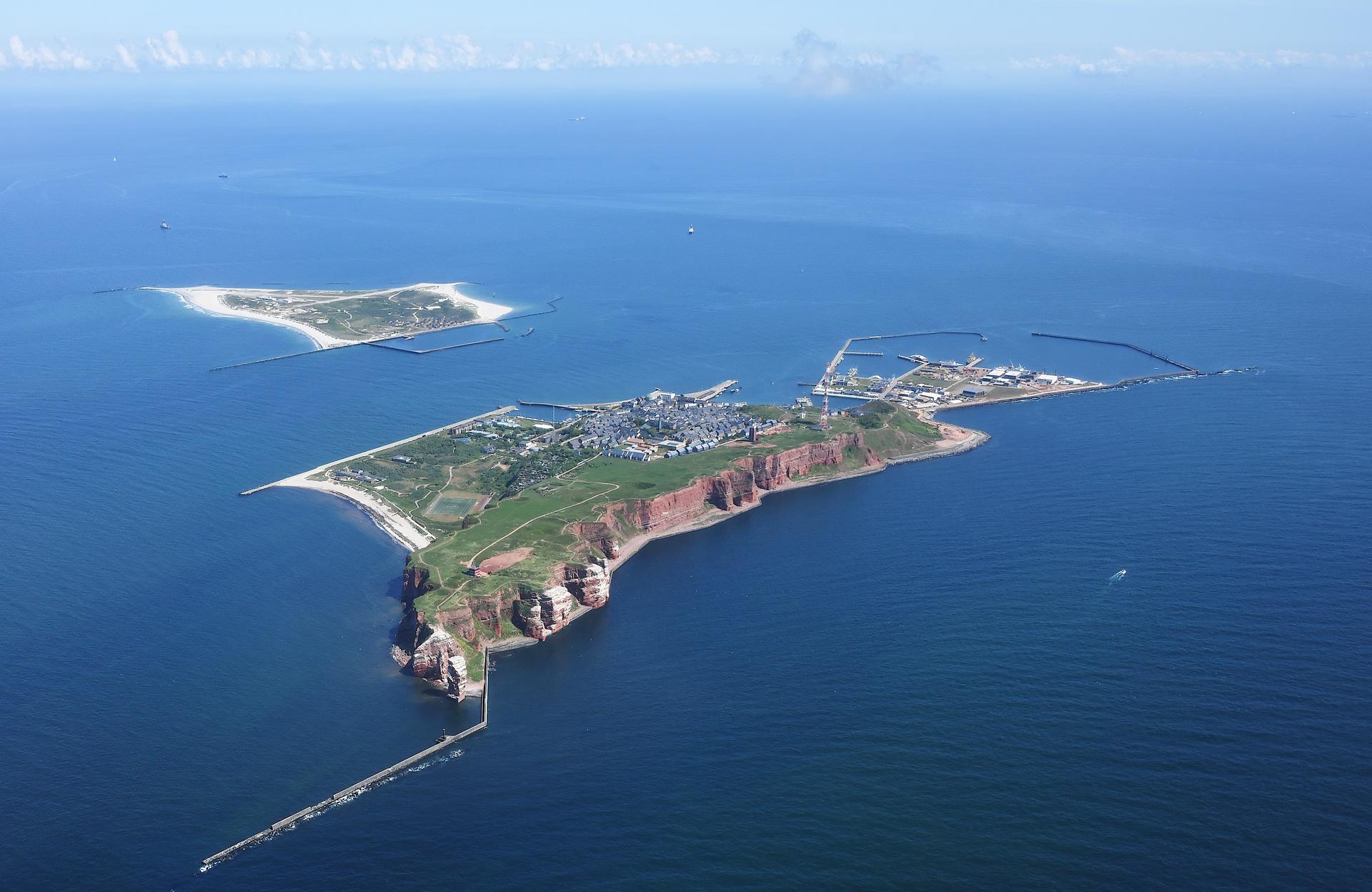
Discover the North Sea Islands of Denmark: idyllic sandy beaches, vibrant local culture, and unique natural landscapes await you on Fanø, Rømø, and Mandø.
Tell me more about The North Sea Islands
Kolding’s oldest church, where medieval roots, Renaissance artistry, and daily parish life meet under a red-brick neo‑Gothic tower.
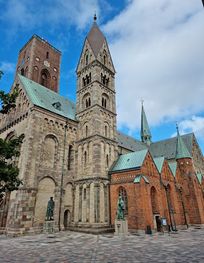
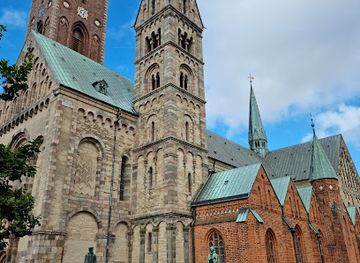
Ancient towers above Viking marshes: Denmark’s oldest cathedral blending Romanesque stone, Gothic height and bold modern mosaics in the heart of Ribe.