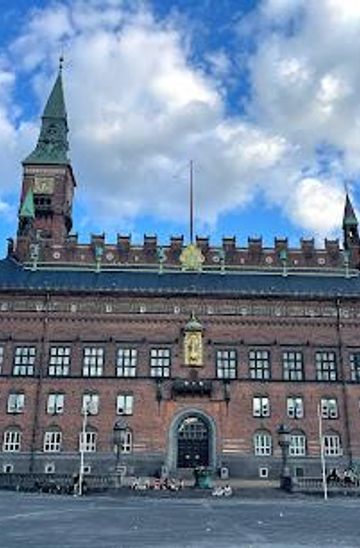
City Hall Square (Rådhuspladsen), Copenhagen
Copenhagen’s open-air living room, where historic City Hall, fountains, sculptures and Strøget’s bustle meet in one lively, central square.
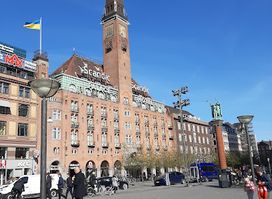
City Hall Square, or Rådhuspladsen, is Copenhagen’s grand urban stage, framed by the red‑brick City Hall, fountains, sculptures and the start of the Strøget pedestrian shopping street. A key gathering point for parades, concerts, exhibitions and public celebrations, the square blends historical architecture, civic life and everyday bustle, with Tivoli Gardens, cafés and cultural sights just steps away.
A brief summary to City Hall Square
- Copenhagen, Indre By, 1599, DK
- Click to display
- Click to display
- Duration: 0.5 to 2 hours
- Free
-
 Outdoor
- Mobile reception: 5 out of 5

Know before you go
Hi, I'm Eve. Here are a few practical things to know before exploring City Hall Square.
- Visit early in the morning or around sunset for softer light and fewer people when photographing City Hall, the Dragon Fountain and views down Strøget.
- Pop into City Hall during opening hours to see Jens Olsen’s World Clock and the interior halls; check locally for current tower tour times and any entrance fees.
- Look up at the Richs Building to spot the Weather Girl sculpture, which rotates to show a cyclist in sunshine or a woman with umbrella on rainy days.
- Combine a stop here with Tivoli Gardens just across the boulevard to experience both Copenhagen’s lively civic square and its historic amusement park.
- In winter, dress for wind and cold; the open expanse of the square can feel significantly chillier than nearby sheltered streets.
Do you manage this location?
Take control to get all the benefits, like improved information, better appearance, and stronger visibility across AI-powered discovery. Learn more
Activate your presence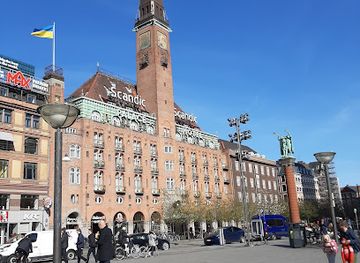


Getting There
-
Metro
Take the M3 Cityringen or M4 metro line to Rådhuspladsen Station, which sits directly beneath City Hall Square. Trains run every few minutes throughout most of the day, and the journey from Nørreport or Kongens Nytorv typically takes around 3–6 minutes. A single-zone adult ticket within central Copenhagen usually costs about 20–25 DKK, and stations and trains are step-free, making this the most convenient option for most visitors.
-
Urban bus
Several city bus lines stop at the Rådhuspladsen hub along the northern edge of the square, linking it with districts such as Østerbro, Nørrebro and Amager. Depending on your starting point within Copenhagen, travel times range from about 10 to 25 minutes. Standard bus tickets for the relevant zones cost roughly 20–35 DKK and can be bought via ticket machines or travel apps. Buses are low-floor and suitable for wheelchairs and strollers, though they can be crowded in rush hours.
-
Bicycle
From most central neighbourhoods, City Hall Square is an easy 10–20 minute ride along Copenhagen’s extensive cycle lanes. The approach is generally flat and well signposted, and there are bike racks on streets surrounding the square, though spaces can fill up at peak times. If you use a city bike or rental, expect to pay roughly 20–40 DKK for a short ride, depending on time and service. Remember to use lights after dark and follow local cycling rules.
-
On foot within the inner city
If you are already in Copenhagen’s inner city, City Hall Square is a comfortable 10–20 minute walk from places such as Nyhavn, Christiansborg Palace or the central lakes. The route is flat and follows paved streets, many of them pedestrianised, making it suitable for most fitness levels and for wheelchairs and strollers, though it can be busy in summer and around major events.
For the on-the-go comforts that matter to you
-
 Restrooms
-
 Drink Options
-
 Drinking Water
-
 Food Options
-
 Seating Areas
-
 Sheltered Areas
-
 Trash Bins
-
 Information Boards
-
 Visitor Center
Discover more about City Hall Square
The civic heart of modern Copenhagen
City Hall Square is one of Copenhagen’s defining public spaces, spreading out in front of the imposing red-brick City Hall at the edge of the historic inner city. Once a hay market on the city’s edge, it has been reshaped several times into the broad, open plaza you see today, a natural meeting point framed by grand façades, neon signs and busy boulevards.This is where the city comes together in moments of celebration and reflection. From championship welcomes and open-air concerts to political rallies and cultural festivals, the square serves as an outdoor living room for Copenhagen. Even on an ordinary weekday, the steady flow of commuters, cyclists and visitors gives the space a constant sense of motion.Architecture, fountains and playful details
The square is dominated by Copenhagen City Hall, completed in 1905, whose tower and stepped gables blend Nordic historicism with Italian Renaissance inspiration. Its warm brick, copper rooflines and gilded details make a distinctive backdrop for any visit. High above the entrance, a figure of Bishop Absalon, the city’s legendary founder, anchors the building’s symbolic role as guardian of the capital.Scattered across the plaza are sculptural highlights that reward a closer look. The Dragon Fountain, depicting a dragon locked in combat with a bull, adds a touch of myth and motion to the stone expanse. Nearby stands a statue of Hans Christian Andersen, gazing towards Tivoli Gardens, while on a corner façade the whimsical Weather Girl rotates between a cycling figure for sunshine and a woman with umbrella and dog for rainy days.Gateway to Strøget and the old town
Rådhuspladsen marks the official beginning of Strøget, one of Europe’s longest pedestrian shopping streets, which runs in a lively ribbon through the medieval core to Kongens Nytorv. From the square, you can drift directly into a world of boutiques, design stores, cafés and side streets that preserve the crooked charm of old Copenhagen.In the immediate surroundings you find a dense cluster of attractions. Tivoli Gardens lies just across the boulevard, while cultural institutions, museums and theatres sit within a short stroll. City Hall Square is therefore both destination and launchpad, an ideal orientation point for exploring the city on foot.Inside City Hall: clocks, corridors and quiet courtyards
Step through the doors of City Hall and you enter a different atmosphere, where light-filled halls and tiled corridors contrast with the traffic outside. One highlight is Jens Olsen’s World Clock, a remarkable astronomical clock whose intricate mechanisms track celestial movements and time with extraordinary precision. Its craftsmanship reflects Denmark’s long-standing interest in design and engineering.The building’s interior courtyard and terraces offer pockets of calm just metres from the busy square. During opening hours, you may be able to join a guided visit or climb the tower for sweeping views over spires, rooftops and the harbour. From above, the grid of streets around Rådhuspladsen reveals how this square sits at the hinge between the historic centre and the broader city.Rhythms, seasons and everyday life
Much of the appeal of City Hall Square lies in its changing mood. On bright summer days, buskers perform near the fountain and people linger on benches, while pop-up markets and outdoor exhibitions occasionally occupy parts of the plaza. In colder months, the light from surrounding cafés and nearby Tivoli adds warmth, and the square often hosts seasonal decorations or events.Despite the constant movement, it remains a practical and accessible place. Smooth paving makes it straightforward for wheelchairs, strollers and bikes to navigate, and the open layout offers clear sightlines in every direction. Whether you pause briefly on your way through town or spend longer exploring its details, Rådhuspladsen offers a concise portrait of Copenhagen’s blend of history, design and urban life.Explore the best of what City Hall Square has to offer













More about North Zealand
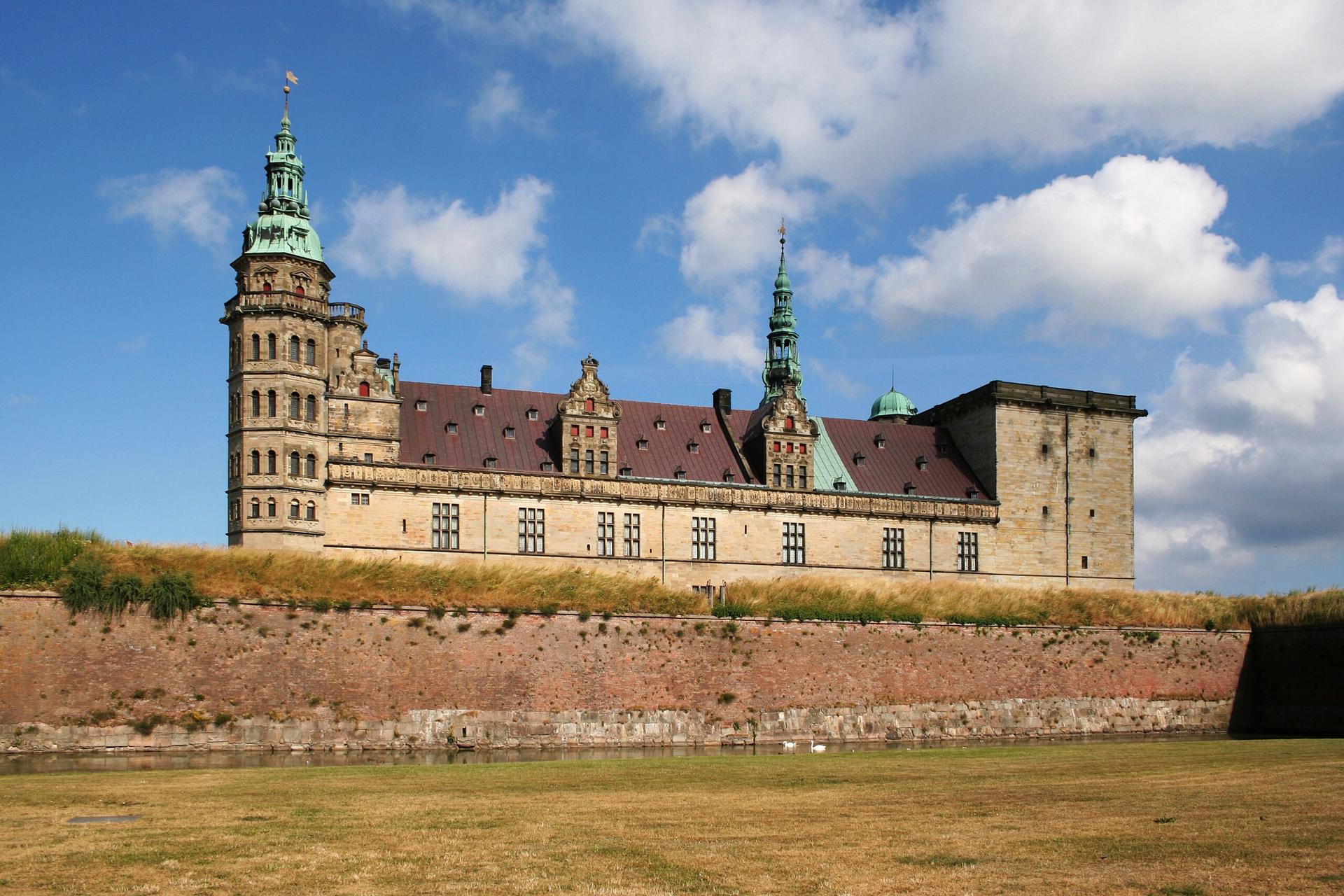
Explore North Zealand, Denmark's enchanting region of castles, beaches, and royal estates, perfect for history buffs, nature enthusiasts, and seaside lovers.
Tell me more about North Zealand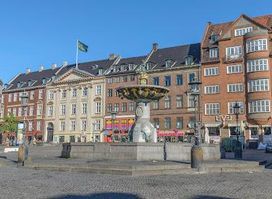
Cobbled, compact and quietly dramatic, Nytorv blends royal-era markets, grim judicial history and Neoclassical authority at the pedestrian heart of old Copenhagen.
A compact oddities museum on Rådhuspladsen where shrunken heads, vortex tunnels and record‑breaking curiosities turn everyday Copenhagen into a world of wonders.