

Danish Architecture Center (DAC)
Denmark’s national hub for architecture and city life, where bold harborfront design, hands‑on exhibitions and skyline views reveal how Copenhagen is built.
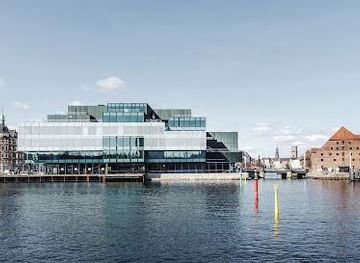
Set inside the bold, glass-fronted BLOX complex on Copenhagen’s inner harbor, the Danish Architecture Center is Denmark’s national hub for architecture, urban design and city life. Hands‑on exhibitions trace Danish building culture from Vikings to cutting‑edge sustainability, while guided city walks lead out into the streets. Families can get creative in workshops and race down the DAC Slide, then refuel in the rooftop café, where harbor and skyline views steal the show.
A brief summary to Danish Architecture Centre
- Bryghusgade 10, Copenhagen, Indre By, 1473, DK
- Click to display
- Click to display
- Duration: 1.5 to 4 hours
- Mid ranged
-
 Mixed
Mixed
- Mobile reception: 5 out of 5
- Monday 10 am-9 pm
- Tuesday 10 am-6 pm
- Wednesday 10 am-6 pm
- Thursday 10 am-9 pm
- Friday 10 am-6 pm
- Saturday 10 am-6 pm
- Sunday 10 am-6 pm

Know before you go
Hi, I'm Eve. Here are a few practical things to know before exploring Danish Architecture Centre.
- Plan at least 2–3 hours to combine exhibitions with time in the café and on the rooftop terraces; add more if you join one of the city architecture tours.
- Arrive earlier in the day on weekends and school holidays if you want space in the family workshop and shorter waits for the 40‑meter DAC Slide.
- Check current exhibitions and event listings in advance; themed shows like Age of Nature or evening talks can significantly shape the experience.
- Head to the rooftop terraces in clear weather for some of the best harbor and skyline views in central Copenhagen, especially around sunset.
- The DAC Design Shop is outside the ticket barrier, so you can browse books and Danish design pieces even if you are not visiting the exhibitions.
Do you manage this location?
Take control to get all the benefits, like improved information, better appearance, and stronger visibility across AI-powered discovery. Learn more
Activate your presenceOther nearby places you may find interesting
Getting There
-
Metro and walk
From central Copenhagen, take the M3 or M4 metro line to Gammel Strand or Rådhuspladsen; trains run every few minutes and a single 2‑zone ticket costs around 20–25 DKK. From either station, expect a 10–15 minute level walk on pavements and harbor promenades, suitable for wheelchairs and strollers in most weather conditions.
-
City bus
Several inner‑city bus lines stop on H. C. Andersens Boulevard and near the city hall area, about 5–10 minutes on foot from the Danish Architecture Center. Buses generally run every 5–10 minutes during the day and accept the same 2‑zone tickets as the metro, around 20–25 DKK per journey; expect the total trip across the central area to take 15–25 minutes depending on traffic.
-
Bicycle
Cycling is one of the easiest ways to reach the harborfront where the center is located. From most central neighborhoods it takes 10–20 minutes on dedicated bike lanes, with gentle gradients and good signage; you can rent standard city bikes or app‑based bikes for roughly 80–150 DKK per day, bearing in mind that rush hours bring heavier cycle traffic.
-
Harbor boat and walk
Harbor buses and sightseeing boats serve piers along Copenhagen’s inner harbor, with stops within a 5–10 minute walk of BLOX. Regular harbor buses use ordinary public transport tickets, around 20–25 DKK for a short trip, and the full journey from other central piers typically takes 15–30 minutes; services can be less frequent in winter or in rough weather.
For the on-the-go comforts that matter to you
-
 Restrooms
-
 Drink Options
-
 Drinking Water
-
 Food Options
-
 Seating Areas
-
 Sheltered Areas
-
 Trash Bins
-
 Information Boards
-
 Visitor Center
Discover more about Danish Architecture Centre
Architecture hub on Copenhagen’s waterfront
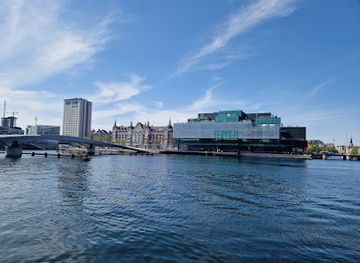
The Danish Architecture Center (DAC) occupies a striking home in BLOX, a stacked glass and steel structure perched directly on Copenhagen’s inner harbor. Inside, the building opens up in dramatic voids, long sightlines and stairways that crisscross between galleries, café, shop and rooftop terraces, mirroring the layered life of the city outside. Floor‑to‑ceiling windows frame boats gliding past, cycle bridges and the towers of the old town, placing contemporary design in constant dialogue with historic rooftops.From the moment you enter, architecture is treated as something lived rather than distant. The lobby feels like a busy urban plaza, with exhibition entrances, a slide plunging through several floors and views into workshop spaces where families and students tinker with models and materials. Rather than a static museum, DAC functions as a living laboratory for how people, buildings and public spaces shape each other.From Vikings to visionary cityscapes
A core attraction is the permanent exhibition So Danish!, which compresses 1000 years of Danish architecture into a clear visual story. Moving through the galleries, you pass from timber Viking halls to Renaissance castles, from functionalist housing blocks to today’s climate‑conscious neighborhoods. Models, drawings and immersive installations highlight how design choices reflect social ideals, from welfare‑state housing policies to the current focus on green mobility and public space.Temporary exhibitions extend that story into the future. Recent shows like Age of Nature explore the relationship between architecture, biodiversity and climate, inviting you to imagine cities where facades host birdlife, towers grow fungi for building materials and new districts are planned around water and trees. Other exhibitions spotlight leading Danish practices and global studios, with big names such as BIG – Bjarke Ingels Group and Dorte Mandrup appearing alongside smaller, experimental offices.City as open‑air gallery
DAC regards Copenhagen itself as its most important collection. Throughout the year, guided walks and bike tours head out from the center to explore waterfront developments, harbor baths, playful cycle bridges and historic quarters. Guides unpack why Copenhagen’s streets feel so human‑scaled, how old warehouses were reimagined as cultural venues, and what it takes to design inviting plazas in a windy Nordic climate.These tours often tie back to themes in the exhibitions, so you might learn about sustainable building systems indoors before seeing real‑world examples outside. Even if you do not join an organized walk, simply stepping onto the harbor promenade outside BLOX places you in the middle of contemporary Danish urbanism, with views toward Christiansborg, sleek pedestrian bridges and busy bike lanes.Playful design for children and families
Architecture can sound abstract, but DAC makes it highly tangible for younger visitors. Family workshops on weekends and school holidays encourage children to build cities of the future from LEGO, cardboard and recycled materials, or to experiment with light, color and structure in hands‑on projects. Educators are on hand to help translate big ideas into playful activities.The 40‑meter DAC Slide is an immediate favorite, swooping through the atrium as a full‑body reminder that buildings can be fun. Around the galleries you will find child‑height exhibits, drawing stations and simple prompts that invite kids to think about the homes, streets and playgrounds they use every day. The result is an environment where adults can dive into detailed plans and manifestos while children explore on their own terms.Café, design shop and skyline terraces
High above the harbor, DAC Café stretches across several rooftop terraces with some of the most expansive views in central Copenhagen. The menu leans toward clean Nordic flavors and seasonal ingredients, but the real highlight is watching ferries, kayaks and cyclists crisscross below as church spires and modern high‑rises sketch the skyline. On clear days, the terraces feel like an elevated town square, with plenty of space to linger.Back at entrance level, the DAC Design Shop curates a compact but sharp selection of Danish design. Shelves are lined with architecture books, prints, clever home objects, jewelry and toys that reflect the country’s blend of functionality and understated style. It is as much a design inspiration library as a souvenir stop, and you can browse without a ticket, making it an easy detour even on a busy city day.A national center with a green focus
Beyond exhibitions and tours, DAC acts as Denmark’s national platform for debates on how cities should evolve. Public talks, film screenings and evening events bring together architects, artists, planners and residents to discuss topics from housing affordability to climate‑resilient waterfronts. Many programs unfold in English as well as Danish, making the center accessible to international visitors.Sustainability runs through both content and operations. The center emphasizes low‑impact design, circular building principles and inclusive public spaces across its programming, and is recognized as a green attraction within Copenhagen’s cultural district. For travelers, that means you encounter not only beautiful models and drawings, but also practical ideas for how the built environment can respond to the environmental challenges of the 21st century.Explore the best of what Danish Architecture Centre has to offer













More about Hillerod
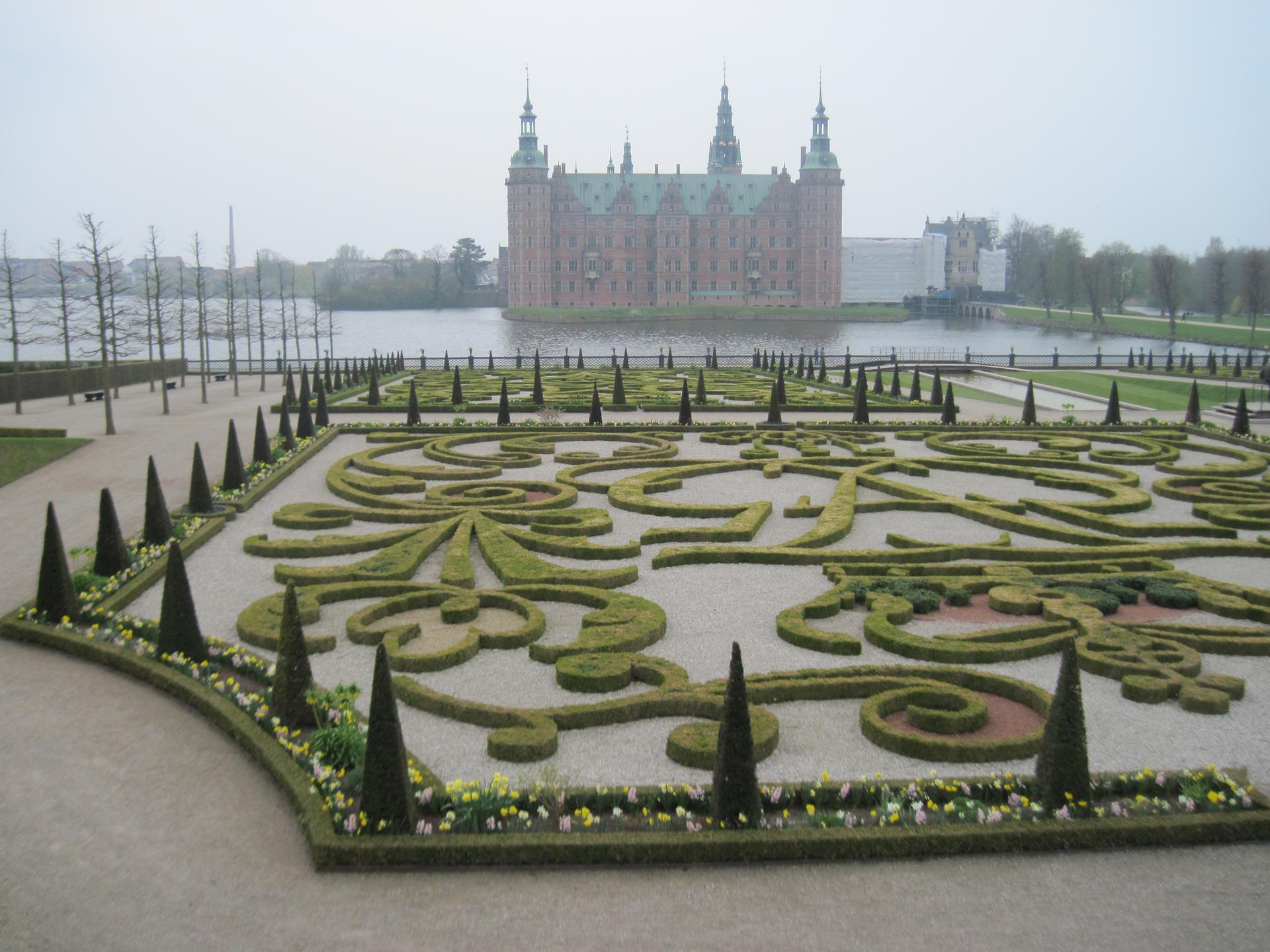
Explore Hillerød: Discover Frederiksborg Castle, vibrant town life, and scenic nature trails in Denmark's charming North Zealand region.
Tell me more about Hillerod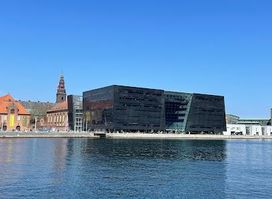
Copenhagen’s Black Diamond blends a centuries‑old national library with bold harbourfront architecture, quiet reading rooms, exhibitions, concerts and a hidden garden oasis.
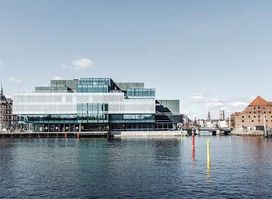
Copenhagen’s living laboratory for architecture and city life, blending bold exhibitions, playful design experiences and harbourfront views inside the BLOX building.
