Background

The King’s Garden (Kongens Have), Copenhagen

Copenhagen’s oldest royal garden, where Renaissance geometry, castle views and everyday picnics blend into one timeless green escape in the city centre.

4.6

The King’s Garden, or Kongens Have, is Copenhagen’s oldest and most beloved public park, wrapped around fairy‑tale Rosenborg Castle. Laid out in 1606 for King Christian IV as a Renaissance pleasure garden, it now blends formal parterres, long tree‑lined avenues, sweeping lawns and colourful flower borders. Today it’s a relaxed green retreat in the city centre, where history, sculpture, pavilions and picnicking locals share the same elegant royal setting.

A brief summary to The King's Garden

  • Øster Voldgade 4A, Copenhagen, Indre By, 1307, DK
  • +4533954200
  • Duration: 1 to 3 hours
  • Free
  • Environment icon Outdoor
  • Mobile reception: 5 out of 5
  • Monday 7 am-5 pm
  • Tuesday 7 am-5 pm
  • Wednesday 7 am-5 pm
  • Thursday 7 am-5 pm
  • Friday 7 am-5 pm
  • Saturday 7 am-5 pm
  • Sunday 7 am-5 pm

Local tips

  • Arrive in the morning for softer light and fewer crowds around the parterre and the long herbaceous border, especially in late spring and early summer.
  • Combine your visit with Rosenborg Castle; explore the gardens first, then tour the castle and Crown Jewels to understand how the two were designed as one ensemble.
  • Bring a picnic or grab food from nearby bakeries; lawns are generally used for informal picnicking, but respect planted beds and keep to paths where requested.
  • If visiting with children, seek out the playground area tucked within the garden so youngsters can play while adults enjoy castle views from nearby benches.
  • Dress for the season: shade from large trees makes summer visits pleasant, but in cooler months the open lawns can feel breezy, so layers are useful.
widget icon

Getting There

  • Metro and walk from Nørreport

    From anywhere on Copenhagen’s M1, M2, M3 or M4 metro lines, ride to Nørreport Station, one of the city’s main hubs; journeys within the central zones typically take 5–15 minutes and cost around DKK 20–30 one way with a standard ticket or travel card. From Nørreport it is an easy 8–10‑minute walk on broad pavements to the King’s Garden, suitable for wheelchairs and strollers. Trains and metro run frequently throughout the day, making this the most convenient option in most weather.

  • City bus to Øster Voldgade area

    Several city bus lines run through central Copenhagen and stop on streets bordering the King’s Garden, with typical travel times of 10–20 minutes from inner districts depending on traffic. Single tickets within the central zones usually cost about DKK 20–30 and can be bought from ticket machines, apps or contactless payment systems. Buses are low‑floor and generally accessible, but they can be crowded at peak commuter times and during major events near the park.

  • Cycling in the city centre

    Copenhagen’s dense network of segregated cycle lanes makes reaching the King’s Garden by bike straightforward from most central neighbourhoods in 5–20 minutes. Many visitors use hotel bikes or short‑term rentals, typically priced from around DKK 80–130 per day depending on type and provider. Bike parking racks are located around the garden edges; lock your bicycle only in designated spots and avoid riding inside the park itself, where cycling is restricted to protect paths and lawns.

  • Walking from nearby central sights

    If you are already in the historic centre, the King’s Garden lies within a pleasant 10–20‑minute walk of major attractions such as Nyhavn, the Round Tower or the city hall area. Pavements are generally even, with some cobbled sections closer to older streets. Walking is free and allows you to link the garden with other sights at your own pace, though in winter or during heavy rain the open areas can feel exposed, so waterproof layers and sturdy footwear are advisable.

The King's Garden location weather suitability

  • Weather icon Any Weather
  • Weather icon Clear Skies
  • Weather icon Mild Temperatures
  • Weather icon Hot Weather
  • Weather icon Cold Weather
  • Weather icon Rain / Wet Weather

Unlock the Best of The King's Garden

Buy tickets

    No tickets available

Book tours with entry

    No tours available

Book tours without entry

    No tours available

Discover more about The King's Garden

Royal green heart of central Copenhagen

The King’s Garden, known in Danish as Kongens Have, unfolds as a 12‑hectare carpet of lawns, trees and flowerbeds in the very centre of Copenhagen. Created in 1606 as the pleasure garden for Rosenborg Castle, it is Denmark’s oldest royal garden and one of the city’s most characteristic green spaces. The castle’s red brick towers rise above treetops and parterres, giving the whole park a storybook backdrop that anchors it firmly in the country’s royal past. Despite its regal origins, the mood today is distinctly relaxed. Wide lawns invite barefoot summer afternoons, students sprawl with books beneath avenues of lime and chestnut, and the mixed herbaceous borders provide a seasonal burst of colour from early spring to late autumn. Sculptures tucked among the greenery, from classical figures to more modern pieces, add a quiet artistic dimension to a simple stroll.

From private pleasure ground to public park

The garden was first laid out for King Christian IV, the energetic Renaissance monarch who reshaped much of Copenhagen. He wanted a garden that matched his new summer residence, Rosenborg, then a modest retreat outside the city ramparts. Initially the space combined ornamental beds with productive plots growing fruit, vegetables and flowers for the royal household, all arranged in the geometric style fashionable at the time. Over the following decades, tastes shifted. Baroque influences brought a more theatrical layout: straight tree‑lined avenues, a maze, and a central pavilion that turned the garden into a stage set for courtly life. By the early 18th century, the royal family had largely moved their attention elsewhere, and the grounds slowly opened to the wider public. What began as an exclusive domain became a shared civic asset, a process that helped define the way Copenhageners still use their parks.

Design details and hidden corners

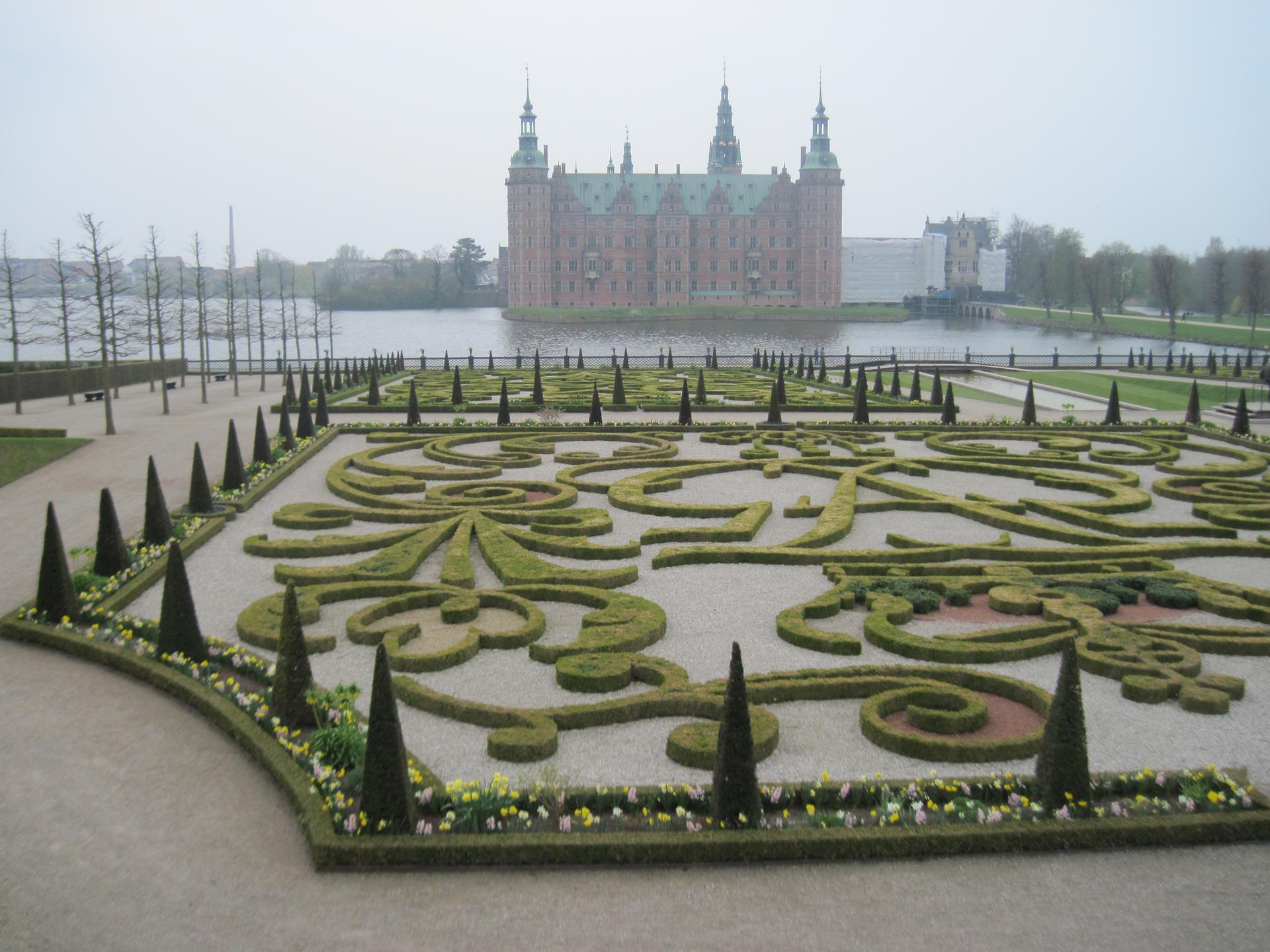
Look closely and the layers of design history are still visible. Near Rosenborg Castle, a formal parterre creates graphic patterns in low hedges and seasonal plantings, echoing the original Renaissance vision. Long diagonal paths, historically known as the Knight’s Path and the Lady’s Path, cross the park and frame some of its most photogenic perspectives. In spring, crocus carpets and blossoming trees soften these strict lines with colour. Elsewhere the tone is more English in spirit. A famously long herbaceous border, often cited as one of Northern Europe’s longest, runs in a generous sweep, packed with perennials and shrubs chosen for continuous bloom. In another section, the Krumspringet rose garden reinterprets a historic maze with clipped hedges, roses and a small pavilion, offering quiet corners just a few steps away from busier lawns.

Rosenborg Castle and garden pavilions

Although the garden is free to enter, Rosenborg Castle at its centre is a separate attraction with ticketed admission, housing royal treasures including the Danish Crown Jewels. Even without going inside, the castle dramatically shapes the garden experience: reflections in the moat, views along the parterre, and the sense of moving through an extended castle forecourt rather than a generic city park. Scattered around the grounds are smaller architectural highlights. The Hercules Pavilion, refashioned in a neoclassical style and fronted by a statue of the hero, hints at the garden’s long role as both pleasure ground and working landscape. It has served over the centuries as everything from hermitage to café, and today it often functions as a relaxed refreshment point and cultural space, underscoring how the garden continues to adapt to contemporary city life.

Everyday rituals in a historic setting

For modern Copenhageners, the King’s Garden is less a formal monument and more a daily living room under open sky. Families gravitate to the well‑equipped playgrounds, where climbing structures sit against a backdrop of castle walls. Office workers take lunchtime walks beneath mature trees; in summer, groups gather with blankets and takeaway picnics, turning the lawns into a patchwork of small social scenes. Seasonality shapes the atmosphere. Early in the year, bulbs and flowering trees lend a delicate, almost ephemeral character. Long summer evenings stretch out in golden light across the grass, while autumn brings rich foliage and a quieter, reflective mood. Even in winter, the symmetrical paths and stark silhouettes of the castle and trees give the garden a graphic elegance, reminding visitors that this is as much a designed landscape as a natural refuge.

Planning time and enjoying the surroundings

Most visitors spend an hour or two wandering the paths, pausing at benches or simply sitting on the grass to absorb the surroundings. Combined with a tour of Rosenborg Castle, the garden easily becomes the centrepiece of a half‑day in the area. Nearby, other cultural institutions and city streets extend the experience, but the King’s Garden remains the natural pause point: a place to slow down, read, talk and watch Copenhagen at its most relaxed, framed by four centuries of royal and civic history.

Busiest months of the year

Busiest hours of the day

Popular Experiences near The King's Garden

Popular Hotels near The King's Garden

Select Currency