
Danish Jewish Museum, Koge Travel Guide
A compact museum of 400 years of Jewish life in Denmark, where Daniel Libeskind’s walkable word “Mitzvah” turns history, memory and rescue into immersive architecture.
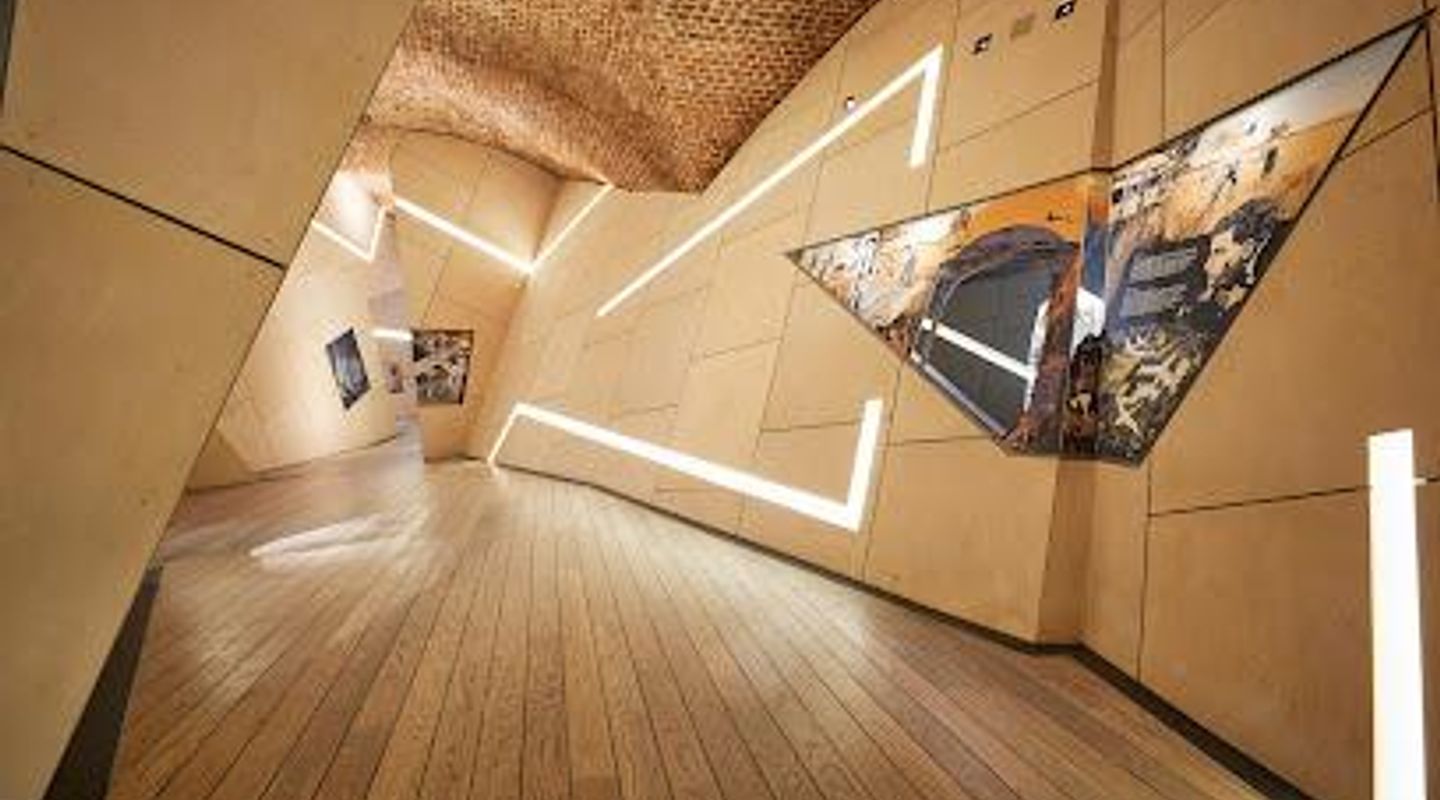
Tucked into the historic Galley House by Copenhagen’s Royal Library Garden, the Danish Jewish Museum tells 400 years of Jewish life in Denmark through evocative objects and daring architecture. Daniel Libeskind’s slanted corridors spell out the Hebrew word “Mitzvah,” echoing the wartime rescue of Danish Jews and the long, largely inclusive relationship between Jewish communities and the Danish state. Intimate, text-rich displays explore faith, everyday life, exile, and return in a compact but thought‑provoking space.
A brief summary to Danish Jewish Museum
- Proviantpassagen 6, Copenhagen, Indre By, 1218, DK
- Click to display
- Click to display
- Duration: 1 to 2 hours
- Mid ranged
-
 Indoor
- Mobile reception: 5 out of 5
- Wednesday 11 am-5 pm
- Thursday 11 am-5 pm
- Friday 11 am-5 pm
- Saturday 11 am-5 pm
- Sunday 11 am-5 pm

Know before you go
Hi, I'm Eve. Here are a few practical things to know before exploring Danish Jewish Museum.
- Plan at least 60–90 minutes if you like reading exhibition texts; the museum is small but densely packed with information and architectural details.
- Check opening days in advance, as the museum is typically closed on Mondays and Tuesdays and only open limited daytime hours on other days.
- Spend a few minutes in the Royal Library Garden before or after your visit; the quiet setting helps you process the museum’s more intense themes.
- Look for how the angular corridors change direction; they outline the Hebrew letters of the word “Mitzvah,” a key to understanding the museum’s concept.
Do you manage this location?
Take control to get all the benefits, like improved information, better appearance, and stronger visibility across AI-powered discovery. Learn more about listing your business on Evendo
Activate your presenceOther nearby places you may find interesting
The closest places of the same kind, if this one is not quite what you had in mind.

Explore Danish Jewish Museum on the Map
A handpicked selection of must-see spots near Danish Jewish Museum, mapped for you.
Unlock the Best of Danish Jewish Museum
Buy tickets
-
No tickets available
Book tours with entry


Getting There
-
Metro and short walk
From most central Copenhagen locations, take the M1 or M2 metro line to Kongens Nytorv station, then walk about 10–15 minutes through the inner city to Slotsholmen. Standard single metro tickets within the city zones typically cost around 20–30 DKK and trains run every few minutes throughout the day. The walk is flat and on paved sidewalks, suitable for most visitors, though cobblestones in some streets may be uneven.
-
S-train and bus combination
If you arrive via S-train, travel to Nørreport Station and transfer to a city bus serving Slotsholmen and the Parliament area; the bus ride is usually 5–10 minutes, followed by a short walk of a few hundred metres. A combined ticket for S-train and bus within central zones generally costs about 20–30 DKK when bought as a single trip. Services are frequent during the day but can be less frequent in the late evening.
-
Bicycle within the city
Copenhagen’s extensive cycle paths make it straightforward to reach the museum by bike from most inner-city neighbourhoods within 10–20 minutes. You can use a rented city bike or a private bicycle; expect typical city bike rental rates of roughly 80–150 DKK per day depending on provider. The route is almost entirely flat, but be prepared for busy intersections at peak commuter times and observe local cycling etiquette.
-
Taxi from central Copenhagen
From central areas such as the main train station or City Hall Square, a taxi ride to the museum area usually takes around 10–15 minutes, depending on traffic. Fares commonly fall in the 120–200 DKK range for this distance, with higher prices in heavy traffic or evenings. Taxis can drop passengers close to the Royal Library and Parliament complex, but stopping directly at the museum entrance may be limited by local security measures.
For the on-the-go comforts that matter to you
-
 Restrooms
-
 Drink Options
-
 Food Options
-
 Seating Areas
-
 Trash Bins
-
 Information Boards
Discover more about Danish Jewish Museum
A hidden museum in a royal boat house
Housed within Christian IV’s former Royal Boat House on Slotsholmen, the Danish Jewish Museum occupies one of Copenhagen’s most atmospheric corners. Brick walls, vaulted ceilings and traces of the 17th‑century harbour complex link the building to the same king who first invited Jews to settle in Denmark in 1622. The museum forms part of the Royal Library complex, just off the tranquil Library Garden, creating a contemplative pocket of history amid the city’s political and cultural heart.Inside, the transition from historic masonry to sharply angled, pale timber surfaces is striking. You step from a Renaissance service building into a contemporary cultural history museum dedicated entirely to Jewish life in Denmark – the first official museum in the country focused on a minority community. That juxtaposition of old and new mirrors the museum’s ambition: to place centuries of Jewish presence firmly within Denmark’s broader national story.Four centuries of Danish Jewish life
The permanent exhibition traces around 400 years of Jewish history in Denmark, from early merchants and court Jews through emancipation, integration and the upheavals of the 20th century. Display cases highlight ritual objects, family heirlooms, business artefacts and personal documents that anchor big historical shifts in individual lives.Rather than centring solely on persecution, the narrative emphasises everyday coexistence, gradual inclusion and cultural exchange. You encounter stories of religious practice in a Lutheran kingdom, of Jewish contributions to trade and industry, and of the changing balance between tradition and modernity. Sections on World War II and the dramatic escape to Sweden in 1943 are framed not only as trauma but as a chapter in a much longer relationship between Jews and the Danish state.Libeskind’s architecture as a walkable word
The museum’s most distinctive feature is its interior, designed by architect Daniel Libeskind. Narrow corridors twist at unexpected angles, floors slope slightly, and sightlines break and rejoin. These passages correspond to four conceptual “planes” – Exodus, Wilderness, The Giving of the Law, and The Promised Land – which together form the Hebrew word “Mitzvah,” meaning commandment or good deed.As you move through the space, you are literally walking inside this word. The architecture alludes both to Jewish textual traditions – layers of commentary around a central text – and to the Danish rescue of most of the country’s Jews during the Second World War. Light filtering through irregular openings softens the sense of disorientation, while carefully placed showcases and benches invite you to pause and read, think, or simply absorb the geometry around you.Intimate exhibitions and changing perspectives
Within this labyrinthine framework, the museum presents compact thematic displays that reward slow looking. Bilingual texts in Danish and English unpack everything from synagogue life and religious holidays to migration stories, wartime escape routes and post‑war identity debates. Audio, film and occasional interactive elements add layers without overwhelming the small footprint.Temporary exhibitions and research projects often focus on specific individuals, families or episodes, such as Danish Jews’ experiences in 1943–45 or more recent immigration from Eastern Europe. The museum also functions as a knowledge centre, hosting lectures, educational programmes and collaborations that extend the story beyond the walls. Even during a short visit, the material invites you to consider questions of belonging, minority status and cultural memory in a Nordic welfare state.A quiet refuge in Copenhagen’s cultural district
Despite its central location, the museum feels calm and self‑contained. The Royal Library Garden outside offers a peaceful place to reflect after the slightly disorienting interior. From here, you are steps away from Christiansborg Palace, the Royal Library’s “Black Diamond” extension and several other museums, making the site easy to combine with a broader exploration of Danish history.The Danish Jewish Museum is compact enough to see in an hour yet layered enough to occupy much longer if you delve into the texts, listen to recordings and follow the architectural narrative. It works equally well as an introduction to Jewish history in Denmark and as a focused architectural experience, where the building itself becomes an interpretive lens on a complex, often inspiring story.












Your all‑in‑one travel companion app
Explore expert travel guides, compare and book tours, experiences, hotels, and more—all from the palm of your hand. Download now for seamless trip planning wherever your wanderlust takes you.


Explore More of Koge
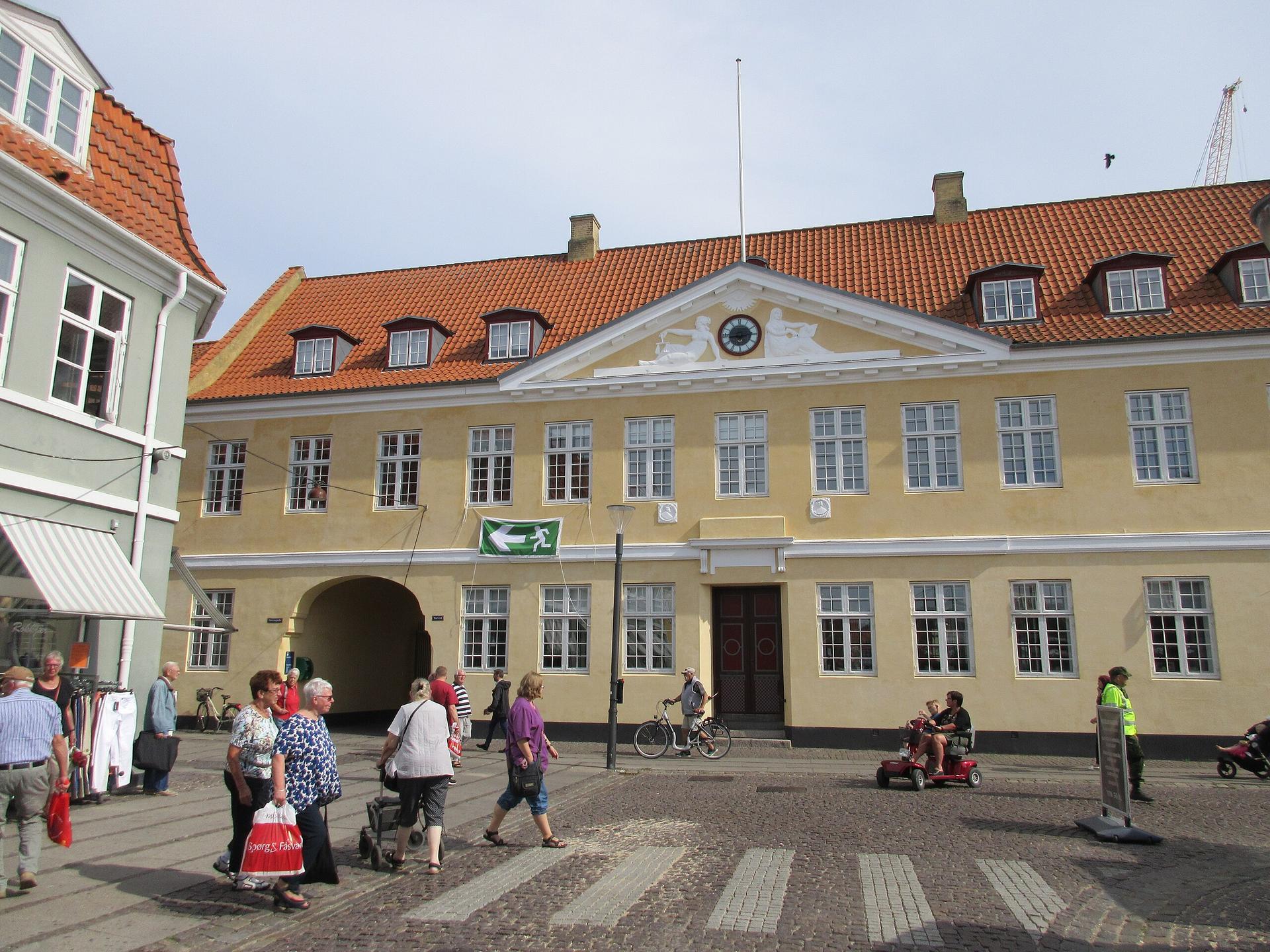
Looking beyond Danish Jewish Museum? Discover Koge for broader travel guides, local hot-spots, and regional highlights.
Explore Koge