Nyholm Central Guardhouse, Køge Travel Guide
Free Guide: Compact Baroque guardhouse with a crown‑topped tower, anchoring Copenhagen’s historic naval base on Holmen amid water, lawns and centuries of maritime heritage.


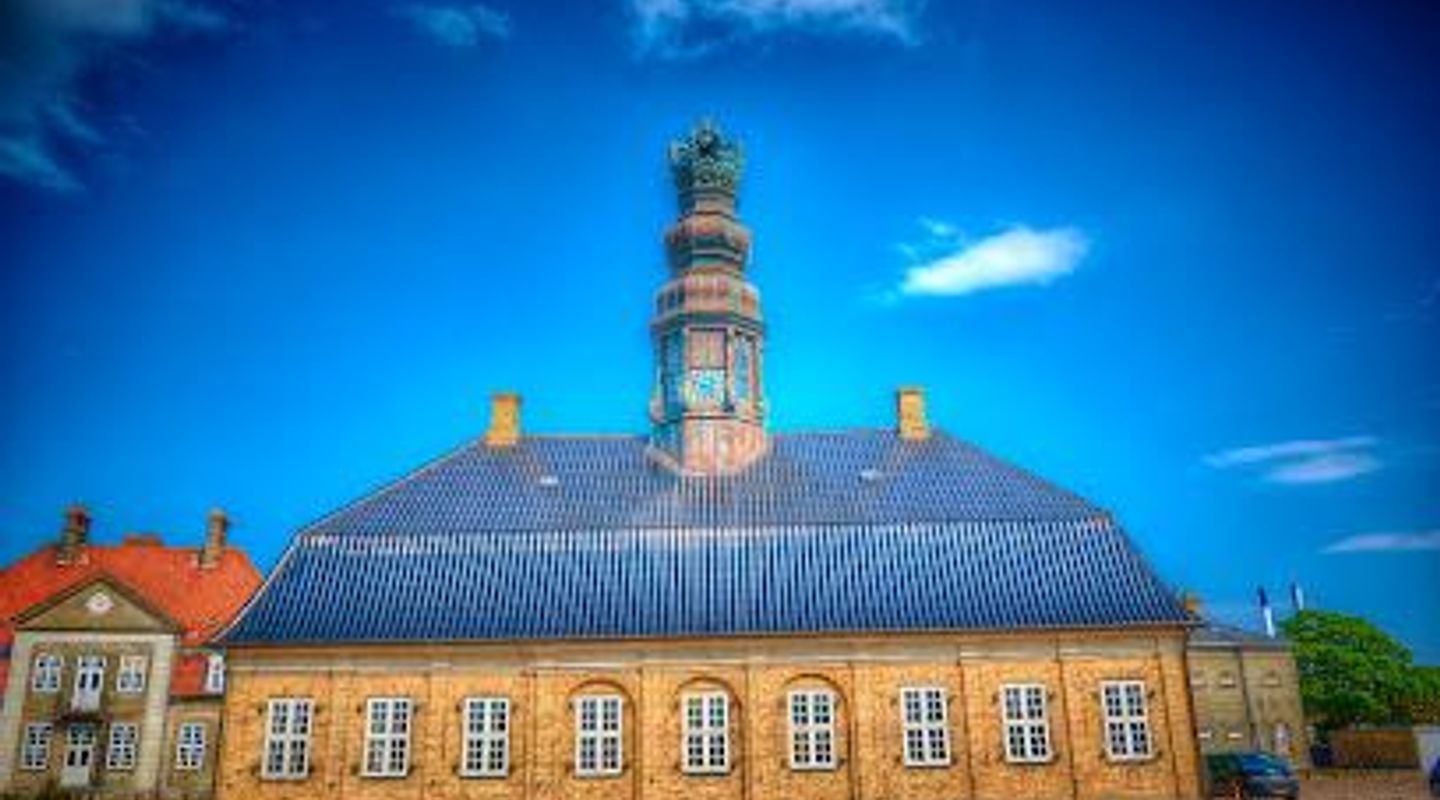
A brief summary of Nyholm Central Guardhouse
Compact Baroque guardhouse with a crown‑topped tower, anchoring Copenhagen’s historic naval base on Holmen amid water, lawns and centuries of maritime heritage.
Nyholm Central Guardhouse is a beautifully preserved 18th‑century Baroque guardhouse standing at the heart of Copenhagen’s former naval base on Holmen. Completed in 1745 and attributed to architect Philip de Lange, it once controlled access to the Nyholm dockyards, the strategic hub of the Danish navy. Today its yellow masonry, high hipped roof and oversized crown‑topped clock tower form an unmistakable silhouette, surrounded by lawns, water and historic naval buildings that together evoke centuries of maritime power.
On-site amenities
 Seating areas
 Trash bins
 Information boards
- Address
- Henrik Gerners Pl. 1, 1439 København
Getting there
Harbour bus
City bus
Bicycle
On foot
Discover more about Nyholm Central Guardhouse
A Baroque Sentinel of Copenhagen’s Naval Past
Nyholm Central Guardhouse rises from Henrik Gerners Plads like a compact Baroque jewel, fronting the waters of Copenhagen’s inner harbour. Completed in 1745 as part of the Nyholm naval base, it served as the central checkpoint and ceremonial face of what was then Denmark’s most important military installation. The base itself occupied reclaimed islands created from the late 1600s, shifting the royal fleet away from the crowded medieval city and into a purpose‑built stronghold of shipbuilding and defense.Conceived as both working guardroom and architectural showpiece, the building signalled that anyone approaching by sea was entering a carefully controlled, prestigious world of naval power. Its relatively modest footprint is offset by theatrical detailing, making it appear almost like a small palace watching over the quays.
Philip de Lange’s Dramatic Architecture
The guardhouse is widely associated with the prolific architect Philip de Lange, whose hand shaped much of 18th‑century Copenhagen. Here he combined sturdy, almost austere brick walls with exuberant Baroque flourishes. The façades are rendered in warm yellow tones, broken by tall, rhythmically spaced windows and simple pilaster‑like strips that emphasize the building’s verticality.Above the steep, dark roof rises the structure’s most distinctive feature: a clock tower crowned by an outsized royal crown. The proportions are deliberately bold, ensuring the crown is legible from ships entering the harbour. Decorative cornices, the crisp outline of the tower and the play between solid masonry and open belfry details create a striking profile against the sky, especially on clear days when the light glints off metalwork and window glass.
Gatekeeper to the Nyholm Naval Base
In its operational heyday the guardhouse controlled movement in and out of the Nyholm complex. Sentries were posted here to monitor personnel, visiting officers and civilian contractors heading toward the dockyards and workshops beyond. The interior, though not normally accessible today, once contained guardrooms, basic facilities for the watch and spaces where officers could oversee shifts and handle formalities.The surrounding square and adjoining quay read like an open‑air manual of naval history. Around the guardhouse you can see long brick sheds, mast cranes and former workshops where hulls were assembled, fittings were crafted and the Danish fleet was readied for sea. The building thus functioned less as an isolated monument and more as the nerve centre of a sprawling working base, where everyday routines were framed by the rituals of inspection and salute.
From Closed Military Zone to Quiet Heritage Enclave
For centuries Holmen was largely off‑limits, its guard posts and barriers enforcing the strict separation between the military world and the civilian city. Over time, as shipbuilding techniques changed and naval operations shifted elsewhere, much of the base was decommissioned. The guardhouse lost its original role, but its fabric and setting remained remarkably intact, protected by continued military use and later heritage designation.Today the area feels unexpectedly tranquil. Lawns soften the ground around the building, and views open across the harbour to modern landmarks and church spires. Occasional naval activity, visiting ships or training vessels at nearby quays recall the site’s original purpose, but most of the time you will encounter only a scattering of walkers, architecture enthusiasts and people following themed city walks that explore Holmen’s layered history.
Experiencing the Guardhouse and Its Waterfront Setting
Although the guardhouse itself is not a regular museum and may be closed internally, there is plenty to take in from the outside. You can circle the building to appreciate how its design changes from the more formal front to the plainer service sides. From different angles the crown‑topped tower aligns with masts, cranes and roofs around the harbour, creating classic Copenhagen photo compositions.The broad quays around Henrik Gerners Plads offer generous sightlines over the water, with benches and informal seating spots where you can pause to watch harbour buses, kayakers and training ships. In the softer light of morning or evening, the yellow walls and intricate rooflines glow, and the guardhouse becomes an atmospheric backdrop for reflection on how the sea has shaped Denmark’s fortunes.
Layers of Memory in a Maritime Landscape
The square takes its name from Henrik Gerner, an 18th‑century naval officer and shipbuilder whose work helped modernize the Danish fleet. His legacy, combined with that of Philip de Lange and generations of sailors, engineers and dockyard workers, gives the area a dense, if quiet, sense of memory. Plaques, preserved workshops and the alignment of streets still echo the days when the clang of metal, shouted orders and the creak of rigging filled the air.For visitors, Nyholm Central Guardhouse offers an accessible way to engage with this history without the formality of an indoor exhibition. Standing here, surrounded by water, brick and sky, you can read the evolution of Copenhagen from fortified naval capital to open, livable harbour city, all anchored by one small but eloquent Baroque building.
Evendo Review Centre
 Google
Guest reviews
Best time to go
Quietest: Jan, Feb & Mar · before 8am or at 9pm
Busy times are Evendo estimates for a typical year, to help you plan. Actual crowds vary with events, school holidays and the weather.
Explore Nyholm Central Guardhouse on the map
A handpicked selection of must-see spots near Nyholm Central Guardhouse, mapped for you.
Get your free copy of our complete guide to Nyholm Central Guardhouse, delivered straight to you.
Everything on this page, from opening hours and how to get there to Eve’s tips and the best time to go, in one PDF you can read offline, print or share.
Already have an account? Sign in
Your Nyholm Central Guardhouse guide is ready.
We'll send it to · Not you? Sign out

Getting your guide ready…
We are putting together a fresh copy of the Nyholm Central Guardhouse guide. This can take up to a minute.
This can take a few moments. If your browser asks, choose Allow so the download can start. You'll find the guide in your Downloads folder.
Nothing happened? Download it again
Sorry, the guide is taking longer than usual. Please try again in a minute, or get it by email instead.
Unlock the best of Nyholm Central Guardhouse
Skip-the-line tickets, guided tours with entry, and walking tours of the area, booked in a few clicks.


Other nearby places you may find interesting
The closest places of the same kind, if this one is not quite what you had in mind.
-
Mindesmærke for slagene i Køge Bugt Harbourfront monument where stone, sea breeze and maritime symbols keep the naval battles of Køge Bugt and their admirals alive on Køge’s working waterfront.
-
Vallø Castle A Renaissance castle reborn: where Danish nobility found refuge and history survived the flames.
-
Køge Church Medieval tower, Denmark's first lighthouse, baroque treasures in a historic port town.
-
Køge bølgebryder Industrial waterfront landmark offering sweeping sea vistas and authentic coastal atmosphere.
-
Køge Torv Denmark's largest medieval town square, where seven centuries of history unfold on cobblestones.
Swipe for more places
More to explore near Nyholm Central Guardhouse
-
 Best experiences near Nyholm Central Guardhouse
-
 Best hotels near Nyholm Central Guardhouse
-
 Best landmarks near Nyholm Central Guardhouse
-
 Best attractions near Nyholm Central Guardhouse
-
 Best shops near Nyholm Central Guardhouse
-
 Best restaurants near Nyholm Central Guardhouse
-
 Best bars near Nyholm Central Guardhouse







Do you manage this location?
Take control to get all the benefits, like improved information, better appearance, and stronger visibility across AI-powered discovery.
Explore more
Explore more of Køge
Explore Køge, Denmark's coastal gem, with its medieval charm, beautiful marina, and close proximity to the stunning Stevns Klint UNESCO World Heritage site.
Explore Køge
Explore more of Denmark
Discover Denmark: A perfect blend of history, modern design, and the cozy concept of hygge. Explore vibrant cities, serene landscapes, and world-class cuisine.
Explore Denmark