

The Little Mermaid, Koge Travel Guide
Copenhagen’s most famous resident: a small bronze mermaid on a harbour rock, where Hans Christian Andersen’s bittersweet fairy tale meets the city’s everyday sea breeze.
Perched on a low granite rock along Copenhagen’s Langelinie promenade, The Little Mermaid is a small bronze statue with outsized fame. Unveiled in 1913 and inspired by Hans Christian Andersen’s 1837 fairy tale, Edvard Eriksen’s 1.25 m figure gazes wistfully across the harbour, symbolising longing and transformation. Free to visit at any time, this iconic waterfront landmark anchors many travellers’ first impressions of Denmark’s capital, pairing literary heritage with classic harbour views.
A brief summary to The Little Mermaid
- Langelinie, København Ø, København Ø, 2100, DK
- Duration: 0.5 to 1.5 hours
- Free
-
 Outdoor
- Mobile reception: 5 out of 5

Know before you go
Hi, I'm Eve. Here are a few practical things to know before exploring The Little Mermaid.
- Visit early in the morning or later in the evening to avoid coach groups and cruise ship crowds and to enjoy softer light for photographs along the harbour.
- Stay on the promenade or stable rocks rather than climbing onto the statue’s boulder; the stones can be slippery and damage to the sculpture carries serious fines.
- Combine your stop here with a walk around the nearby Kastellet star fort and the rest of the Langelinie waterfront for a fuller sense of Copenhagen’s harbour history.
- In winter, dress for strong windchill coming off the water; even on sunny days the exposed harbour can feel much colder than the city streets.
- If you want unobstructed photos, step a little further along the path and use the curve of the shore to frame the mermaid against open water rather than the promenade.
Do you manage this location?
Take control to get all the benefits, like improved information, better appearance, and stronger visibility across AI-powered discovery. Learn more about listing your business on Evendo
Activate your presenceOther nearby places you may find interesting
The closest places of the same kind, if this one is not quite what you had in mind.
Explore The Little Mermaid on the Map
A handpicked selection of must-see spots near The Little Mermaid, mapped for you.
Unlock the Best of The Little Mermaid
Buy tickets
-
No tickets available
Book tours with entry


Getting There
-
Metro and bus from central Copenhagen
From central Copenhagen, take the M3 or M4 metro to Østerport Station, a frequent ring-line service where trains run roughly every few minutes. From there, local buses toward the harbour area reduce the walk, or you can continue on foot along broad pavements. The total journey typically takes 15–25 minutes depending on connections. Standard city tickets or travel cards cover both metro and bus, with a single zone-based fare usually in the range of 20–30 DKK.
-
On foot from the historic centre
Energetic visitors can walk from the Kongens Nytorv and Nyhavn area to the statue in around 25–35 minutes. The route follows mostly flat, paved city streets and then the harbourside promenade, suitable for most fitness levels and pushchairs. Surfaces are generally smooth, but sections close to the water can be exposed to wind and occasional spray, so sturdy footwear and weather-appropriate clothing are advisable, especially in colder months.
-
Harbour boat and canal tour
Several canal and harbour boat tours departing from Nyhavn and nearby quays include a waterside view of The Little Mermaid as part of a wider circuit. Typical trips last 60–90 minutes and operate regularly in the main season, less frequently in winter. Prices vary by operator but commonly fall between 95 and 150 DKK per adult, with discounts for children. Boats are low and open or semi-covered, so expect wind and spray; in poor weather, departures can be reduced or rerouted.
-
Bicycle from city districts
Copenhagen’s extensive cycle lanes make it straightforward to reach Langelinie by bike from most central neighbourhoods in about 10–20 minutes. You can use shared bicycles or rentals, which typically cost around 20–35 DKK per short ride or 100–200 DKK for a full day, depending on the scheme or shop. The approach is almost entirely on segregated cycle tracks, but near the statue the paths narrow and mix with pedestrians, so speeds should be low and care taken in busy periods.
For the on-the-go comforts that matter to you
-
 Restrooms
-
 Food Options
-
 Seating Areas
-
 Trash Bins
-
 Information Boards
Discover more about The Little Mermaid
A quiet bronze figure with a global reputation
The Little Mermaid is Copenhagen’s most recognisable symbol: a modest 1.25 m bronze statue seated on a granite boulder at the edge of the Øresund, just off the Langelinie promenade. Sculpted by Edvard Eriksen and unveiled in 1913, she depicts the moment between sea and shore, her tail subtly morphing into human legs as she looks towards the city. Despite her small size, this delicate figure has come to stand for Copenhagen itself, appearing on postcards, guidebook covers and tourism campaigns around the world.From the path, you first notice how low and close to the water she sits. There is no grand plinth, only rough stone and lapping waves, which gives the encounter an unexpectedly intimate feel. Ships glide past in the harbour behind her, while joggers and cyclists trace the promenade in front, weaving the statue into the city’s everyday rhythm.From fairy tale page to harbour rock
The statue is inspired by Hans Christian Andersen’s 1837 tale about a young mermaid who longs for a human soul and earthly love, sacrificing her voice and enduring great pain for a chance to walk on land. In Copenhagen, Andersen’s story is part of the cultural fabric, and this sculpture is its most visible expression. Brewer and philanthropist Carl Jacobsen, moved by a ballet adaptation of the tale at the Royal Danish Theatre in 1909, commissioned the statue as a gift to the city.Eriksen drew on two muses: ballerina Ellen Price, who danced the mermaid on stage and lent her features for the head, and the sculptor’s wife, Eline, who posed for the nude body. The result is a figure that feels both theatrical and real, her posture poised yet introspective. The smooth bronze surface, softened by more than a century of sea air, hints at countless winters, sea mists and distant ship horns that have passed since she first appeared on the rock.Stories etched by time, tides and turmoil
Over the decades The Little Mermaid has led a surprisingly turbulent life for such a serene figure. Political slogans have been sprayed across the stones, paint has been poured over her, and several times she has literally lost her head or limbs to vandals. On one dramatic occasion she was blown from her rock into the harbour and later retrieved and restored.Each incident has been followed by careful conservation work, and the statue you see today bears no obvious scars. Yet those stories linger, adding a layer of resilience to her expression of quiet longing. The repeated restorations speak to Copenhagen’s determination to preserve this emblem of its maritime and literary heritage, even when it becomes a canvas for protest.Experiencing the harbour setting
Part of the statue’s appeal lies in her setting along Langelinie, a waterside promenade lined with trees, lawns and moorings for visiting cruise ships. The open view across the harbour contrasts with the compact figure on the rock, making her seem even smaller against the backdrop of water, sky and industrial silhouettes. On clear days, the light glints off the bronze and the granite base, while the breeze carries the mixed scents of sea air, tarred timber and distant bakery stands.The area invites slow wandering: you can circle along the shore to see the mermaid from different angles, notice how her profile changes against passing boats, and watch as groups politely take turns for photographs. Early mornings and winter afternoons often feel calmer, when the soundscape shifts from camera shutters and conversations to gulls and the soft slap of waves against stone.Planning your visit on Langelinie
The Little Mermaid is in a public, unfenced space and can be seen at all hours without an entry fee. Simple pathways and low curbs make the immediate area relatively straightforward to access, though clambering out onto the rocks is not recommended, especially in wet or icy conditions. Allow enough time not just for a quick photo, but to absorb the interplay between statue, story and harbour.Nearby lawns and benches provide places to pause, while the broader Langelinie stretch connects with historic fortifications and other waterfront viewpoints. The statue works well as a stop within a longer harbour walk, or as a brief detour to connect a famous fairy tale with the very real, working waterfront that has shaped Copenhagen’s identity for centuries.












Your all‑in‑one travel companion app
Explore expert travel guides, compare and book tours, experiences, hotels, and more—all from the palm of your hand. Download now for seamless trip planning wherever your wanderlust takes you.


Explore More of Koge
Looking beyond The Little Mermaid? Discover Koge for broader travel guides, local hot-spots, and regional highlights.
Explore Koge
Historic waterfront where Scandinavian dreams embarked for America, now a refined promenade of heritage and harbour views.
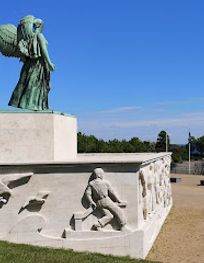
Honoring Denmark’s seafaring legacy, the Maritime Monument in Østerbro is a striking, evocative memorial nestled in the heart of Copenhagen’s leafy cityscape.
