

Christiania Travel Guide
Free Guide: Copenhagen's autonomous anarchist commune where hand-built creativity, alternative culture, and radical freedom define a unique urban sanctuary.


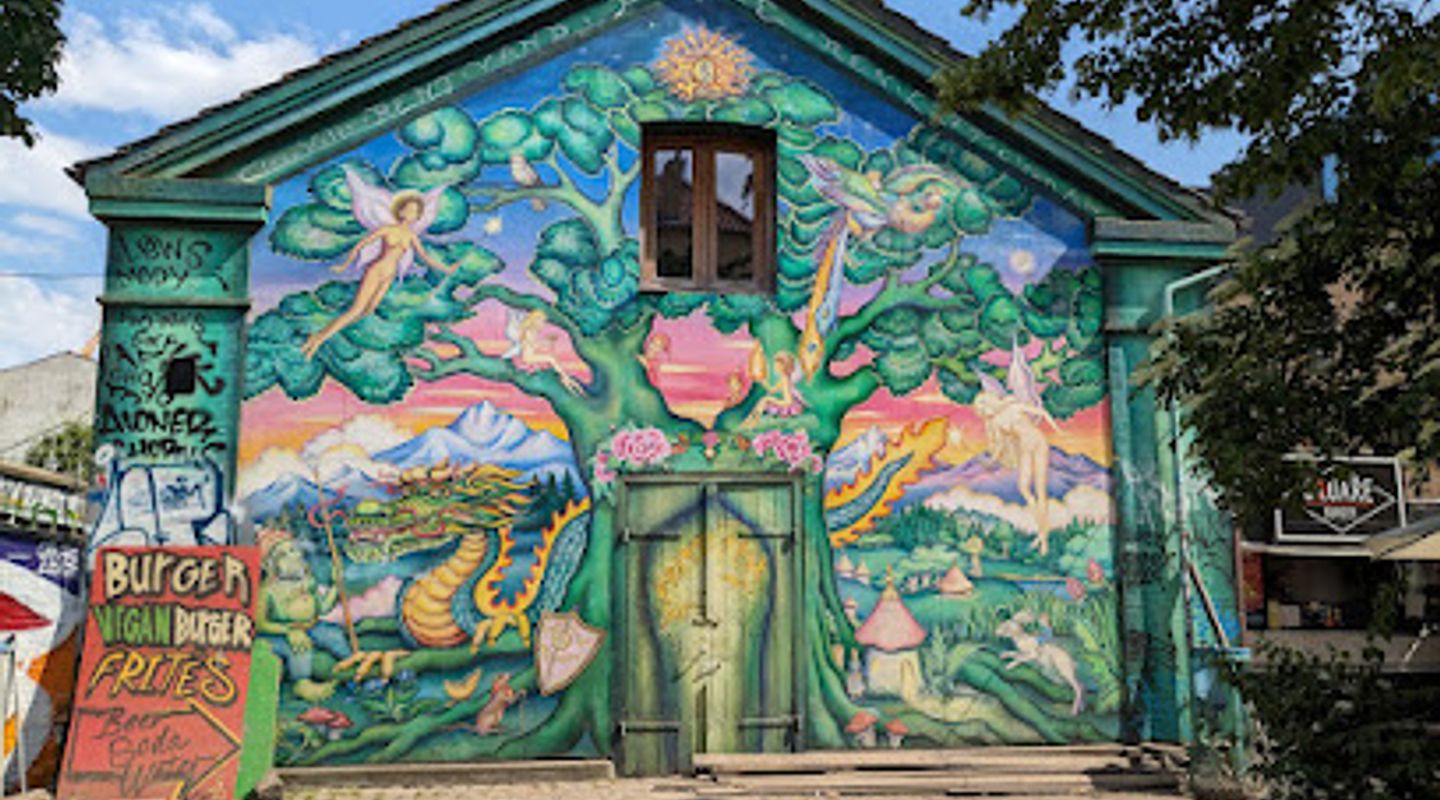
A brief summary of Christiania
Copenhagen's autonomous anarchist commune where hand-built creativity, alternative culture, and radical freedom define a unique urban sanctuary.
Freetown Christiania is an autonomous anarchist commune and intentional community established in 1971 on a former military base in Copenhagen's Christianshavn district. Home to 850–1,000 residents across 7.7 hectares, this self-governing enclave operates independently from Danish law with its own rules, culture, and creative spirit. Known for colorful hand-built architecture, vibrant street art, music venues, and alternative lifestyle, Christiania attracts over a million visitors annually. Following a major community-led transformation in 2024, the area is now safer and more welcoming to tourists exploring its unique bohemian character.
On-site amenities
 Restrooms
 Drink options
 Food options
 Seating areas
 Picnic areas
 Trash bins
 Information boards
Opening hours
- Every dayOpen 24 hours
Opening hours as listed on the venue’s Google Business Profile. Hours can change for services and special events, so check with the venue before you go.
- Address
- Bådsmandsstræde 43, 1407 København K
- Phone
- Website
Getting there
Metro + Walk
Bicycle
Bus
Taxi or Rideshare
Discover more about Christiania
From Military Barracks to Bohemian Haven
Freetown Christiania emerged from an act of creative rebellion on 26 September 1971, when journalist Jacob Ludvigsen and fellow activists declared an abandoned military base a free town. The site itself carries centuries of history: the ramparts and borough of Christianshavn were established in 1617 by King Christian IV through land reclamation, and the four gunpowder storehouses—now renamed Aircondition, Autogena, Fakirskolen, and Kosmiske Blomst—were built in 1779–1780 following a catastrophic explosion at Østerport that killed 50 people. When the Danish military vacated the 7.7-hectare compound in the late 1960s, squatters and housing-shortage refugees began trickling in. By 1971, the space had transformed into a deliberate experiment in autonomous living, rooted in principles of self-governance, collective responsibility, and freedom from state control.
Architecture and Artistic Expression
What distinguishes Christiania visually is its extraordinary DIY architecture. Residents constructed homes from salvaged materials, transforming the former military landscape into a kaleidoscope of hand-built structures, colorful murals, and imaginative designs. A former military stable became a church; a horse-riding arena was converted into Den Grå Hal (The Grey Hall), now the district's largest concert venue. Walking along the ramparts—known locally as Volden—reveals some of Copenhagen's most creative and unconventional housing, each structure a testament to individual vision and communal values. This aesthetic extends throughout: street art adorns walls, gardens flourish in unexpected corners, and every corner invites exploration and photography.
Community Governance and Cultural Life
Christiana operates as a consensus-driven society with its own flag, governance structures, and cultural institutions entirely independent of Danish law. The approximately 900–1,000 residents—known as Christianites—live by collective principles emphasizing fairness, equality, and shared responsibility for community well-being. The district hosts thriving music and performance scenes, including the world-renowned ALIS Wonderland skate bowl, Nemoland café with its free summer Sunday concerts, and the Christiania Art Gallery. The community has historically championed progressive causes: the gay house's variety shows remain celebrated within Copenhagen's LGBT community, and the district pioneered waste sorting, recycling, communal bathing facilities, and children's houses decades before such practices became mainstream.
A Transformation in 2024
For decades, Pusher Street—the district's main thoroughfare—was infamous as an open cannabis marketplace. While cannabis remains illegal in Denmark, Christiania's autonomous status created a legal gray area that authorities largely tolerated. However, by the early 2000s, as Denmark's conservative government increased drug penalties, local dealers were displaced by organized crime. Biker gangs including the Hells Angels moved in, turning the street into a violent battleground marked by stabbings and shootings. In 2024, the residents themselves took decisive action: the community collectively decided to reclaim their neighborhood. Pusher Street was physically dismantled, gangs were expelled, and the area underwent a powerful grassroots transformation. This shift—driven by Christianites themselves rather than state intervention—represents a pivotal moment in the commune's history, restoring safety and authenticity to the district.
Visitor Experience and Atmosphere
Today, Christiania welcomes over a million visitors annually, offering a genuine alternative to mainstream Copenhagen. The atmosphere is peaceful, creative, and welcoming to those who approach with respect. Photography is now generally permitted, and the district's vibrant food scene reflects its multicultural ethos: organic, locally grown cuisine dominates, with abundant vegan and vegetarian options alongside meat dishes, all at prices lower than central Copenhagen. Cafés are chic and unpretentious; small businesses—including a brewery and bicycle factory—operate alongside galleries and workshops. The car-free environment enhances the pedestrian experience, allowing visitors to wander freely through winding paths, discover hidden courtyards, and absorb the creative energy that defines the space.
Enduring Legacy and Ongoing Evolution
Despite decades of legal challenges—including a 1978 Supreme Court ruling ordering immediate clearance and a 2007 agreement to cede control to Copenhagen's city council—Christiania has persisted in maintaining its core identity. The commune's resilience reflects a fundamental tension: an anarchist community that rejected state involvement now occasionally depends on state assistance to address internal crises. Yet this paradox has not diminished Christiania's significance as Europe's longest-surviving intentional community and a living laboratory in alternative social organization. The 2024 transformation demonstrates that Christiania continues to evolve, adapting its principles to contemporary challenges while preserving the spirit of freedom, creativity, and collective responsibility that inspired its founding over five decades ago.
Evendo Review Centre
 Google
Guest reviews
Best time to go
Quietest: Jan, Feb & Dec · before 7am or at 10pm
Busy times are Evendo estimates for a typical year, to help you plan. Actual crowds vary with events, school holidays and the weather.
Explore Christiania on the map
A handpicked selection of must-see spots near Christiania, mapped for you.
Get your free copy of our complete guide to Christiania, delivered straight to you.
Everything on this page, from opening hours and how to get there to Eve’s tips and the best time to go, in one PDF you can read offline, print or share.
Already have an account? Sign in
Your Christiania guide is ready.
We'll send it to · Not you? Sign out

Getting your guide ready…
We are putting together a fresh copy of the Christiania guide. This can take up to a minute.
This can take a few moments. If your browser asks, choose Allow so the download can start. You'll find the guide in your Downloads folder.
Nothing happened? Download it again
Sorry, the guide is taking longer than usual. Please try again in a minute, or get it by email instead.
Other nearby places you may find interesting
The closest places of the same kind, if this one is not quite what you had in mind.
-
Frederikssund Viking Village Open‑air Viking village and legendary summer saga play on the shores of Roskilde Fjord, where costumed warriors, longhouses and Norse myths come vividly to life.
-
Gummistranden Compact urban beach on Helsingør’s waterfront, with Kronborg Castle on the horizon, easy promenade access and big Øresund views just minutes from the town centre.
-
Esrum Kloster & Møllegård A 12th-century Cistercian abbey turned cultural hub, where red-brick history, herb gardens and North Zealand’s gentle landscapes meet around Esrum Lake.
-
Island of imagination A quiet royal ruin on a forested lake, where fragments of a 19th‑century retreat invite you to weave Nordic myths, royal tales and your own stories together.
-
Udsigtsplateau A modest wooden platform with a million‑kroner view over Øresund, Kronborg’s silhouette and the Swedish coast, perfect for a quiet coastal pause in Helsingør.
Swipe for more places
More to explore near Christiania

 Best experiences near Christiania
 Best hotels near Christiania
 Best landmarks near Christiania
 Best attractions near Christiania
 Best shops near Christiania
 Best restaurants near Christiania
 Best bars near Christiania
Do you manage this location?
Take control to get all the benefits, like improved information, better appearance, and stronger visibility across AI-powered discovery.
Explore more

Explore more of North Zealand
Explore North Zealand, Denmark's enchanting region of castles, beaches, and royal estates, perfect for history buffs, nature enthusiasts, and seaside lovers.
Explore North Zealand
Explore more of Denmark
Discover Denmark: A perfect blend of history, modern design, and the cozy concept of hygge. Explore vibrant cities, serene landscapes, and world-class cuisine.
Explore Denmark
