

Rosenborg Castle Travel Guide
Free Guide: Copenhagen’s fairytale Renaissance castle, where intimate royal chambers, the dramatic Knights’ Hall and the Danish Crown Jewels bring 400 years of monarchy to life.


A brief summary of Rosenborg Castle
Copenhagen’s fairytale Renaissance castle, where intimate royal chambers, the dramatic Knights’ Hall and the Danish Crown Jewels bring 400 years of monarchy to life.
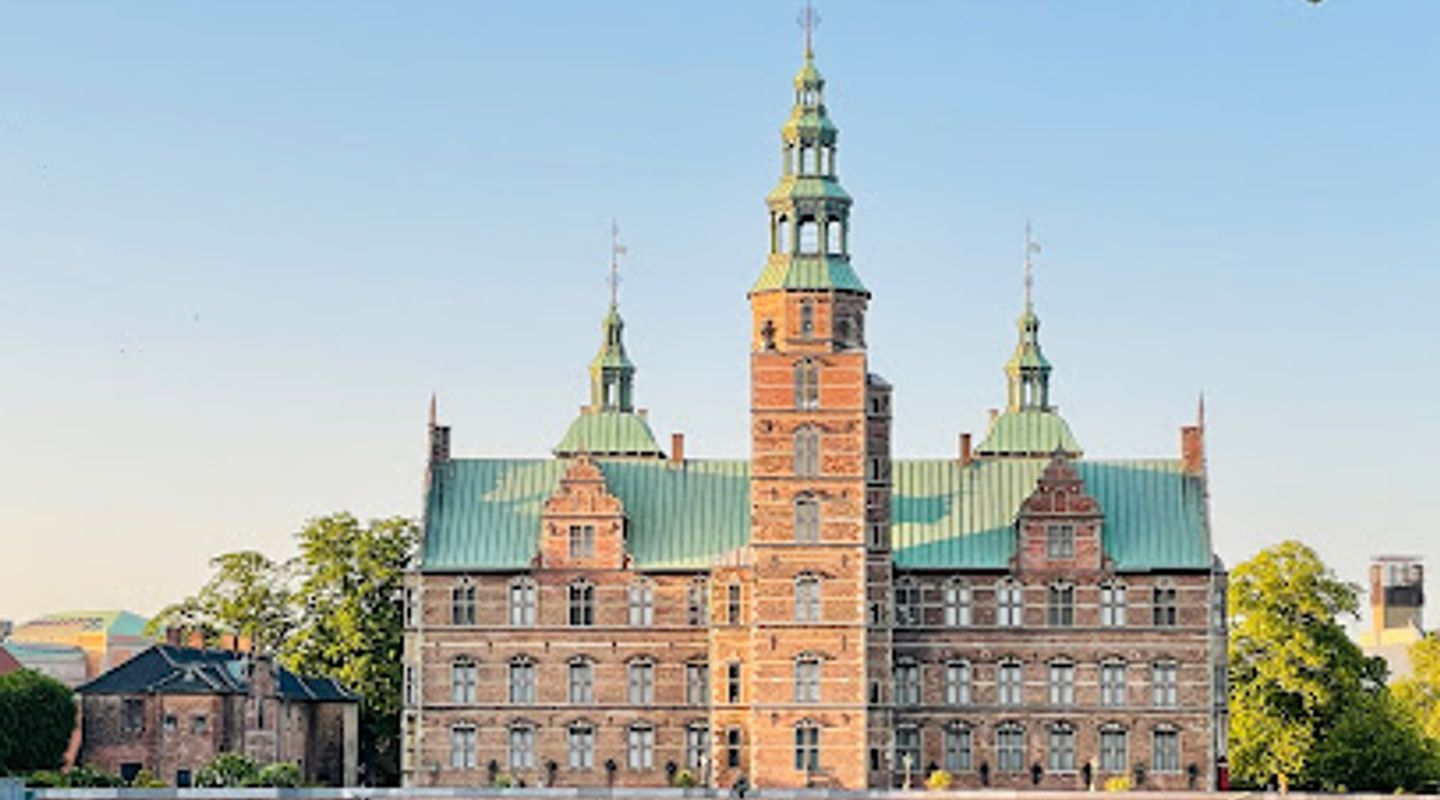
Rosenborg Castle rises like a red-brick fairytale in the heart of Copenhagen’s King’s Garden, a compact Renaissance palace built by Christian IV in the early 1600s as a pleasure residence. Inside, richly decorated rooms trace 400 years of Danish monarchy, culminating in the dazzling Knights’ Hall with coronation thrones and silver lions. In the vaulted treasury below, the nation’s Crown Jewels and royal regalia are displayed in secure chambers, making Rosenborg one of Denmark’s most evocative royal time capsules.
On-site amenities
 Restrooms
 Drink options
 Drinking water
 Food options
 Lockers
 Seating areas
 Sheltered areas
 Picnic areas
 Trash bins
 Information boards
 Visitor centre
Opening hours
- Every day9 am–5 pm
Opening hours as listed on the venue’s Google Business Profile. Hours can change for services and special events, so check with the venue before you go.
- Address
- Øster Voldgade 4A, 1350 København
- Phone
- Website
Getting there
Metro and walking
City bus
Bicycle
Taxi
Discover more about Rosenborg Castle
A Renaissance jewel in the King’s Garden
Rosenborg Castle stands at the edge of Copenhagen’s leafy King’s Garden, a slender red-brick silhouette crowned with copper-green spires. Built between 1606 and 1634 for King Christian IV, it began life as a summer retreat on the city’s outskirts and gradually evolved into a showpiece of royal power and taste. Its moat, drawbridge details and tall, narrow profile give it a distinctly romantic character that contrasts with the more formal royal palaces elsewhere in the city.Although modest in footprint compared with Europe’s grandest palaces, Rosenborg compresses centuries of Danish royal history within its walls. The setting in the park softens the formality; in good weather, visitors spill out into lawns and tree-lined avenues, so time here often feels like a seamless blend of museum visit and city garden escape.
Inside Christian IV’s private world
Crossing the threshold, you step into Christian IV’s personal sphere. The castle’s lower floors contain intimate chambers that retain much of their original character. The celebrated Winter Room is among the best-preserved spaces from the early building phase, its wood panelling, painted ceilings and tiny writing closet evoking the everyday routines of a working monarch.Throughout the route, you encounter a succession of small rooms packed with detail: tiled stoves, intricate marquetry furniture, delicate wall paintings and cabinets filled with curiosities. Some spaces still hint at the more eccentric aspects of court life, including historic sanitary facilities and bathing arrangements that remind you this was once a lived-in royal residence, not purpose-built gallery space.
The splendour of the Knights’ Hall
At the top of the castle, the building opens up into the dramatic Knights’ Hall, a single long room running the full length of the structure. Here, the visual language changes from cosy intimacy to baroque grandeur. Vaulted ceilings, painted allegories and polished floors create a stage-like setting for royal ceremonies and banquets.At one end stand the coronation thrones of the king and queen, richly ornamented and accompanied by three life-size silver lions that appear to guard the dais. The surrounding tapestries narrate conflicts between Denmark and Sweden, weaving military history into the decorative scheme. Portraits and heraldic motifs complete the sense of a room designed to project dynastic confidence to visiting dignitaries.
Treasures in the vaults below
Beneath the castle, the atmosphere shifts again as you enter the treasury and vaults. Cool, dimly lit rooms showcase ceremonial arms, regalia and the famous Crown Jewels. The crowns and garnitures glint under carefully controlled lighting, their table-cut stones, enamel and goldwork emphasising fine craftsmanship rather than sheer scale.Displays are arranged to tell a chronological story of coronations and state occasions, linking specific pieces to monarchs and historical events. Beyond the jewels, you can find ornate sword hilts, sceptres and other ceremonial items that reveal how power was visually expressed in early modern Denmark, all set within heavy vault doors and thick masonry that underscore their national importance.
Collections of glass, porcelain and portraiture
Rosenborg is more than a royal house museum; it also preserves significant art and decorative collections. In tower rooms and side chambers you encounter one of the world’s finer assemblies of Venetian glass, arranged in glittering ranks of bottles, goblets and delicate vessels. Nearby, service pieces from the famed Flora Danica porcelain series illustrate Denmark’s fascination with botany and scientific illustration.Portraits line staircases and galleries, including works connected with some of the more dramatic episodes in royal history, such as the story of Queen Caroline Mathilde and Johann Friedrich Struensee in the 18th century. Together, these pieces help visitors trace the evolving tastes, alliances and scandals of the Danish court across four centuries.
Planning your time inside and out
A visit to Rosenborg typically involves both the castle interior and time in the surrounding King’s Garden. Inside, most guests spend around one to two hours moving through the three principal floors and the basement vaults, with a marked one-way route helping to manage the flow through narrow staircases and corridors.Outside, the formal beds, tree-lined paths and open lawns of the garden offer space to pause after the intensity of the interiors. Seasonal changes add variety: spring blossoms, summer greenery and autumn colours each frame the castle differently. Combined, the building and its landscape setting provide a compact but richly layered introduction to Denmark’s royal past in the very centre of modern Copenhagen.
Evendo Review Centre
 Google
Guest reviews
Best time to go
Quietest: Jan, Feb & Mar · before 8am or from 8pm
Busy times are Evendo estimates for a typical year, to help you plan. Actual crowds vary with events, school holidays and the weather.
Explore Rosenborg Castle on the map
A handpicked selection of must-see spots near Rosenborg Castle, mapped for you.
Get your free copy of our complete guide to Rosenborg Castle, delivered straight to you.
Everything on this page, from opening hours and how to get there to Eve’s tips and the best time to go, in one PDF you can read offline, print or share.
Already have an account? Sign in
Your Rosenborg Castle guide is ready.
We'll send it to · Not you? Sign out

Getting your guide ready…
We are putting together a fresh copy of the Rosenborg Castle guide. This can take up to a minute.
This can take a few moments. If your browser asks, choose Allow so the download can start. You'll find the guide in your Downloads folder.
Nothing happened? Download it again
Sorry, the guide is taking longer than usual. Please try again in a minute, or get it by email instead.
Unlock the best of Rosenborg Castle
Skip-the-line tickets, guided tours with entry, and walking tours of the area, booked in a few clicks.
 Tour with entry
Half Day Self-Guided Audio Walking Private Tour in Copenhagen
from $14.07 Tour with entry
Copenhagen Highlights & Hidden Gems Walking Tour with Local Guide
from $32.06 Tour with entry
Copenhagen 2-hour City Highlights Bike Tour
from $35.47 Tour with entry
48-Hour Hop-on Hop-off Copenhagen Sightseeing Bus Tour
from $41.30


Other nearby places you may find interesting
The closest places of the same kind, if this one is not quite what you had in mind.
-
-
-
-
-


Swipe for more places
More to explore near Rosenborg Castle

 Best experiences near Rosenborg Castle
 Best hotels near Rosenborg Castle
 Best landmarks near Rosenborg Castle
 Best attractions near Rosenborg Castle
 Best shops near Rosenborg Castle
 Best restaurants near Rosenborg Castle
 Best bars near Rosenborg Castle
Do you manage this location?
Take control to get all the benefits, like improved information, better appearance, and stronger visibility across AI-powered discovery.
Explore more

Explore more of North Zealand
Explore North Zealand, Denmark's enchanting region of castles, beaches, and royal estates, perfect for history buffs, nature enthusiasts, and seaside lovers.
Explore North Zealand
Explore more of Denmark
Discover Denmark: A perfect blend of history, modern design, and the cozy concept of hygge. Explore vibrant cities, serene landscapes, and world-class cuisine.
Explore Denmark
