St. Alban's Church (Sankt Albani Kirke), Odense
Neo‑Gothic brick, glowing stained glass and a multicultural Catholic parish make St. Alban’s Church a serene, characterful sanctuary in the historic heart of Odense.
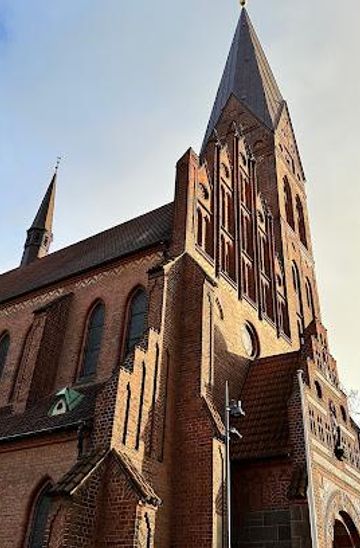
St. Alban's Church in central Odense is a striking neo‑Gothic red‑brick Catholic church with a 54 m tower, pointed arches and colourful stained glass. Consecrated in 1908, it became the heart of Odense’s revived Catholic community after the Reformation and today serves many Polish, German and Vietnamese parishioners. Just a short stroll from Odense Cathedral, it offers a quieter, contemplative counterpoint with rich ornamentation, a carved wooden altarpiece and a softly lit, prayerful interior.
A brief summary to St. Alban's Church
- Adelgade 1, Odense, Odense C, 5000, DK
- Click to display
- Click to display
- Duration: 0.5 to 1.5 hours
- Free
-
 Indoor
- Mobile reception: 5 out of 5

Know before you go
Hi, I'm Eve. Here are a few practical things to know before exploring St. Alban's Church.
- Plan your visit outside Mass and confession times so you can quietly explore the nave, side chapels and altarpiece without disturbing worship.
- Bring a small zoom lens or camera with good low‑light performance to capture the stained‑glass windows and carved altar without flash.
- Combine a stop at St. Alban’s with Odense Cathedral and Albani Torv to trace the story of King Canute and Odense’s medieval church landscape.
- Step outside and walk a slow circle around the church to appreciate the tower height, brickwork patterns and flying buttresses from different angles.
Do you manage this location?
Take control to get all the benefits, like improved information, better appearance, and stronger visibility across AI-powered discovery. Learn more
Activate your presenceOther nearby places you may find interesting


Getting There
-
Walk from central Odense
From the pedestrian core around Flakhaven and Odense City Hall, St. Alban’s Church is an easy urban walk of about 10–15 minutes on generally level, paved surfaces. The route passes through mostly pedestrian streets and shared zones, with frequent crossings and curb cuts that make it manageable for wheelchairs and strollers. In winter, allow a little extra time for potentially icy pavements, and be aware that the area can feel busy around weekday lunchtime and late afternoon.
-
City bus within Odense
Several local buses stop within a 5–10 minute walk of the church, including routes serving Odense Station and the main shopping streets. Typical journey times from the station area are 10–20 minutes depending on traffic and route, with buses generally running every 10–20 minutes on weekdays and less frequently in the evening and on Sundays. A single adult ticket usually costs around 20–30 DKK and can be purchased via ticket machines, apps or contactless payment where available.
-
Light rail (Odense Letbane) plus short walk
The Odense light rail line connects outlying neighbourhoods and the main railway station with the city centre. Journeys to the central stops normally take 5–15 minutes, after which you should expect a further 10–12 minute walk on city pavements to reach the church. Trams run frequently during the day, with longer intervals in the late evening. A single adult fare is typically in the 20–30 DKK range, and tickets are valid across both tram and city buses within the zone limits.
-
Bicycle within Odense
Odense is a cycle‑friendly city with dedicated bike lanes on many main streets. Reaching St. Alban’s by bicycle from most central districts usually takes 5–15 minutes, with relatively flat terrain throughout. Public bike‑share schemes and hotel rentals are common; expect to pay from about 100–150 DKK per day for a standard city bike. Cycle parking is generally available near churches and public buildings, though spaces can be in higher demand on Sundays and during major services.
For the on-the-go comforts that matter to you
-
 Restrooms
-
 Seating Areas
-
 Trash Bins
-
 Information Boards
Discover more about St. Alban's Church
A neo‑Gothic landmark in Hans Christian Andersen’s city
St. Alban's Church rises above Adelgade in a flurry of red brick, pointed arches and a tall, slender spire, an eye‑catching counterpoint to the pale Gothic of nearby Odense Cathedral. Completed in the early 20th century and consecrated in 1908, the building was designed by German architect Ludwig Schneider, who gave it a distinctly Central European neo‑Gothic flavour. Outside, buttresses, traceried windows and decorative brick patterns pull your gaze upward to the 54‑metre tower that anchors this corner of the old city.Step through the main portal and the mood shifts from urban bustle to hushed reverence. The nave’s ribbed vaults and clustered columns lead your eye toward a richly carved high altar, while the soft glow of coloured glass gives the interior a warm, almost velvety light. Though comparatively young by Danish standards, the church feels timeless thanks to its careful craftsmanship and harmonious proportions.From tiny congregation to Catholic focal point
The story of St. Alban’s is inseparable from the re‑emergence of Catholic life in Odense. After the Reformation, centuries passed without a Catholic parish here. In 1867 a new congregation was formally recognised with just a handful of adults and children, initially meeting in rented rooms before establishing a modest St. Mary’s church and schools in converted monastic buildings. As numbers grew, especially with arrivals from German‑speaking regions, dreams of a purpose‑built church took shape.At the end of the 19th century Redemptorist priests from Austria arrived and began fundraising widely, drawing donations from Austria and Germany as well as local supporters. The foundation stone for the new church was laid in 1906, and only two years later the unfinished building was solemnly dedicated to Our Lady, Saint Alban and Saint Canute. That triple dedication subtly links the new Catholic presence with Odense’s medieval past and its martyred king, even though the original St. Alban’s Priory once stood elsewhere.Glass, wood and sound: craftsmanship in every detail
Inside, St. Alban’s rewards unhurried attention to its details. High above the pews, stained‑glass windows designed by Georg Schneider in Bavaria depict biblical scenes and saints in a characteristically Central European palette, all deep blues, ruby reds and golds that scatter coloured reflections across the floor on bright days. The windows frame views of the city beyond while rooting the interior firmly in a Catholic visual tradition.Dominating the sanctuary is a finely carved wooden altarpiece, completed in 1908 by Tyrolean sculptor Konrad Martiner. Packed with figures and tracery, it forms a vertical forest of saints and foliage rising behind the altar, echoing the forest of stone and brick in the nave. In the gallery, the pipe organ built by Gebrüder Rieger adds another layer of artistry; its casework and shining pipes provide a visual focus while its sound fills the church during Mass, weddings and concerts.A living parish with global ties
Although it is a historic monument, St. Alban’s is first and foremost a working parish church. It has long been a spiritual home for immigrants, especially Germans and Poles, and more recently many Vietnamese Catholics as well. On any given week, Masses and devotions may be offered in different languages, and the parish calendar is shaped by Catholic feasts from across Europe and Asia.This multicultural character lends the church an international atmosphere that contrasts with its thoroughly Danish urban setting. Visitors who step inside between services often encounter quiet personal prayer, candlelight before side altars and the subtle hum of parish life unfolding in side rooms and cloisters. Respectful behaviour and discreet photography are expected, especially when liturgies are underway.Linking past and present in Odense’s sacred landscape
St. Alban’s occupies an important place in Odense’s constellation of religious sites. The medieval timber church of St. Alban, where King Canute IV was murdered in 1086, once stood closer to today’s Albani Torv, midway between the current church and the cathedral. That earlier building disappeared around the time St. Canute’s Cathedral rose in its place, but the new St. Alban’s symbolically revives the dedication while anchoring modern Catholic life in the city.From the church steps you are only moments from the cathedral, city hall and several Hans Christian Andersen sites, making St. Alban’s an easy and rewarding stop on a wider exploration of Odense. Whether you are drawn by architecture, history or the simple wish for a few quiet minutes, the church offers a contemplative pocket of brick and glass in the very heart of town.Explore the best of what St. Alban's Church has to offer













More about Funen
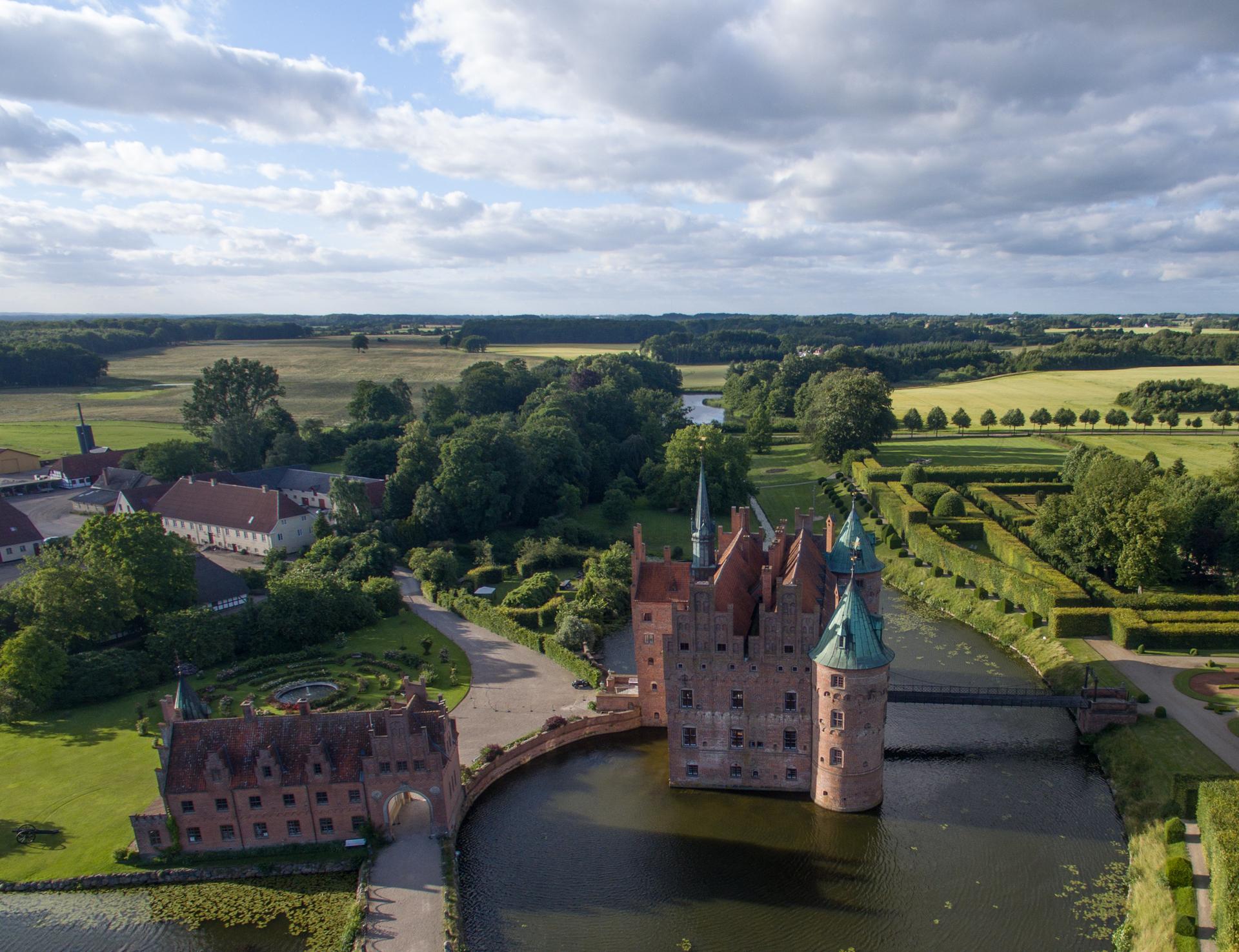
Discover Funen, Denmark's lush island treasure, where fairy tales come to life amidst scenic landscapes, historic castles, and vibrant cultural heritage.
Tell me more about Funen
Gothic grandeur and royal history meet in the heart of Odense at St. Canute's Cathedral, a landmark of spiritual and architectural significance on Funen.

A modest riverside platform where washerwomen toiled, the Washing Site at Odense River quietly preserves the everyday world that shaped Hans Christian Andersen’s childhood.