

Rolfshøj, Odense Travel Guide
Free Guide: A quiet Neolithic long barrow in the fields near Ferritslev Fyn, where a simple stone chamber and grassy mound bring Funen’s prehistoric past close at hand.


A brief summary of Rolfshøj
A quiet Neolithic long barrow in the fields near Ferritslev Fyn, where a simple stone chamber and grassy mound bring Funen’s prehistoric past close at hand.
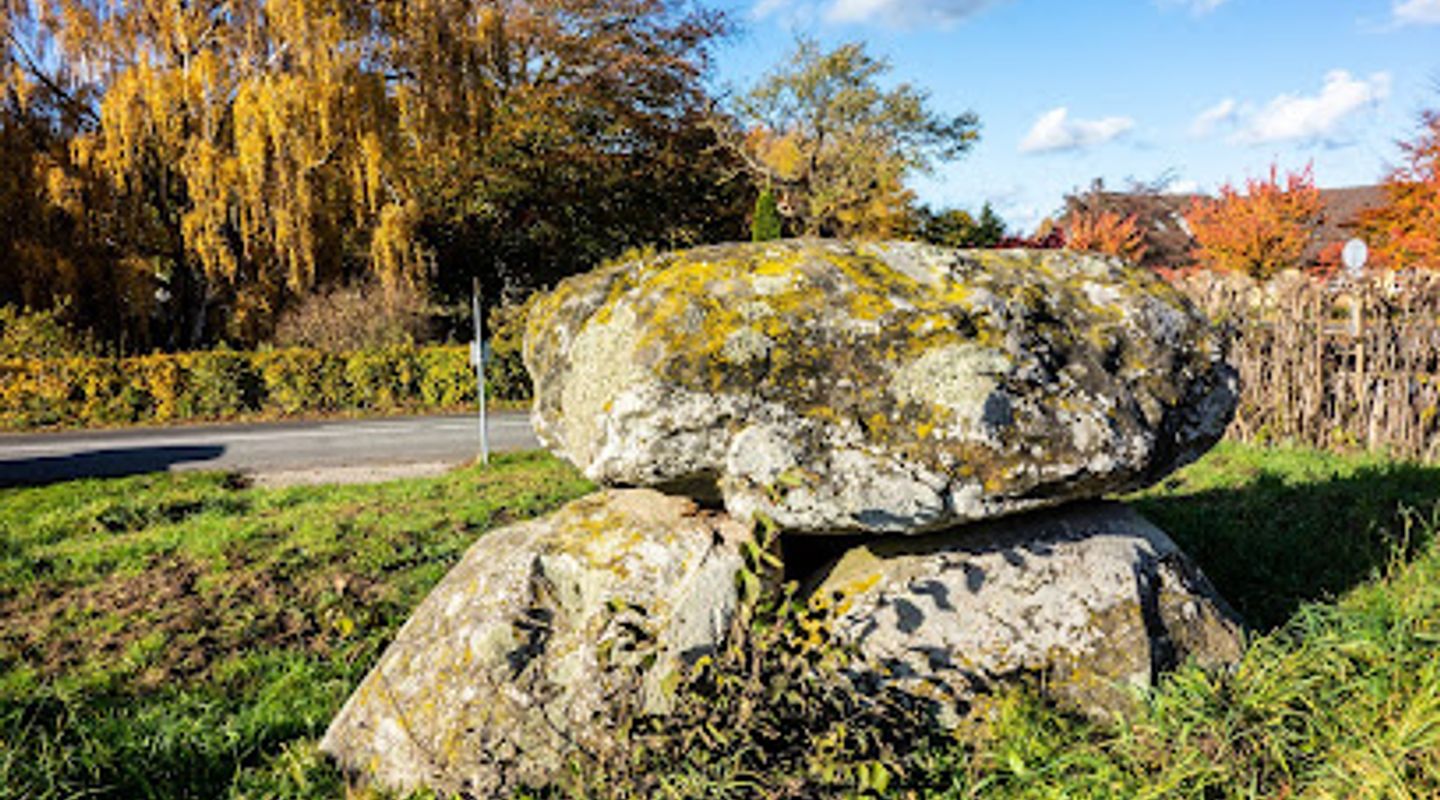
Set just west of the village of Rolfsted near Ferritslev Fyn, Rolfshøj is a beautifully preserved Neolithic long barrow with an intact stone burial chamber. Framed by fields and quiet country roads, this modest yet powerful monument offers an intimate encounter with Denmark’s prehistoric past. Massive kerbstones, a clearly defined mound and an accessible chamber make it an evocative stop for history‑minded travelers exploring rural Funen.
On-site amenities
 Information boards
 Trash bins
Opening hours
- Every dayOpen 24 hours
Opening hours as listed on the venue’s Google Business Profile. Hours can change for services and special events, so check with the venue before you go.
- Address
- Rolighedsvej 1, 5863 Ferritslev Fyn
- Website
Getting there
Car from Odense
Bus and short walk from Odense or Nyborg
Cycling from Ferritslev Fyn
Discover more about Rolfshøj
Ancient Tomb in the Fields of Funen
Rolfshøj rests in gently rolling farmland near Ferritslev Fyn, a grassy earthen mound edged with large stones that at first glance could be mistaken for a natural rise. Step closer and the symmetry of the long barrow reveals itself: an elongated mound, framed by hefty kerbstones, aligned along a soft ridge in the landscape. This is a Neolithic burial monument, raised more than 5,000 years ago by early farming communities on Funen.The setting is quiet and unassuming. Cars hum past on nearby country roads, yet inside the low fence line the mood changes. Short grass, scattered wildflowers and the muted colours of weathered boulders create a simple, almost austere scene that focuses all attention on the tomb itself.
A Well-Preserved Stone Chamber
At the heart of Rolfshøj is a remarkably well-preserved stone chamber. Large upright slabs form the walls, topped by a broad capstone that still sits securely in place. The entrance passage is short but clearly legible, inviting you to imagine the effort it took to haul these stones into position using only stone tools, timber rollers and sheer manpower.Though the chamber is now empty, its proportions are easy to read. You can trace the outline of the burial space, picture offerings laid along the sides and sense how the low, confined interior once framed ceremonies for the living and the dead. The simplicity of the design is part of its power: there is nothing decorative here, only raw material shaped into enduring architecture.
Life and Death in the Neolithic Countryside
Monuments like Rolfshøj belonged to the first settled farmers of the region, communities who cleared patches of woodland, cultivated grain and raised livestock. Long barrows often served as collective tombs, used over generations. The mound might be reopened to add new burials, turning the site into a focal point for memory and identity.Standing beside the stones, it is easy to imagine the surrounding countryside as a mosaic of forest and fields, dotted with small clearings and wooden houses. The monument’s prominent position near a route through the landscape suggests it was meant to be seen, a durable marker of territory and belief that far outlived the people who built it.
A Short, Atmospheric Stop on Rural Funen
Today Rolfshøj is an open site with free access and no formal visitor facilities beyond basic signage. It works best as a short, contemplative stop: a chance to stretch your legs, breathe country air and step physically into Denmark’s deep prehistory. The ground around the mound is uneven but not steep, with grass underfoot and farmland on every side.Because the barrow is compact, you can easily walk a slow circuit, viewing the mound from multiple angles and lingering at the chamber entrance. In soft evening light or on a low, overcast day, the muted tones of stone and turf seem to absorb sound, adding to the quiet, introspective character of the place.
Reading the Stones and Respecting the Site
Rolfshøj rewards careful looking. You can identify individual kerbstones that have slipped out of line, patches of erosion on the mound and small details where roots and lichen have begun to claim the stones. Any information board on site provides basic context, but much of the experience lies in piecing together clues from the structure itself.As with all prehistoric graves, it is important to treat the monument gently. Climbing on the capstone, moving stones or leaving litter quickly damages features that have survived millennia. A slow walk, a few quiet photographs and a moment of reflection are enough to connect you to the long arc of human history anchored in this modest hill of earth and rock.
Evendo Review Centre
 Google
Guest reviews
Best time to go
Quietest: Jan, Feb & Dec · before 8am or at 7pm
Busy times are Evendo estimates for a typical year, to help you plan. Actual crowds vary with events, school holidays and the weather.
Explore Rolfshøj on the map
A handpicked selection of must-see spots near Rolfshøj, mapped for you.
Get your free copy of our complete guide to Rolfshøj, delivered straight to you.
Everything on this page, from opening hours and how to get there to Eve’s tips and the best time to go, in one PDF you can read offline, print or share.
Already have an account? Sign in
Your Rolfshøj guide is ready.
We'll send it to · Not you? Sign out

Getting your guide ready…
We are putting together a fresh copy of the Rolfshøj guide. This can take up to a minute.
This can take a few moments. If your browser asks, choose Allow so the download can start. You'll find the guide in your Downloads folder.
Nothing happened? Download it again
Sorry, the guide is taking longer than usual. Please try again in a minute, or get it by email instead.
Other nearby places you may find interesting
The closest places of the same kind, if this one is not quite what you had in mind.
-
-
-
-
-


Swipe for more places
More to explore near Rolfshøj

 Best experiences near Rolfshøj
 Best hotels near Rolfshøj
 Best landmarks near Rolfshøj
 Best attractions near Rolfshøj
 Best shops near Rolfshøj
 Best restaurants near Rolfshøj
 Best bars near Rolfshøj
Do you manage this location?
Take control to get all the benefits, like improved information, better appearance, and stronger visibility across AI-powered discovery.
Explore more

Explore more of Odense
Discover Odense, Denmark's enchanting city where fairy tales come to life amidst historic streets, vibrant culture, and scenic beauty.
Explore Odense
Explore more of Denmark
Discover Denmark: A perfect blend of history, modern design, and the cozy concept of hygge. Explore vibrant cities, serene landscapes, and world-class cuisine.
Explore Denmark
