H. C. Andersens House, Funen Travel Guide
Step into a modern fairy tale where immersive storytelling, bold architecture and a living garden bring Hans Christian Andersen’s world to life in the heart of Odense.
Hans Christian Andersen House in Odense is a strikingly modern museum that lets you step inside the imagination of Denmark’s most famous storyteller. Designed by architect Kengo Kuma and surrounded by a 7,000 m² fairy-tale garden, it blends underground exhibition spaces, soundscapes and light installations with Andersen’s life and beloved stories. Families, literature lovers and design fans alike are drawn into an immersive world where biography, art and fantasy intertwine.
A brief summary to H. C. Andersens House
- H.C. Andersen Haven 1, Odense C, Odense C, 5000, DK
- Click to display
- Click to display
- Duration: 1 to 2 hours
- Mid ranged
-
 Mixed
Mixed
- Mobile reception: 5 out of 5
- Monday 9 am-6 pm
- Tuesday 9 am-6 pm
- Wednesday 9 am-6 pm
- Thursday 9 am-6 pm
- Friday 9 am-6 pm
- Saturday 9 am-6 pm
- Sunday 9 am-6 pm

Know before you go
Hi, I'm Eve. Here are a few practical things to know before exploring H. C. Andersens House.
- Allow at least 1.5–2 hours to explore both the underground exhibition spaces and the fairy-tale garden without rushing key installations.
- Pick an early morning slot to enjoy quieter galleries and more contemplative soundscapes before families with children arrive in larger numbers.
- If you know Andersen’s stories, revisit a few before visiting; recognising characters and motifs makes the immersive rooms far richer.
- Combine your ticket with a visit to Hans Christian Andersen’s Childhood Home on the same or following day to complete the narrative arc.
- Bring a light layer: underground spaces can feel cool compared with the sunlit garden, especially outside the summer months.
Do you manage this location?
Take control to get all the benefits, like improved information, better appearance, and stronger visibility across AI-powered discovery. Learn more about listing your business on Evendo
Activate your presenceOther nearby places you may find interesting
The closest places of the same kind, if this one is not quite what you had in mind.

Explore H. C. Andersens House on the Map
A handpicked selection of must-see spots near H. C. Andersens House, mapped for you.
Unlock the Best of H. C. Andersens House
Buy tickets
-
No tickets available
Book tours with entry
-
No tours available


Getting There
-
Train and short walk from Odense Station
From Odense Railway Station, Hans Christian Andersen House is an easy city-centre visit. Intercity and regional trains connect Odense with Copenhagen and other Danish cities in about 1–1.5 hours from Copenhagen and under an hour from many Funen towns. From the station, plan around 10–15 minutes on foot through level, paved streets suitable for wheelchairs and strollers. Train fares from Copenhagen typically range from about 120–280 DKK one way in standard class, depending on time and ticket type. Services run frequently throughout the day, but it is wise to check departure times in advance, especially on weekends and public holidays.
-
Local city bus within Odense
Several Odense city buses run through the central districts around the museum, making this a convenient option if you are staying elsewhere in town. Typical travel times from residential neighbourhoods or the outskirts range from 10 to 25 minutes, depending on distance and traffic. Single tickets on local buses usually cost around 24–30 DKK for adults, with discounts for children and travel cards. Buses generally operate from early morning to late evening, but evening and Sunday frequencies can be reduced, so allow extra time for transfers and waiting.
-
Bicycle in the city centre
Odense brands itself as a bicycle-friendly city, and cycling to Hans Christian Andersen House is both practical and atmospheric. From most central hotels or inner districts you can expect a ride of 5–20 minutes along a mix of dedicated bike lanes and calm streets. Many accommodations offer bicycles, and local bike rentals typically range around 80–150 DKK per day, with helmets often available. The terrain is flat and suitable for casual cyclists, though extra care is needed in wet or icy weather and during darker winter afternoons when visibility is lower.
-
Taxi within Odense
For a direct option, taxis are readily available at key points such as Odense Railway Station and major hotels. A ride to the museum from most inner-city locations usually takes 5–10 minutes, depending on traffic. Typical fares within the city centre fall roughly in the 80–160 DKK range, increasing with distance, time of day and any waiting time in traffic. Taxis provide comfortable transport for visitors with limited mobility, but availability can tighten during major events or in the late evening, so pre-booking is advisable if you are on a set schedule.
For the on-the-go comforts that matter to you
-
 Restrooms
-
 Drink Options
-
 Drinking Water
-
 Food Options
-
 Seating Areas
-
 Sheltered Areas
-
 Trash Bins
-
 Information Boards
-
 Visitor Center
Discover more about H. C. Andersens House
A Modern Portal into Andersen’s Imagination
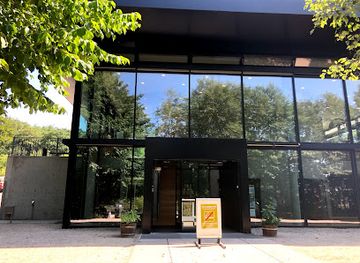
Hans Christian Andersen House is far more than a traditional literary museum. Conceived as an immersive narrative space, it invites you to enter the author’s inner world rather than simply view objects in display cases. From the first steps inside, the familiar lines between biography and fairytale begin to blur, as scenes, voices and motifs from his stories fold into episodes from his life.Japanese architect Kengo Kuma has created a museum that moves in sweeping curves and circular forms, echoing the fluid logic of storytelling. Two-thirds of the building lies below ground, freeing the surface for greenery and giving the exhibition rooms a cocoon-like atmosphere. Here, you navigate a sequence of darkened and light-filled spaces in which text, image, sound and interactive technology work together to reframe Andersen’s tales in unexpected ways.Architecture Woven with a Living Garden
Above the subterranean galleries stretches a 7,000 m² garden inspired by Andersen’s recurring themes of wandering, transformation and wonder. Pathways curve through hedges that shift in height from low, human scale walls to towering green cylinders, echoing the museum’s circular architecture and creating a constant play between openness and enclosure.Planting schemes draw on symbolic associations from the stories: tranquil groves, mysterious shaded corners and reflective water mirrors suggest different moods and narrative tones. Vistas open suddenly onto sunlit clearings or glimpses of the city beyond, reinforcing the sense that reality and fairytale overlap. The garden is freely accessible, so locals and ticketed visitors share this enchanted landscape at all times of year.Immersive Story Rooms and Soundscapes
Inside, the museum unfolds as a series of experience rooms rather than chronological galleries. International artists, designers and dramaturgs have translated familiar tales into environments you move through, guided by sound design, lighting and projections. Voices whisper lines from stories, orchestral music swells and fades, and subtle effects nudge you to look again at characters you thought you knew.Some spaces emphasise playfulness with bold colours, shifting scales and interactive installations; others are more introspective, encouraging you to slow down and listen. The lack of conventional display text in many rooms keeps the focus on sensation and emotional resonance. For those curious about context, strategically placed explanations reveal how specific episodes in Andersen’s life shaped his writing and imagination.Family-Friendly Worlds and Ville Vau
Hans Christian Andersen House is designed with families firmly in mind. Children can respond directly to the stories through tactile and performative experiences, from simple interactive pieces to more elaborate role-play areas. A highlight is Ville Vau, a dedicated universe where youngsters can dress up, act out scenes, experiment with props and create their own variations on Andersen’s tales.Workshops and creative corners encourage drawing, crafting and storytelling, turning passive viewing into active participation. Adults accompanying children can either join in the imaginative play or use the time to explore adjacent exhibition spaces at a more reflective pace, making the museum suitable for multi-generational visits.Connecting City, Childhood Home and Cultural Life
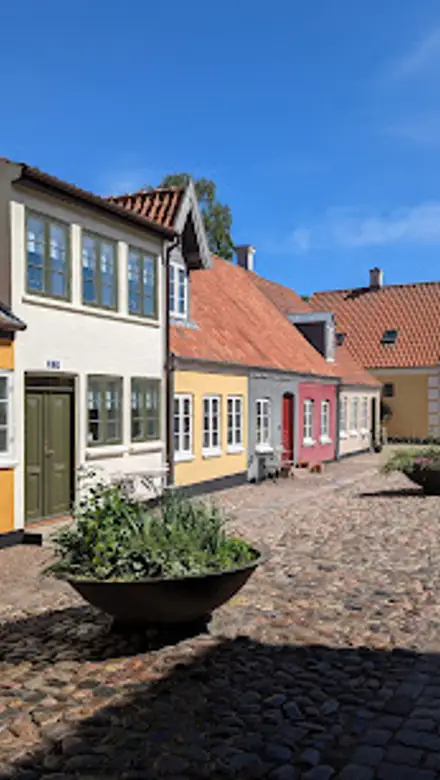
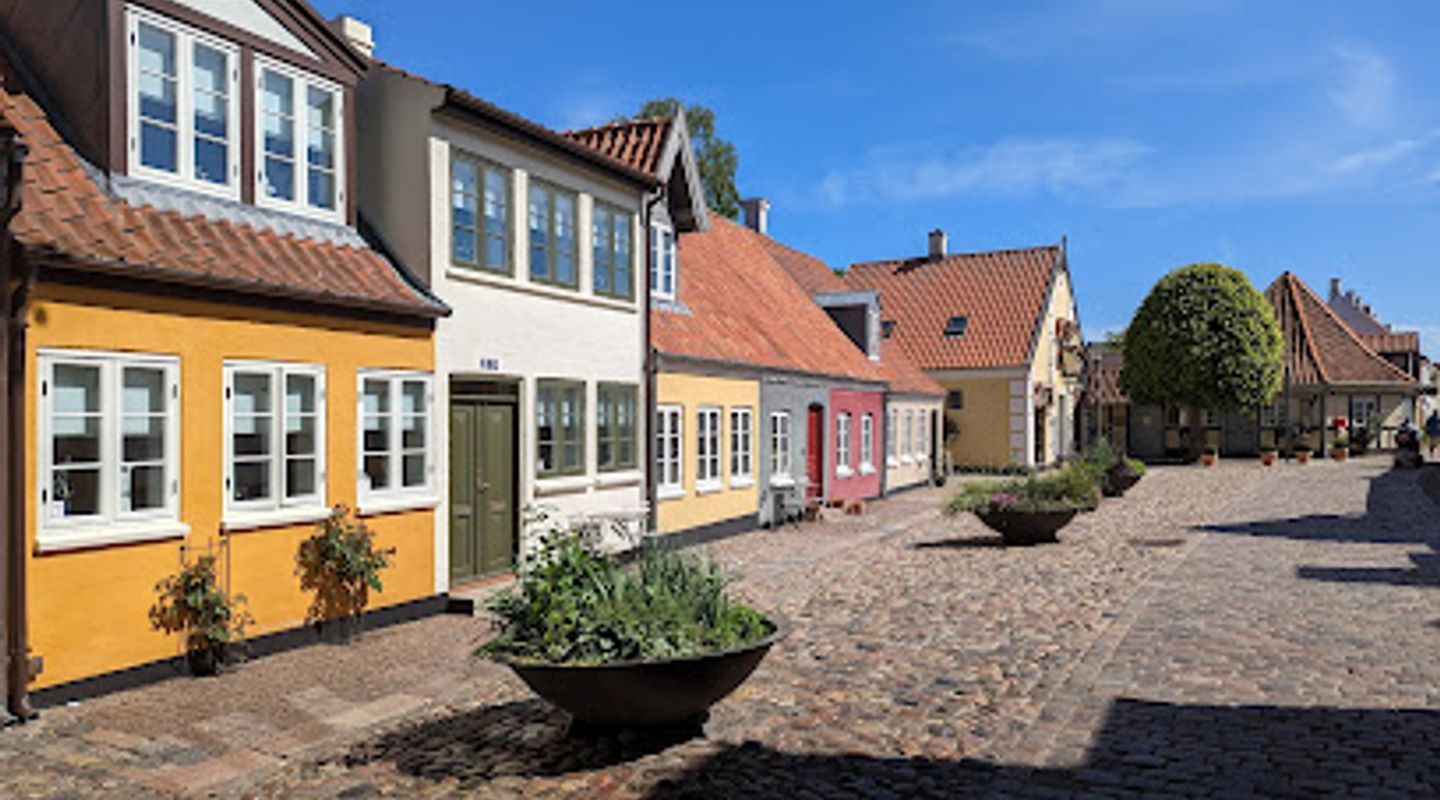
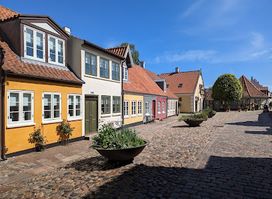
The museum stands in the heart of Odense’s historic centre, closely linked to the narrow streets and low, timbered houses that shaped Andersen’s early years. Its garden paths subtly continue the lines of nearby lanes, so that stepping outside feels like moving into a larger open-air chapter of the same story. Sculptures and references to his fairytales appear in neighbouring parks and squares, extending the experience beyond the museum walls.Your ticket also connects you to other cultural sites in the city, including Andersen’s childhood home, allowing a more complete exploration of his journey from modest beginnings to international fame. On site, a café set in the garden offers a relaxed place to pause, while the museum shop presents carefully curated books, design objects and mementos that reflect both Andersen’s legacy and the building’s contemporary aesthetic.












Your all‑in‑one travel companion app
Explore expert travel guides, compare and book tours, experiences, hotels, and more—all from the palm of your hand. Download now for seamless trip planning wherever your wanderlust takes you.


Explore More of Funen
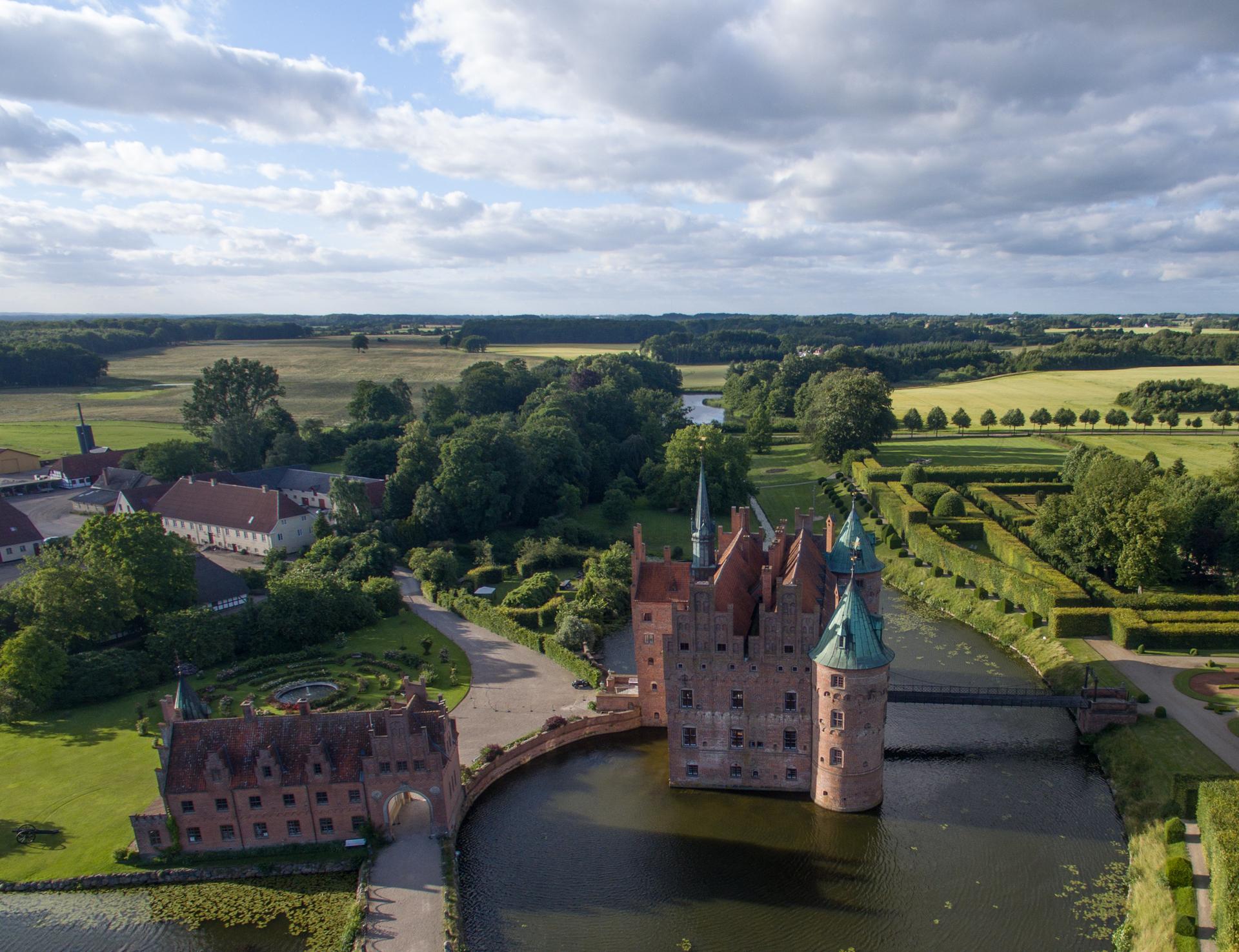
Looking beyond H. C. Andersens House? Discover Funen for broader travel guides, local hot-spots, and regional highlights.
Explore Funen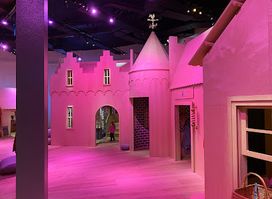
A playful fairy-tale universe inside H.C. Andersen’s House, where children dress up, act out stories and create their own adventures in the heart of Odense.
Step beneath the surface of Odense into a dreamlike museum where Andersen’s fairytales, bold architecture and a living garden merge into one continuous story.