
Klokkedybet, Odense Travel Guide
A quiet, story-rich bend of Odense River where legends of a sunken bell and Hans Christian Andersen’s fairytale imagination deepen an otherwise modest city waterscape.
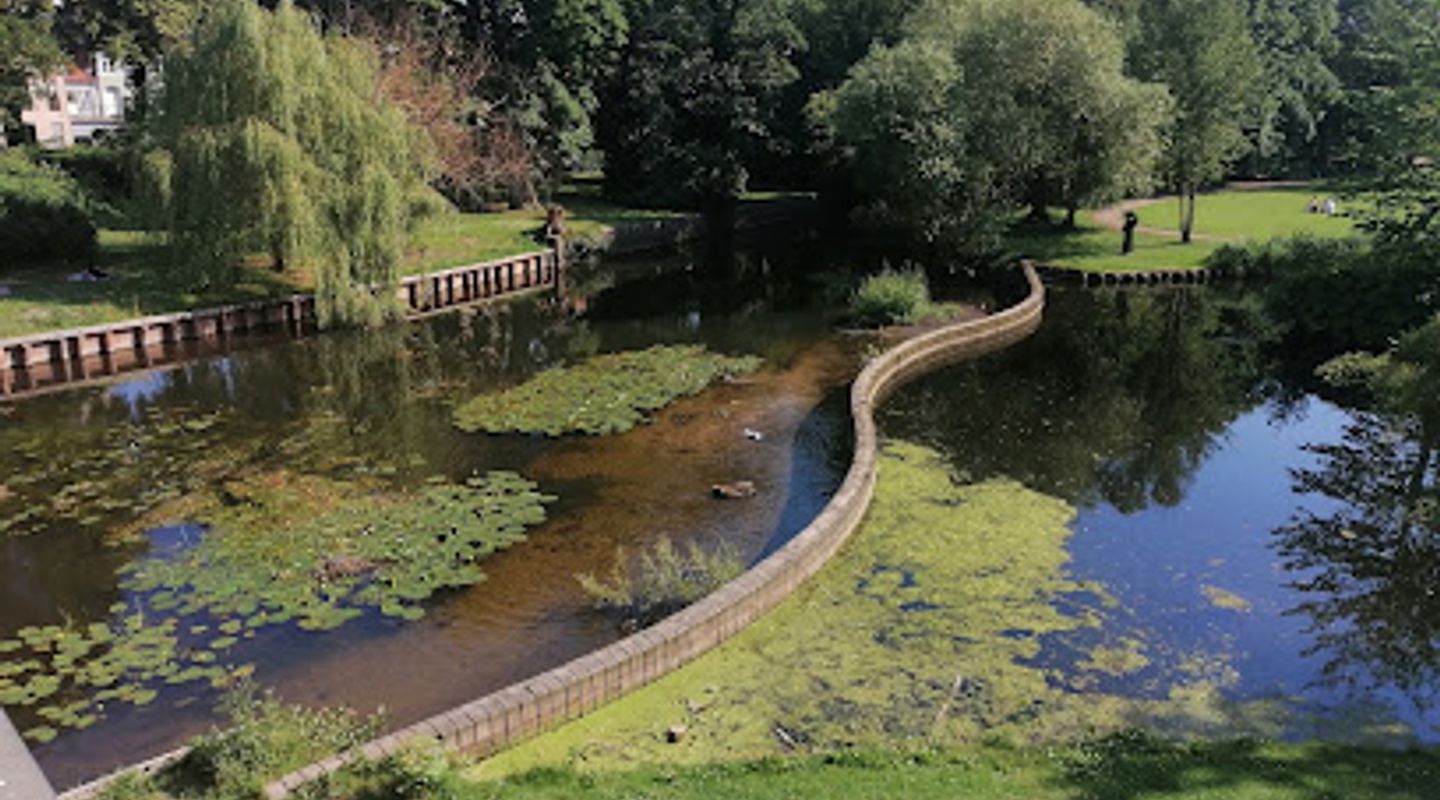
Klokkedybet is a quietly atmospheric bend of the Odense River in central Odense, wrapped in legends and Hans Christian Andersen’s imagination. Here, a simple stretch of water becomes a story-filled place, linked to a sunken church bell and the river spirit Åmanden, and associated with the old Skt. Albani Church and convent. Today it is a tranquil green riverside spot where you can pause, watch the slow current and sense the layers of history flowing through Denmark’s fairytale city.
A brief summary to Klokkedybet
- Odense Å, Odense, Odense C, DK
- Duration: 0.5 to 1.5 hours
- Free
-
 Outdoor
- Mobile reception: 4 out of 5

Know before you go
Hi, I'm Eve. Here are a few practical things to know before exploring Klokkedybet.
- Read Hans Christian Andersen’s tale “Klokkedybet” before or after your visit to better appreciate the legends and descriptions tied to this particular stretch of river.
- Visit in the early morning or late evening when the light is low and the river surface is calm; the atmosphere feels closest to the old stories of the sunken bell.
- Combine a stop at Klokkedybet with a longer riverside walk through central Odense’s green corridor to connect this small site with the wider flow of the city.
- Bring a light jacket outside of summer; the shaded riverbank can feel noticeably cooler than the nearby streets, especially when there is a breeze on the water.
- Use this as a quiet break between museum visits in central Odense, taking a few minutes on a bench to reflect and listen for the imagined echo of distant bells.
Do you manage this location?
Take control to get all the benefits, like improved information, better appearance, and stronger visibility across AI-powered discovery. Learn more about listing your business on Evendo
Activate your presenceOther nearby places you may find interesting
The closest places of the same kind, if this one is not quite what you had in mind.

Explore Klokkedybet on the Map
A handpicked selection of must-see spots near Klokkedybet, mapped for you.
Getting There
-
Tram and short walk from Odense Station
From Odense Station, take the light rail line toward the city centre and ride 3–5 minutes to a central stop near Albani Torv; a single ticket typically costs 20–25 DKK and machines accept cards. From there, allow about 8–12 minutes on foot along central streets and river paths to reach the stretch of Odense River known as Klokkedybet. Surfaces are generally paved or well‑made gravel, and the route is suitable for most visitors, though it can be busier on weekdays and during major city events.
-
City bus within central Odense
Several city bus lines connect neighbourhoods around Odense with stops close to the historic centre and the river; typical journey times range from 10–20 minutes depending on distance and traffic. A standard single ticket is usually around 20–25 DKK, with more frequent service during daytime than late evening. From central stops near Albani Torv or the cathedral area, expect a further 5–10 minute walk on mostly level pavements and riverside paths to reach Klokkedybet.
-
Cycling through Odense’s river corridor
Odense is a very cycle‑friendly city, and many visitors choose to reach Klokkedybet by bike using marked cycle lanes and paths along Odense Å. From most central districts, cycling times range from 5–20 minutes at a relaxed pace. You can rent a city bike or use a bike‑share service, typically paying from 20–60 DKK for short use depending on duration. Be aware that some riverside sections are shared with pedestrians, so moderate your speed and be prepared to dismount in narrow areas.
-
Walking from central Odense
If you are already in Odense’s compact centre near sights such as the cathedral or Hans Christian Andersen–related attractions, you can reach Klokkedybet entirely on foot in roughly 10–20 minutes. The walk passes through a mix of historic streets and green spaces as you approach the river. Pavements are mostly even, though some older cobblestones and gentle slopes may be less comfortable for those with limited mobility, particularly in wet or icy weather.
For the on-the-go comforts that matter to you
-
 Seating Areas
-
 Trash Bins
-
 Information Boards
Discover more about Klokkedybet
Where the river carries fairytales
Klokkedybet is not a grand monument but a mood: a particularly deep and quiet reach of the Odense River, close to the historic heart of the city. Here the water narrows slightly and darkens, hinting at unseen depths beneath the surface. Trees lean over the banks, their branches mirrored in the slow current, while the sounds of the city filter in as a soft background hum. It is easy to stand here for a moment and feel that the river itself is a storyteller.This stretch of Odense Å has long been part of the city’s identity. The river once powered mills, defined property lines and carried small boats, but it also shaped the imagination of those who grew up along its banks. In the 19th century, a boy named Hans Christian Andersen wandered these paths. Years later, he turned Klokkedybet into the opening scene of one of his lesser-known yet deeply atmospheric tales, fixing the place in Danish literary memory.The legend of the sunken bell
The name Klokkedybet – roughly “the bell’s deep” – refers to a local legend about a church bell that vanished from the tower of the medieval Skt. Albani Church. On a high holy day, the story goes, the bell rang with such force and fervour that it broke free, shot out through the tower window and plunged into the nearby river. It sank to the bottom at the deepest point of the channel, and from then on this part of the river was said to be marked by holy metal and mystery.Over time, tales grew up around the bell. Some insisted that, on quiet evenings or misty mornings, you could still hear its muffled chime through the water, as though it were keeping time for the city from the riverbed. Others claimed that the bell would only rise again when a truly pure-hearted person passed by. Whether you believe such stories or not, standing beside the dark surface at Klokkedybet makes it easy to imagine a heavy bronze shape resting somewhere down below.Andersen’s river spirit and the deep place
Hans Christian Andersen wove Klokkedybet into his fairytale of the same name, first published in the 1850s. In it, he fused the legend of the sunken bell with older folklore about Åmanden, the spirit or keeper of the river who watched over its waters and occasionally meddled in human affairs. Andersen’s story lingers over the river’s course through Odense, describing bridges, banks and buildings as he remembered them from childhood.In the tale, Klokkedybet becomes a meeting point between the everyday world and something older and more enchanted. Reading the story before or after your visit adds a layer of resonance: the rustle of leaves, the ripple of a passing duck and the distant sound of modern traffic all feel like present-day notes across an older score. Even without a book in your hand, the knowledge that a world-famous storyteller once fixed his gaze on this very water invites you to slow down and look more closely.Traces of the vanished lane and convent
Historically, Klokkedybet did not only name the deep pool in the river. It was also the name of a narrow lane that once ran from Albani Torv down towards the water, close to where the river was considered at its deepest. The lane appeared on 16th- and 17th-century maps of Odense, a tight little passage squeezed between buildings in a crowded medieval streetscape. In the late 20th century the alley disappeared under new development, but the old name survived in maps, archives and memory.Nearby stood an aristocratic convent for noblewomen, part of the dense cluster of church sites that once defined this part of Odense. Andersen placed his Klokkedybet in front of that convent, layering his own childhood impressions over older topography. Today, modern offices and traffic routes have reshaped the area above the banks, but as you look across the water you are standing at a junction of many eras: monastic bells, merchant traffic, industrial expansion and contemporary city life.A quiet pause in a green city corridor
For today’s visitor, Klokkedybet is best experienced as a contemplative stop along the riverside paths that thread through Odense. Benches and grassy patches nearby offer places to sit and watch the play of light on the water, or to trace the flight of birds weaving between branches and reflections. Joggers, cyclists and dog walkers pass by, yet the focus always returns to the river and its steady flow.This green corridor is part of what makes Odense feel unusually soft and leafy for a city of its size. Standing by Klokkedybet, you can follow the ribbon of water with your eyes and imagine it upstream among parks and downstream past bridges and harbour works. Whether you are pausing during a walk, exploring Andersen-related sites or simply escaping the streets for a moment of stillness, the deep bend of Klokkedybet offers a subtle but memorable sense of place.












Your all‑in‑one travel companion app
Explore expert travel guides, compare and book tours, experiences, hotels, and more—all from the palm of your hand. Download now for seamless trip planning wherever your wanderlust takes you.


Explore More of Odense
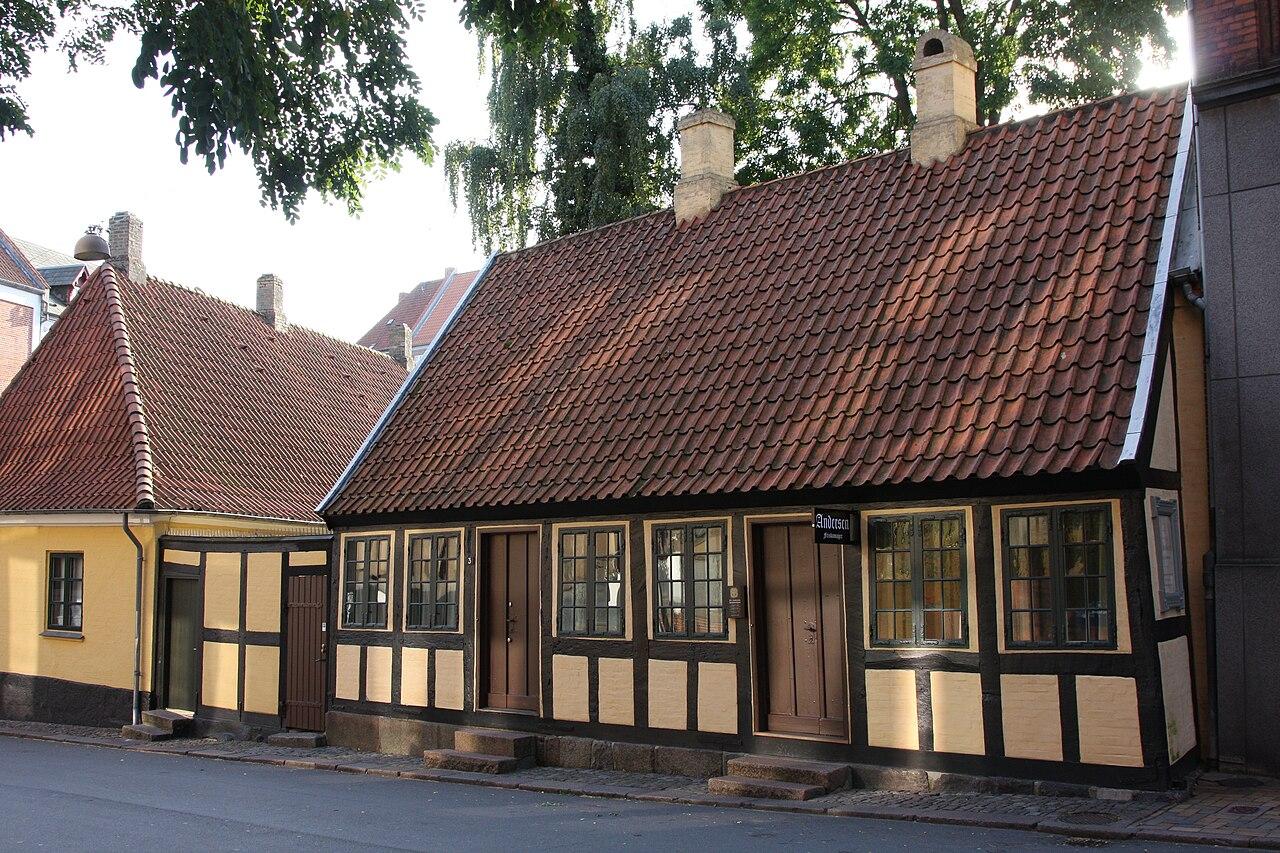
Looking beyond Klokkedybet? Discover Odense for broader travel guides, local hot-spots, and regional highlights.
Explore Odense
On Sortebrødre Torv, the lost Odense Comediehuus lives on in stories of young H.C. Andersen, vanished footlights and a square that still hums with everyday drama.
Riverside lawns, fairy-tale sculptures and seasonal blooms create a peaceful Hans Christian Andersen–inspired refuge in the very heart of Odense.
