

Free Nyborg Travel Guide & Mobile App
Plan your Nyborg trip with Evendo. Get free guides to top attractions, restaurants, hotels, and bars. Web access or download the mobile app.


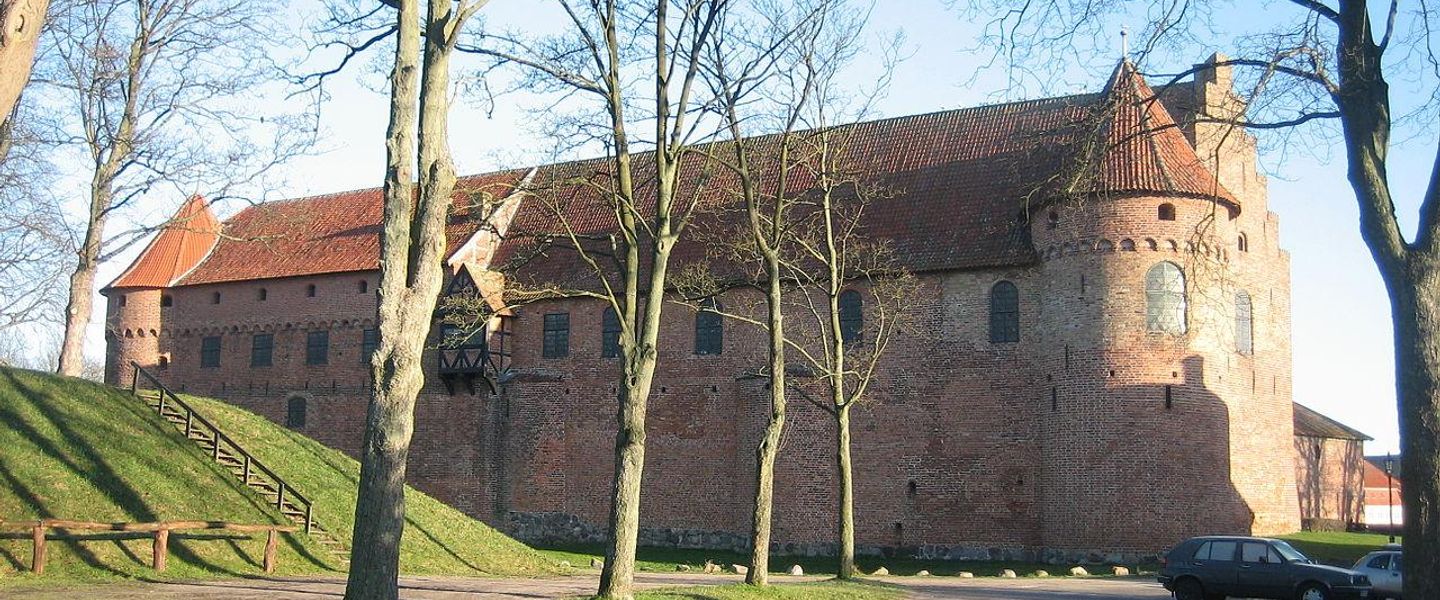


Nyborg, Denmark, pairs a medieval royal castle and historic town centre with Great Belt landscapes, coastal walks, local food and gentle island culture.
A Royal Town on Funen
Nyborg stands on eastern Funen beside the Great Belt, where Denmark’s central position between Zealand and Jutland shaped both its history and its character. The town grew around Nyborg Castle, a royal stronghold associated with the medieval Danehof, the assembly where kings, nobles and representatives negotiated matters of national importance. Although modern Nyborg is a modest town rather than a large urban centre, its historic core preserves a clear sense of its former political importance.Read more about Nyborg
Streets, Churches and Castle Heritage
Coast, Parks and Contemporary Nyborg
When is the best time to visit Nyborg?
Best: June–August · 21–24°C| Month | High (°C) | Rainfall (mm) |
|---|---|---|
| January | 4 | 31 |
| February | 4 | 27 |
| March | 6 | 27 |
| April | 11 | 26 |
| May | 17 | 25 |
| June (best) | 21 | 28 |
| July (best) | 24 | 35 |
| August (best) | 23 | 34 |
| September | 20 | 31 |
| October | 14 | 30 |
| November | 9 | 32 |
| December | 6 | 35 |
Getting to and around Nyborg
How to get there
Transportation
Best attractions in Nyborg
Nyborg Castle is the town’s central attraction, linking the visitor experience to the medieval royal court and the Danehof assemblies; its grounds and restoration project provide a changing view of one of Denmark’s important royal sites. Nearby, Landporten survives as a substantial reminder of the old fortifications, while Vor Frue Kirke introduces the religious history of the medieval settlement. The compact centre is rewarding to explore at street level, with traditional façades, small squares and routes leading towards the harbour. Nyborg Strand and the coastal paths offer open views across the Great Belt, and the wooded Dyrehave provides a pleasant setting for walking and cycling. The waterfront adds a more contemporary dimension, showing how the town remains connected to maritime movement and the national east-west transport corridor. Together these places create a sightseeing experience that combines royal history, civic architecture, shoreline scenery and the everyday atmosphere of a small Funen town.
-
Castle
Egeskov Castle
Europe's best-preserved Renaissance water castle, still inhabited by its noble family and surrounded by award-winning gardens.
35 min drive · 15 km from city centre
-
Castle
Valdemars Slot
Seaside baroque manor on Tåsinge, where royal ambitions, naval heroism and family life meet amid lakeside lawns, a chapel, museums and a gentle maritime breeze.
15 min drive · 5.0 km from city centre
-
Memorial park
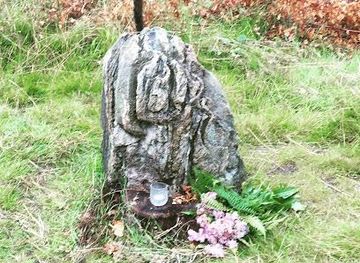
Elvira Madigan og Sixten Sparre
A modest forest clearing on Tåsinge where myth, murder and memory meet under the beech trees at the memorial to Elvira Madigan and Sixten Sparre.
19 min drive · 6.2 km from city centre


Best landmarks in Nyborg
Nyborg Castle is the defining landmark, a royal stronghold whose location and surviving fabric express the town’s medieval importance in Danish government. Its association with the Danehof gives the site a constitutional and political significance beyond its military role. Landporten, the old land gate, is one of the clearest surviving elements of Nyborg’s defensive townscape and marks the historic approach to the settlement. Vor Frue Kirke represents the religious and civic importance of the medieval town, with its position and long history anchoring the old centre. Traditional town houses and the historic street network complete the architectural picture, while Nyborg’s harbour and Great Belt setting explain why the settlement became strategically valuable. The later railway and fixed-belt infrastructure form a contrasting modern landmark landscape, showing how the town’s role as a national crossing point has continued in a different form.
-
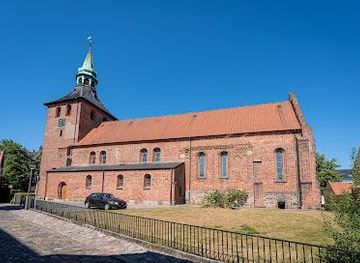
Protestant church
Saint Nicolai's Church
Svendborg's oldest building and spiritual guardian of seafarers since the 11th century.
3 min walk · 0.2 km from city centre
Explore Nyborg on the map
Plan your Nyborg trip on one map. See where the top attractions, landmarks, restaurants, bars and hotels are, find what's near where you're staying, and book hotels and experiences in a few clicks.
Best hotels in Nyborg
Get your free copy of our complete guide to Nyborg, delivered straight to you.
Everything on this page, from attractions and restaurants to essentials and local phrases, in one PDF you can read offline, print or share.
Already have an account? Sign in
Your Nyborg guide is ready.
We'll send it to · Not you? Sign out

Getting your guide ready…
We are putting together a fresh copy of the Nyborg guide. This can take up to a minute.
This can take a few moments. If your browser asks, choose Allow so the download can start. You'll find the guide in your Downloads folder.
Nothing happened? Download it again
Sorry, the guide is taking longer than usual. Please try again in a minute, or get it by email instead.
Nyborg essentials
Currency and Payment
Safety
Emergency Situations
Do's and Don'ts
Local Tips
From Eve
Local phrases worth knowing
You don't need to get them perfect. A few words go a long way, and locals appreciate the effort.
Basics
| English | Local | Say it |
|---|---|---|
| Hello | Hej | [hey] |
| Goodbye | Farvel | [far-vel] |
| Yes | Ja | [ya] |
| No | Nej | [nay] |
| Please/You're welcome | Vær så god | [ver sa go] |
| Thank you | Tak | [tak] |
| Excuse me/Sorry | Undskyld | [un-skyld] |
| How are you? | Hvordan har du det? | [vohr-dan har doo deh] |
| Fine. And you? | Fint. Og du? | [fint oh doo] |
| Do you speak English? | Taler du engelsk? | [ta-ler doo en-gelsk] |
| I don't understand | Jeg forstår ikke | [yay for-stor ee-keh] |
Eating & Drinking
| English | Local | Say it |
|---|---|---|
| I'd like to see the menu, please | Jeg vil gerne se menuen, tak | [yay vil geh-neh seh meh-noo-en tak] |
| I don't eat meat | Jeg spiser ikke kød | [yay spee-ser ee-keh kood] |
| Cheers! | Skål! | [skawl] |
| I would like to pay, please | Jeg vil gerne betale, tak | [yay vil geh-neh beh-tah-leh tak] |
Emergencies
| English | Local | Say it |
|---|---|---|
| Help! | Hjælp! | [hyelp] |
| Go away! | Gå væk! | [gow vehk] |
| Call the Police! | Ring til politiet! | [ring teel po-lee-tee-et] |
| Call a doctor! | Ring til en læge! | [ring teel en lay-eh] |
| I'm lost | Jeg er faret vild | [yay er fah-ret veeld] |
| I'm ill | Jeg er syg | [yay er soog] |
Shopping
| English | Local | Say it |
|---|---|---|
| I'd like to buy... | Jeg vil gerne købe... | [yay vil geh-neh koo-beh] |
| I'm just looking | Jeg kigger bare | [yay kee-ger bah-reh] |
| How much is it? | Hvor meget koster det? | [vor meh-eh kost-er deh] |
| That's too expensive | Det er for dyrt | [deh er for deert] |
| Can you lower the price? | Kan du sænke prisen? | [kan doo saeng-keh pree-sen] |
Time & Numbers
| English | Local | Say it |
|---|---|---|
| What time is it? | Hvad er klokken? | [vad er klok-ken] |
| It's one o'clock | Den er et | [dehn er et] |
| Half past (10) | Halv ti | [hahlv tee] |
| Morning | Morgen | [mor-gen] |
| Afternoon | Eftermiddag | [ef-ter-mee-daaw] |
| Evening | Aften | [af-ten] |
| Yesterday | I går | [ee gor] |
| Today | I dag | [ee dah] |
| Tomorrow | I morgen | [ee mor-gen] |
| 1 | En | [en] |
| 2 | To | [too] |
| 3 | Tre | [treh] |
| 4 | Fire | [fee-reh] |
| 5 | Fem | [fem] |
| 6 | Seks | [seks] |
| 7 | Syv | [soov] |
| 8 | Otto | [oh-toh] |
| 9 | Ni | [nee] |
| 10 | Ti | [tee] |
Transport & Directions
| English | Local | Say it |
|---|---|---|
| Where's a/the...? | Hvor er en/et...? | [vor er en/et] |
| What's the address? | Hvad er adressen? | [vad er ad-ress-en] |
| Can you show me (on the map)? | Kan du vise mig (på kortet)? | [kan doo vee-seh meeh (poh kor-teh)] |
| When's the next (bus)? | Hvornår er den næste (bus)? | [vor-nar er den neh-steh bus] |
| A ticket (to ....) | En billet (til ....) | [en bee-let teel] |
History of Nyborg
The Castle and Medieval Foundation
Nyborg’s emergence as a town is closely connected with its castle, established by the Danish monarchy in the late twelfth or early thirteenth century at a strategically important point on eastern Funen. The stronghold guarded movement across the Great Belt and offered the crown a base between the kingdom’s eastern and western territories. A settlement developed around the royal complex, whose position by the coast linked military power, administration and maritime traffic. The surviving castle site and the town’s historic street plan reflect this relationship, even though later rebuilding and modern development have altered the medieval appearance.
The Danehof and Royal Government
During the thirteenth and fourteenth centuries, Nyborg became associated with the Danehof, the medieval Danish assembly that met under the kings to deliberate laws, taxation and political agreements. Erik V’s charter of 1282, issued at Nyborg, is especially significant in Danish constitutional history because it set out limits on royal authority and recognised legal principles concerning government. The castle consequently functioned not merely as a fortress but as a central place of national politics. Nyborg’s reputation as a royal and administrative centre grew from these gatherings, bringing court officials, clergy, nobles and merchants to the town.
A Fortified Market Town
Nyborg’s position on the Great Belt encouraged commerce as well as royal administration. The town developed as a market and ferry point, with fortifications, gates and churches supporting a growing urban community. Landporten survives as a particularly tangible reminder of the defensive system that controlled movement into the settlement from the landward side. Vor Frue Kirke, whose history reaches back to the medieval period, reflects the religious institutions that helped organise urban life. Through the late Middle Ages and early modern period, Nyborg remained important as a crossing point, although its political prominence gradually declined as royal government became more centralised elsewhere.
War, Occupation and Changing Fortunes
Nyborg’s strategic location repeatedly exposed it to conflict. During the wars involving Denmark and Sweden in the seventeenth century, Funen and the Great Belt became contested territory, and Nyborg experienced military pressure and occupation. The Swedish capture of Nyborg in 1658 formed part of the crisis that led to the Treaty of Roskilde, which forced Denmark to surrender substantial territory. The town’s military importance diminished as warfare, administration and transport changed, but its castle, fortifications and position on the crossing continued to shape its identity and economy.
Railways and the Modern Crossing
The nineteenth century brought new forms of mobility and helped Nyborg adapt from a medieval ferry and market town into a modern transport centre. Rail connections linked eastern Funen with the wider Danish network, while harbour activity and ferry traffic continued to connect the island with Zealand. These routes reinforced Nyborg’s geographical importance even as national political life moved elsewhere. The opening of the fixed Great Belt connection in 1998 transformed travel across Denmark, replacing the traditional train and car ferry system with bridges and rail infrastructure. Nyborg remains closely identified with this national east-west link.
Preserving a Historic Identity
In contemporary Nyborg, preservation and interpretation have become central to the town’s cultural identity. The castle, old streets, Landporten and Vor Frue Kirke provide visible evidence of a past in which royal power, law, religion and trade converged. Restoration and redevelopment around Nyborg Castle have also prompted discussion about how medieval heritage should be presented in a living town. Alongside this historical focus, the harbour, coastal areas and everyday civic life show how Nyborg has evolved beyond its royal past while retaining an unusually direct connection with the political and architectural history of medieval Denmark.
Nyborg in Photos
Browse through our photo collection highlighting the charm and character of the destination.
Cities near Nyborg
The closest cities to Nyborg, if you have time for more than one stop.
-
-

-

-
-


Swipe for more cities
Explore more

Explore more of Denmark
Discover Denmark: A perfect blend of history, modern design, and the cozy concept of hygge. Explore vibrant cities, serene landscapes, and world-class cuisine.
Explore Denmark