Museum Odense, Funen Travel Guide
A cluster of historic courtyards and immersive galleries where Odense’s story unfolds from Viking fortress and merchant town to modern, family-friendly city museum.
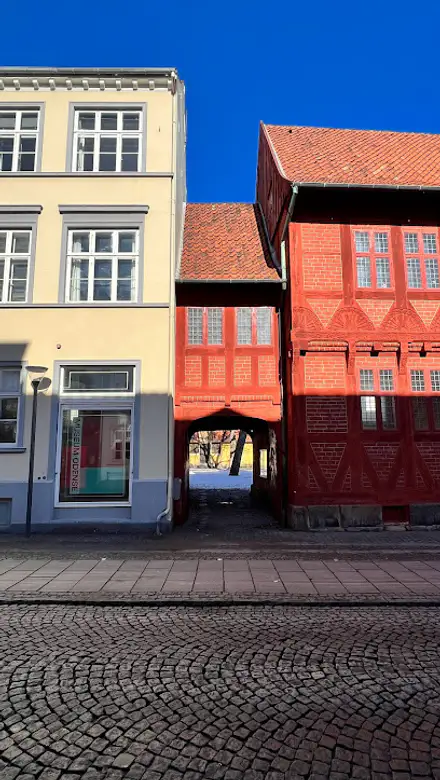
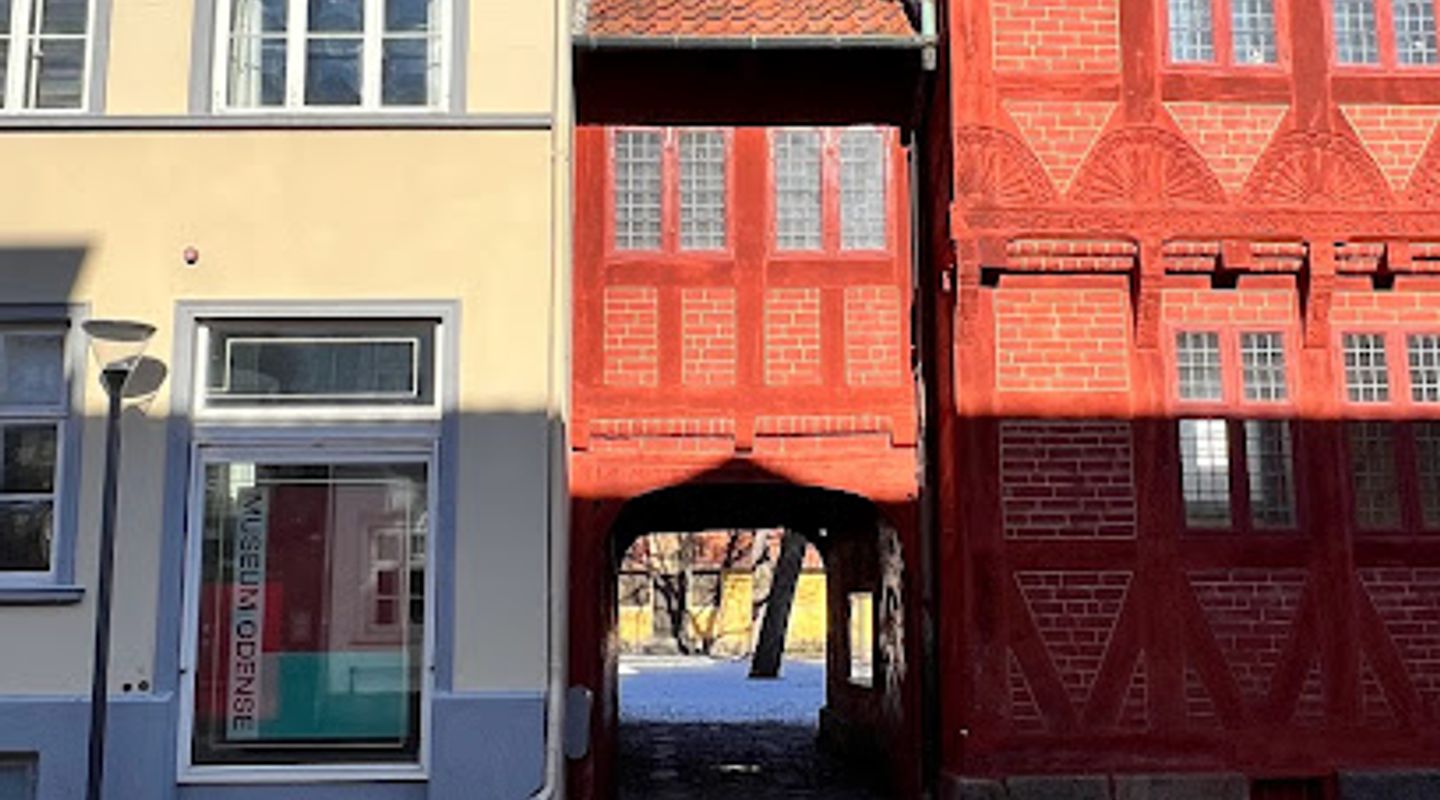
Set among cobbled lanes and timbered houses in Odense’s old town, Museum Odense’s TID City Museum is a compact cultural quarter where Funen’s history unfolds from Viking stronghold to modern city life. Exhibitions range from the “Fyn – Centre of the Universe” narrative of Danish and world events, to atmospheric Renaissance merchant homes, almshouses and hands-on spaces for children. Courtyards, period interiors and interactive displays create a rich, family-friendly museum campus that links Odense’s past, present and future in one walkable block.
A brief summary to Museum Odense
- Overgade 48, Odense, Odense C, 5000, DK
- Click to display
- Click to display
- Duration: 1.5 to 3 hours
- Mid ranged
-
 Indoor
- Mobile reception: 5 out of 5
- Monday 8 am-4 pm
- Tuesday 8 am-4 pm
- Wednesday 8 am-4 pm
- Thursday 8 am-4 pm
- Friday 8 am-1 pm

Know before you go
Hi, I'm Eve. Here are a few practical things to know before exploring Museum Odense.
- Allow at least two hours to explore both the main historical exhibitions and the children’s areas; add extra time if you like to read display texts in detail.
- Bring a light picnic or snacks to enjoy in the atmospheric courtyards, where seating offers a quiet break between galleries.
- If travelling with children, check in advance for school holiday activity days, when extra hands-on workshops and storytelling are often scheduled.
- Combine your visit with other Museum Odense sites in the city; joint ticket options and discounts can make this a good-value cultural day.
- Wear comfortable shoes; the museum spans several historic buildings with cobbled courtyards and some uneven floors.
Do you manage this location?
Take control to get all the benefits, like improved information, better appearance, and stronger visibility across AI-powered discovery. Learn more about listing your business on Evendo
Activate your presenceOther nearby places you may find interesting
The closest places of the same kind, if this one is not quite what you had in mind.

Explore Museum Odense on the Map
A handpicked selection of must-see spots near Museum Odense, mapped for you.
Unlock the Best of Museum Odense
Buy tickets
-
No tickets available
Book tours with entry
-
No tours available
Book tours without entry

Getting There
-
Walking from Odense city center
From the central pedestrian shopping streets in Odense C, reaching Museum Odense’s city museum area on Overgade typically takes around 5–15 minutes on foot. The route runs through flat, paved streets and alleys that are easy to manage for most visitors, though cobblestones in the immediate old-town area can be uneven for wheelchairs or prams. Walking is often the most convenient option, as many central streets are pedestrianised and on-street car access is limited.
-
Local bus within Odense
City buses running through central Odense connect residential districts and outer neighbourhoods with stops a short walk from Overgade; travel time is usually 10–25 minutes depending on distance and traffic. A single adult ticket normally costs in the range of 20–30 DKK and can be bought from ticket machines, apps or contactless payment on many services. Buses are generally low-floor and suitable for pushchairs and wheelchairs, but frequencies may be lower in evenings and on weekends.
-
From Odense railway station by public transport
Arriving at Odense railway station, visitors can either walk to the museum area in about 15–20 minutes on level pavements, or take a short city bus ride of roughly 5–10 minutes depending on the route. Bus fares from the station are typically 20–30 DKK for a single journey, with services running more frequently in daytime than late evening. Both the station and nearby bus stops are equipped with lifts or ramps, making this option suitable for most mobility levels.
-
Car or taxi within Odense
Driving to the old town from elsewhere in Odense usually takes 10–20 minutes, depending on traffic. There is no large dedicated car park directly in the historic museum block, so drivers generally use public parking facilities in the broader city centre and continue on foot for 5–10 minutes. Paid parking in central Odense commonly ranges from about 15–25 DKK per hour and can have time limits. Taxis offer door-near drop-offs and are widely available, with short central journeys often costing 80–150 DKK, but they cannot enter pedestrian-only streets.
For the on-the-go comforts that matter to you
-
 Restrooms
-
 Seating Areas
-
 Picnic Areas
-
 Trash Bins
-
 Information Boards
-
 Visitor Center
Discover more about Museum Odense
History woven into Odense’s old quarter
TID City Museum, part of Museum Odense, occupies a cluster of historic buildings tucked behind Overgade in the medieval heart of the city. Here, merchant houses, almshouses and modern galleries form a small labyrinth of cobbled yards that mirror the way Odense has grown over the centuries. The site was long known as Møntergården, after a 17th‑century coin merchant who once lived here, and it remains one of the best places to understand how this former market town evolved into Funen’s cultural centre.Walking through the entrance, you move from the bustle of contemporary streets into a series of sheltered courtyards. Timber-framed facades lean in at odd angles, red tiles glow in the often soft Danish light, and details like carved doorframes and leaded windows hint at the wealth and worries of past residents. The museum’s layout encourages wandering rather than rushing, leading you through spaces that feel half open-air museum, half urban time capsule.From Funen to the wider world
The museum’s newest building houses the exhibition "Fyn – midt i verden" (Fyn – Centre of the Universe), which retells national and global history through a Funen lens. Instead of dry timelines, you encounter immersive sets, film projections and soundscapes that link local events to turning points far beyond Denmark. A Viking-age trading hub, a medieval religious centre and an industrial-era city all appear in sequence, allowing you to see how this island has repeatedly looked outward while keeping a strong local identity.Among the collection’s highlights are archaeological finds from the Odense area, including material connected to the ring fortress at Nonnebakken and some of Scandinavia’s oldest human remains. These objects are displayed with strong scenography: dimmed lighting draws the eye to a single skull; animated maps show trade routes fanning out across Europe. The aim is not simply to preserve artefacts but to present them in a way that makes abstract centuries suddenly feel close at hand.Historic homes and everyday lives
In Falk Gøyes Gård, a richly detailed 17th‑century townhouse, an exhibition on medieval and Renaissance Odense explores how power, faith and commerce shaped the streets outside. Rooms are dressed with heavy chests, painted wall panels and utilitarian tools that suggest both prosperity and constraint. The building’s creaking floors and low beams frame displays about guilds, market regulations and the slow shift from church-dominated town to emerging civic life.Nearby, the almshouses known as Pernille Lykke’s Dwellings show two very different periods under one roof. One sequence recreates interiors from the 1600s, where charity, status and strict social rules governed daily existence. Another section jumps forward to the years 1935–45, with radios, textiles and design classics that make the era of occupation and early welfare state feel tangible. Together they highlight how Odense’s residents have navigated hardship, community and changing ideas of comfort.Hands-on history for younger visitors
A distinctive feature of TID City Museum is its focus on children’s engagement. The dedicated children’s museum space and the "Children’s Backyard" invite younger visitors to step into a mini townscape inspired by around 1890. Here they can try out a carpentry bench, pump water in a small courtyard, dress up in period clothing or explore a modest apartment interior. Unlike traditional galleries, almost everything here is designed to be touched, opened or played with.In the Histotoriet, genuine museum objects are made accessible to curious hands under gentle supervision. Instead of peering at implements through glass, children can examine and discuss them up close, turning abstract "history" into a series of concrete, memorable encounters. Regular themed activities during school holidays add extra layers, from craft workshops to storytelling sessions that bring local legends and real events into focus.Courtyard calm and sustainable credentials
Between visits to the galleries and historic homes, the museum’s courtyards act as a welcome pause point. Picnic-friendly corners, benches and small planted beds create a low-key, urban garden atmosphere, shielded from traffic yet only steps from central Odense. In warmer months, these spaces feel almost like an extended living room for the museum, where families unpack lunches, children roam safely and adults linger over conversation.TID is certified under a Danish environmental scheme for attractions, reflecting ongoing efforts to reduce energy use, sort waste and integrate sustainability into daily operations. This aligns neatly with the museum’s own message about continuity and responsibility across generations. Visiting here is not just an encounter with the past; it is also a quiet reminder that heritage, environment and everyday choices are closely connected.Planning your museum visit
Museum Odense’s city museum is compact enough to explore in a couple of hours, yet layered enough to reward a longer stay. Many visitors choose to combine the main historical narratives with time in the children’s areas and a short break in the courtyards. Temporary exhibitions can add contemporary art, design or focused historical themes to the permanent displays, so repeat visits often reveal something new.The location in Odense’s pedestrian-friendly centre makes it easy to weave into a broader day of exploring nearby streets, churches and other cultural institutions linked under the Museum Odense umbrella. Tickets and opening hours may vary by season, but once inside, the combination of architecture, storytelling and hands-on elements offers a well-rounded introduction to the city’s long, quietly eventful story.












Your all‑in‑one travel companion app
Explore expert travel guides, compare and book tours, experiences, hotels, and more—all from the palm of your hand. Download now for seamless trip planning wherever your wanderlust takes you.


Explore More of Funen
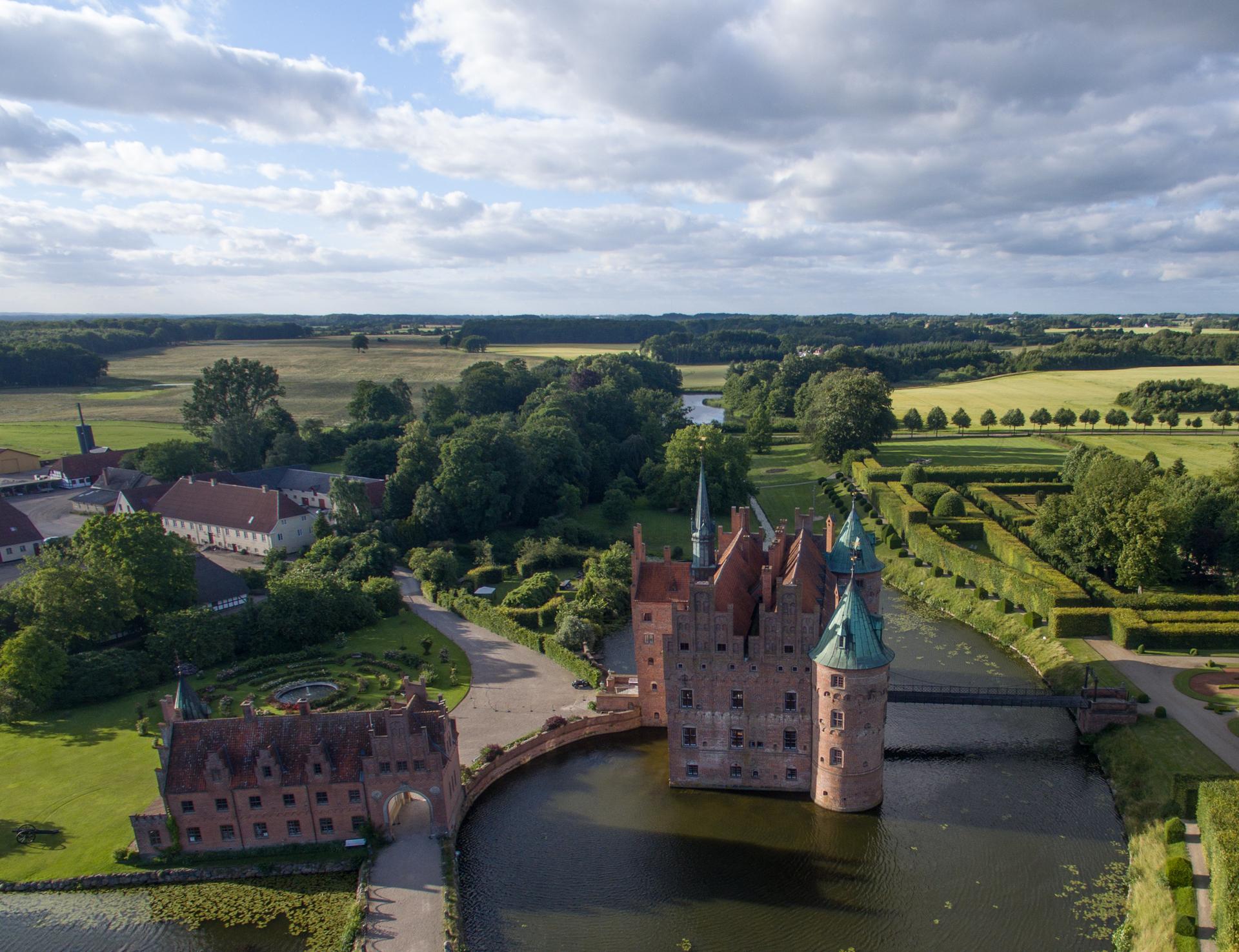
Looking beyond Museum Odense? Discover Funen for broader travel guides, local hot-spots, and regional highlights.
Explore Funen