
Washing Site at Odense River, Funen Travel Guide
A modest riverside platform where washerwomen toiled, the Washing Site at Odense River quietly preserves the everyday world that shaped Hans Christian Andersen’s childhood.
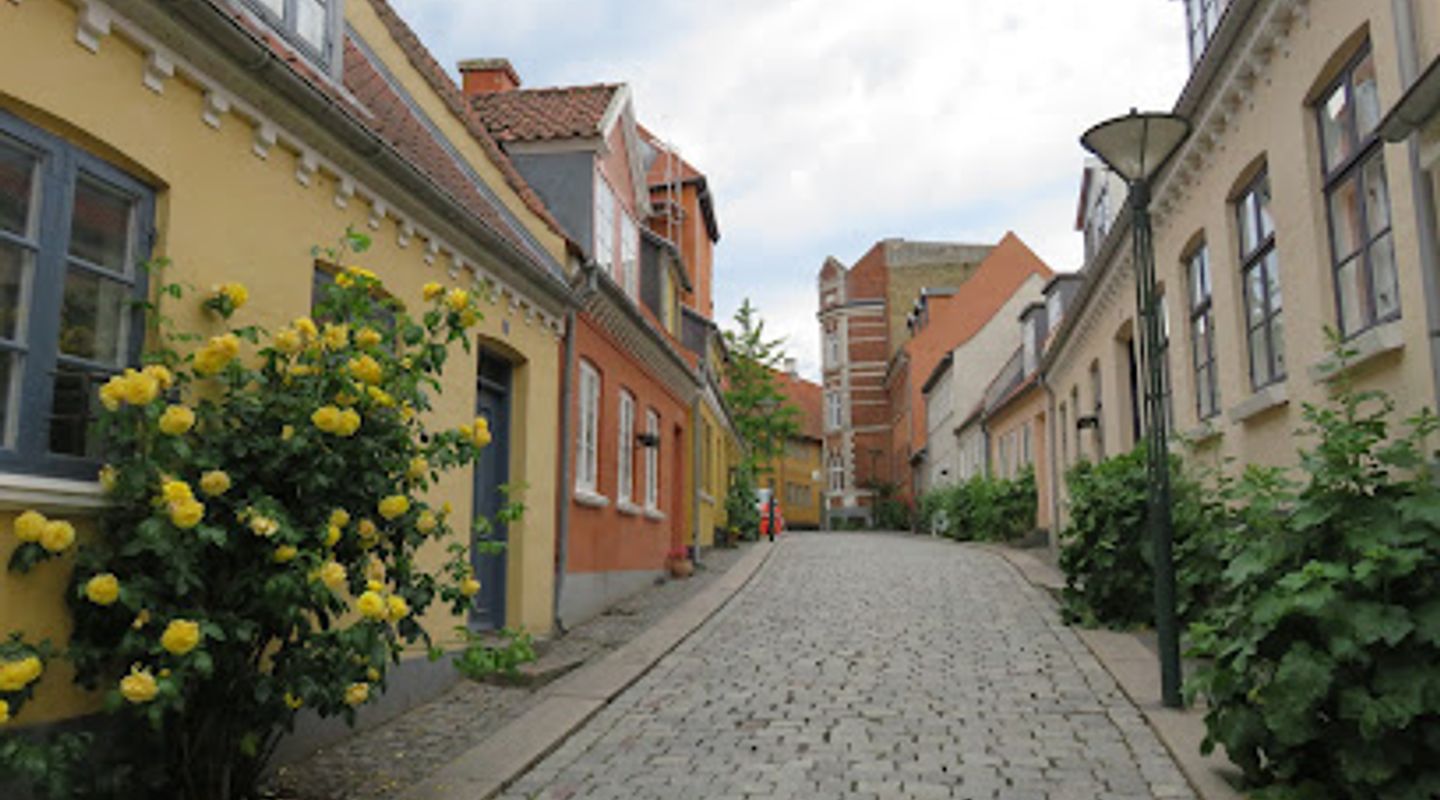
Tucked below the cobbled slope of Paaskestræde, the Washing Site at Odense River is a small but evocative reminder of Odense’s working past and of Hans Christian Andersen’s childhood world. Here, washerwomen once knelt at the river’s edge, including Andersen’s own mother, scrubbing clothes in Odense Å long before running water and machines. Today the modest stone platform in midstream, framed by leafy banks and pretty townhouses above, offers a quiet pause where you can picture aprons, soap foam and local gossip drifting on the current in the heart of historic Odense.
A brief summary to Washing Site at Odense River
- Paaskestræde 20, Odense Municipality, Odense C, 5000, DK
- Click to display
- Click to display
- Duration: 0.5 to 1 hours
- Free
-
 Outdoor
- Mobile reception: 5 out of 5

Know before you go
Hi, I'm Eve. Here are a few practical things to know before exploring Washing Site at Odense River.
- Combine the washing site with a stroll up Paaskestræde to appreciate how the steep lane connects the riverside to Odense’s old town streets.
- Visit in the early morning or late afternoon for softer light on the river and easier photography without harsh reflections.
- Bring a light jacket outside summer; the riverbank can feel noticeably cooler and breezier than the streets above.
- Read a short biography of Hans Christian Andersen beforehand so the link to his mother’s work here feels more vivid on site.
Do you manage this location?
Take control to get all the benefits, like improved information, better appearance, and stronger visibility across AI-powered discovery. Learn more about listing your business on Evendo
Activate your presenceOther nearby places you may find interesting
The closest places of the same kind, if this one is not quite what you had in mind.

Explore Washing Site at Odense River on the Map
A handpicked selection of must-see spots near Washing Site at Odense River, mapped for you.
Getting There
-
On foot from central Odense
From the core of Odense’s old town, reaching Paaskestræde and the washing site is an easy walk of about 10–20 minutes along mostly cobbled, gently sloping streets. The final approach down Paaskestræde is relatively steep and uneven underfoot, which can be challenging for wheelchairs, strollers or those with limited mobility, but the distance involved is short and there are frequent places to pause and rest.
-
City bus within Odense
Several local bus routes stop near the historic centre, with journey times of roughly 10–25 minutes from residential districts to stops around Overgade or Fisketorvet. A single adult ticket within Odense typically costs around 20–30 DKK, with buses running at regular intervals during the day. From the nearest stops it is a further 5–10 minute walk through the pedestrian streets to reach Paaskestræde and the riverbank.
-
Light rail and short walk
Odense’s light rail line connects outlying neighbourhoods to the city centre in about 10–20 minutes, depending on where you board. Standard adult fares are usually in the 20–30 DKK range for trips within the urban zone. Disembark at the central area and continue on foot for approximately 10–15 minutes through the old streets towards Paaskestræde, where the path descends to the Washing Site at Odense River.
For the on-the-go comforts that matter to you
-
 Seating Areas
-
 Trash Bins
-
 Information Boards
Discover more about Washing Site at Odense River
A quiet corner of Hans Christian Andersen’s childhood world
The Washing Site at Odense River sits just below the steep, postcard‑pretty Paaskestræde, where small cottages tumble down towards the water. At the bottom of the lane, the city suddenly falls away and you are face to face with Odense Å, the river that shaped the town’s life for centuries. In the middle of the stream you can see the preserved washing platform, its stones low and level with the surface, reached today by a short bridge and simple steps.This humble structure is closely tied to Hans Christian Andersen’s early years. His mother worked here as a washerwoman, carrying heavy bundles of linen down from the cramped streets above. The riverbank becomes a kind of open‑air footnote to his biography: it is easy to imagine the boy hovering nearby, watching the rhythm of washing and rinsing, listening to stories traded across the water while he dreamed up tales of his own.Everyday labour on the banks of Odense Å
Before indoor plumbing and laundromats, Odense’s residents depended on places like this to keep a growing town clean. Several washing spots lined the river, each with level stones or wooden platforms where women could kneel side by side. They used ash or early soap powders, scrubbing clothes against washboards before rinsing them in the cold current. The river’s steady flow carried away the soapy water, while the open air helped linens dry faster once they were wrung out and taken back uphill.The preserved platform here is modest in size, but it speaks volumes about daily life. The work was hard, wet and often done in all seasons, yet it also created a social hub. News moved along the riverbank as quickly as the water itself; births, deaths, romances and local scandals were discussed above the slap of fabric on stone. Standing at the edge today, the scene is quiet, but the layout of platform, bank and street helps you reconstruct that world with very little effort.Setting, views and neighbouring streets
What makes this corner particularly atmospheric is the way city and nature meet. Behind you rise the pastel fronts and half‑timbered facades of Paaskestræde and nearby historic lanes, while ahead the river curves between trees and low stone walls. In summer, leaves filter the light and reflections ripple on the water; in winter the branches reveal more of the old town’s rooflines and church towers further away.From the washing site you get a sideways glimpse into Odense’s layered geography. The historic centre feels close at hand, yet the soundscape shifts to birdsong, water and the occasional bicycle crossing nearby bridges. It is not a sweeping panorama but an intimate urban vignette, rewarding a slow look at details: worn stone edges, iron railings, moss in cracks and the subtle tilt of houses that have faced the river for generations.A brief, contemplative stop on a larger city walk
For most visitors the washing site is a short stop woven into a broader exploration of Odense’s old town and Andersen‑related landmarks. The site itself is compact; a few minutes are enough to see the structure, take photos and read any information panels if present. Yet lingering a little longer allows the place to do its work: you start to notice the play of light on the water, the cool air rising from the river and how the traffic noise above is softened by the drop in level.This makes the washing site a good pause between busier attractions. It suits travellers who enjoy piecing together a city through small traces rather than grand monuments alone. Families can use the spot to place Andersen’s stories in a concrete setting, while solo travellers might treat it as a pocket‑sized reflection space, letting the river carry thoughts away just as it once carried soap suds downstream.Stories preserved in stone and flowing water
Although unassuming, the washing site stands as a physical reminder of women’s work in the city’s history, which rarely left such visible marks. The stones you see are not heroic architecture but working infrastructure, preserved so that the everyday does not disappear entirely beneath modern improvements. In that sense, the site complements Odense’s grander churches, museums and theatres by highlighting the lives that supported them from the background.Taken together, the river, the sloping street and the simple platform form a small outdoor museum without walls. There is no admission barrier, no schedule to follow, only the invitation to step close, imagine the clatter of wooden tubs and the murmur of conversation, and then climb back up into the streets carrying a richer sense of how Odense once sounded and smelled along its water’s edge.More to explore near Washing Site at Odense River













Your all‑in‑one travel companion app
Explore expert travel guides, compare and book tours, experiences, hotels, and more—all from the palm of your hand. Download now for seamless trip planning wherever your wanderlust takes you.


Explore More of Funen
Looking beyond Washing Site at Odense River? Discover Funen for broader travel guides, local hot-spots, and regional highlights.
Explore Funen
A medieval monastic church of red brick and quiet light, Saint Hans links Odense’s castle, sacred history and old-town charm in one compact, atmospheric stop.

A small but vibrant picture wall where Hans Christian Andersen’s bold misfit, Klods Hans, steps off the page and into the streets of historic Odense.
