Stormflodssøjlen, Ribe Travel Guide
A slender oak column on Ribe’s riverfront, Stormflodssøjlen turns historic storm surges into visible rings, telling a powerful story of sea, danger and resilience.
Stormflodssøjlen on Ribe’s historic Skibbroen is a tall oak flood column ringed with bronze bands that quietly tell one of Denmark’s most dramatic stories: the times when the Wadden Sea rose high enough to inundate the town. Erected in 1922 by the riverfront, it marks historic storm surges, including catastrophic floods that once sent water above six metres over normal sea level. Simple at first glance, it is a powerful visual reminder of how closely Ribe’s life has always been tied to the sea, the tides and the protective dikes that now guard the marshland.
A brief summary to Stormflodssøjlen
- Skibbroen 25, Ribe, 6760, DK
- Duration: 0.5 to 1 hours
- Free
-
 Outdoor
- Mobile reception: 4 out of 5

Know before you go
Hi, I'm Eve. Here are a few practical things to know before exploring Stormflodssøjlen.
- Take a slow walk around the column and read each bronze band; imagining the water at those heights against surrounding buildings makes the scale of past floods much clearer.
- Pair your stop here with a visit to Ribe Cathedral or the Wadden Sea Centre to better understand the wider marshland landscape and how dikes have transformed life along the coast.
- Visit in soft morning or late-afternoon light for atmospheric photos of the column, river and marshes without harsh reflections on the water.
Do you manage this location?
Take control to get all the benefits, like improved information, better appearance, and stronger visibility across AI-powered discovery. Learn more about listing your business on Evendo
Activate your presenceOther nearby places you may find interesting
The closest places of the same kind, if this one is not quite what you had in mind.
Explore Stormflodssøjlen on the Map
A handpicked selection of must-see spots near Stormflodssøjlen, mapped for you.
Getting There
-
Train and short walk from Ribe Station
From cities like Esbjerg or Kolding, regional trains run to Ribe Station roughly once an hour, with journeys of about 30–45 minutes from Esbjerg and 1–1.5 hours from Kolding. A standard adult single on these routes usually costs around 60–120 DKK depending on distance and ticket type. From Ribe Station it is an easy, mostly flat walk through the old town to the riverfront and Stormflodssøjlen. Surfaces are cobbled in places, so wheelchairs and prams may need a bit of extra time, but gradients are gentle and the route is usable in all seasons.
-
Car trip via Ribe town centre
Drivers approaching Ribe on regional roads such as route 11 typically reach the town centre in 10–20 minutes from nearby areas like Esbjerg’s outskirts and in around 45–60 minutes from Kolding. There are several public car parks around the historic core where short- and medium-stay parking is available, often for a modest hourly fee in the range of 10–20 DKK, and sometimes free for limited periods. From these car parks, expect a brief stroll on cobbled streets to the riverfront; the final approach to Stormflodssøjlen is pedestrian-only and can be slick in wet weather, so suitable footwear is advisable.
-
Cycling within Ribe and from nearby countryside
Ribe and the surrounding marshland are well suited to cycling, with generally flat terrain and signed local bike routes. From nearby campsites, holiday homes or farm stays within roughly 5–10 km of town, the ride into Ribe usually takes 20–40 minutes at a relaxed pace. Bicycle access to the old centre is straightforward, but some streets are cobbled and can be uncomfortable at speed. There is no charge to bring your own bike into town; if renting a bicycle locally, expect daily prices around 80–150 DKK depending on type and season. Strong winds from the Wadden Sea can make the ride more demanding, particularly in autumn and winter.
For the on-the-go comforts that matter to you
-
 Restrooms
-
 Drink Options
-
 Drinking Water
-
 Food Options
-
 Seating Areas
-
 Trash Bins
-
 Information Boards
-
 Visitor Center
Discover more about Stormflodssøjlen
A wooden monument to Ribe’s restless waters
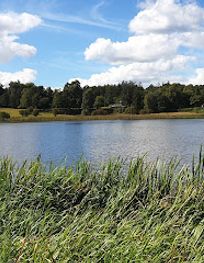
Stormflodssøjlen stands on the quay at Skibbroen, a slender oak column crowned with a gilded “hat” that could almost pass for an oversized mooring post. In reality, it is a meticulously crafted memorial to the many times the sea has surged into Denmark’s oldest town. Bronze rings wrapped around the timber indicate historic flood levels, each band stamped with a date and a stark figure: how high the water rose above normal.Seen against the low riverfront buildings and the flat marshland beyond, the column makes immediate visual sense. Ribe was a working harbor long before dikes and sluices tamed the tides, and this is where the water once rushed in unchecked from the Wadden Sea. The column’s position by the river, yet within the cosy medieval town, underlines how closely daily life and danger once overlapped here.Dates and heights that shaped local memory
The story told by the rings is one of recurring confrontation with the elements. One band marks the devastating storm surge of 1634, often called the Second Great Drowning of Men, when water rose more than six metres over normal levels and thousands of people along the Wadden Sea coast lost their lives. Another indicates the powerful North Sea storm of 1999, when modern sea defenses were tested and held.Reading the column from bottom to top is like scanning a vertical chronicle of disasters narrowly avoided or painfully endured. Some rings recall floods in the 18th and 19th centuries, while newer bands note storm surges from the late 20th century, when dikes reduced the damage but could not prevent tense nights along the marsh. Together, they give a tangible sense of scale that no written number alone can convey.Ribe, the marsh and the making of the dike
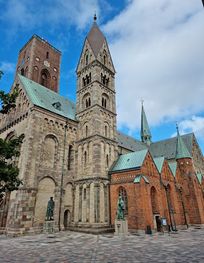
For centuries, Ribe’s prosperity depended on its accessible river harbor and its proximity to the North Sea. The same geography, however, made it vulnerable whenever strong westerly winds pushed high tides deep into the river system. The flat marshes surrounding the town offered little natural protection. Fields, roads and even the cathedral floor have all been submerged at times in the town’s history.The construction of the Ribe dike in the early 20th century profoundly changed this relationship. Completed in the 1910s, the dike and later sluice works limited storm surges and gave the town a new sense of security. Stormflodssøjlen, erected a few years later, captures that turning point. It does not merely look back at past calamities; it also marks the moment when engineering, planning and cooperation across the Wadden Sea region began to hold the sea more firmly at bay.A quiet open-air classroom by the river
Despite the gravity of its subject, the atmosphere around the column is calm. Cobblestones crunch underfoot, the river flows gently past and, on many days, the loudest sounds are seabirds and the occasional boat. The column works almost like an outdoor classroom: its simple design invites you to walk around it, read the dates and imagine the waterline cutting through nearby facades and doorways.From this spot, you can easily visualise how the quay, the marsh and the town would look under several metres of water. The view across the low meadows toward the Wadden Sea National Park connects the local monument to a broader coastal landscape that is now recognised as a UNESCO World Heritage area. The column becomes a link between Ribe’s intimate riverfront and a much larger story of tides, storms and migrating birds.Reflections on resilience and changing climate
Stormflodssøjlen also resonates with contemporary questions about sea-level rise and climate resilience. What began as a record of past catastrophes now reads like an early warning: even with dikes, sluices and modern forecasts, the balance between land and sea here remains delicate. Engineers still monitor storm surges carefully, and new defenses are periodically evaluated to match changing conditions.Standing beside the column, it is easy to imagine families, sailors and town leaders gathering at this very quay after past storms, measuring marks on walls and deciding what needed to change. The monument quietly honours their losses and their determination to adapt. For visitors, it offers a compact, thought-provoking pause in any exploration of Ribe: a reminder that beneath the town’s half-timbered charm lies a long, hard-earned partnership with the ever-shifting waters.












Your all‑in‑one travel companion app
Explore expert travel guides, compare and book tours, experiences, hotels, and more—all from the palm of your hand. Download now for seamless trip planning wherever your wanderlust takes you.


Explore More of Ribe
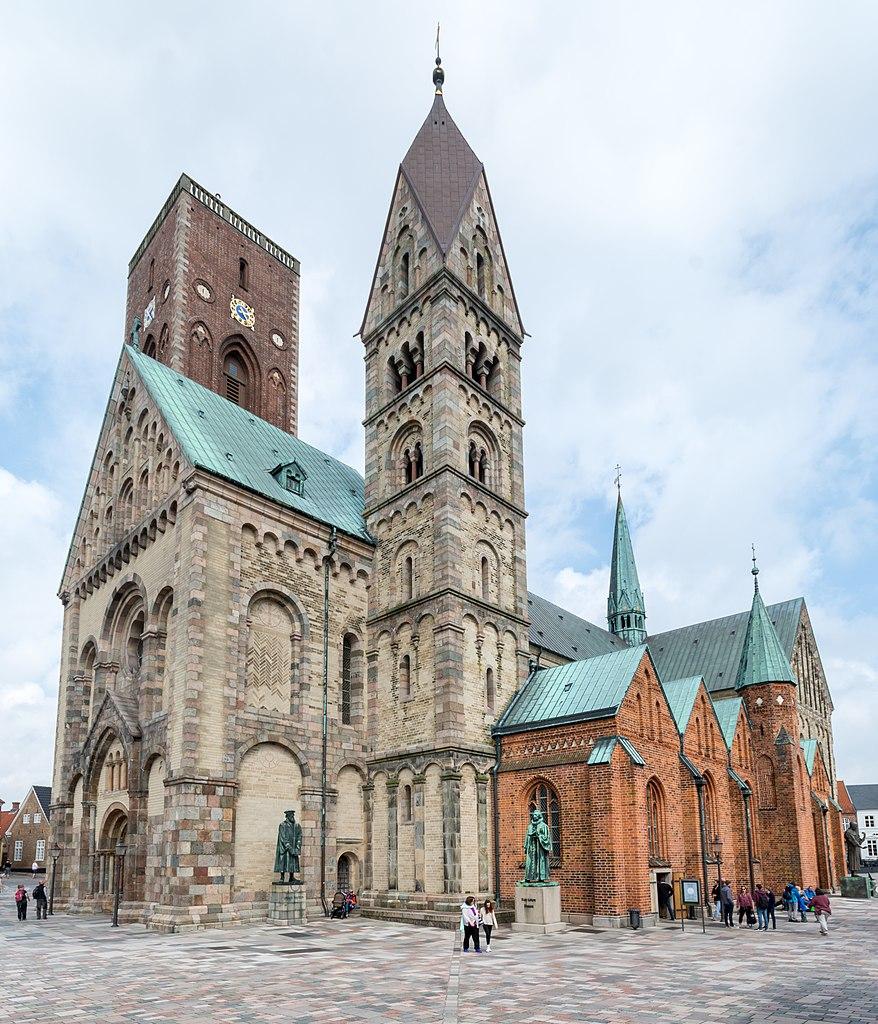
Looking beyond Stormflodssøjlen? Discover Ribe for broader travel guides, local hot-spots, and regional highlights.
Explore Ribe