Copenhagen Opera House
A floating masterpiece of contemporary design where golden maple, 24-karat gold, and world-class acoustics meet Copenhagen's harbor.
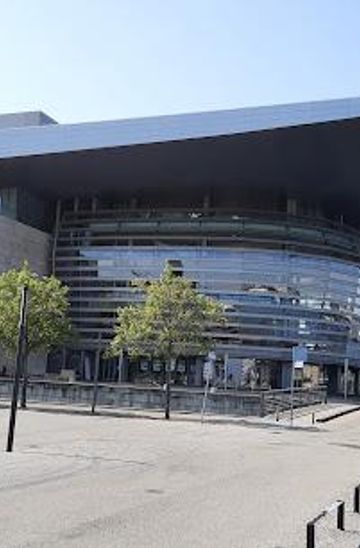
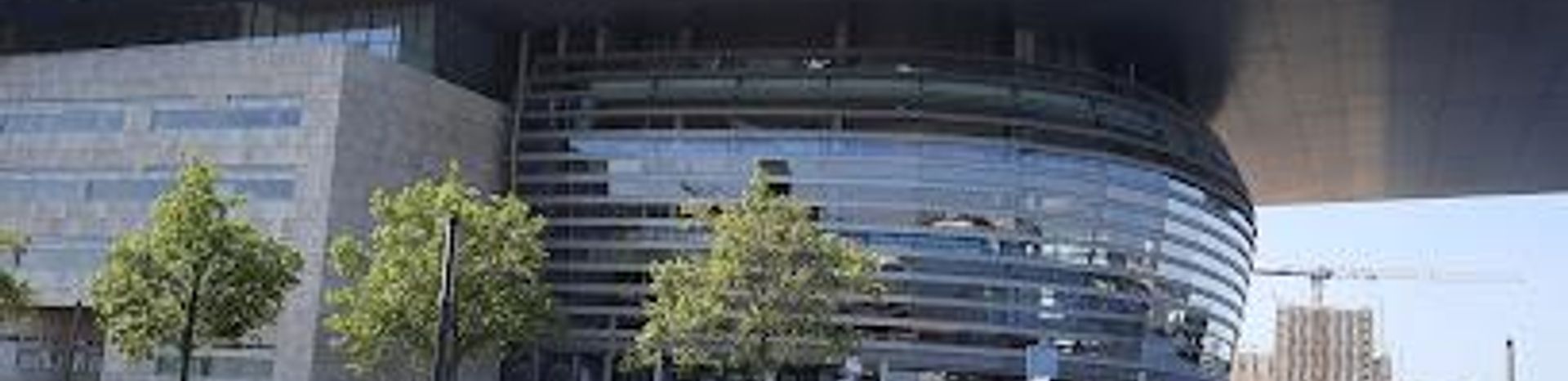
A masterpiece of contemporary architecture designed by Henning Larsen, the Copenhagen Opera House stands on the island of Holmen in Copenhagen's inner harbor. Inaugurated in 2005, this 41,000-square-meter cultural landmark features a 1,703-seat main auditorium renowned for its exceptional acoustics, a distinctive floating roof cantilevered over the water, and interiors adorned with maple wood, Sicilian marble, and 24-karat gold leaf. The building serves as a beacon for world-class opera, ballet, and theatrical performances.
A brief summary to Copenhagen Opera House
- Ekvipagemestervej 10, København K, København K, 1438, DK
- Click to display
- Click to display
- Duration: 1.5 to 3 hours
- Mid ranged
-
 Mixed
Mixed
- Mobile reception: 5 out of 5

Know before you go
Hi, I'm Eve. Here are a few practical things to know before exploring Copenhagen Opera House.
- Book guided tours in English well in advance; they operate most days and provide exclusive backstage access, including views of the Queen's private box and the six performance stages. Tours are not recommended for children under 7 years old.
- Arrive early to explore the foyer and experience Olafur Eliasson's light sculptures, which transform dramatically throughout the day. The elevated balconies offer stunning 180-degree panoramic views of Copenhagen's harbor and skyline.
- For performances, purchase tickets online or by phone (+45 33 69 69 69) well in advance, as popular shows sell out quickly. Tickets are also available 2 hours before performances at the box office.
- Visit the adjacent Opera Park, a free year-round green space with hundreds of plant species, offering tranquil views of the Opera House and harbor. Guided tours of the park are available for groups in Danish and English.
- Do not bring baby strollers, food, drinks, large bags, or pets (except assistance dogs) on guided tours. Arrive 15 minutes early at the main entrance lobby on the harbor side.
Do you manage this location?
Take control to get all the benefits, like improved information, better appearance, and stronger visibility across AI-powered discovery. Learn more
Activate your presenceGetting There
-
Metro and Walking
Take the Copenhagen Metro to Kongens Nytorv station (approximately 10 minutes from Central Station). From there, walk along the historic Nyhavn waterfront for about 15 minutes, crossing the Butterfly Bridge (Sommerfuglebro), a pedestrian and bicycle bridge that spans the harbor. Follow the path to the Opera House entrance. Total journey time: 25–35 minutes. No charge for metro travel with a valid Copenhagen Card or day ticket (approximately 80 DKK for a single journey).
-
Bicycle
Copenhagen is highly bicycle-friendly. Rent a bike from numerous rental stations throughout the city (approximately 80–150 DKK per day). From Nyhavn or the city center, cycle along the harbor promenade toward Holmen, crossing the Butterfly Bridge. The journey takes 10–15 minutes depending on your starting point. Bike parking is available at the Opera House.
-
Bus
Several bus routes serve the Opera House area. Bus lines 2A, 9A, and 66 stop near Operaen (the Opera House). Journey times vary from 15–25 minutes depending on your starting location. A single bus ticket costs approximately 24 DKK; day passes and multi-day tickets offer better value. Service runs frequently throughout the day.
-
Taxi or Rideshare
Taxis and rideshare services (Uber, Bolt) are available throughout Copenhagen. Journey time from the city center is approximately 10–15 minutes depending on traffic. Expect to pay 100–200 DKK from central locations. Limited paid parking is available at the Opera House for approximately 40–50 DKK per hour, though public transport and cycling are recommended.
For the on-the-go comforts that matter to you
-
 Restrooms
-
 Drink Options
-
 Food Options
-
 Seating Areas
-
 Information Boards
-
 Visitor Center
Discover more about Copenhagen Opera House
Architectural Vision and Design Innovation
The Copenhagen Opera House represents one of the world's most ambitious contemporary cultural projects. Designed by renowned Danish architect Henning Larsen, the building was completed in 2004 and inaugurated in January 2005 as a gift to the Danish people from the A.P. Møller and Chastine McKinney Møller Foundation. The structure spans 41,000 square meters across 14 floors, with five levels extending underground, making it one of Denmark's largest and most innovative buildings. The design emerged from an international architectural competition announced by the Danish government in 2000, with Larsen's innovative and striking contemporary vision selected as the winning entry.The building's most distinctive feature is its dramatic cantilevered roof, which extends 32 meters—equivalent to the length of three football fields—hovering above the waterfront like a floating platform. This engineering marvel employs aircraft wing technology to achieve its seemingly impossible span with minimal structural depth, earning the Opera the International Association for Bridge and Structural Engineering's Outstanding Structure Award in 2008. The exterior combines southern German Jura Gelb limestone with a metal grid and glass panels, creating a structure that appears different from every angle. The rounded glass wall facing the waterfront contrasts sharply with the straight stone walls beneath the distinctive metal roof, while canals excavated on both sides of the building emphasize its monumental character and maritime setting.Interior Splendor and Acoustic Excellence
Stepping into the foyer reveals an interior of extraordinary refinement. The centerpiece is a magnificent wooden shell crafted from stained maple, visible through the glass façade and inspired by the form of a conch shell. This golden maple structure embraces the main auditorium and dominates the foyer, with suspended balconies and dynamic light footbridges creating an ever-changing interplay of shadows and silhouettes. The foyer features Sicilian Perlatino marble and three striking light sculptures created by Danish-Icelandic artist Olafur Eliasson, which transform the space throughout the day and evening.The main auditorium, nicknamed "the pumpkin" for its distinctive orange-hued wavy appearance, seats between 1,492 and 1,703 spectators depending on the flexible orchestra pit configuration. Every element has been meticulously calibrated for optimal acoustics: the ceiling is adorned with 105,000 sheets of 24-karat gold leaf (equivalent to 1.5 kilos of gold), while rear walls and box fronts are covered in stained solid maple and smoked oak with precisely coordinated horizontal recesses and reliefs. These design elements serve both ornamental and acoustic purposes, ensuring exceptional sound quality throughout the venue. The auditorium's intimate yet grand horseshoe configuration creates excellent sight lines from every seat, while the large orchestra pit accommodates both traditional and contemporary performance arrangements.Cultural Significance and Artistic Contributions
The Opera House functions as the home of the Royal Danish Theatre, administering opera, ballet, and theatrical productions. Beyond the main auditorium, the building houses Takkelloftet, a black box experimental theater with 200 seats, along with six performance stages, numerous rehearsal halls for singers, choir, soloists, orchestra, and ballet, and a large orchestra rehearsal room five floors underground. The building contains over 1,000 rooms, including costume shops, dressing rooms, and administrative offices. Several renowned Danish artists contributed to the building's artistic identity: Per Kirkeby created four bronze reliefs, while Olafur Eliasson designed the foyer's transformative light installations.The Opera House occupies a position of profound cultural and historical significance within Copenhagen. Located on the island of Holmen in the inner harbor, directly across from Amalienborg Palace and the Marble Church, the building completes a historical axis that connects these iconic landmarks. The structure played a fundamental role in transforming Copenhagen's former industrial port into the vibrant recreational waterfront district it is today. The Queen of Denmark maintains her own private box on the left side of the auditorium, closest to the stage, honoring the building's status as a national institution.Design Complexity and Collaborative Vision
The construction process, which began in 2001, proved extraordinarily complex due to the building's partial construction in water and the integration of modern engineering with traditional craftsmanship. The project involved more than 950 staff members, including building workers, supervisors, and chief resident engineers, working over four years to complete the structure. The collaboration between architect Henning Larsen and Mærsk Mc-Kinney Møller, the primary donor and visionary behind the project, shaped many design decisions. Møller's meticulous attention to detail—personally testing seats and materials and visiting opera houses worldwide to study aging and durability—influenced critical design choices, including the modification of the original all-glass façade to a metal grid with smaller glass panels to ensure long-term weathering performance.Notably, the construction costs exceeded US$500 million, making the Opera House one of the world's most expensive opera venues. The building's completion represented an absolute requirement from the client that the project be finished within the four-year timeline, demonstrating the commitment of all parties to realizing this ambitious vision. Remarkably, after the Opera's completion, architect Henning Larsen published a critical book about the building, distancing himself from the project and calling it a "mausoleum" for Mærsk Mc-Kinney Møller—an unusual and controversial step for an architect to critique one of their own completed works.Waterfront Integration and Public Access
The Opera House's relationship with Copenhagen's harbor and public spaces defines much of its character. Visitors approach the building from the wide harbor promenade or by crossing the waterway via the Butterfly Bridge, a pedestrian and bicycle crossing that connects Nyhavn to Holmen. The arrival plaza, framed by the building's dramatic floating roof eaves, welcomes visitors into a space where the boundary between interior and exterior becomes fluid. From the foyer's elevated vantage points, audiences enjoy a 180-degree panoramic view spanning from the harbor fairway across the city's historic turrets and spires to the view toward Øresund to the north. The Opera Park, a free green oasis located between the Opera House and the Paper Island development, provides additional public access and contemplative space year-round.Explore the best of what Copenhagen Opera House has to offer















More about North Zealand
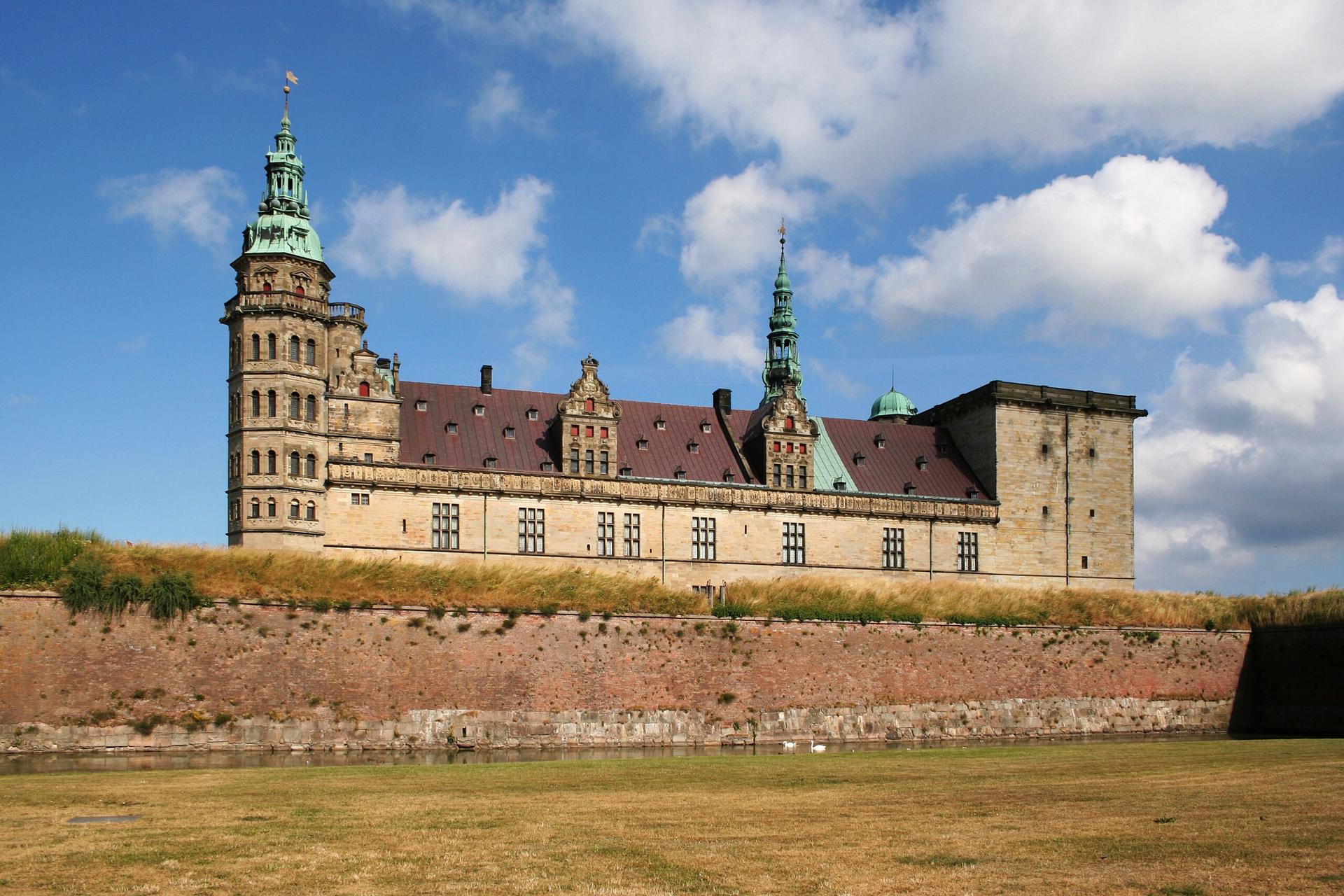
Explore North Zealand, Denmark's enchanting region of castles, beaches, and royal estates, perfect for history buffs, nature enthusiasts, and seaside lovers.
Tell me more about North Zealand