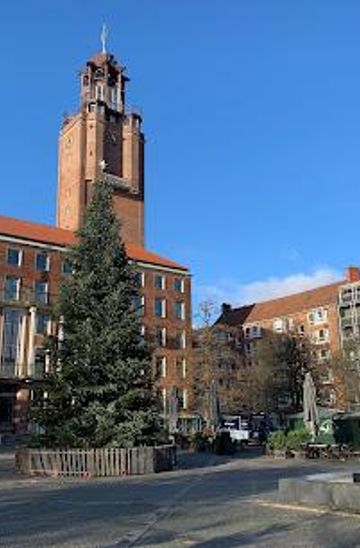
Frederiksberg Town Hall
Brick-clad functionalist town hall with a 60m tower, retro interiors and sweeping views over Frederiksberg’s parks, villas and the Copenhagen skyline.
Rising in warm brick above bustling Smallegade, Frederiksberg Town Hall is the civic heart of Copenhagen’s greenest municipality. Completed in the early 1950s to Henning Hansen’s functionalist design, the long, low complex and its 60m tower anchor a generous forecourt and tree-lined avenues between Frederiksberg Center and leafy Frederiksberg Have. Inside, open stairwells, retro details and ceremonial halls reveal mid‑century Danish design at work, while monthly tower visits unlock sweeping views across Frederiksberg and the Copenhagen skyline.
A brief summary to Frederiksberg Town Hall
- Smallegade 1, Frederiksberg, 2000, DK
- Click to display
- Click to display
- Duration: 0.5 to 2 hours
- Free
-
 Mixed
Mixed
- Mobile reception: 5 out of 5
- Monday 9 am-5 pm
- Tuesday 9 am-1 pm
- Wednesday 9 am-1 pm
- Thursday 9 am-5 pm
- Friday 9 am-1 pm

Know before you go
Hi, I'm Eve. Here are a few practical things to know before exploring Frederiksberg Town Hall.
- Time your visit for a weekday morning if you want to explore the lobby and public corridors without the lunchtime rush of local office workers.
- Check locally for scheduled guided tours or open tower days; access to the 60m tower is not continuous and is usually tied to specific dates.
- Combine a short architectural stop at the town hall with a stroll through Frederiksberg Have and Søndermarken just behind the complex.
- Look out for original mid‑century details such as open stairwells, elevators and lighting, which give the interior a distinct 1950s character.
- If you are attending a wedding or ceremony, allow extra time to navigate security and find the correct floor and room inside the large building.
Do you manage this location?
Take control to get all the benefits, like improved information, better appearance, and stronger visibility across AI-powered discovery. Learn more
Activate your presence
Getting There
-
Metro
From central Copenhagen, take the M1 or M2 metro line to Frederiksberg Station, then walk about 10 minutes along the main shopping streets to the town hall. Metro trains run every few minutes throughout the day and the ride from Nørreport is around 5–7 minutes. A standard single-journey ticket within the city zones typically costs about 20–30 DKK, and lifts and escalators at the station make this a convenient option for most visitors.
-
Bus
Several city bus routes run along Falkoner Allé and nearby main roads, stopping within a few minutes’ walk of the town hall. From the inner city, expect a journey of about 15–25 minutes depending on traffic and route. Bus tickets are integrated with the metro system, so the same 20–30 DKK single fare usually applies within central zones. Buses run frequently during the day but can be less frequent in the late evening and on weekends.
-
Bicycle
Cycling from the historic centre to Frederiksberg Town Hall typically takes 10–20 minutes, using Copenhagen’s extensive network of separated bike lanes. The route is mostly flat and suitable for casual cyclists. Public bike-share schemes and many hotels offer rental bikes, usually from around 100–150 DKK per day. Be prepared for busy intersections at rush hour and always follow local cycling rules and signals.
-
Taxi / Rideshare
Taxis from central Copenhagen to Frederiksberg Town Hall usually take 10–20 minutes depending on traffic. Fares commonly range from about 120–220 DKK for the trip, with higher prices at night or during peak periods. Drop-off is straightforward on the surrounding streets, but stopping directly outside the main entrance can be limited at busy times, so allow a couple of extra minutes to walk from the nearest safe drop-off point.
For the on-the-go comforts that matter to you
-
 Restrooms
-
 Drink Options
-
 Drinking Water
-
 Food Options
-
 Seating Areas
-
 Sheltered Areas
-
 Trash Bins
-
 Information Boards
-
 Visitor Center
Discover more about Frederiksberg Town Hall
A mid-century landmark at the heart of Frederiksberg
Frederiksberg Town Hall stands where busy Falkoner Allé meets Smallegade, a broad brick complex stretching almost the length of a football pitch with a single, slender tower rising 60 metres above the street. Conceived as the administrative centre of an independent municipality surrounded by Copenhagen, it brings together political, ceremonial and everyday civic life under one long, horizontal roofline.The building was inaugurated in 1953 after a protracted construction period spanning the Second World War. Shortages of steel and other materials halted progress for years, leaving foundations and bare walls standing while the city grew around them. When work finally resumed, the result was a quietly confident expression of post‑war optimism in sturdy Danish brick.From rural parish to self-assured city hall
Until the mid‑19th century, Frederiksberg was a rural community of fields and farmsteads, with administrative affairs handled in modest schoolrooms and converted houses. Rapid urbanisation, spurred by the lifting of Copenhagen’s building restrictions in 1852, transformed the area into a dense, villa‑lined city within the city, demanding a more fitting civic home.Earlier town hall arrangements quickly became too cramped for the expanding bureaucracy. By the 1930s the municipality launched architectural competitions for a purpose-built seat of government. Architect Henning Hansen ultimately won the commission, and his design replaced a warren of older houses between Bredegade and Smallegade with a single, coherent complex fit for a modern welfare municipality.Functionalist lines and Danish brick craftsmanship
The town hall is a study in Danish functionalism: clean planes, rhythmic rows of windows and restrained ornamentation. Long façades of red brick are punctuated by narrow vertical window bays and the square clock tower, which has become a local landmark visible from much of Frederiksberg. The proportions are generous but never showy, emphasising practical clarity over monumental excess.Inside, more than 20,000 square metres of floor space accommodate around 800 municipal employees. Corridors and stairwells are lined with terrazzo, pale wood and simple metal details that speak of early‑1950s taste. Ceremonial rooms and council chambers add a touch of gravitas through higher ceilings, carefully placed artworks and Danish furniture design, yet the overall impression remains deliberately accessible and human-scaled.Civic life, ceremonies and everyday errands
Today the town hall is where residents come to register life events, arrange documents or attend local democracy in action. The Citizen Service Centre occupies the first floor, serving as a practical gateway to the municipality’s many services. Elsewhere, offices house planners, social services, cultural departments and the mayor’s administration, all woven into the fabric of daily Frederiksberg life.The building is also a place of celebration. Wedding ceremonies are held in elegant rooms that balance official formality with a distinctly Scandinavian warmth, their windows framing treetops and rooftops rather than grandiose squares. On weekdays, the forecourt and surrounding pavements buzz with people heading to the metro, nearby shopping streets or the lawns of Frederiksberg Have just beyond the complex.A tower with views over parks and rooftops
On selected open days and guided tours, visitors can climb or ride up to the tower room, where large windows reveal a surprisingly green panorama. To one side spreads the canopy of Frederiksberg Have and Søndermarken; to the other, the denser roofscape of central Copenhagen, punctuated by spires and modern high-rises.From this vantage point, Frederiksberg’s role as a compact, self‑contained municipality becomes tangible. The town hall reads as both symbol and tool: a mid‑century structure that continues to shape how residents encounter their local government, framed by parks, cultural venues and busy shopping streets on every side.Explore the best of what Frederiksberg Town Hall has to offer













More about North Zealand
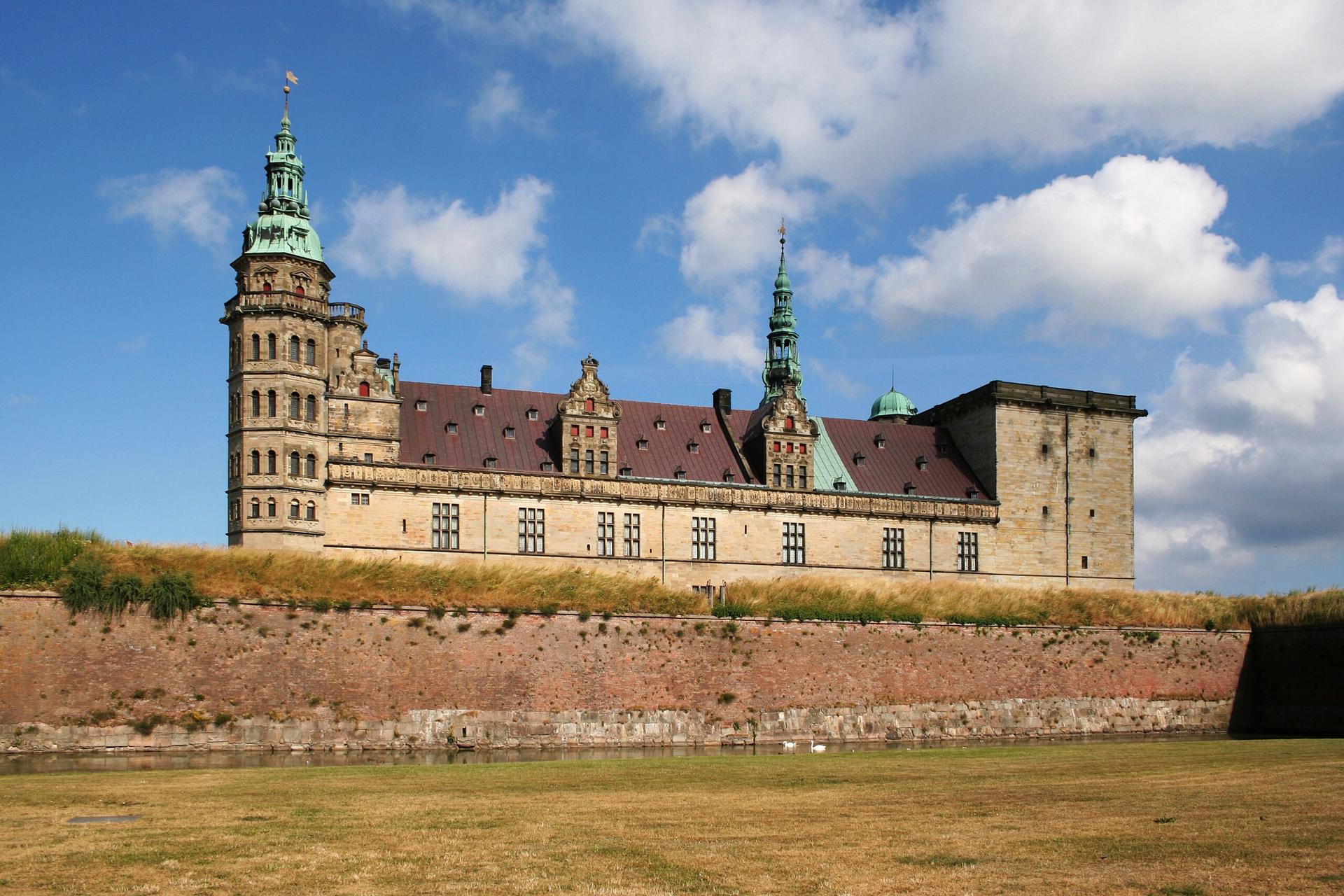
Explore North Zealand, Denmark's enchanting region of castles, beaches, and royal estates, perfect for history buffs, nature enthusiasts, and seaside lovers.
Tell me more about North Zealand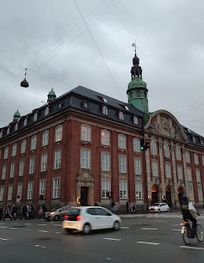
A majestic neo-Baroque landmark intertwining Denmark’s postal history with Vesterbro’s vibrant urban fabric, located beside Copenhagen’s bustling central railway station.

Explore contemporary art in a historic neoclassical villa at Møstings Hus, Frederiksberg's cultural gem.