Slaggård Banke Travel Guide
Free Guide: Bronze Age burial mounds on a quiet Jutland ridge, with gentle trails, far-reaching views and a nearby stargazing shelter for atmospheric nights under the sky.


A brief summary of Slaggård Banke
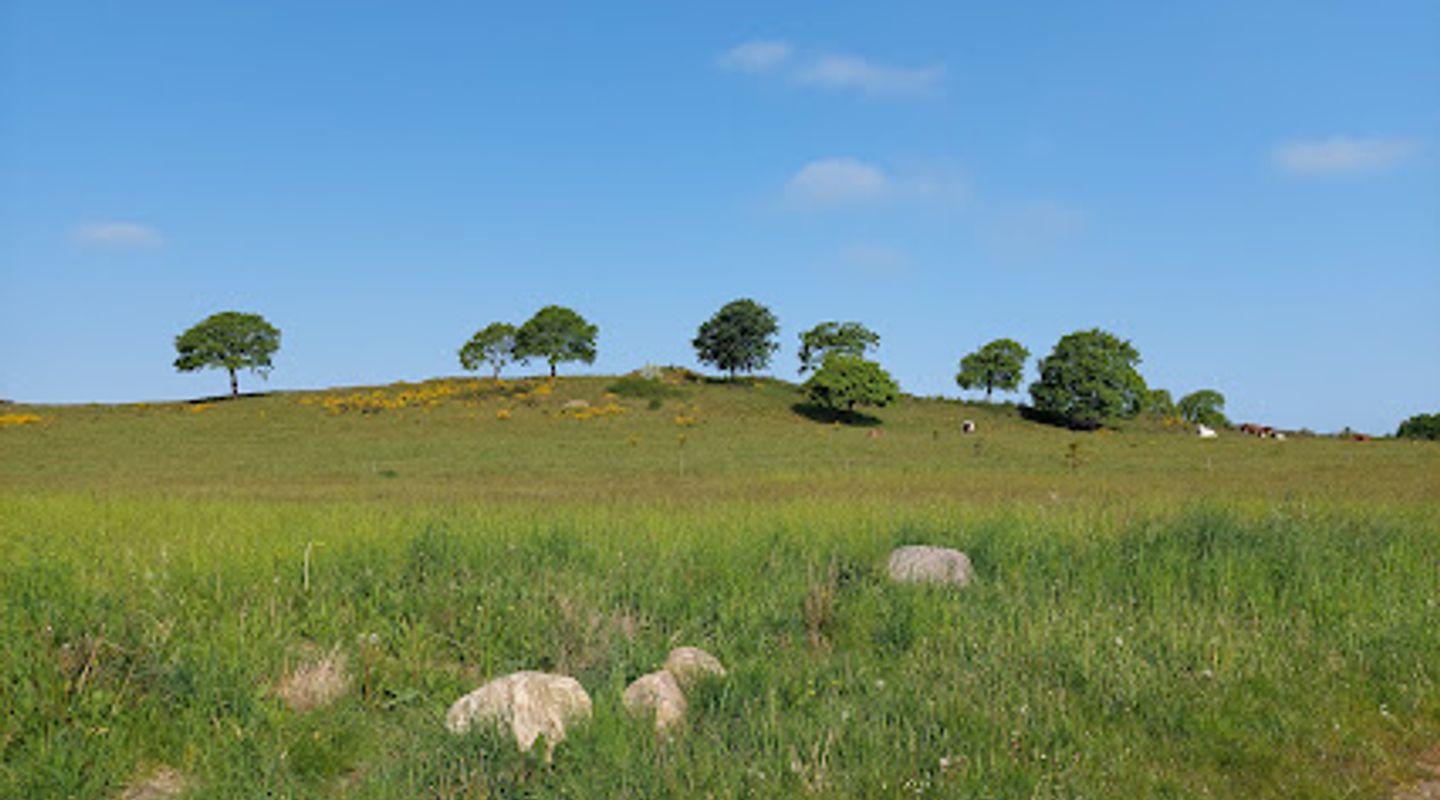
Bronze Age burial mounds on a quiet Jutland ridge, with gentle trails, far-reaching views and a nearby stargazing shelter for atmospheric nights under the sky.
Slaggård Banke, just outside Østbirk in Central Jutland, is a gently rolling ridge strewn with Bronze Age burial mounds, open fields and pockets of woodland. This protected cultural landscape combines quiet walking trails, far-reaching views toward the Gudenå valley and a palpable sense of prehistory. Simple waymarked paths, a distinctive shelter-and-stargazing tower nearby and scattered information boards make it a rewarding stop for nature lovers and history-minded walkers alike.
On-site amenities
 Seating areas
 Information boards
 Trash bins
Opening hours
- Every dayOpen 24 hours
Opening hours as listed on the venue’s Google Business Profile. Hours can change for services and special events, so check with the venue before you go.
- Address
- Naldalvej 5, 8752 Østbirk
- Website
Getting there
Car from Horsens
Regional bus from Horsens
Cycling from Østbirk and surroundings
Discover more about Slaggård Banke
Ancient Ridge Above the Jutland Farmland
Slaggård Banke rises as a long, undulating ridge south of Vestbirk and east of the Gudenå valley, its profile marked by rounded Bronze Age burial mounds that punctuate the skyline. Standing here, you look out over patchwork fields, hedgerows and farmsteads, with the ridge itself forming a natural stage for thousands of years of human activity. The landscape feels both modest and monumental: low hills under a big sky, yet layered with the weight of time.The banke is part of a wider old cultural environment where agriculture, ancient monuments and later forest planting coexist. Grassy paths and farm tracks weave between open slopes and small groves, revealing new angles on the mounds and the surrounding countryside as you walk.
Bronze Age Barrows and Stories of the Dead
The rounded humps crowning Slaggård Banke are prehistoric barrows, raised some 3,000 years ago as burial places for local elites. Their position on the ridge was no accident: elevated ground symbolised status and ensured that the dead remained visible to the living, watching over routes that once threaded through this part of Jutland.Although the individual graves are closed to visitors, their forms tell a clear story. Some mounds stand singly on small knolls, others group together like a silent family above the fields. A few show subtle signs of old excavations, reminders of early antiquarian interest and the fragile nature of such sites, which today are protected under heritage law.
Walking Through Woods, Meadows and Art
Slaggård Banke is best experienced on foot. Waymarked trails lead through light woodland, across meadow-like clearings and along the crest of the ridge, with gentle gradients that suit most walkers. Underfoot, surfaces shift between grass, soil and occasionally gravel, and in wet weather the low-lying patches can feel soft and muddy.In some sections, local art initiatives have placed sculptural pieces and playful interventions in the forest, giving the walk a subtle, open-air gallery character. A curve in the path might suddenly frame a mound between tree trunks, or a clearing may reveal both a barrow and an artwork sharing the same quiet space.
Night Skies and the Stargazing Shelter
Close to the ridge, a two-storey shelter doubles as a small stargazing tower, offering a simple yet imaginative way to stay overnight in the landscape. Built in timber and tucked into the terrain, it provides basic sleeping platforms and an upper level where openings frame the night sky.On clear evenings, light pollution is low enough that constellations, planets and sometimes the hazy band of the Milky Way become part of the experience. Owls, rustling leaves and distant farm sounds become the soundtrack, while the silhouettes of the barrows fade into darkness below.
Seasonal Moods and Subtle Wildlife
The character of Slaggård Banke shifts gently with the seasons. Spring brings fresh beech leaves, birdsong and wildflowers along the ditches. Summer paints the fields in gold and green, with heat shimmering over the mounds. In autumn, mist clings to the valley while the ridge breaks into sunlight, the trees glowing in copper and rust tones. Winter strips the landscape back to its contours, making the shape of each barrow especially clear.Birdlife is present more by sound than spectacle: skylarks above the fields, finches in hedges, occasional birds of prey circling on thermals. Small mammals, insects and a variety of grasses and wild plants add to the quiet richness of this semi-managed, semi-wild environment.
A Quiet Pause in Central Jutland
Despite its deep history, Slaggård Banke remains an understated place. There are few built facilities beyond information signs, simple seating in spots, and the shelter area further along the ridge. This low-key setup suits the site: the lack of noise and commercial activity amplifies the sense of stepping briefly outside everyday life.For many visitors, the appeal lies in combining a short, contemplative walk with a picnic or a longer ramble linking nearby woods and streams. Whether you come for archaeology, views or just a peaceful hour in the open, the ridge offers a compact but evocative window into Denmark’s prehistoric heartland.
Evendo Review Centre
 Google
Guest reviews
Best time to go
Quietest: Jan, Feb & Mar · before 8am or at 8pm
Busy times are Evendo estimates for a typical year, to help you plan. Actual crowds vary with events, school holidays and the weather.
Explore Slaggård Banke on the map
A handpicked selection of must-see spots near Slaggård Banke, mapped for you.
Get your free copy of our complete guide to Slaggård Banke, delivered straight to you.
Everything on this page, from opening hours and how to get there to Eve’s tips and the best time to go, in one PDF you can read offline, print or share.
Already have an account? Sign in
Your Slaggård Banke guide is ready.
We'll send it to · Not you? Sign out

Getting your guide ready…
We are putting together a fresh copy of the Slaggård Banke guide. This can take up to a minute.
This can take a few moments. If your browser asks, choose Allow so the download can start. You'll find the guide in your Downloads folder.
Nothing happened? Download it again
Sorry, the guide is taking longer than usual. Please try again in a minute, or get it by email instead.
Other nearby places you may find interesting
The closest places of the same kind, if this one is not quite what you had in mind.
-
Tidselkorridoren A winding botanical art corridor celebrating Samsø's wildflowers and native plants.
-
Vesborg Fyr Historic lighthouse on Samsø’s southwestern tip, blending medieval ramparts, sweeping sea views and classic Danish coastal atmosphere in one compact headland.
-
Falkecenter Samsø ApS High‑speed falcons, soaring eagles and silent owls in a one‑hour open‑air show that brings the ancient art of falconry to life on the island of Samsø.
-
Ballebjerg Samsø’s highest hill, crowned by a 1920 watchtower and wrapped in wide Kattegat horizons, offering simple, far-reaching views over fields, sea and islands.
-
Samsø Labyrinten Lose yourself in the world’s largest labyrinth, where quiz questions guide you through 5.5 km of leafy paths, hidden goals, play areas and tranquil island nature.
Swipe for more places
More to explore near Slaggård Banke

 Best experiences near Slaggård Banke
 Best hotels near Slaggård Banke
 Best landmarks near Slaggård Banke
 Best attractions near Slaggård Banke
 Best shops near Slaggård Banke
 Best restaurants near Slaggård Banke
 Best bars near Slaggård Banke
Do you manage this location?
Take control to get all the benefits, like improved information, better appearance, and stronger visibility across AI-powered discovery.
Explore more
Explore more of Samsø
Samsø: Explore Denmark's eco-friendly island, rich in natural beauty, culinary delights, and cultural heritage.
Explore Samsø
Explore more of Denmark
Discover Denmark: A perfect blend of history, modern design, and the cozy concept of hygge. Explore vibrant cities, serene landscapes, and world-class cuisine.
Explore Denmark