Skagen Bunker, Skagen Travel Guide
Explore a former German WWII hospital bunker in Skagen’s dunes, where dense exhibits and raw concrete bring the Atlantic Wall and Denmark’s wartime story to life.
Half-buried in the dunes near Grenen, Skagen Bunker is a former German Second World War hospital bunker now transformed into a compact, atmospheric war museum. Built as part of the Atlantic Wall and of the Regelbau 638 type, it was designed to treat wounded soldiers but never used as an infirmary. Today it’s fitted out with operations rooms, bunks, uniforms, weapons, documents and film, offering a stark, tangible glimpse into Denmark’s wartime history amid windswept North Jutland scenery.
A brief summary to Skagen Bunker
- Fyrvej, Skagen, 9990, DK
- Duration: 0.5 to 1.5 hours
- Budget
-
 Mixed
Mixed
- Mobile reception: 4 out of 5

Know before you go
Hi, I'm Eve. Here are a few practical things to know before exploring Skagen Bunker.
- Bring a light jacket even in summer; the bunker interior stays noticeably cool and the surrounding dunes are often windy.
- Allow extra time to wander among the nearby bunkers in the dunes after your museum visit for a fuller sense of the wartime landscape.
- Check seasonal opening hours in advance, as the museum generally operates from spring to autumn with shorter winter holiday periods.
- Watch your step inside: corridors are narrow, lighting is subdued and some floors and thresholds are uneven or slightly sloping.
Do you manage this location?
Take control to get all the benefits, like improved information, better appearance, and stronger visibility across AI-powered discovery. Learn more about listing your business on Evendo
Activate your presenceOther nearby places you may find interesting
The closest places of the same kind, if this one is not quite what you had in mind.

Explore Skagen Bunker on the Map
A handpicked selection of must-see spots near Skagen Bunker, mapped for you.
Unlock the Best of Skagen Bunker
Buy tickets
-
No tickets available
Book tours with entry


Book tours without entry

Getting There
-
Local bus and short walk from central Skagen
From central Skagen, use the local bus service that runs toward Grenen and the northern beaches; buses typically reach the area in about 10–15 minutes and operate more frequently in summer than in winter. A single ticket within the town zone is usually in the range of 20–40 DKK, purchasable by card or app. From the nearest stop, expect a level walk on paved or compacted paths across the dunes, taking around 10–20 minutes at a relaxed pace. The terrain is generally easy but can feel exposed in strong winds.
-
Bicycle from Skagen town
Cycling from the centre of Skagen to the bunker follows well-used cycle-friendly roads and paths toward Grenen, with the journey typically taking 15–25 minutes depending on your pace. Standard city bike rentals in Skagen generally cost in the region of 80–150 DKK for a day, with helmets and locks often included. The route is mostly flat but can be tiring in headwinds, and in high season you will share space with other cyclists and pedestrians near the dunes, so moderate traffic awareness is needed.
-
Car or taxi within Skagen area
If you travel by car or taxi from within Skagen, the drive toward Grenen is short, usually 10–15 minutes depending on congestion during summer. Taxi fares within town for such a distance commonly fall in the range of 120–220 DKK, varying with time of day and any waiting time. Parking areas near the dunes can become busy in peak months, and some zones may have time limits or seasonal fees, so factor in a few extra minutes to find a suitable legal space before continuing on foot across the sand.
For the on-the-go comforts that matter to you
-
 Restrooms
-
 Drink Options
-
 Drinking Water
-
 Food Options
-
 Seating Areas
-
 Trash Bins
-
 Information Boards
-
 Visitor Center
Discover more about Skagen Bunker
Wartime Stronghold at Denmark’s Northern Tip
Skagen Bunker sits in the dunes close to Grenen, where the Skagerrak and Kattegat seas meet, on the wind-lashed tip of Jutland. During the Second World War this remote headland was strategically crucial, guarding the busy shipping routes between the North Sea and the Baltic. The occupying German forces folded it into the vast Atlantic Wall, a chain of coastal defences stretching from France to Norway.Here they established the Skagen infantry strongpoint, codenamed “Hamburg”, with radar installations and dozens of bunkers scattered through sand and heath. The concrete structure you visit today was part of this fortified landscape, hidden in the dunes yet wired into a much larger defensive system watching the seas and skies.A Hospital Bunker That Never Treated Patients
The museum occupies a Regelbau 638 bunker, a standardized design intended as a sanitary bunker for wounded soldiers. Thick reinforced walls, narrow corridors and heavy blast doors were conceived to keep patients and medical staff safe from bombardment. Inside, treatment rooms, bunks and storage niches were laid out to function as a self-contained underground clinic.Although the bunker was equipped for medical use, it apparently never received casualties. The war ended before it was tested in combat conditions. This oddity gives the space a slightly frozen-in-time quality: a facility planned for a reality that never quite materialized, yet still steeped in the tensions of the period.Inside the Concrete Shell
Today the dim interior has been refitted as a small but dense war museum. Low ceilings and cool air frame displays of uniforms, helmets and field gear from German forces stationed along the coast. Weapons and equipment trace the technology of occupation, from rifles and machine guns to communications devices.An operations room recreates the feel of a working bunker, with maps, instruments and paperwork suggesting how the strongpoint was coordinated. In a compact film room, archival footage and photographs provide broader context on the Atlantic Wall and Skagen’s role within it. Written information and brochures in multiple languages help decode the artefacts and layout.Landscapes of Sand, Sea and Concrete
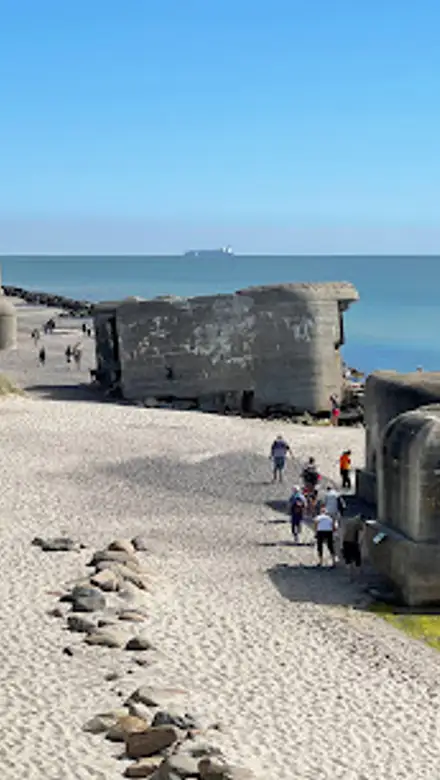
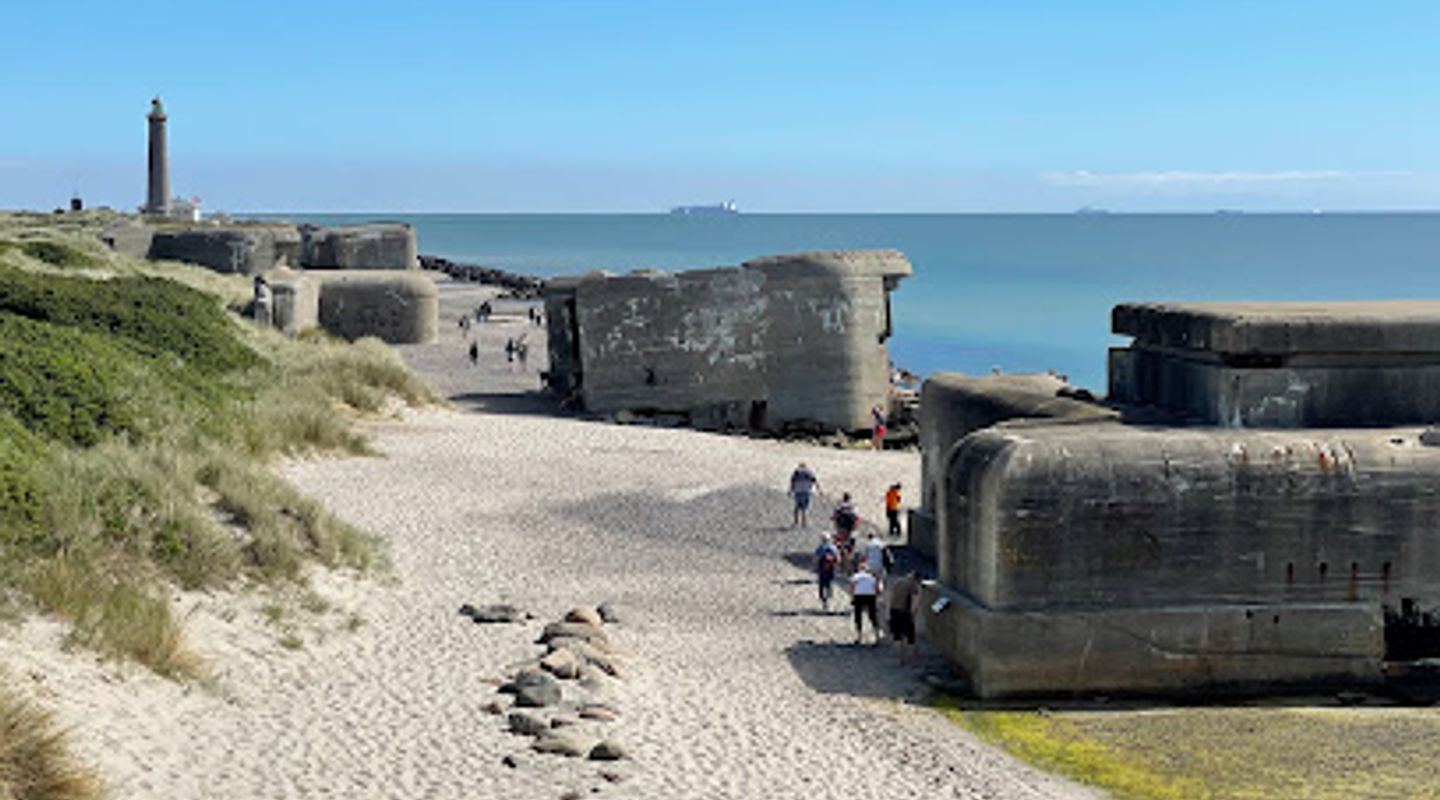
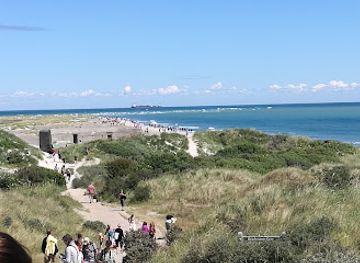
Stepping back outside, the surroundings are as much a part of the experience as the bunker itself. The structure lies amid rolling dunes, coarse grasses and distant sea views, in a landscape constantly reshaped by wind and sand. Scattered nearby, other wartime bunkers sink slowly into the terrain, some partly exposed, others almost swallowed.From the dunes you can sense why this headland mattered militarily: ships lining up in the distance, open horizons, and the narrow passage to the Baltic beyond. The contrast between raw nature and cold concrete creates a striking atmosphere, especially in clear, blustery weather when the elements feel as insistent as they did eight decades ago.Practical Visit and Seasonal Rhythm
Skagen Bunker operates as a private museum with seasonal opening, typically open daily from spring to autumn, often around late morning to mid-afternoon, with extended hours in high summer. Admission is paid, with adult tickets in a modest range and discounts for children and concessions, reflecting its volunteer-driven character.Most visits last under an hour, leaving time to explore the wider dune area and other visible bunkers on foot. Space inside is tight, corridors are narrow and floors can be uneven, so moving carefully is important. Combined with nearby coastal paths and beaches, a stop at the bunker fits easily into a broader day exploring Skagen’s meeting-of-the-seas landscapes and maritime history.Memory, Interpretation and Reflection
Beyond objects and diagrams, the site invites quiet reflection on occupation, defence and the daily realities of war at the edge of Europe. In the compact rooms it is easy to imagine long shifts underground, the weight of concrete overhead and the watchful focus on radar screens and sea traffic.Because the bunker survived largely intact, it serves both as a historical document and a physical reminder of a period that reshaped Denmark. Standing between the exhibits indoors and the windswept dunes outside, you bridge past and present: a short, intense visit that adds depth to any journey to Skagen’s far northern shore.












Your all‑in‑one travel companion app
Explore expert travel guides, compare and book tours, experiences, hotels, and more—all from the palm of your hand. Download now for seamless trip planning wherever your wanderlust takes you.


Explore More of Skagen
Looking beyond Skagen Bunker? Discover Skagen for broader travel guides, local hot-spots, and regional highlights.
Explore Skagen
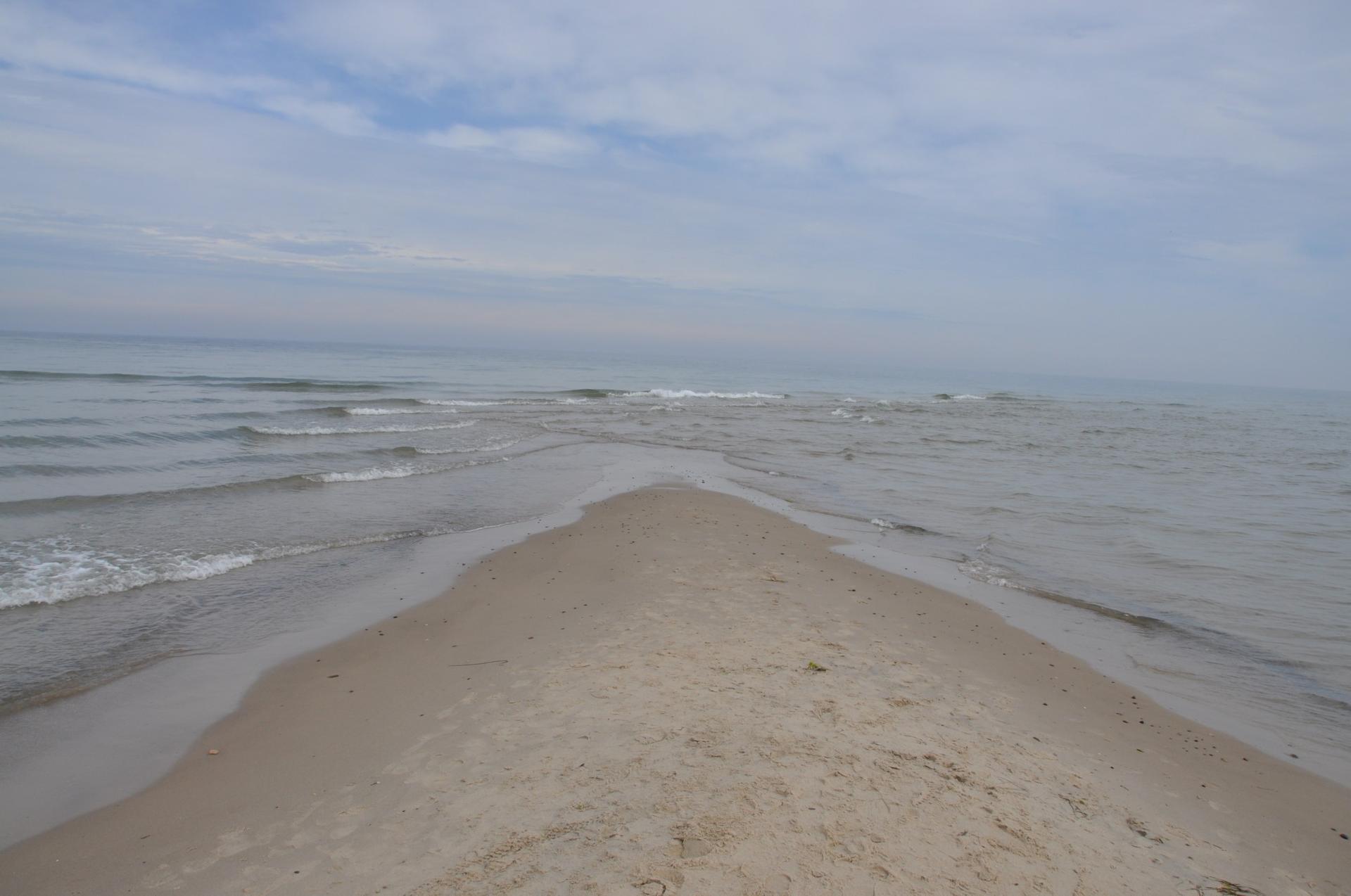
Walk to the narrow tip of Denmark’s sandy branch at Skagen, where Skagerrak and Kattegat collide in foaming waves and wild North Sea light.
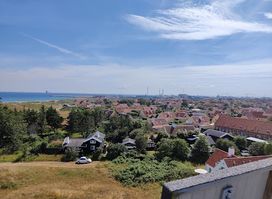
Historic brick lighthouse turned exhibition space, Det Hvide Fyr stands above Skagen’s dunes as a serene maritime landmark of light, history and wide coastal views.