Vippefyret, Skagen Travel Guide
Free Guide: A simple wooden beacon with a tilting fire basket, Vippefyret turns Skagen’s windswept dunes into a vivid window onto centuries of coastal navigation and seafaring risk.


A brief summary of Vippefyret
A simple wooden beacon with a tilting fire basket, Vippefyret turns Skagen’s windswept dunes into a vivid window onto centuries of coastal navigation and seafaring risk.
Perched on a sandy rise above Skagen’s Sønderstrand, Vippefyret is a striking wooden tilting beacon – a faithful reconstruction of Denmark’s first ‘vippefyr’, originally erected here in 1627 to guide ships past the treacherous Skagen Reef. The simple timber frame and basket, once filled with burning material and tipped toward the sea, tell a vivid story of early coastal navigation. Today, the structure doubles as an atmospheric viewpoint, offering wide North Sea horizons, sea breeze, and a tangible link to Skagen’s maritime past, especially magical around midsummer when it is ceremonially lit.
On-site amenities
 Trash bins
 Information boards
 Seating areas
Opening hours
- Every dayOpen 24 hours
Opening hours as listed on the venue’s Google Business Profile. Hours can change for services and special events, so check with the venue before you go.
- Address
- Fyrstuevej 17, 9990 Skagen
Getting there
Walking from central Skagen
Bicycle within Skagen town
Car or taxi from wider Skagen area
Discover more about Vippefyret
A wooden lighthouse that once swung fire over the sea
Vippefyret is one of Skagen’s most distinctive silhouettes: a tall wooden frame with a long arm balancing a metal basket, poised as if about to tip a fire out toward the waves. The design is deceptively simple. In the age before modern lenses and electric bulbs, a blazing basket of combustible material – often coal or wood – was hoisted at the seaward end and literally “tilted” up to send its glow far across the dark waters. Lowered to be refuelled, raised again to warn ships, it was a crucial lifeline for sailors groping their way around the dangerous point of Jutland.The original beacon here was part of a wider push by the Danish crown in the 16th and 17th centuries to make the kingdom’s waters safer. By the early 1600s, the Skagen area had earned a fearsome reputation for groundings and wrecks on the shifting reefs off Grenen. A dedicated vippefyr in 1627 brought a simple but highly visible signal to this vulnerable stretch of coast, and similar tilting lights soon appeared elsewhere along strategic routes.
Reconstructed with care, but rooted in 1627
The structure you see today is not the original, but a meticulously researched reconstruction. Over the centuries, wooden beacons were vulnerable to storms, wear, and fire. Skagen’s first tilting light eventually disappeared, but its form and function survived in drawings and written descriptions. In the early 20th century, as Skagen marked a major town anniversary, local artists and enthusiasts championed a project to rebuild the beacon as a tribute to the region’s seafaring heritage.A first replica stood only briefly, yet the idea took hold that Skagen’s skyline needed its old landmark back. The present Vippefyret dates from the mid-20th century and was erected with strong local involvement. Its proportions and mechanics are designed to match what would have stood here in the 1600s, preserving the look and working principle rather than turning it into a modernized monument. The result feels more like a piece of functional equipment paused in time than a decorative sculpture.
Sea air, sand paths and open horizons
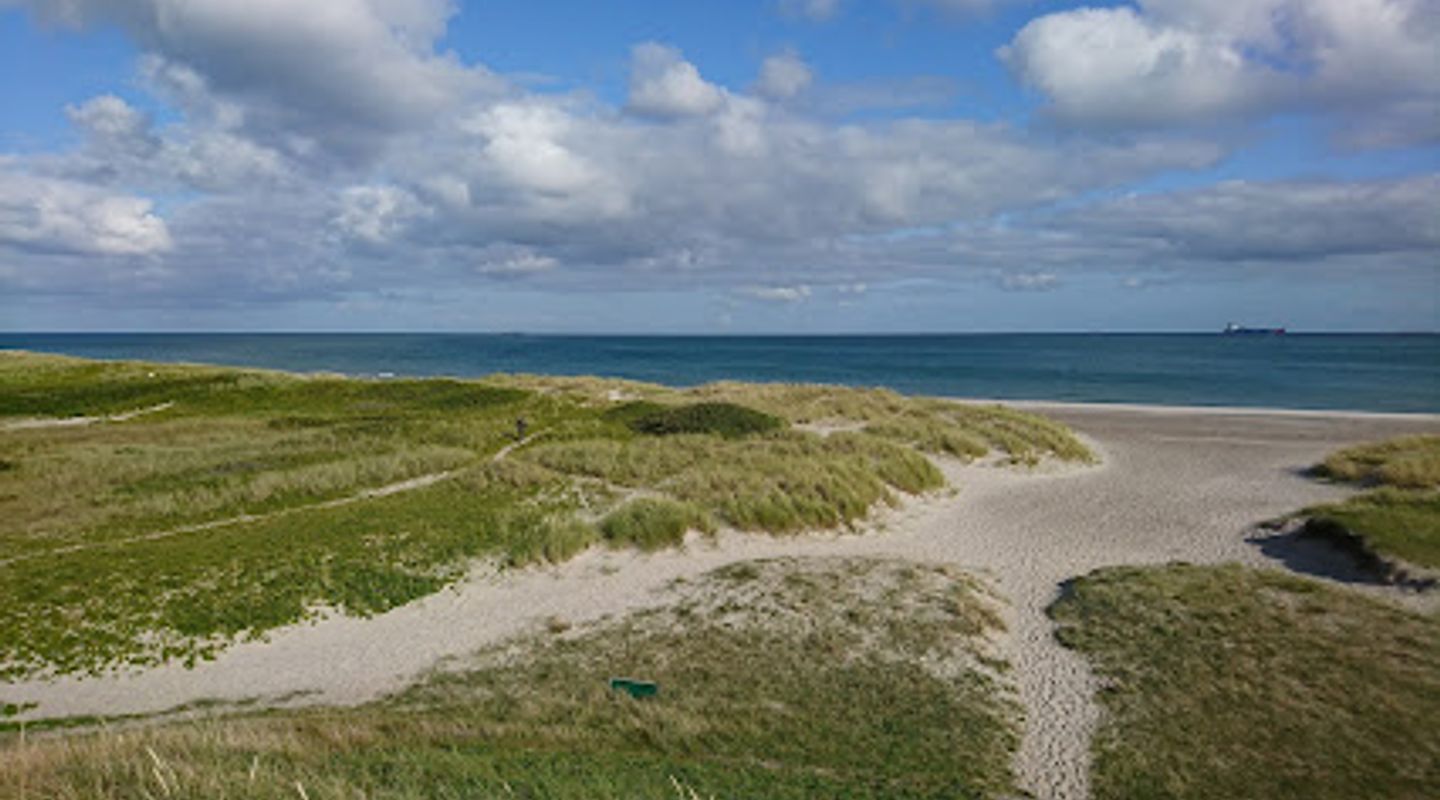
Vippefyret stands just beyond the built-up town, on low dunes overlooking Sønderstrand and the approaches to the harbour. Underfoot, sandy paths thread through tufts of marram grass, while the wind often carries a mix of salt spray and the faint tang of tar and rope from Skagen’s working waterfront. From the beacon’s base you get broad views: to one side the old harbour area and red-roofed houses; to the other, the open sweep of shore that leads toward Grenen’s famous meeting of seas.The site is compact, so you can walk all around the structure and study its details: the hefty timber uprights, the ironwork supporting the basket, the counterweights that allow the arm to tilt. It is an easy place to pause, sit on the nearby sand or low grass, and simply watch the shifting light on the water as ships pass at a safe distance – thanks in part to centuries of navigational improvements that this humble design helped pioneer.
Midsummer fire and a living maritime symbol
On evenings around midsummer, Vippefyret takes on its most atmospheric role. For the Sankt Hans celebrations, a Danish tradition marking the height of summer, the beacon is ceremonially lit, echoing the nights when it burned as a true navigational aid. Below on the beach, bonfires and gatherings make the shoreline glow, and the beacon’s arm, raised against a northern twilight, becomes a reminder of how closely local life has always been tied to the sea.Even outside festival times, the beacon serves as a quiet emblem of Skagen’s identity. Artists have long been drawn to its simple geometry and weathered surfaces, framing it against stormy skies or calm pastel sunsets. For visitors, it offers a concise introduction to the area’s maritime story: a single, sculptural object that encapsulates centuries of risk, ingenuity, and adaptation along one of Denmark’s most challenging coasts.
Short, atmospheric stop in a wider Skagen walk
Most visits to Vippefyret are brief. There is no interior to tour, and its story can be absorbed in a short stop. Yet its location encourages you to linger, combining it with a stroll along the beach or a wider loop taking in Skagen’s harbour and historic quarters. Because it is freely accessible at all hours, you can time your visit for soft morning light, a blustery midday, or the golden calm before the northern twilight.Whether you are tracing the evolution of lighthouses, following in the footsteps of Skagen’s artists, or simply looking for an easy coastal viewpoint, this modest wooden beacon earns its place on the itinerary. Standing beside it in the wind, it is easy to imagine the relief of sailors who once spotted its swinging fire – and knew they had cleared one of the North Sea’s most treacherous corners.
Evendo Review Centre
 Google
Guest reviews
Best time to go
Quietest: Jan, Feb & Mar · before 3am
Busy times are Evendo estimates for a typical year, to help you plan. Actual crowds vary with events, school holidays and the weather.
Explore Vippefyret on the map
A handpicked selection of must-see spots near Vippefyret, mapped for you.
Get your free copy of our complete guide to Vippefyret, delivered straight to you.
Everything on this page, from opening hours and how to get there to Eve’s tips and the best time to go, in one PDF you can read offline, print or share.
Already have an account? Sign in
Your Vippefyret guide is ready.
We'll send it to · Not you? Sign out

Getting your guide ready…
We are putting together a fresh copy of the Vippefyret guide. This can take up to a minute.
This can take a few moments. If your browser asks, choose Allow so the download can start. You'll find the guide in your Downloads folder.
Nothing happened? Download it again
Sorry, the guide is taking longer than usual. Please try again in a minute, or get it by email instead.
Other nearby places you may find interesting
The closest places of the same kind, if this one is not quite what you had in mind.
-
-
-
-
-


Swipe for more places
More to explore near Vippefyret

 Best experiences near Vippefyret
 Best hotels near Vippefyret
 Best landmarks near Vippefyret
 Best attractions near Vippefyret
 Best shops near Vippefyret
 Best restaurants near Vippefyret
 Best bars near Vippefyret
Do you manage this location?
Take control to get all the benefits, like improved information, better appearance, and stronger visibility across AI-powered discovery.
Explore more
Explore more of Skagen
Discover Skagen, Denmark's northernmost town, where two seas meet, artists find inspiration, and nature's beauty is unparalleled.
Explore Skagen
Explore more of Denmark
Discover Denmark: A perfect blend of history, modern design, and the cozy concept of hygge. Explore vibrant cities, serene landscapes, and world-class cuisine.
Explore Denmark