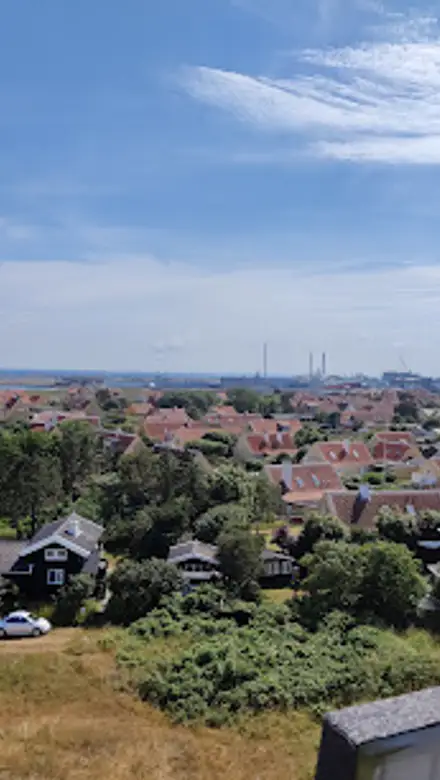
Det Hvide Fyr, Skagen Travel Guide
Free Guide: Historic brick lighthouse turned exhibition space, Det Hvide Fyr stands above Skagen’s dunes as a serene maritime landmark of light, history and wide coastal views.


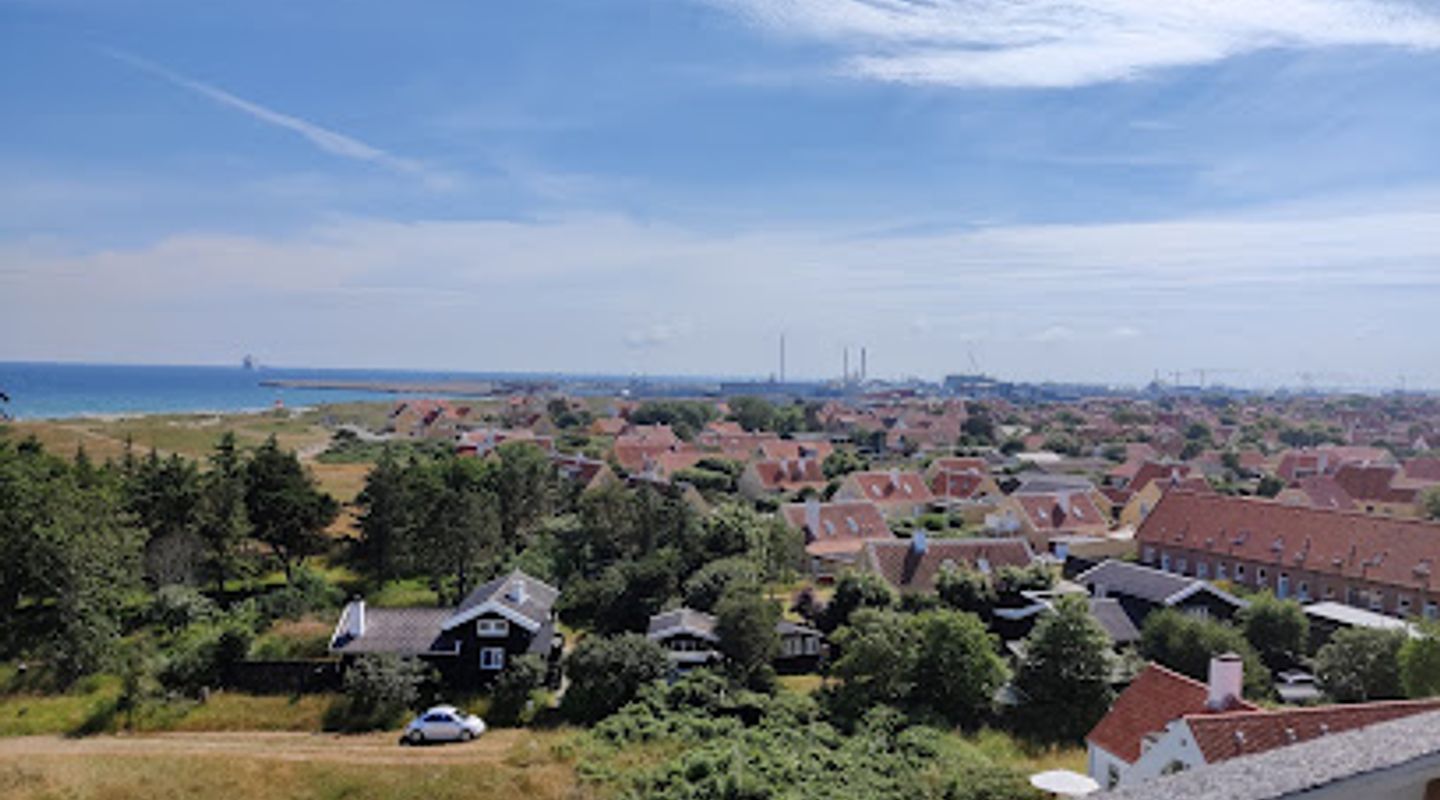
A brief summary of Det Hvide Fyr
Historic brick lighthouse turned exhibition space, Det Hvide Fyr stands above Skagen’s dunes as a serene maritime landmark of light, history and wide coastal views.
Det Hvide Fyr, Skagen’s White Lighthouse, rises from the dune landscape just north of town as Denmark’s oldest brick lighthouse, first lit in 1747 and designed by architect Philip de Lange. The 21 m octagonal tower once guided ships around the treacherous Skagen Odde with coal fires and later rapeseed oil, before being replaced by Det Grå Fyr in 1858. Today it serves as a quiet, atmospheric exhibition space and vantage point over sea, dunes and endless sky.
On-site amenities
 Information boards
 Trash bins
 Seating areas
- Address
- Fyrvej 2, 9990 Skagen
- Phone
- Website
Getting there
Walking from central Skagen
Local bus within Skagen area
Taxi from Skagen station or harbour
Discover more about Det Hvide Fyr
An historic beacon at the edge of Denmark
Det Hvide Fyr stands on the sandy ridge just north of Skagen, where the North Sea and the Kattegat begin to feel close at hand. Built in 1747, it was Denmark’s first lighthouse constructed in brick and a statement of maritime ambition in an age when safe passage around Skagen Odde was crucial to long-distance trade. The lighthouse was designed by Philip de Lange, one of the leading architects of the time, who gave it its characteristic octagonal form and sturdy, compact profile.From its position near the junction of Fyrvej and Batterivej, the 21‑metre tower once dominated a low, windswept landscape. Even today, with dunes and summer houses in the wider area, it still reads as a solitary sentinel. Its height and exposed setting allowed its light to be seen far out at sea, reassuring captains that they had reached the northern tip of Jutland and warning them of the shoals and moving sands offshore.
From red brick tower to whitewashed landmark
Although now known as the White Lighthouse, the tower began its life in raw red brick. The masonry was left exposed for several decades, before being whitewashed in the early 19th century. The limewash both protected the bricks from salt-laden winds and transformed the lighthouse into a bright daytime seamark, easily spotted against the horizon. Over time this stark, light-reflecting surface became part of its identity, tying it visually to Skagen’s white churches and houses.The tower’s appearance changed only subtly over the centuries, even as its surroundings shifted. Paths were worn into the dunes, defensive batteries vanished, and new, taller lighthouses arrived further out on the spit. Yet Det Hvide Fyr retained its compact elegance, with narrow window openings cutting into the thick walls and a simple lantern structure crowning the top. In 1960 it was carefully restored to an earlier form, underlining its value as a piece of national maritime heritage.
Coal fires, oil lamps and evolving lighthouse technology
When Det Hvide Fyr first shone to sea, the light came from an open coal fire on the top platform. Coal was hoisted up through an internal shaft and burned in a basket, sending up smoke and sparks that were visible in bad weather as well as clear nights. It was hard, dirty work for the keepers, who had to manage the fire in all conditions and ensure a constant glow for passing ships.By 1835, advances in optics and fuels brought major changes. The coal fire was replaced by rapeseed oil lamps, while parabolic mirrors concentrated and directed the beam, greatly increasing range and efficiency. This shift reflected broader innovations along the Danish coast, as the kingdom professionalised its lighthouse service to better protect both national and international shipping. Det Hvide Fyr stood at the forefront of that story until 1858, when the taller Det Grå Fyr further north took over as the principal light.
Signal station and stories of the Skagen coast
The end of its role as a primary lighthouse did not spell retirement for the tower. From 1871, Det Hvide Fyr was used as a signal station, transmitting information about ice and missing lightships to vessels on the busy routes around Skagen. Flags, signal lamps and later radio equipment kept the tower relevant in an era when communication at sea was changing almost as rapidly as navigation.These years also added layers of human story to the building: watchmen scanning the horizon in winter storms, coded messages about drifting ice fields, and the constant tension of knowing that a wrong decision could have consequences for ships far out of sight. Inside the thick walls, the rooms that once housed lighthouse keepers adapted to their new function but retained the plain, purposeful character of maritime service architecture.
Today’s quiet exhibition space by the dunes
In modern times the light has long been extinguished, but Det Hvide Fyr has found a new life as an exhibition venue managed by the local municipality. The simple interiors lend themselves to art shows and cultural events, where contemporary works meet an 18th‑century shell. Depending on the current programme, you may find painting, photography or installations that echo the themes of light, weather and the sea outside.Even without an exhibition, the tower and its immediate surroundings invite unhurried exploration. The low dunes around the base provide sheltered spots to sit, and on breezy days you can hear the surf while watching the sky change over the flat horizon. From the upper levels, when accessible, views stretch across Skagen’s roofs, out towards Det Grå Fyr and along the coastline that made this modest white tower so important in the history of Danish navigation.
Evendo Review Centre
 Google
Guest reviews
Best time to go
Quietest: Jan, Feb & Nov · before 6am or from 9pm
Busy times are Evendo estimates for a typical year, to help you plan. Actual crowds vary with events, school holidays and the weather.
Explore Det Hvide Fyr on the map
A handpicked selection of must-see spots near Det Hvide Fyr, mapped for you.
Get your free copy of our complete guide to Det Hvide Fyr, delivered straight to you.
Everything on this page, from opening hours and how to get there to Eve’s tips and the best time to go, in one PDF you can read offline, print or share.
Already have an account? Sign in
Your Det Hvide Fyr guide is ready.
We'll send it to · Not you? Sign out

Getting your guide ready…
We are putting together a fresh copy of the Det Hvide Fyr guide. This can take up to a minute.
This can take a few moments. If your browser asks, choose Allow so the download can start. You'll find the guide in your Downloads folder.
Nothing happened? Download it again
Sorry, the guide is taking longer than usual. Please try again in a minute, or get it by email instead.
Other nearby places you may find interesting
The closest places of the same kind, if this one is not quite what you had in mind.
-
-
-
-
-


Swipe for more places
More to explore near Det Hvide Fyr

 Best experiences near Det Hvide Fyr
 Best hotels near Det Hvide Fyr
 Best landmarks near Det Hvide Fyr
 Best attractions near Det Hvide Fyr
 Best shops near Det Hvide Fyr
 Best restaurants near Det Hvide Fyr
 Best bars near Det Hvide Fyr
Do you manage this location?
Take control to get all the benefits, like improved information, better appearance, and stronger visibility across AI-powered discovery.
Explore more
Explore more of Skagen
Discover Skagen, Denmark's northernmost town, where two seas meet, artists find inspiration, and nature's beauty is unparalleled.
Explore Skagen
Explore more of Denmark
Discover Denmark: A perfect blend of history, modern design, and the cozy concept of hygge. Explore vibrant cities, serene landscapes, and world-class cuisine.
Explore Denmark