
Hanstholm fortress, North Jutland Travel Guide
Northern Europe’s largest WWII coastal fortress, where colossal guns, concrete bunkers and wild North Sea dunes meet on the windswept edge of Denmark.
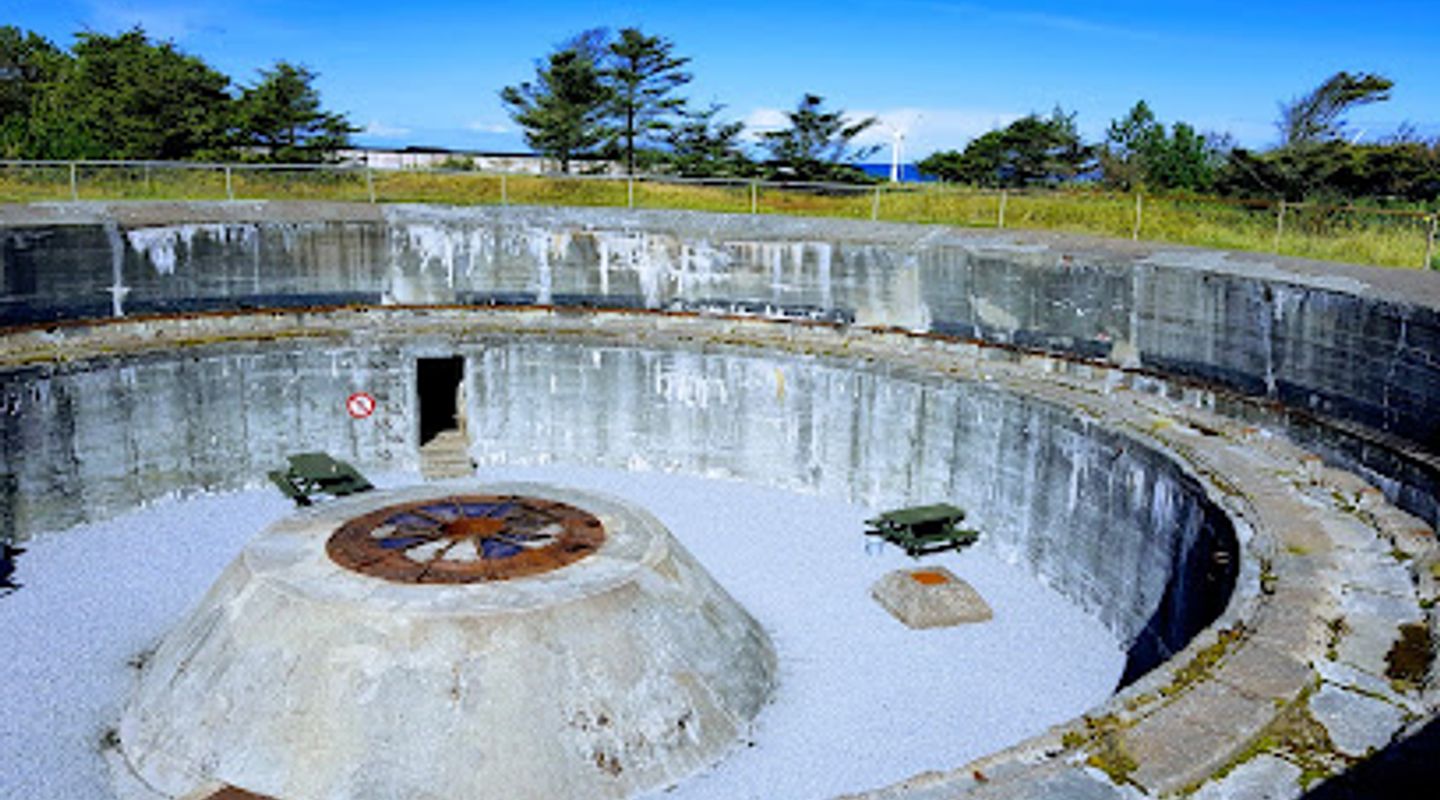
Hanstholm Fortress, home to Bunker Museum Hanstholm, is Denmark’s largest bunker museum and part of Northern Europe’s most powerful WWII coastal fortification. Built in 1941 as a key link in the Atlantic Wall, the complex once hosted four 38 cm naval guns and more than 3,000 troops guarding the Skagerrak. Today you can explore a 2,500 m² bunker, an immersive documentation centre, a historic ammunition train and an open-air landscape dotted with bunkers on the edge of Thy National Park.
A brief summary to Hanstholm fortress
- Molevej 29, Hanstholm, 7730, DK
- Click to display
- Click to display
- Duration: 1.5 to 4 hours
- Mid ranged
-
 Mixed
Mixed
- Mobile reception: 4 out of 5
- Monday 10 am-5 pm
- Tuesday 10 am-5 pm
- Wednesday 10 am-5 pm
- Thursday 10 am-5 pm
- Friday 10 am-5 pm
- Saturday 10 am-5 pm
- Sunday 10 am-5 pm

Know before you go
Hi, I'm Eve. Here are a few practical things to know before exploring Hanstholm fortress.
- Wear sturdy shoes and bring a light jacket: you will be walking on uneven bunker floors and sandy paths, and the North Sea wind can feel cool even in summer.
- Plan extra time for the outdoor areas and the Hanstholm 1 open-air battery; the indoor bunker alone can take over an hour if you read the exhibits carefully.
- Join a guided tour or introduction if available to get deeper context on the Atlantic Wall, the 38 cm guns and how the occupation shaped local life.
- Families should consider riding the museum ammunition train; it is short but very effective for understanding the size and function of the battery.
- Bring water and, in summer, sun protection; much of the open-air museum is exposed dunes with limited shade despite the cool coastal climate.
Do you manage this location?
Take control to get all the benefits, like improved information, better appearance, and stronger visibility across AI-powered discovery. Learn more about listing your business on Evendo
Activate your presenceOther nearby places you may find interesting
The closest places of the same kind, if this one is not quite what you had in mind.
Explore Hanstholm fortress on the Map
A handpicked selection of must-see spots near Hanstholm fortress, mapped for you.
Getting There
-
Car from Thisted
Driving from Thisted to Hanstholm Fortress typically takes around 30–35 minutes. The route follows main regional roads across flat, open countryside with clear signage toward Hanstholm. Parking at the museum is free, but spaces can fill up on busy summer days and during school holidays, when overflow parking may extend along the roadside. There are no tolls, and regular passenger cars are sufficient; only strong coastal winds and occasional rain require extra care.
-
Regional bus from Thisted
Regional buses connect Thisted and Hanstholm in about 40–55 minutes, with services generally running hourly on weekdays and less frequently in the evening and on weekends. A standard adult ticket for this regional journey usually costs in the range of 30–60 DKK depending on exact zone and ticket type. Buses stop in Hanstholm town; from there you should allow time for a walk on local pavements and gentle inclines to reach the museum. Check current timetables in advance, especially outside the summer season.
-
Car from Aalborg
From Aalborg, the drive to Hanstholm Fortress usually takes around 1 hour 45 minutes to 2 hours via well-maintained highways and regional roads through North Jutland. There are no road tolls on this route, and fuel is the main cost; budget roughly 150–250 DKK in fuel for a typical return trip in a standard rental car, depending on consumption and prices. The final stretch crosses exposed coastal terrain where wind and weather can change quickly, so allow extra time in poor conditions.
-
Cycling from Hanstholm town centre
Cycling from central Hanstholm to the fortress area is a practical option in good weather, generally taking 10–20 minutes along local roads with some gentle hills. There is no direct cost, and you can usually find informal places to leave a locked bicycle near the museum entrance. Be aware that coastal winds can be strong, especially from the west, making the ride more demanding, and winter conditions can be cold and wet, so appropriate clothing and lights are essential.
For the on-the-go comforts that matter to you
-
 Restrooms
-
 Drink Options
-
 Drinking Water
-
 Food Options
-
 Seating Areas
-
 Sheltered Areas
-
 Picnic Areas
-
 Trash Bins
-
 Information Boards
-
 Visitor Center
Discover more about Hanstholm fortress
A coastal fortress built to command the Skagerrak
Hanstholm Fortress was constructed by German forces in 1941 as part of the Atlantic Wall, a vast chain of defences stretching from Norway to France. Here at Denmark’s northwestern edge, the task was clear: to seal off the 120 km-wide entrance to the Skagerrak and keep the British fleet at bay. The battery at Hanstholm was paired with a sister battery in Kristiansand, Norway, creating a deadly crossfire zone over the sea lane.At its wartime peak the fortress covered roughly 9 square kilometres and housed more than 3,000 men. Four colossal 38 cm naval guns formed its core, each weighing around 110 tonnes and capable of firing shells up to 55 km out to sea, almost halfway to Norway. The sheer scale of the engineering leaves little doubt how strategically important this wind-battered headland once was.Life inside the 2,500 m² museum bunker
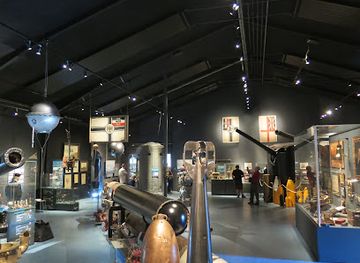
Today the heart of the site is a 2,500 m² bunker that once sheltered one of those massive guns along with around 90 soldiers. Several rooms have been meticulously restored to their original wartime appearance, from sleeping quarters and mess rooms to communications spaces. Walking the narrow corridors, you get a tangible sense of the routines, boredom and tension that filled long shifts on watch.Other chambers host detailed exhibitions on topics such as the 38 cm guns themselves, the battleship Bismarck and even the Olsen Gang in Jutland film, which used the fortress as a backdrop. Together they turn bare concrete into a layered narrative about technology, propaganda, everyday habits and the human cost of occupation.Stories of occupier and occupied
Above the bunker, a modern documentation centre adds an important civilian perspective. Under the title “Enemy and Neighbour – Hanstholm occupied!”, the exhibition traces how fortress and fishing town coexisted under German control. Personal testimonies, photographs and artefacts explore rationing, requisitioned land, collaboration and resistance, viewed from both German and Danish angles.Rather than focusing purely on hardware, these galleries emphasise relationships and dilemmas. You see how local families navigated life in the shadow of heavy guns, how soldiers coped with isolation on a distant coast, and how the landscape itself was reshaped by concrete, barbed wire and searchlights.Riding the ammunition train through the battery
Out in the museum terrain, part of the original narrow-gauge ammunition railway has been restored. A small museum train now follows a one-kilometre loop through the battery, passing an ammunition bunker and one of the gun bunkers. The ride lasts around ten minutes, but it vividly shows how shells and supplies once moved around this military city.The track winds through dunes and low vegetation, with bunkers half-sunk into the sand on either side. It is an unusual way to grasp the extent of the site: instead of looking at a map, you feel distance and layout in real time as the carriages rattle from position to position across the old firing sector.Bunkers, dunes and the edge of Thy National Park
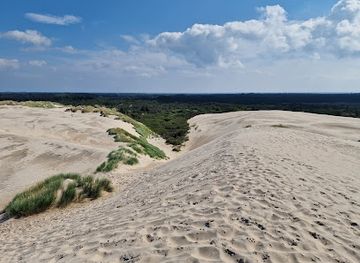
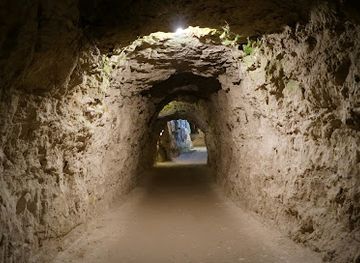
Beyond the core museum area, Hanstholm’s surroundings form an open-air extension of the story. To the south lies the Hanstholm 1 open-air museum, one of Denmark’s best-preserved coastal batteries, where 19 bunkers dot a hilly dune landscape. Many are still accessible, inviting careful exploration with a torch and a bit of imagination.What was once a bare, windswept military zone has partly rewilded into mixed forest and heath that now sits on the fringe of Thy National Park. Walking these paths, you move between skylarks and concrete cupolas, heather and gun emplacements. It is a striking combination of nature and history, where Atlantic surf, North Sea winds and silent casemates all shape the atmosphere of this remote corner of Jutland.












Your all‑in‑one travel companion app
Explore expert travel guides, compare and book tours, experiences, hotels, and more—all from the palm of your hand. Download now for seamless trip planning wherever your wanderlust takes you.


Explore More of North Jutland
Looking beyond Hanstholm fortress? Discover North Jutland for broader travel guides, local hot-spots, and regional highlights.
Explore North Jutland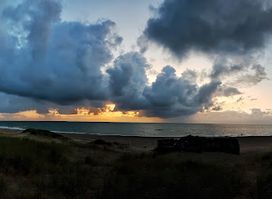
A low-key coastal hideaway on Denmark’s Cold Hawaii shore, where North Sea waves, shifting dunes and a laid-back surf culture shape every moment by the water.
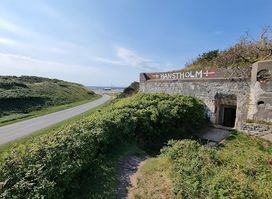
Wind, dunes and concrete bunkers meet on Hanstholm’s headland, where a vast WWII fortress now forms an open-air museum in the wild light of Denmark’s northwest coast.
