

Jammerbugt Travel Guide
Free Guide: Denmark's wild North Sea bay where dramatic dunes, ancient woodlands, and untamed beaches reveal nature's raw power.


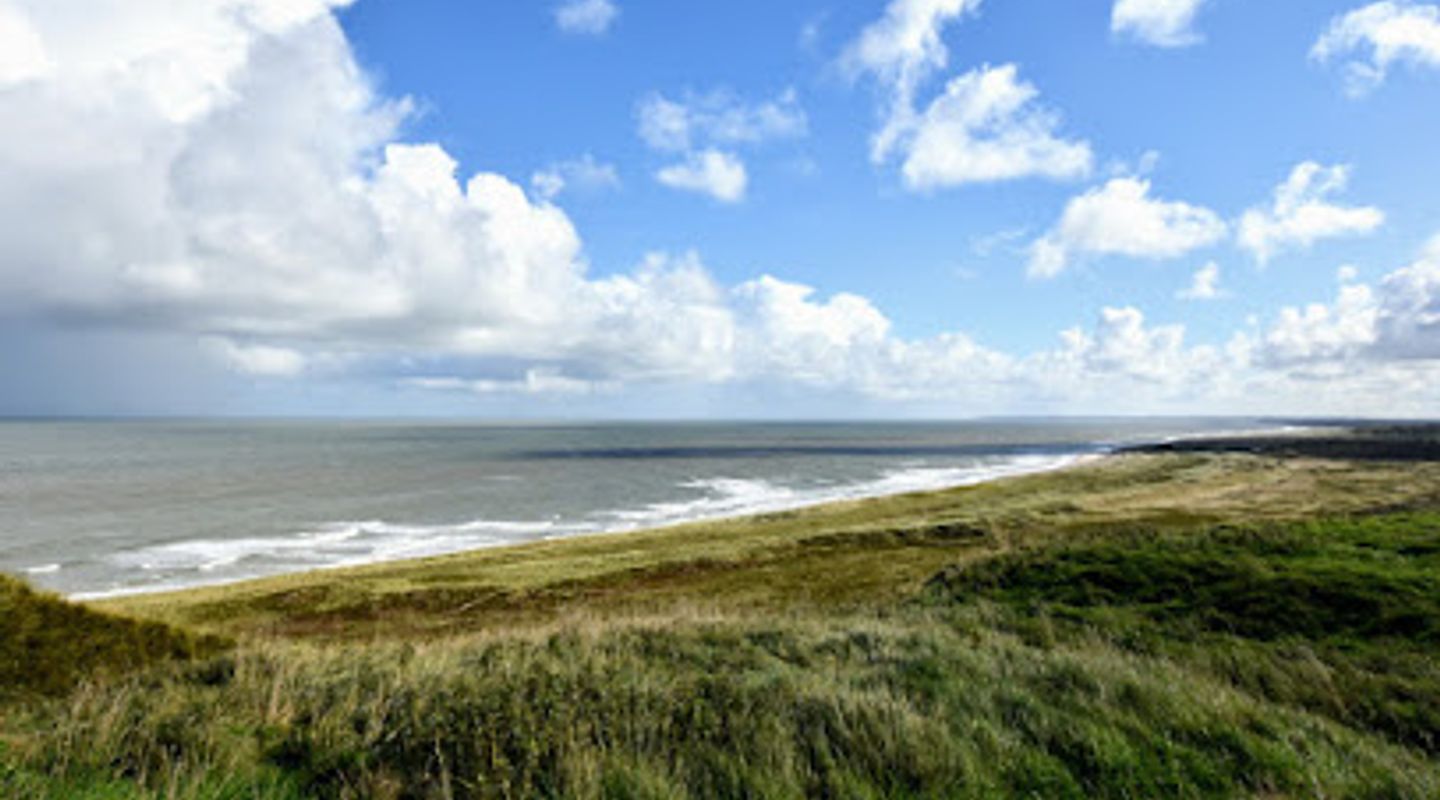
A brief summary of Jammerbugt
Denmark's wild North Sea bay where dramatic dunes, ancient woodlands, and untamed beaches reveal nature's raw power.
Jammerbugt, meaning 'Bay of Woe,' stretches along Denmark's wild North Sea coast in northwestern Jutland. This dramatic natural landscape features towering dunes, wind-sculpted heaths, vast sandy beaches, and chalk cliffs that remain largely uncrowded. The bay's name reflects its maritime history of shipwrecks and treacherous waters, now home to rich marine biodiversity. Coastal villages like Blokhus and Løkken offer brightly painted houses, harbors, and Danish hygge culture, while nature reserves invite exploration of ancient woodlands and rare flora.
On-site amenities
 Food options
 Drink options
 Restrooms
 Seating areas
 Picnic areas
 Information boards
 Visitor centre
- Address
- Jammerbugt
Getting there
Car
Bicycle
Bus
Train
Discover more about Jammerbugt
The Bay of Woe: History and Heritage
Jammerbugt's evocative name—translating to 'Bay of Woe' or 'Bay of Lamentations'—originates from centuries of maritime tragedy. Treacherous reefs and violent North Sea storms once claimed countless ships and sailors, their laments echoing across these waters. Today, the seafloor remains a graveyard of wrecks, yet these submerged vessels have become unexpected havens for marine life. A 2020 seafloor mapping project revealed far greater biodiversity than previously understood, with shipwrecks providing critical habitats for fish and other organisms. This transformation from a place of peril to one of ecological richness reflects the bay's complex character.
Landscape of Wind and Water
The coastline unfolds as a patchwork of dramatic natural features shaped by relentless North Sea forces. Towering dunes, some crowned with grass and wildflowers, rise majestically above wind-whipped beaches that stretch for kilometers. Chalk cliffs frame sections of the shore, their pale faces weathered by centuries of salt spray and gales. The Rubjerg Knude lighthouse stands as an iconic symbol, perched atop migrating sand dunes that shift constantly under the bay's powerful winds. Vast heathlands extend inland, their sparse vegetation adapted to harsh coastal conditions. Even during peak summer months, the beaches feel wild and uncrowded, offering genuine solitude and space.
Flora, Fauna, and Protected Ecosystems
Jammerbugt's diverse habitats support remarkable biodiversity. Nature reserves such as Fosdalen and Svinkløv protect ancient woodlands where rare plants flourish, including wolf's bane and cloudberry—species uncommon in Denmark. Birdlife thrives here, with autumn migrations bringing thousands of birds along the bay's flyway, creating spectacular natural spectacles. The Fosdal Plantation, a heath landscape north of Brovst, harbors polecats, hares, and numerous insects adapted to dune environments. Store Vildmose, a protected bogland north of Aabybro, preserves remnants of extensive raised peat bog and shelters the elusive Eurasian otter. This ecological richness makes Jammerbugt a destination for nature enthusiasts and wildlife observers.
Coastal Villages and Danish Culture
Small villages dot the Jammerbugt shoreline, each preserving authentic Danish character. Blokhus and Løkken feature brightly painted houses, atmospheric harbors, and thriving café culture rooted in both tradition and modern hygge. These settlements serve as gateways to the bay's natural wonders while offering warm hospitality and local character. Fresh-caught fish smoked in seaside smokehouses represents culinary tradition, while the villages embody the slower pace of life that defines this region. The municipality's seat, Aabybro, dates to 1664 and maintains its role as a cultural and administrative hub.
Adventure and Recreation
Jammerbugt attracts outdoor enthusiasts year-round. Surfers brave the North Sea breakers, while windsurfers carve across shallow lagoons. The North Sea Cycle Route threads through wind farms and heathland, offering panoramic coastal views and rewarding detours. Families picnic atop grass-crowned bluffs with endless vistas, while swimmers embrace Denmark's cold-water bathing tradition. Walkers explore dramatic ravines and ancient woodlands in protected reserves. WWII bunkers, slowly slipping into the sea, stand as stark historical reminders of the area's tumultuous past and offer unique perspectives on wartime heritage.
The Spirit of Jammerbugt
Jammerbugt transcends mere scenery; it embodies a way of life shaped by nature's power and human resilience. The atmosphere is simultaneously invigorating and contemplative, where the might of the North Sea is ever-present and the pace refreshingly unhurried. Visitors discover a sense of space and freedom unmatched elsewhere in Denmark. Whether seeking wild beauty, authentic Danish culture, outdoor adventure, or simple relaxation by the waves, Jammerbugt delivers in spectacular style. The bay's transformation from a place of maritime lament to one celebrated for natural splendor and ecological richness makes it a destination of profound character and enduring appeal.
Evendo Review Centre
 Google
Guest reviews
Best time to go
Quietest: Jan, Feb & Dec · before 6am or at 9pm
Busy times are Evendo estimates for a typical year, to help you plan. Actual crowds vary with events, school holidays and the weather.
Explore Jammerbugt on the map
A handpicked selection of must-see spots near Jammerbugt, mapped for you.
Get your free copy of our complete guide to Jammerbugt, delivered straight to you.
Everything on this page, from opening hours and how to get there to Eve’s tips and the best time to go, in one PDF you can read offline, print or share.
Already have an account? Sign in
Your Jammerbugt guide is ready.
We'll send it to · Not you? Sign out

Getting your guide ready…
We are putting together a fresh copy of the Jammerbugt guide. This can take up to a minute.
This can take a few moments. If your browser asks, choose Allow so the download can start. You'll find the guide in your Downloads folder.
Nothing happened? Download it again
Sorry, the guide is taking longer than usual. Please try again in a minute, or get it by email instead.
Other nearby places you may find interesting
The closest places of the same kind, if this one is not quite what you had in mind.
-
Bispehuen A dramatic folded column of volcanic ash and clay, shaped like a bishop's hat, rising from Fur's largest quarry.
-
Limfjordsbroen Historic bascule bridge linking Aalborg and Nørresundby, offering everyday Danish life, harbor views, sea air and classic Limfjord light in all seasons.
-
Limfjordstunnelen Denmark's pioneering underwater motorway tunnel connecting North Jutland's vital regions since 1969.
-
Statue of Michael Drewsen Bronze tribute to Silkeborg’s founding industrialist, anchoring the historic town square and local traditions at the heart of Denmark’s lake district.
-
Battery Hanstholm 1 Wind-beaten dunes, concrete giants and sweeping sea views meet at Battery Hanstholm 1, an open-air World War II strongpoint on Denmark’s remote northwest coast.
Swipe for more places
More to explore near Jammerbugt

 Best experiences near Jammerbugt
 Best hotels near Jammerbugt
 Best landmarks near Jammerbugt
 Best attractions near Jammerbugt
 Best shops near Jammerbugt
 Best restaurants near Jammerbugt
 Best bars near Jammerbugt
Do you manage this location?
Take control to get all the benefits, like improved information, better appearance, and stronger visibility across AI-powered discovery.
Explore more
Explore more of Limfjord
Discover Limfjord in Denmark: A serene waterway offering a blend of nature, culture, and history with charming villages, Viking sites, and vibrant arts scenes.
Explore Limfjord
Explore more of Denmark
Discover Denmark: A perfect blend of history, modern design, and the cozy concept of hygge. Explore vibrant cities, serene landscapes, and world-class cuisine.
Explore Denmark
