

Best Landmarks in Lower Egypt
Planning a trip to Lower Egypt? Discover the best landmarks in Lower Egypt with history, expert tips, and routes. Free on web or the Evendo app.


The best landmarks in Lower Egypt
- Top rated
- Closest to the centre
- A–Z
81 landmarks
-
Archaeological site4.6★94,698 reviews
Giza Necropolis
The Giza Necropolis, located on the outskirts of Cairo, is an ancient burial ground dating back over 4,500 years. It's home to the iconic Pyramids of Giza, the Great Sphinx, and various other tombs and temples, representing the architectural prowess and cultural significance of ancient Egypt.
Daily 6:00–16:00
-
Archaeological museum4.5★53,757 reviews
The Egyptian Museum in Cairo
The Egyptian Museum in Cairo, established in 1858, is a treasure trove of ancient Egyptian artifacts, showcasing over 120,000 items from the Predynastic Period to the Greco-Roman era. Located in Tahrir Square, it offers an unparalleled glimpse into Egypt's rich history and cultural heritage.
Daily 9:00–17:00
-
Archaeological site4.8★28,153 reviews
Luxor Temple
Luxor Temple, located in the heart of Luxor, Egypt, is a strikingly graceful monument to ancient Egyptian civilization. Built around 1400 BCE, it stands as a testament to the pharaohs' power and devotion, particularly to the Theban Triad of Amun, Mut, and Khonsu. Unlike other temples in the area, Luxor Temple was dedicated to the rejuvenation of kingship, making it a unique and significant site.
Daily 6:00–22:00
-
Historical place4.8★24,028 reviews
Karnak
Karnak Temple, located in Luxor, Egypt, is the largest ancient religious site in the world, encompassing temples, chapels, pylons, and other structures built over two thousand years. Dedicated to the Theban triad of Amun, Mut, and Khonsu, it stands as a testament to the power and devotion of ancient Egyptians.
Daily 6:00–17:30
-
Historical landmark4.6★26,562 reviews
The Great Pyramid of Giza
The Great Pyramid of Giza, the largest of the Giza pyramids and one of the Seven Wonders of the Ancient World, stands as a testament to the ingenuity and grandeur of ancient Egypt. Built over 4,500 years ago as the tomb of Pharaoh Khufu, it remains an awe-inspiring structure that attracts millions of visitors each year.
Daily 8:00–16:30
-
Museum4.7★22,701 reviews
The National Museum of Egyptian Civilization
The National Museum of Egyptian Civilization (NMEC) in Cairo offers a comprehensive exploration of Egypt's rich history, showcasing over 50,000 artifacts from prehistoric times to the present day. It is the first museum of its kind in the Arab world to focus on the entirety of Egyptian civilization.
-
Monument4.7★20,901 reviews
Great Sphinx of Giza
The Great Sphinx of Giza, a colossal limestone statue with the body of a lion and the head of a human, stands as an enduring symbol of ancient Egypt. Located on the Giza Plateau, it is believed to have been built around 2500 BCE during the reign of Pharaoh Khafre. The Sphinx is one of the world's largest and oldest sculptures, captivating visitors with its enigmatic presence and rich history.
Daily 8:00–17:00
-
Historical landmark4.7★19,118 reviews
Mortuary Temple of Hatshepsut
Nestled against the cliffs of Deir el-Bahari, the Mortuary Temple of Hatshepsut is an ancient Egyptian masterpiece dedicated to Queen Hatshepsut, one of the few female pharaohs. This unique funerary temple, with its terraced design and intricate reliefs, stands as a testament to her power and architectural vision.
Daily 6:00–17:00
-
Tourist attraction4.3★25,264 reviews
Cairo Tower
Dominating Cairo's skyline, the Cairo Tower offers panoramic views of the city from its 187-meter height. Designed by Egyptian architect Naoum Shebib, its latticed structure evokes a pharaonic lotus plant, symbolizing Egypt's rich history.
Daily 9:00–1:00
-
Archaeological site4.8★16,646 reviews
Valley of the Kings
Explore the Valley of the Kings, the final resting place of pharaohs and nobles from the New Kingdom (16th to 11th century BC). Located on Luxor's West Bank, this arid valley houses over 60 tombs, adorned with intricate hieroglyphics and vibrant paintings, offering a glimpse into ancient Egyptian beliefs about the afterlife.


Abu Simbel Temples
The Abu Simbel temples, carved into a mountainside by Ramesses II over 3,000 years ago, stand as a testament to ancient Egyptian power and artistry. Relocated in the 1960s to save them from the rising waters of the Aswan High Dam, these colossal structures continue to inspire awe.
Daily 5:00–18:00

Alexandria Naval Unknown Soldier Memorial
A poignant tribute to Egypt's fallen naval heroes, the Alexandria Naval Unknown Soldier Memorial stands on the Corniche, offering stunning Mediterranean views. It serves as a reminder of the city's rich maritime history and the sacrifices made by those who served in the Egyptian Navy.
Open 24 hours

Lesan Area
Nestled in Ras El-Bar, the Lesan Area is a breathtaking tourist attraction where the mighty Nile River meets the Mediterranean Sea, offering stunning views, vibrant local culture, and a unique natural experience for every traveler.
Open 24 hours

Steigenberger Hotel El Lessan
The Steigenberger Hotel El Lessan is a luxurious 5-star hotel in Ras El Bar, Egypt, uniquely situated at the point where the Nile River meets the Mediterranean Sea. Offering stunning views, a private beach, and top-notch amenities, it's an ideal destination for a relaxing and memorable stay.

People of Egypt Walkway
The People of Egypt Walkway, located in Cairo's Bulaq district, offers a modern and vibrant waterfront experience along the Nile. With landscaped pathways, art installations, and various amenities, it's a popular spot for locals and tourists seeking relaxation and cultural immersion.
Daily 9:00–1:00

Amenhotep III Sun Temple
Explore the ruins of the Amenhotep III Sun Temple on Luxor's West Bank, a historical landmark dedicated to the sun god Amun. Though largely in ruins, the site offers a serene atmosphere and a glimpse into the grandeur of ancient Egypt, with remnants of colossal statues and intricate carvings.
Daily 6:00–17:00

Colossi of Memnon
The Colossi of Memnon are two massive stone statues of Pharaoh Amenhotep III, standing as silent sentinels on the West Bank of Luxor. These imposing figures, remnants of a once-grand mortuary temple, offer a glimpse into the power and artistry of ancient Egypt.
Mon–Sat 6:00–17:00 · Sun 6:00–18:00

Bab al-Futuh
Bab al-Futuh, or the Gate of Conquest, is one of the three remaining gates in the old city walls of Cairo. Built in 1087 during the Fatimid Caliphate, it stands as a testament to the city's rich history and military architecture.
Open 24 hours

Serapeum of Alexandria
The Serapeum of Alexandria was a grand ancient temple dedicated to the god Serapis, a fusion of Greek and Egyptian deities. Built in the 3rd century BC, it was a major center of learning and worship, housing a vast library. Today, only Pompey's Pillar and some underground galleries remain, offering a glimpse into Alexandria's Hellenistic past.
Daily 9:00–16:30

Pyramid of Djoser
The Pyramid of Djoser, located in Saqqara, is the oldest complete stone building complex in Egypt, dating back to the 27th century BC. Built for Pharaoh Djoser during the Third Dynasty, it represents a pivotal moment in ancient Egyptian architecture, marking the evolution of royal tombs from simple mastabas to the iconic pyramid shape.
Daily 8:00–17:00

Ancient Roman Theater, Alexandria
The Roman Theater in Alexandria is a remarkably well-preserved structure dating back to the 4th century AD, offering a glimpse into the city's Greco-Roman past. Discovered in 1960 during excavations, this theater once hosted musical performances, poetry competitions, and public assemblies, and could accommodate up to 800 spectators. Today, it stands as a testament to Alexandria's rich cultural heritage and the influence of the Roman Empire in Egypt.
Daily 8:00–17:00

Catacombs of Kom el Shoqafa
Descend into the Catacombs of Kom el Shoqafa, a fascinating Greco-Roman burial site in Alexandria, Egypt, blending Egyptian, Greek, and Roman architectural styles. Discovered by chance in 1900, these tombs offer a unique glimpse into ancient funerary practices and Alexandria's multicultural history.
Daily 9:00–16:00

Ibn Tulun Mosque
The Ibn Tulun Mosque, Cairo's oldest mosque still in its original form, is a stunning example of 9th-century Abbasid architecture. Built by Ahmad Ibn Tulun, it features a vast courtyard, a unique spiral minaret inspired by the Great Mosque of Samarra, and intricate stucco decorations.
Daily 9:00–16:00

Panoramic View of the Pyramids
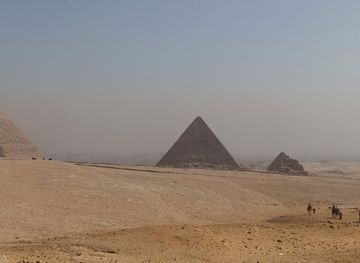
The Panoramic View of the Pyramids offers an unparalleled vantage point to witness the grandeur of the Giza Pyramids. Located just outside of Cairo in Al Omraneyah, Giza Governorate, it provides breathtaking views of the Great Pyramid of Giza, the Pyramid of Khafre, and the Pyramid of Menkaure, set against the expansive desert landscape.
Daily 8:00–17:00

Unfinished Obelisk
The Unfinished Obelisk in Aswan offers a unique glimpse into ancient Egyptian stoneworking. Commissioned by Queen Hatshepsut, this colossal obelisk was abandoned due to cracks in the granite, revealing the techniques used to create these massive monuments.
Daily 7:00–16:00

Mohamed Ali Pasha Statue
The Mohamed Ali Pasha Statue in Alexandria is an equestrian bronze sculpture honoring Mohamed Ali Pasha, the founder of modern Egypt. Created by French sculptor Alfred Jacquemart, it was unveiled in 1873 and stands in the historic Mansheya district.
Open 24 hours

Edfu Temple
Edfu Temple, also known as the Temple of Horus, is one of the best-preserved ancient temples in Egypt. Located on the west bank of the Nile River in Edfu, it was built between 237 and 57 BC during the Ptolemaic Kingdom. The temple is dedicated to Horus, the falcon-headed god of the sky.

Saqqara Necropolis
Explore Saqqara, the vast necropolis of ancient Memphis and a UNESCO World Heritage site, located just south of Cairo. Discover the Step Pyramid of Djoser, the oldest complete stone building complex in the world, along with numerous tombs and pyramids that span over 3,000 years of Egyptian history.
Open 24 hours

Dendera Temple of Hathor
The Dendera Temple of Hathor, located near Qena, Egypt, is a remarkably well-preserved temple complex dedicated to the goddess Hathor. Known for its stunning architecture, intricate carvings, and vibrant astronomical ceiling, it offers a captivating glimpse into ancient Egyptian religious beliefs and artistic achievements.
Daily 7:00–17:00

Manasterly Bridge
The Manasterly Bridge in Cairo is more than just a crossing; it's a testament to Egyptian architectural heritage. Located in Old Cairo, this pedestrian bridge offers scenic views of the Nile and access to cultural sites on Rhoda Island.
Open 24 hours

Wadi Degla Reserve
Escape the urban sprawl of Cairo at Wadi Degla Reserve, a protected area boasting dramatic limestone formations, winding canyons, and diverse wildlife. Perfect for hiking, biking, and a peaceful retreat into nature, it's a geological treasure trove with fossils dating back millions of years.
Daily 7:00–18:00

One Thousand and One Nights
One Thousand and One Nights is an entertainment complex in Sharm el-Sheikh, Egypt, offering a vibrant mix of Pharaonic and Bedouin-inspired shows, music, and architecture. Visitors can immerse themselves in Egyptian history and culture through live performances, acrobats, and a dancing fountain, all within a castle-like setting.

Kom Ombo Temple
The Temple of Kom Ombo, dating back to the Ptolemaic dynasty (180-47 BC), is a unique double temple dedicated to two distinct sets of deities: Sobek, the crocodile god, and Haroeris (Horus the Elder), the falcon god. Its symmetrical design and well-preserved state make it a captivating destination on the banks of the Nile.
Daily 7:00–21:00

Bab Zuweila
Bab Zuweila, also known as Bawabat al-Mitwali, is one of the three remaining gates of the old city of Cairo, dating back to 1092 AD. Built during the Fatimid dynasty, it stands as a testament to Cairo's rich history and architectural brilliance, offering panoramic views from its minarets.
Open 24 hours

Valley of the Queens
The Valley of the Queens, located on the west bank of the Nile River in Luxor, Egypt, is an ancient burial site for queens, princesses, and other members of the royal families of the New Kingdom. Known in ancient times as Ta-Set-Neferu, meaning "The Place of Beauty," it contains over 90 tombs, offering a glimpse into the lives and beliefs of ancient Egypt's elite.
Daily 6:00–17:00

Gayer-Anderson Museum
The Gayer-Anderson Museum, nestled in the heart of Islamic Cairo, is a captivating art museum housed within two well-preserved 17th-century houses. Named after Major Robert Grenville Gayer-Anderson Pasha, it showcases a rich collection of art, furniture, and artifacts, offering a glimpse into a bygone era.
Daily 9:00–15:00

Mini Egypt Park
Explore Egypt's most iconic landmarks in miniature form at Mini Egypt Park in Hurghada. This unique open-air museum features meticulously crafted replicas of famous sites like the Pyramids of Giza, Karnak Temple, and Abu Simbel, offering a fun and educational experience for all ages.
Daily 10:00–19:00

The Lighthouse of Port Said
The Port Said Lighthouse, a historical landmark in Egypt, stands as a testament to 19th-century architecture and maritime innovation. Built in 1869, it was designed by François Coignet and served as a crucial guide for ships passing through the Suez Canal. Today, it remains a symbol of Port Said's rich history and global trade significance.
Mon–Sat 8:30–18:30

Dolphin Inn
The Dolphin Inn is a 3-star hotel located in Ras El Bar, Egypt, offering comfortable accommodations and a welcoming atmosphere with views of the Nile. It is known for its friendly staff and convenient location near local attractions.

Qalawun Complex
The Qalawun Complex is a stunning example of Mamluk architecture in Cairo, built by Sultan al-Mansur Qalawun between 1284 and 1285. This vast complex includes a mosque, madrasa, mausoleum, and the remains of a hospital, showcasing the grandeur and sophistication of the Mamluk Sultanate.
Daily 9:00–17:00

Mortuary Temple of Seti I
The Mortuary Temple of Seti I, located in the Theban Necropolis, stands as a testament to the grandeur of ancient Egyptian civilization. Built by Pharaoh Seti I and completed by his son Ramses II, this temple offers insights into the reign and religious beliefs of the New Kingdom period.

Deir el-Medina
Deir el-Medina, also known as Set-Maat or "The Place of Truth", is an ancient Egyptian village near Luxor that once housed the artisans and craftsmen who constructed and decorated the royal tombs in the Valley of the Kings and the Valley of the Queens. This remarkably well-preserved village offers a unique glimpse into the daily lives, beliefs, and working conditions of these skilled laborers.
Daily 6:00–17:00

El- Tahrir Square
Tahrir Square, or Liberation Square, is a historically significant landmark in Cairo, Egypt. Originally named Ismailia Square, it gained prominence as a central location for political demonstrations, most notably the 2011 Egyptian Revolution. Today, it's a bustling hub surrounded by important cultural and governmental buildings.

Soviet-Egyptian Friendship Monument
The Soviet-Egyptian Friendship Monument in Aswan, erected in the 1970s, commemorates the strong bond between Egypt and the former Soviet Union during the Cold War. The monument features imposing figures and offers scenic views of the Nile.

Deir el-Bahari
Deir el-Bahari, meaning "Monastery of the North", is a complex of mortuary temples and tombs on the west bank of the Nile River, near Luxor, Egypt. It is best known for the Mortuary Temple of Hatshepsut, a stunning architectural achievement dedicated to the female pharaoh and the god Amun. The site also includes temples of Mentuhotep II and Thutmose III, showcasing over two millennia of Egyptian religious and funerary practices.
Daily 6:00–17:00

Pyramids of Queens
Located on the Giza Plateau, the Queens' Pyramids are a trio of smaller pyramids next to the Pyramid of Khufu and another trio near Menkaure's pyramid. These served as tombs for the wives and family members of the pharaohs, demonstrating the importance of royal women in ancient Egyptian society.
Daily 8:00–15:00

Heliopolis Obelisk - Obelisk of Snosert I
The Heliopolis Obelisk, also known as the Obelisk of Senusret I, stands as a remarkable testament to ancient Egyptian civilization. Located in the El Matareya district of Cairo, it is one of the oldest obelisks still standing in its original location. Erected during the 12th Dynasty, it offers a tangible link to the once-thriving religious and intellectual center of Heliopolis.
Daily 7:00–17:00

Tombs of the Nobles
The Tombs of the Nobles, located on Luxor's West Bank, offer a fascinating look into the lives of ancient Egypt's elite. Unlike the royal tombs, these tombs showcase detailed scenes of daily life, providing a unique perspective on this ancient civilization.
Daily 8:00–18:00

Egyptian Geology Museum
Explore Egypt's ancient geological history at the Egyptian Geology Museum in Old Cairo. Discover a rich collection of rocks, minerals, and fossils, including dinosaur skeletons and meteorites, offering a unique glimpse into the region's natural heritage.
Mon–Thu 9:00–14:00 · Sun 9:00–14:00

Precinct of Amun-Re
The Precinct of Amun-Re, the largest and most accessible part of the Karnak Temple Complex in Luxor, Egypt, is a sprawling testament to ancient Egyptian religious devotion and architectural prowess. Dedicated to Amun-Re, the chief deity of the Theban Triad, this vast complex showcases towering columns, intricate hieroglyphics, and colossal statues, offering visitors an immersive journey into the heart of ancient Egyptian civilization.
Daily 8:00–17:30

Magra El Oyoun aqueduct
The Magra El Oyoun Aqueduct, located in Old Cairo, is a remarkable feat of ancient engineering. Built during the Mamluk period, it was crucial for transporting water from the Nile to the Cairo Citadel. Today, its impressive arches offer a glimpse into Cairo's rich history and architectural ingenuity.

Museum Of Modern Egyptian Art
Located in the Zamalek district within the Cairo Opera House grounds, the Museum of Modern Egyptian Art showcases a vast collection of 20th and 21st-century Egyptian art. Established in 1927, the museum features works by prominent Egyptian artists, reflecting various artistic movements and intellectual trends.
Tue–Thu 10:00–16:00 · Sat–Sun 10:00–16:00

Dome of Abu Al-Hawa
The Dome of Abu Al-Hawa, or Qubbet el-Hawa, is a captivating landmark in Aswan, Egypt, famed for its stunning architecture and historical importance. Perched atop a hill on the Nile's west bank, it provides panoramic views of the river, surrounding islands, and Aswan city.
Daily 7:00–16:00

Aga Khan Mausoleum
The Aga Khan Mausoleum, a striking monument in Aswan, Egypt, is the final resting place of Aga Khan III, the spiritual leader of the Ismaili Muslims. Built in the Fatimid style, the mausoleum stands on the Nile's west bank, offering stunning views and a glimpse into Islamic architectural heritage.
Daily 6:00–17:00

Egypt's Renaissance Statue
Egypt's Renaissance Statue, also known as Nahdet Misr, is a significant monument in Giza, Egypt, embodying the country's modern national aspirations. Sculpted by Mahmoud Mukhtar, it features a woman and a sphinx, representing Egypt's past and future. The statue stands as a testament to Egyptian artistry and cultural heritage.
Open 24 hours

Seheil Island
Seheil Island, located south of Aswan, is a historically significant island in the Nile, known for its ancient rock inscriptions dating back to the Middle Kingdom. These inscriptions, including the famed Famine Stela, offer insights into the lives and beliefs of ancient travelers and the island's role as a granite quarry and a crucial waypoint for expeditions into Nubia.

Synagogue Ben Ezra
The Ben Ezra Synagogue, nestled in Old Cairo, stands as Egypt's oldest synagogue, with a history stretching back to the 9th century. Originally a church, it was sold to the Jewish community in 882 AD. The synagogue is renowned for its unique blend of architectural styles and the discovery of the Cairo Geniza, a treasure trove of historical documents.
Daily 9:00–16:00

Mortuary Temple of Khufu
Adjacent to the Great Pyramid of Giza, the Mortuary Temple of Khufu stands as a testament to ancient Egyptian architectural prowess and the pharaoh's divine status. Though largely ruined, its remnants evoke the grandeur of Khufu's reign and the rituals surrounding his afterlife.

Temple of Khnum
Explore the Temple of Khnum on Elephantine Island in Aswan, a partially reconstructed site dedicated to Khnum, the god of the Nile's inundation. With history dating back to 3000 BC, the temple offers a glimpse into ancient Egyptian religious practices and the island's rich cultural heritage.
Open 24 hours

Triumphal arch
The Triumphal Arch in Cairo stands as a historical landmark, embodying Egypt's rich cultural heritage. This impressive structure pays tribute to past civilizations, offering a glimpse into the architectural achievements that have shaped the region for centuries. It's a popular attraction for history enthusiasts and travelers alike.

Winds of Change = your private English guide + personal driver in Cairo&Giza, Egypt
Winds of Change offers personalized tours of Cairo and Giza with a private English-speaking guide and driver. Explore ancient wonders and modern Egyptian life at your own pace, creating an unforgettable journey through time.
Open 24 hours

Deir El-Shelwit Temple
Deir El-Shelwit, a Greco-Roman temple dedicated to Isis, offers a tranquil escape from Luxor's bustling tourist trails. Discover well-preserved reliefs and inscriptions within its modest structure, revealing the enduring appeal of Egyptian religious traditions under Roman rule.
Daily 7:00–17:00

Beit el-Wali
Beit el-Wali is a small, rock-cut temple in Nubia, built by Pharaoh Ramses II. Originally located 50 kilometers south of Aswan, it was relocated to higher ground near the Kalabsha Temple during the 1960s to save it from submersion by the Aswan High Dam project. Dedicated to the deities Amun-Re, Re-Horakhti, Khnum, and Anuket, it offers insights into ancient Egyptian art, culture, and history.

Fortress of Babylon
The Fortress of Babylon, located in Coptic Cairo, is an ancient Roman fortress built around 300 AD by Emperor Diocletian. It protected the entrance to a canal linking the Nile and the Red Sea and served as a toll point for river traffic. Today, it houses the Coptic Museum, a convent, and several historic churches.
Open 24 hours

Karnak Open-air Museum
The Karnak Open-air Museum, located within the Karnak Temple complex in Luxor, Egypt, displays reconstructed chapels and shrines that were dismantled by pharaohs to build their own monuments. It offers a unique look into the art and architecture of ancient Egypt.

Egypt Tour Packages
Egypt Tour Packages, located in New Damietta, is a travel agency specializing in crafting personalized tours throughout Egypt. With a 5-star rating, they offer a range of experiences from ancient pyramids to Nile cruises, aiming to provide memorable and insightful journeys for every traveler.

Wasila Historical House
Step back in time at the Wasila Historical House, a beautifully preserved example of Ottoman-era domestic architecture in the heart of Cairo's El-Darb El-Ahmar district. Built in 1646, this house offers a unique insight into the lives of its former residents and the architectural styles of the period.
Daily 9:00–17:00

Temple of Dakka
The Temple of Dakka, located in Nubia, near Aswan, is a Greco-Roman temple dedicated to Thoth, the Egyptian god of wisdom. Originally built in the 3rd century BC by a Meroitic king, it was expanded by the Ptolemaic and Roman rulers. Relocated during the construction of the Aswan High Dam, it stands as a testament to cultural fusion and ancient religious practices.

Ramses II Obelisk
The Ramses II Obelisk, a pink granite monument adorned with hieroglyphs, stands in Cairo's Tahrir Square. Originally erected by Ramses II in the city of Per-Ramesses (Pi-Ramesses) (present day Qantir) around 1250 BC, it was later moved to Tanis and then to Cairo in 2020 to showcase Egypt's rich history.

Famine Stela
The Famine Stela, located on Sehel Island near Aswan, is an ancient Egyptian inscription recounting a seven-year drought and famine during the reign of Pharaoh Djoser. Carved during the Ptolemaic Kingdom, it offers insights into ancient Egyptian beliefs and their response to natural disasters.

Marin El Nile Hotel
Nestled in the serene Damietta Desert, the Marin El Nile Hotel offers a comfortable and convenient base for exploring the Damietta Governorate. With well-furnished rooms and a friendly atmosphere, it's ideal for leisure and business travelers seeking a blend of relaxation and cultural immersion.

The Hanging Obelisk
The Hanging Obelisk, located in Kafr Nassar near Al Haram in Giza, is a unique historical landmark showcasing ancient Egyptian engineering. Unlike traditional obelisks, this one appears to defy gravity, drawing tourists to witness its architectural wonder.

Egipto
Egipto, likely referring to a landmark or area within Cairo, offers a glimpse into the city's vibrant heart. Situated in the Qasr El Nil district, it's near historical sites and modern amenities, providing a blend of culture and contemporary life.

Art D' Egypt
Art D' Egypt is a must-visit tourist attraction nestled near the iconic Pyramids of Giza, offering a captivating glimpse into the rich tapestry of Egyptian history and art. This destination is perfect for those seeking to immerse themselves in the art and culture of ancient Egypt while enjoying stunning views of one of the world’s most recognizable landmarks.

Qasr Dusch
Qasr Dusch, also known as Kysis, is an ancient Roman fortress and temple complex located in the Kharga Oasis of Egypt's New Valley Governorate. Once a vital military outpost securing trade routes, today it stands as a remarkably well-preserved historical site, offering visitors a glimpse into Roman life in the Sahara.

Gateway of Ptolemy III Euergetes
The Gateway of Ptolemy III Euergetes, located in Karnak Temple, Luxor, stands as a remarkable testament to ancient Egypt's architectural and artistic achievements during the Ptolemaic era. Erected during the reign of Ptolemy III, this monumental gateway offers a glimpse into the rich history and culture of the time, featuring intricate carvings and hieroglyphs.

Kiosk of Qertassi
The Kiosk of Qertassi, a small yet elegant Roman structure dating back to the 1st century CE, stands as a testament to the blend of Egyptian and Roman influences in ancient Nubia. Relocated to New Kalabsha, near the Aswan High Dam, this historical landmark offers visitors a serene glimpse into the past with its intricate carvings and picturesque Nile views.

EGYPTIANS WALKWAY - PH. 3
The Egyptians Walkway, located along the Nile Corniche in Cairo, offers a picturesque escape with stunning river views and a vibrant atmosphere. It's a popular spot for locals and tourists seeking relaxation and cultural immersion.

Egypt flag
A prominent display of the Egyptian flag in Ahmed Oraby Square, New Cairo, serving as a local landmark and a point of orientation within the Al Rehab community.
ميدان عمر افندى
Omar Effendi Square in Faraskur, Damietta Governorate, is a modest town square reflecting local life. While not a major tourist destination, it offers a glimpse into the daily routines of the town's residents.
مرور السنانية
مرور السنانية is a town square located in Kafr El Battikh, Damietta Governorate, Egypt. While specific historical details are scarce, it serves as a central point in the town, likely a place for local gatherings and daily life. Kafr El Battikh itself has a history rooted in fishing and agriculture.
Explore Lower Egypt on the map
A handpicked selection of must-see spots in Lower Egypt, mapped for you.
More about Lower Egypt

Lower Egypt travel guide
Explore Lower Egypt through Cairo's monuments, the Nile Delta's farm landscapes, Alexandria's Mediterranean heritage and historic river towns.
Tell me more about Lower EgyptMore to explore in Lower Egypt

 Best attractions in Lower Egypt

 Best shops in Lower Egypt

 Best bars in Lower Egypt

 Best restaurants in Lower Egypt

 Best nightclubs in Lower Egypt

 Best experiences in Lower Egypt

 Best hotels in Lower Egypt
Explore more
Explore more of Egypt
Discover Egypt: From the timeless pyramids to the vibrant Red Sea, experience a land where ancient wonders meet modern adventures.
Explore Egypt
Getting your guide ready…
We are putting together a fresh copy of the Lower Egypt guide. This can take up to a minute.
This can take a few moments. If your browser asks, choose Allow so the download can start. You'll find the guide in your Downloads folder.
Nothing happened? Download it again
Sorry, the guide is taking longer than usual. Please try again in a minute, or get it by email instead.

